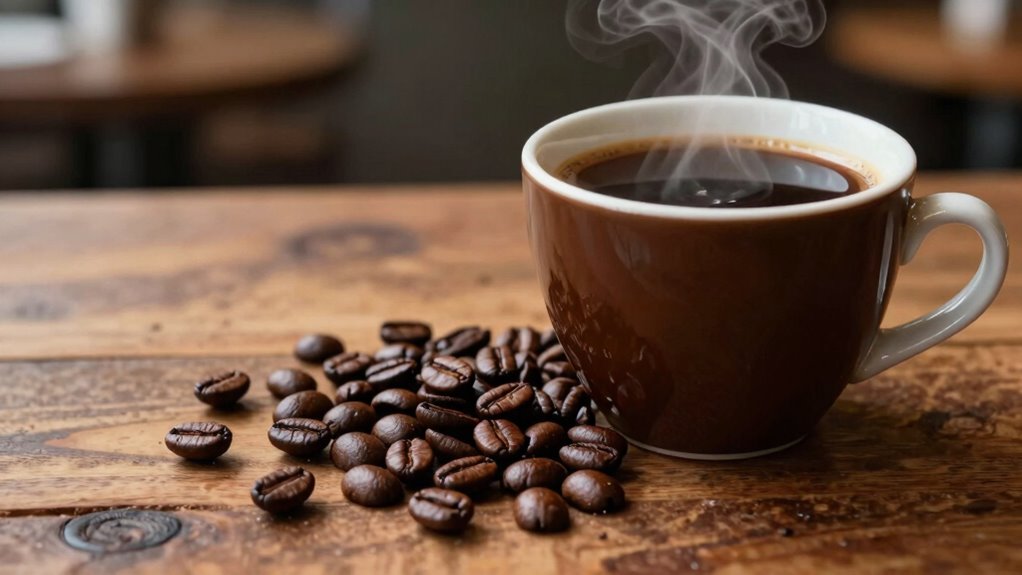

No, dark roast coffee doesn’t actually have less caffeine than light roast. Although it’s a common myth, caffeine levels stay pretty stable throughout roasting. The differences people notice come from flavor and aroma, not caffeine content. Factors like grind size and brewing method affect how much caffeine you get, regardless of roast. Curious how brewing affects your caffeine intake? Keep exploring to uncover more facts about coffee’s true caffeine levels.

Get coffee and tea gear delivered free — and shop member deals
- Fast, free delivery on millions of items
- Access to Prime Big Deal Days deals on October 6–7
- Prime Video, Amazon Music and more included
Key Takeaways
- Caffeine content remains similar across roast levels; dark roasts are not inherently less caffeinated.
- Caffeine is chemically stable during roasting, with minimal loss regardless of darkness.
- Brew method and extraction time impact caffeine levels more than roast color.
- Darker roasts are less dense and more porous, affecting caffeine extraction during brewing.
- Perceptions of lower caffeine in dark roasts are myths; actual caffeine amounts are comparable.
As an affiliate, we earn on qualifying purchases.
Does Dark Roast Have Less Caffeine Than Light Roast?
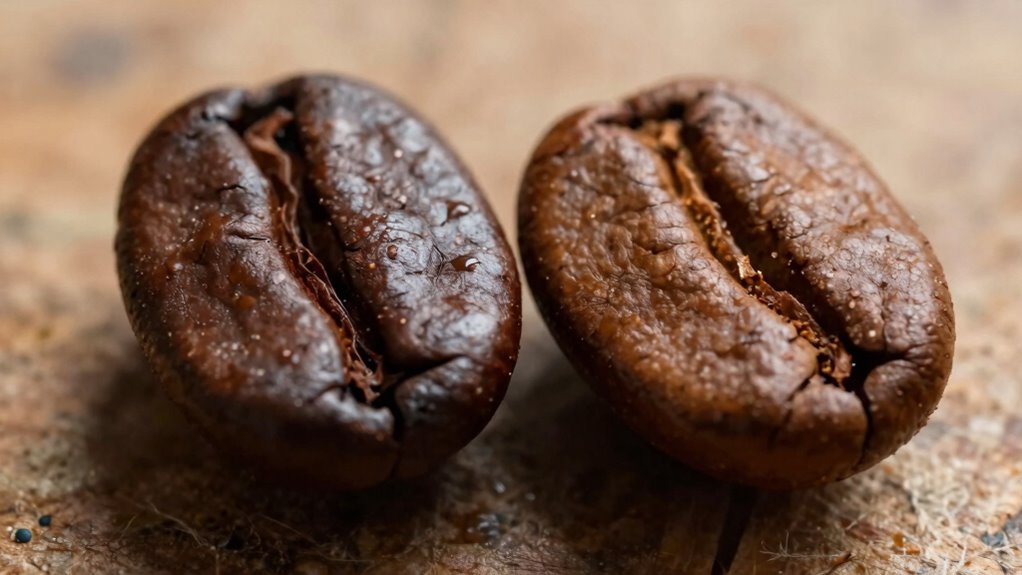
Many people assume that dark roast coffee has less caffeine than light roast, but the truth isn’t that simple. The flavor profile of dark roasts is bolder and more robust, which can influence how you perceive caffeine’s effects. However, caffeine levels are more affected by brewing techniques than roast level alone. For example, brewing methods like French press or espresso extract more caffeine regardless of whether the beans are dark or light roast. Dark roasted beans tend to be less dense, so you might need to use more beans to achieve the same caffeine content as a lighter roast. Ultimately, your brewing method and amount of coffee used play a bigger role in caffeine content than the roast level itself.
As an affiliate, we earn on qualifying purchases.
How Roasting Affects Coffee Caffeine Content

As you roast coffee, some caffeine is lost through the process, but the extent depends on how long and dark the roast becomes. You’ll also notice that bean density decreases with darker roasts, which can influence caffeine concentration. Additionally, bean density changes during roasting, affecting how caffeine is distributed in the beans. The roasting process can also impact the overall flavor profile, but it plays a crucial role in determining the caffeine content in your cup. Ultimately, the level of roast plays a significant role in determining the caffeine content in your cup. Understanding caffeine retention during roasting can help you make more informed choices about your coffee, especially considering how coffee chemistry shifts with different roasting times.
Caffeine Loss During Roasting
Curious about how roasting impacts caffeine levels? During roasting, caffeine remains relatively stable, but some loss can occur with higher temperatures and longer durations. Dark roasts might seem to have less caffeine, but that’s often due to changes in bean density and volume rather than actual caffeine loss. As beans roast, their flavor profile develops, and grind size can influence extraction, affecting perceived caffeine strength. Additionally, bean density can influence how much caffeine is extracted during brewing.
Bean Density Changes
Roasting considerably alters the density of coffee beans, which in turn influences the perceived caffeine content in your brew. As beans roast, they lose moisture and expand, decreasing their bean density. This change affects how much coffee you pack into your scoop; lighter, less dense beans take up more space, while darker, denser beans pack more tightly. Although the caffeine content per bean remains relatively stable, the overall caffeine in your cup can appear different depending on roast level and bean density. Additionally, bean density impacts the flavor profile, with darker roasts often having a more pronounced, bold taste. Recognizing how density variations influence the brewing process can help you tailor your coffee to achieve the desired strength and flavor. Moreover, bean density also impacts brewing extraction, affecting the final taste and caffeine release in your cup. Understanding these density changes can also help you optimize your brewing technique for a more consistent and satisfying coffee experience.
Roast Level and Caffeine Content
While roasting greatly changes the appearance and flavor of coffee beans, its effect on caffeine content is less straightforward. As beans darken, their flavor profile shifts, often becoming bolder and more bitter, with a deeper aroma intensity. However, caffeine levels remain relatively stable during roasting, since caffeine is heat-resistant and doesn’t evaporate easily. Darker roasts lose some mass due to water and volatile compounds, making the beans lighter by volume but not necessarily by caffeine content. This means a scoop of dark roast might have slightly less caffeine than a lighter roast, but the difference is minimal. Ultimately, roast level influences flavor and aroma more than caffeine content, so your choice depends on taste preferences rather than caffeine reduction.
As an affiliate, we earn on qualifying purchases.
Does Roasting Increase or Decrease Coffee’s Caffeine?

Roasting levels can influence caffeine content, but not always in straightforward ways. As beans roast, they lose water and become less dense, which can affect how much caffeine they contain by weight. Plus, your brewing method also plays a big role in how much caffeine ends up in your cup.
Roast Level and Caffeine
Many people assume that darker roasts have less caffeine because they taste stronger and more bitter, but in reality, the caffeine content remains quite similar across different roast levels. The roasting duration influences flavor profiles more than caffeine levels. As beans roast longer, they develop richer, smoky flavors, but caffeine stays relatively stable.
- Darker roasts often have bolder, more robust flavor profiles, which can mask subtle caffeine differences
- Lighter roasts tend to retain more acidic, brighter notes, but caffeine levels are comparable
- The roasting process causes beans to lose moisture, but caffeine remains unaffected by roast length
- The perceived strength of flavor doesn’t directly correlate with caffeine content
In short, roast level impacts taste more than caffeine.
Bean Density Changes
As beans roast and develop their flavor profiles, their physical structure undergoes notable changes, particularly in density. During roasting, bean density decreases as heat causes moisture to evaporate and cell structures to expand. Darker roasts tend to be less dense than lighter ones, making them more porous. These density changes influence how caffeine is distributed within the bean. Since caffeine is water-soluble and relatively stable during roasting, the overall caffeine content remains fairly consistent regardless of roast level. However, the decreased bean density in dark roasts can affect how much caffeine you ultimately extract during brewing. Your perception of strength and flavor profiles may shift as the bean’s physical structure transforms, but caffeine levels stay relatively stable across roast levels. The physical changes that occur during roasting also impact how the beans respond to brewing methods, further influencing caffeine extraction.
Brewing Method Impact
The brewing method you choose can greatly influence how much caffeine ends up in your cup, regardless of the roast level. Different techniques extract varying amounts of caffeine and impact the flavor profile and aroma enhancement. For example:
- Espresso extracts a concentrated dose of caffeine quickly, emphasizing bold flavors and aroma.
- Pour-over allows for precise control, highlighting subtle flavor nuances and aroma complexity.
- French press produces a full-bodied brew with a balanced caffeine content and rich aroma.
- Cold brew uses longer steeping, resulting in a smooth flavor profile and higher caffeine concentration per ounce.
Your brewing choice can either amplify or diminish caffeine content, so consider your desired flavor profile and aroma when selecting a method.
As an affiliate, we earn on qualifying purchases.
How Roast Level Changes Coffee Bean Density and Caffeine Content

Roast level considerably impacts the density of coffee beans, which in turn influences their caffeine content. As beans are roasted darker, they lose water and mass, becoming less dense. This reduction means that, by volume, dark roasts contain fewer beans compared to lighter roasts. However, because of the decreased density, the caffeine content per bean stays relatively consistent across roast levels. The roast level also alters the flavor profile and aroma intensity; darker roasts develop bold flavors and stronger aromas, often masking subtle caffeine differences. When measuring coffee by weight, the caffeine amount remains quite similar regardless of roast. So, while dark roasts may seem less caffeinated due to their lighter appearance, their actual caffeine content per serving is comparable to that of lighter roasts.
How Brewing Methods Impact Caffeine Extraction

Have you ever wondered why some brewing methods produce a stronger caffeine kick than others? It’s because brewing methods influence caffeine extraction and flavor profiles. For example, methods with longer extraction times or higher brewing temperatures tend to pull more caffeine from the beans. Additionally, the brewing temperature plays a crucial role in how much caffeine is extracted during the process.
Brewing time and temperature directly impact caffeine strength and flavor intensity in your coffee.
- French press: Longer steeping extracts more caffeine, resulting in a robust flavor profile.
- Espresso: Uses high pressure and temperature, quickly extracting intense flavors and caffeine.
- Cold brew: Cold water and slow brewing result in a smoother, less bitter taste but still high caffeine levels.
- Drip brewing: Moderate temperature and time balance flavor and caffeine extraction.
Your choice of brewing method impacts both flavor and caffeine content, making it essential to consider how brewing temperature and process influence your coffee experience.
Is Dark Roast Really Less Caffeinated Than Light Roast?
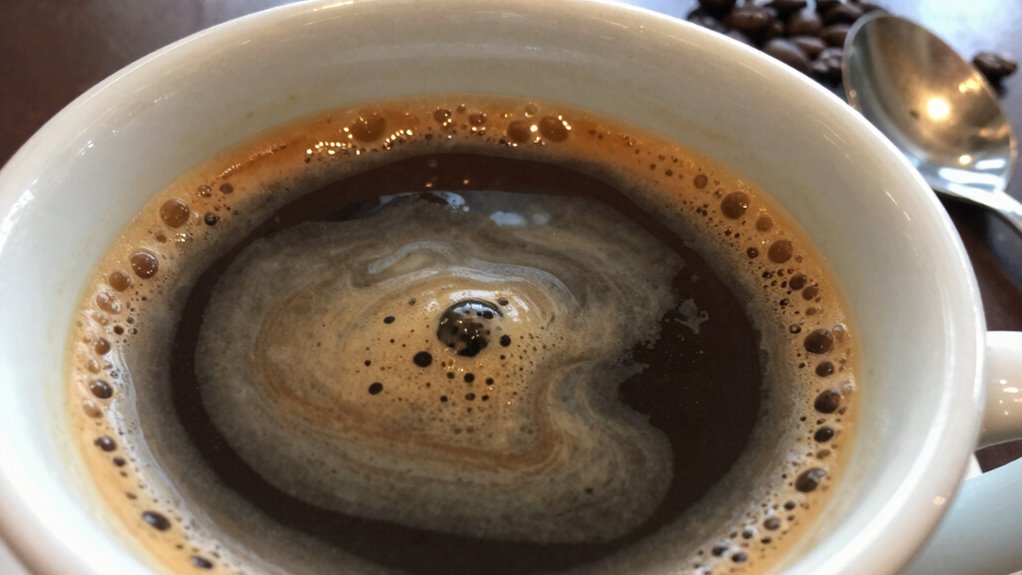
Many people assume dark roast coffee has less caffeine than lighter roasts, but is that actually true? The answer isn’t straightforward. While dark roasts often have bolder flavor profiles, their caffeine content can be similar to lighter roasts. Factors like brewing techniques, grind size, and extraction influence caffeine levels more than roast color. Your brewing method, whether using a French press or pour-over, can extract different amounts of caffeine regardless of roast. To better understand, here’s a quick comparison:
| Roast Level | Flavor Profile | Caffeine Content |
|---|---|---|
| Light Roast | Bright, fruity, complex | Slightly higher |
| Medium Roast | Balanced, nuanced | Similar to light |
| Dark Roast | Bold, smoky | Slightly lower, but not always |
Additionally, recent studies show that roast level has a minimal impact on caffeine content compared to other factors. Understanding the chemical composition of coffee beans helps clarify why caffeine levels remain relatively consistent across different roasts. This is because the bean structure and caffeine’s chemical stability mean that roasting process has limited effect on caffeine levels. Furthermore, caffeine stability during roasting contributes to the consistency in caffeine content regardless of roast darkness.
It’s also important to consider that brewing time and temperature play significant roles in how much caffeine is ultimately extracted from the beans.
Debunking Common Myths About Dark Roast and Caffeine

Despite common beliefs, dark roast coffee doesn’t necessarily contain less caffeine than lighter roasts. Many assume the intense flavor profile and bold aroma intensity mean more caffeine, but that’s not accurate. The myth persists because dark roasts often taste stronger and have a more robust aroma, which can mislead you into thinking they’re more caffeinated. In reality, caffeine content remains quite similar across roast levels. Here are some myths to debunk:
- Dark roasts are always weaker because of longer roasting times
- Lighter roasts have more caffeine due to their brighter flavor profile
- Aroma intensity indicates caffeine levels
- The darker the roast, the less caffeine it contains
Understanding that caffeine stability remains relatively stable helps you make informed choices, regardless of roast darkness. Additionally, factors like coffee bean type and brewing method can influence caffeine levels more than roast level. Recognizing that roast level alone doesn’t determine caffeine content can help you better navigate your coffee options.
Tips to Manage Your Caffeine Intake Regardless of Roast Level

Managing your caffeine intake effectively involves being mindful of not just how much coffee you drink, but also when and how you consume it. Pay attention to flavor profiles, as lighter roasts often have brighter, more acidic notes, while darker roasts tend to have bolder, richer flavors. Understanding roasting techniques can help you choose coffee that aligns with your caffeine goals. For example, some brewing methods extract caffeine differently, regardless of roast level, so experimenting with brewing time or temperature can help control your intake. Keep track of your consumption patterns, and consider switching to decaf or lower-caffeine options when needed. Additionally, being aware of roast level differences can influence your caffeine consumption, as darker roasts are often thought to have less caffeine, though the actual amount can vary. Recognizing caffeine extraction processes can further assist in managing your intake, ensuring you enjoy your coffee responsibly without overdoing it, no matter the roast level. Staying aware of these factors allows you to enjoy coffee without overdoing it, no matter the roast level.
Frequently Asked Questions
Does Grind Size Affect Caffeine Extraction Differently for Dark and Light Roasts?
Yes, grind size affects caffeine extraction differently for dark and light roasts. When you adjust grind consistency and particle size, you influence how quickly caffeine dissolves. Dark roasts, with larger or more uneven particles, may extract caffeine faster with a coarse grind, while light roasts benefit from a finer grind to maximize extraction. Paying attention to particle size helps you control caffeine levels, regardless of roast type.
How Does Storage Time Influence Caffeine Levels in Roasted Coffee Beans?
As time gently passes, the caffeine content in roasted coffee beans stays mostly stable, but shelf stability and flavor preservation can become delicate. You might notice subtle changes in aroma and taste, yet caffeine levels remain consistent. To enjoy the freshest brew, store your beans in a cool, airtight container. This way, you maintain the vibrant flavors and guarantee your coffee’s caffeine punch stays just as lively as when you first bought it.
Are There Health Benefits Linked to Choosing Dark Roast Over Light Roast?
Choosing dark roast offers health benefits like higher antioxidant levels, which can support your immune system. Plus, the rich coffee flavor and deep roast aroma make each sip more satisfying. Dark roasts tend to be easier on your stomach and reduce acidity, helping digestion. So, if you prefer robust flavor and potential health perks, opting for dark roast could be a smart choice for your overall well-being.
Can Decaffeination Processes Alter the Caffeine Content in Dark Roasts?
Decaffeination processes can slightly alter the caffeine content in dark roasts. For example, a coffee shop might notice that a decaffeinated dark roast has marginally less caffeine than a regular one, despite their similar flavor profiles. Since roasting duration influences flavor complexity, it doesn’t considerably impact caffeine levels. Instead, decaffeination methods like Swiss Water or CO2 extraction primarily reduce caffeine, so expect minor differences in caffeine content after decaffeination.
What Is the Impact of Brewing Temperature on Caffeine Extraction Across Roasts?
Brewing temperature considerably impacts caffeine extraction, affecting the flavor profile and aroma intensity of your coffee. Higher temperatures tend to extract more caffeine, enhancing the overall aroma and delivering a bolder flavor. Conversely, lower temperatures extract less caffeine, resulting in a milder taste and subdued aroma. You can control these qualities by adjusting your brewing temperature, which directly influences how much caffeine, flavor, and aroma you enjoy in each cup.
Conclusion
So, don’t assume dark roasts are less caffeinated—they often have similar or even slightly more caffeine than light roasts. Remember, brewing method and bean density play key roles in caffeine extraction. Surprisingly, a study found that light roasts can contain up to 12% more caffeine by volume, but taste and personal preference should guide your choice. Ultimately, enjoy your coffee how you like it, knowing caffeine levels are more nuanced than roast color alone.
Fall Picks
fall essentials
As an affiliate, we earn on qualifying purchases.