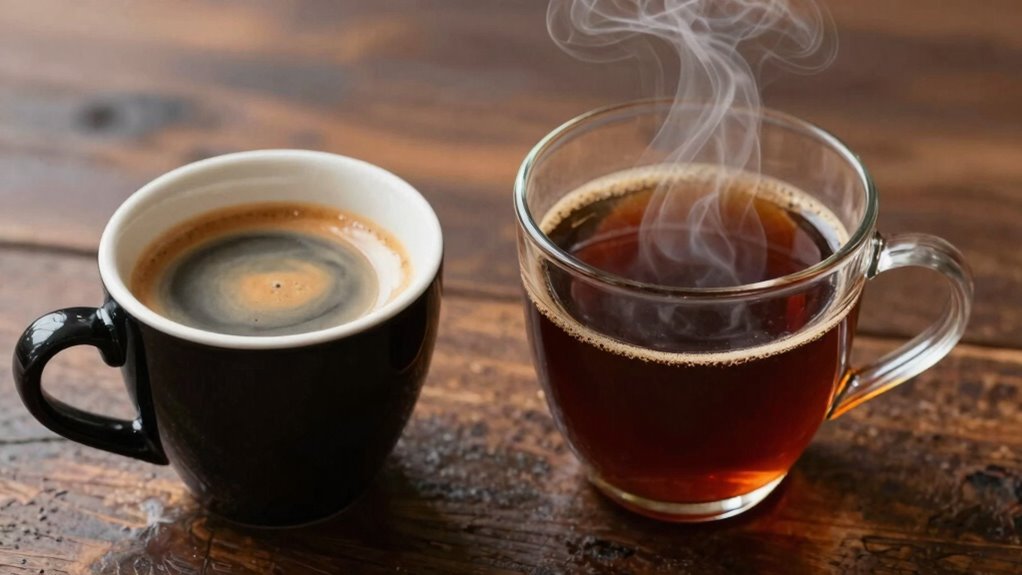
Espresso contains about 63 mg of caffeine per shot, making it a quick, concentrated energy boost. In contrast, an 8-ounce cup of drip coffee has roughly 95 mg of caffeine, thanks to its larger volume and milder taste. The actual caffeine level depends on factors like bean type, roast, brewing method, and serving size. If you’re curious about how these variables affect caffeine and want tips on managing your intake, keep exploring further.

Get coffee and tea gear delivered free — and shop member deals
- Fast, free delivery on millions of items
- Access to Prime Big Deal Days deals on October 6–7
- Prime Video, Amazon Music and more included
Key Takeaways
- Espresso contains about 63 mg of caffeine per shot, while an 8-ounce drip coffee has approximately 95 mg.
- Espresso offers a high caffeine concentration in a small volume, providing a quick energy boost.
- Drip coffee generally delivers more caffeine per serving due to larger portion sizes.
- Brewing methods and grind size influence caffeine extraction and levels in both drinks.
- Bean type and roast level also affect caffeine content, with Robusta beans typically higher in caffeine than Arabica.
As an affiliate, we earn on qualifying purchases.
Why Caffeine Content Matters When Choosing Coffee
Caffeine content plays a crucial role in how you choose your coffee, especially if you rely on it for a morning boost or to stay alert throughout the day. Your decision can be influenced by flavor profiles, which vary between brewing methods, and the cultural significance behind each type. For example, some cultures cherish the strong, bold taste of espresso, while others prefer the milder, smoother flavor of drip coffee. Knowing the caffeine levels helps you match your energy needs with your taste preferences. It also deepens your appreciation of coffee’s cultural roots, whether it’s an Italian espresso shot or a leisurely American drip. Additionally, understanding the variety of brewing methods can help you select the right coffee to suit your caffeine and flavor preferences. Recognizing the impact of sustainable coffee practices can also guide you in making environmentally responsible choices. For instance, choosing coffee from farms that prioritize ethical sourcing ensures a more sustainable and socially responsible coffee experience. Being aware of caffeine variability across different brewing techniques allows you to tailor your coffee choices more precisely. Moreover, understanding how roasting levels influence caffeine content can further refine your selection. Ultimately, understanding caffeine content helps you select the right brew to energize your day and enjoy its unique cultural significance.
As an affiliate, we earn on qualifying purchases.
How Do Espresso and Drip Coffee Differ in Caffeine Content
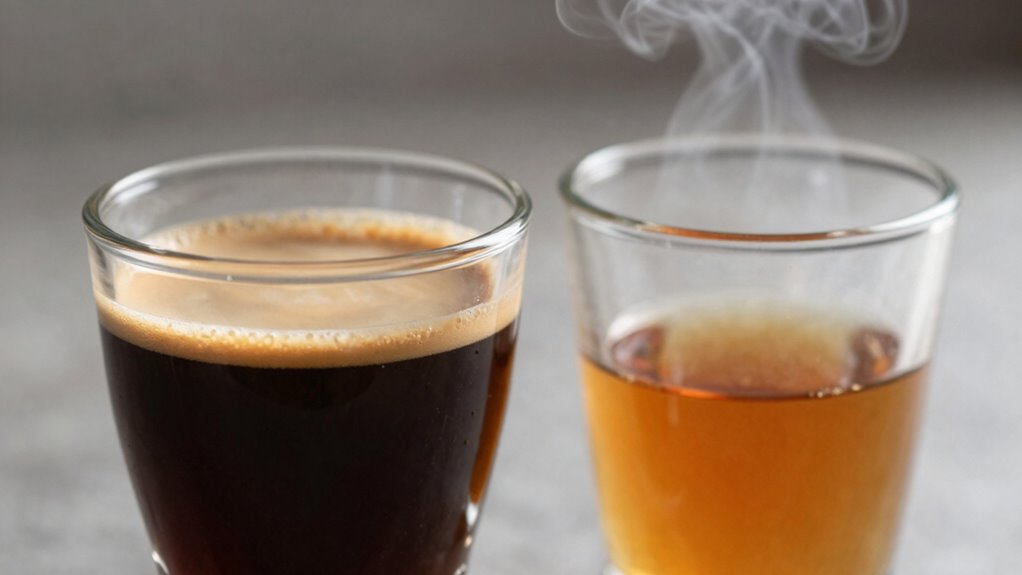
While espresso and drip coffee both contain caffeine, they differ considerably in how much caffeine is present per serving. Espresso is brewed quickly with high pressure, producing a concentrated shot with a bold flavor profile. Because of its brewing technique, a single shot usually has about 63 milligrams of caffeine. In contrast, drip coffee uses a slower brewing process, resulting in a milder flavor profile but often a larger volume. An 8-ounce cup of drip coffee typically contains around 95 milligrams of caffeine or more, depending on the beans and brewing strength. So, while espresso offers a potent caffeine punch in a small amount, drip coffee provides more caffeine per serving due to its larger size, even with a milder flavor profile. Brewing techniques play a significant role in determining the caffeine content of each type of coffee, and serving size can greatly influence the overall caffeine intake. Additionally, factors like coffee bean variety can also impact the caffeine levels in each brew. The roast level can also affect the caffeine content, with lighter roasts generally having slightly more caffeine than darker roasts.
coffee bean grinder for espresso
As an affiliate, we earn on qualifying purchases.
As an affiliate, we earn on qualifying purchases.
What Factors Influence Caffeine Levels in Coffee
Your choice of coffee bean type and brewing method directly impacts the caffeine content in your cup. Different beans have varying caffeine levels, and brewing techniques can extract more or less caffeine. Understanding these factors helps you control how much caffeine you get with each brew. Additionally, regional coffee traditions can influence how coffee is prepared and its resulting caffeine strength. Factors like bean origin and traditional preparation methods also play a role in determining caffeine content. Recognizing the impact of brewing time can further help you customize your caffeine intake. Variations in water temperature during brewing can also significantly alter caffeine extraction, allowing for further customization based on personal preference.
Coffee Bean Type
The type of coffee bean you choose plays a crucial role in determining caffeine content. Different coffee plants produce beans with varying caffeine levels, influenced by their species and growing conditions. For example, Arabica beans generally have less caffeine than Robusta beans. The bean processing method also impacts caffeine retention, affecting the final caffeine content. Here’s a quick overview:
| Bean Type | Coffee Plant | Typical Caffeine Content |
|---|---|---|
| Arabica | Higher altitudes | Lower (around 1.2%) |
| Robusta | Lower altitudes | Higher (around 2.2%) |
| Liberica | Unique species | Moderate |
| Excelsa | Rare variety | Varies |
Choosing the right bean type and understanding bean processing can considerably influence your caffeine intake. Additionally, bean processing methods can further alter caffeine levels in the final product. Recognizing the species of coffee plant can help consumers select coffees that align with their caffeine preferences. Being aware of how growing conditions affect caffeine content can also be beneficial for those seeking specific caffeine levels. Furthermore, factors like harvesting techniques can also impact caffeine retention during production. The climate in which the coffee is grown can significantly influence the plant’s caffeine synthesis.
Brewing Method Variations
Brewing method considerably influences the caffeine content in your coffee, as different techniques extract caffeine at varying rates. Your choice of brewing equipment and method impacts flavor profiles and caffeine levels. For example:
- French press uses coarse grounds and longer steeping, resulting in a rich, full-bodied cup with higher caffeine extraction.
- Espresso machines force hot water through finely ground coffee quickly, delivering a concentrated shot with intense caffeine per ounce.
- Pour-over allows precise control, producing a clean, nuanced coffee where caffeine extraction depends on grind size and brew time.
- Drip coffee makers use medium grounds and consistent brewing times, generally yielding a balanced caffeine content.
Your brewing method shapes both flavor and caffeine, making it essential to choose the right equipment and technique. Additionally, extraction process significantly influences how much caffeine is pulled from the coffee grounds during brewing.
As an affiliate, we earn on qualifying purchases.
How Much Caffeine Is in a Single Espresso Shot?
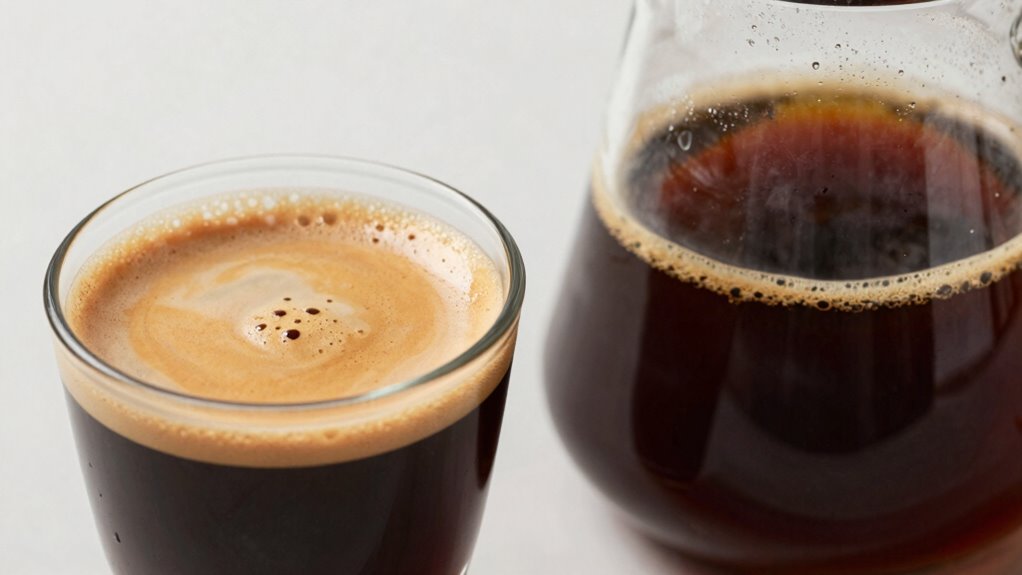
A single shot of espresso typically contains about 63 milligrams of caffeine, though this amount can vary based on factors like bean type, roast level, and extraction method. When you consider coffee flavor, this variation influences the caffeine content, as darker roasts generally have slightly less caffeine than lighter ones. Brewing techniques also play a role; a well-extracted shot guarantees you get the right balance of flavor and caffeine. The pressure and duration of extraction affect how much caffeine ends up in your cup. If you prefer a bolder coffee flavor, you might opt for a longer extraction, which can increase caffeine levels. Overall, the caffeine in a single espresso shot is concentrated, making it a quick, potent caffeine boost.
Caffeine in a Standard Cup of Drip Coffee
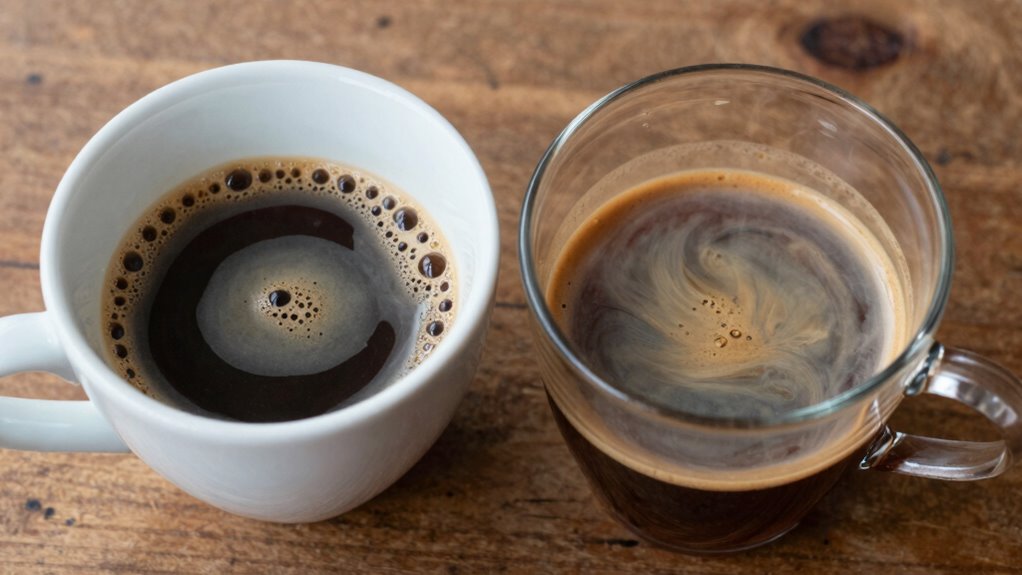
A standard cup of drip coffee typically contains around 95 milligrams of caffeine, but this amount can vary widely depending on brewing methods. Factors like grind size, water temperature, and brewing time influence how much caffeine is extracted. Knowing these variations helps you understand how your coffee’s caffeine levels can change from one cup to the next.
Typical Caffeine Content
A standard cup of drip coffee typically contains around 95 milligrams of caffeine, but this amount can vary based on factors like bean type and brewing strength. The caffeine content influences your experience of coffee flavor and overall alertness. When brewing, higher temperatures can extract more caffeine, subtly increasing its levels. To visualize, think of:
- Dark roast beans, which often have a richer coffee flavor but slightly less caffeine than lighter roasts.
- Longer brewing times, which allow more caffeine to dissolve into your cup.
- Hotter brewing temperatures, boosting extraction but risking bitterness.
- Smaller serving sizes, delivering less caffeine per cup but maintaining flavor intensity.
Understanding these factors helps you gauge the caffeine in your drip coffee, aligning it with your caffeine needs and flavor preferences. Additionally, brewing temperature plays a crucial role in caffeine extraction efficiency.
Variations in Brewing Methods
Since brewing methods greatly influence caffeine levels, understanding how variations in technique affect your cup is essential. When making drip coffee, factors like using single origin beans can impact caffeine content, as different regions produce beans with unique profiles. The roasting profile also plays a key role; lighter roasts tend to preserve more caffeine than darker roasts, which develop a richer flavor but slightly reduce caffeine. Additionally, grind size, water temperature, and brew time all affect extraction, altering caffeine levels. A finer grind and longer brew time increase extraction, resulting in a stronger, more caffeinated cup. By experimenting with these variables—such as selecting specific single origin beans or adjusting your roasting profile—you can tailor your drip coffee to match your caffeine preferences precisely.
Which Brew Delivers More Caffeine Per Serving
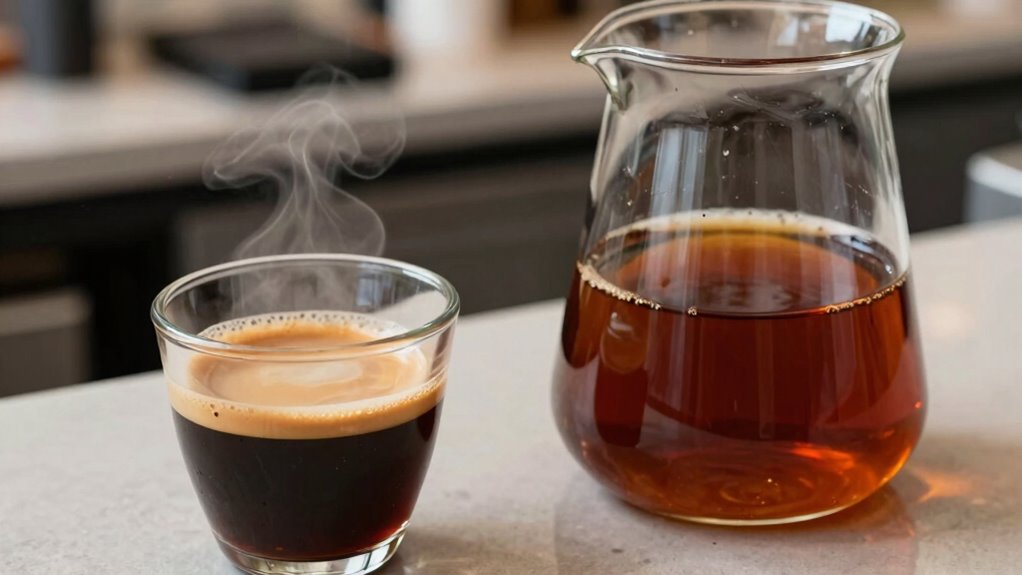
When comparing caffeine content, espresso generally delivers more caffeine per ounce than drip coffee, making it a stronger choice if you’re seeking a quick caffeine boost. The key factors influencing caffeine per serving include:
- Serving size – a typical shot of espresso is small but concentrated.
- Flavor profile – espresso’s intense taste masks its caffeine density.
- Brewing time – espresso brews quickly, extracting more caffeine in less time.
- Preparation method – high pressure in espresso machines pulls out more caffeine efficiently.
- Extraction process – the brewing method significantly impacts the caffeine levels in each beverage, with the extraction process playing a crucial role in maximizing caffeine extraction. Additionally, factors like water temperature can further influence how much caffeine is pulled from the coffee grounds. The coffee grind size also affects how much caffeine is extracted during brewing. Understanding the extraction efficiency can help optimize caffeine yield from your brew.
Tips to Manage Your Caffeine Intake Based on Your Needs

To effectively manage your caffeine intake, it’s important to understand your personal tolerance and daily needs. If you’re sensitive to caffeine, consider limiting your consumption or choosing decaffeinated options to avoid jitters or sleep issues. Pay attention to how caffeine affects your energy levels and overall well-being, and adjust accordingly. For some, spreading out caffeine throughout the day helps prevent crashes; for others, cutting back on late-afternoon or evening drinks ensures better sleep. If you’re unsure of your caffeine sensitivity, start with small amounts and track your reactions. Remember, moderation is key—balance your intake based on your lifestyle and health goals. This way, you can enjoy your coffee without overdoing it or risking unwanted side effects.
Frequently Asked Questions
How Does Brewing Time Affect Caffeine Extraction?
Longer brewing duration increases extraction efficiency, meaning more caffeine gets pulled from the coffee grounds. If you brew for just a short time, you won’t extract as much caffeine, resulting in a milder taste. Conversely, extended brewing allows for more caffeine to be dissolved into your drink. So, the longer your brewing time, the higher the caffeine content, but beware of over-extraction, which can make your coffee bitter.
Do Different Coffee Bean Types Impact Caffeine Levels?
Different coffee bean varieties considerably impact caffeine levels, with robusta beans packing nearly twice the caffeine of arabica beans. While arabica offers nuanced, sweeter flavor profiles, robusta delivers a stronger, more bitter taste. You might find that choosing a robusta blend boosts your caffeine intake, but it also alters flavor. So, your preferred bean variety shapes both your caffeine kick and the overall flavor experience.
Can Decaffeinated Coffee Still Contain Caffeine?
Yes, decaffeinated coffee can still contain caffeine because the decaffeination process rarely removes all caffeine. During decaffeination, caffeine stability varies based on the method used, such as solvent, water, or CO2 extraction. Some caffeine remains in the beans, so your coffee might have a small amount, typically 2-5 mg per cup. If you’re sensitive to caffeine, check labels or opt for brands that specify low-caffeine content.
How Does Altitude Influence Caffeine Content?
Altitude effects can slightly alter caffeine content because lower oxygen levels may influence caffeine stability during brewing. When you go higher, the reduced air pressure can cause water to boil at lower temperatures, potentially extracting less caffeine from coffee beans. So, while altitude might change brewing dynamics, it usually doesn’t cause a dramatic shift in caffeine levels. You’re safe to enjoy your brew, knowing caffeine content stays relatively steady despite the altitude.
Are There Health Risks Associated With High Caffeine Consumption?
Yes, high caffeine consumption can pose health risks. You might develop caffeine addiction, leading to dependence and withdrawal symptoms like headaches or irritability. Excessive intake can also impact heart health, increasing your heart rate or blood pressure, which raises risks for heart issues. To stay safe, limit your caffeine intake and monitor how it affects your body, especially if you have existing heart conditions or are sensitive to caffeine.
Conclusion
Ultimately, understanding the caffeine content in espresso and drip coffee helps you make smarter choices, like a navigator charting a course through a busy city. Whether you prefer the bold punch of an espresso or the steady warmth of drip coffee, knowing what fuels your day guarantees you stay alert without overdoing it. By tuning into your needs, you can enjoy your favorite brew just like a skilled artist blending colors—perfectly balanced for your unique palette.
Fall Picks
fall essentials
As an affiliate, we earn on qualifying purchases.