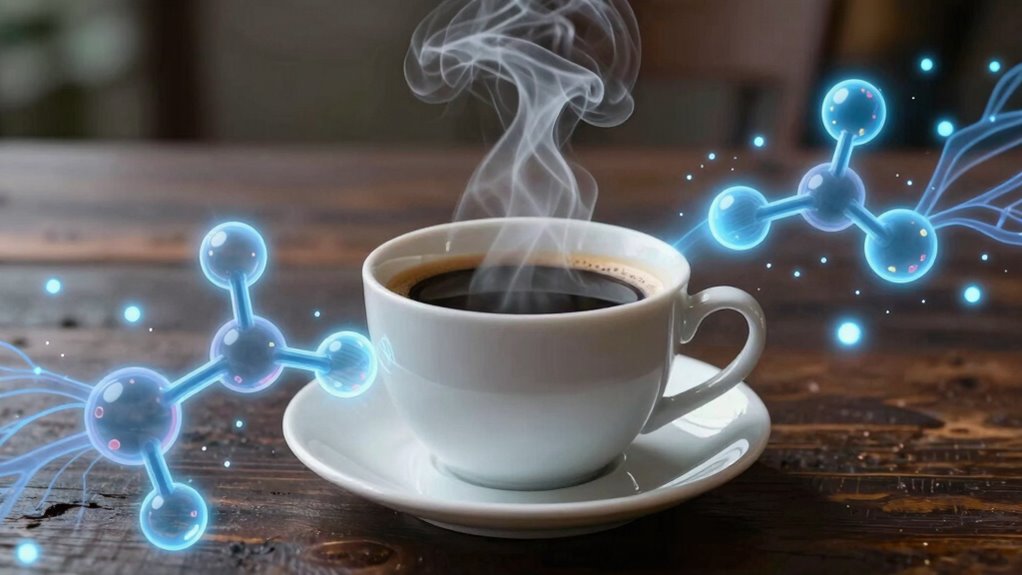

When you consume caffeine, it quickly enters your bloodstream and blocks adenosine receptors in your brain. This prevents feelings of tiredness, boosting alertness and focus by increasing neurotransmitters like dopamine and norepinephrine. Caffeine also stimulates your nervous system and releases adrenaline, making you feel more energized. It can improve physical performance but may affect your sleep and cause side effects if you have too much. To understand how you can enjoy its benefits safely, keep exploring further.

Get coffee and tea gear delivered free — and shop member deals
- Fast, free delivery on millions of items
- Access to Prime Big Deal Days deals on October 6–7
- Prime Video, Amazon Music and more included
Key Takeaways
- Caffeine blocks adenosine receptors in the brain, reducing feelings of tiredness and increasing alertness.
- It stimulates neurotransmitter release (dopamine, norepinephrine), enhancing mood, focus, and mental energy.
- Caffeine activates the nervous system, leading to increased heart rate, blood pressure, and physical readiness.
- It temporarily disrupts sleep by interfering with REM and deep sleep stages, affecting recovery.
- Caffeine boosts physical performance by improving endurance and delaying fatigue during activity.
caffeine supplement for alertness
As an affiliate, we earn on qualifying purchases.
As an affiliate, we earn on qualifying purchases.
What Happens When You Drink Caffeine?
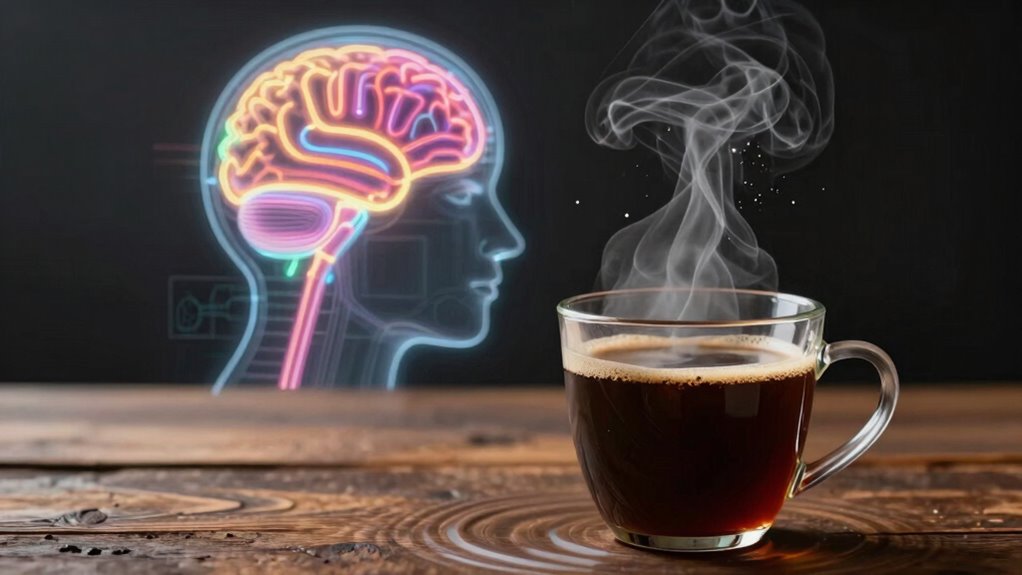
Have you ever wondered what actually happens inside your body when you take that first sip of coffee or energy drink? When you do, caffeine quickly enters your bloodstream and begins its journey through your body. Your liver starts caffeine metabolism, breaking it down into smaller compounds. Depending on your culture, consumption habits vary—some sip coffee daily, while others prefer energy drinks during long work hours. These cultural consumption patterns influence how your body processes caffeine, affecting its effects and duration. As caffeine spreads through your bloodstream, it reaches your brain, ready to influence your alertness and energy levels. Understanding this initial process helps you see how caffeine’s presence in your body is shaped by both biological mechanisms and cultural habits. Additionally, the biodiversity of plant sources used for caffeine production can impact its composition and effects on health. The biochemical pathways involved in caffeine metabolism can also vary based on individual genetic differences, further influencing how long and intensely caffeine affects you. Recognizing the cultural consumption patterns surrounding caffeine can help you make more informed choices about your intake and health. Moreover, plant biodiversity influences not only caffeine content but also the presence of other bioactive compounds that may modify its effects.
As an affiliate, we earn on qualifying purchases.
How Does Caffeine Stimulate Your Nervous System?

When you consume caffeine, it blocks adenosine receptors in your brain, preventing feelings of tiredness. This leads to an increase in neurotransmitter release, which boosts your alertness. As a result, neural activity intensifies, making you feel more awake and focused. Additionally, caffeine’s stimulation of the nervous system can enhance mental alertness, helping you stay attentive during demanding tasks. This process is similar to how home decor items can create an environment that promotes alertness and focus by reducing clutter and creating a calming atmosphere. Interestingly, caffeine’s ability to stimulate the nervous system is closely related to its action on neurotransmitters, which play a crucial role in regulating mood and cognitive function. Moreover, the impact of caffeine on neural activity illustrates its influence on overall brain function and mental performance. The way caffeine interacts with these systems highlights its powerful role in modulating brain chemistry to produce its stimulating effects.
Blocks Adenosine Receptors
Ever wonder how caffeine boosts your alertness? It works by blocking adenosine receptors in your brain. Normally, adenosine binds to these receptors, making you feel sleepy. When caffeine enters your system, it competes with adenosine, preventing it from binding. This inhibition causes increased activity of neurons and the release of stimulating neurotransmitters. However, your body’s caffeine metabolism varies, influencing how long effects last and potential adverse effects.
| Effect of Caffeine | Explanation |
|---|---|
| Increased alertness | Due to blocked adenosine receptors |
| Duration varies | Based on caffeine metabolism |
| Potential adverse effects | Jitters, anxiety, or insomnia if overused |
| Sensitivity differences | Some people experience stronger effects |
Increases Neurotransmitter Release
Caffeine stimulates your nervous system by triggering the release of key neurotransmitters such as dopamine, norepinephrine, and serotonin. This process enhances alertness and focus, making you feel more awake. When you consume caffeine, it undergoes metabolism in your liver, which influences how quickly effects set in. As caffeine blocks adenosine receptors, it prompts your body to release more neurotransmitters. This increase leads to:
- Elevated adrenaline release, boosting energy
- Increased heart rate and blood flow
- Enhanced mood and motivation
- Improved cognitive functioning
- Heightened alertness and reduced perception of fatigue
All these effects work together to stimulate your nervous system, helping you stay alert and responsive throughout the day. Your caffeine metabolism rate determines how long these effects last.
Enhances Neural Activity
Have you ever wondered how caffeine quickly ramps up your brain’s activity? It all starts with caffeine metabolism, which varies from person to person due to genetic variations. When you drink coffee, caffeine enters your bloodstream and crosses the blood-brain barrier, stimulating your nervous system. It blocks adenosine receptors, which normally promote relaxation and sleepiness. By doing so, caffeine enhances neural activity, making you feel more alert and focused. Your genetic makeup influences how efficiently your body metabolizes caffeine, affecting how strongly and how long its effects last. Faster caffeine metabolism means shorter, milder stimulation, while slower metabolism can intensify and prolong the alertness boost. This genetic variation explains why caffeine affects people differently, even when they consume the same amount. Genetic differences also impact the body’s ability to process caffeine, influencing individual sensitivity and response duration. Understanding metabolic rate helps explain why some people experience jitters or anxiety from caffeine while others do not. Additionally, individual genetic makeup plays a crucial role in determining overall caffeine sensitivity and side effects. Furthermore, caffeine metabolism is influenced by several factors, including age, liver health, and lifestyle habits. A person’s genetic makeup can determine how quickly they clear caffeine from their system, impacting how long they stay alert.
energy drinks with natural caffeine
As an affiliate, we earn on qualifying purchases.
As an affiliate, we earn on qualifying purchases.
How Quickly Does Caffeine Kick In?

You’ll start feeling caffeine’s effects within about 15 to 45 minutes after drinking it. However, how quickly it hits you depends on factors like your metabolism, whether you’ve eaten, and the type of beverage you choose. Understanding these elements can help you better predict when you’ll experience that boost of energy.
Timeframe for Effects
Ever wonder how quickly caffeine starts to work after you sip your coffee? It typically takes about 15 to 45 minutes for you to feel its effects, but this can vary widely. Your caffeine metabolism, influenced by genetic variability, plays a key role in how fast it kicks in. Some people metabolize caffeine quickly, feeling alert almost immediately, while others experience a delayed response. The metabolism rate significantly impacts how swiftly caffeine affects you. Additionally, understanding regional culture and how it influences consumption patterns can provide insights into typical caffeine effects across different populations. Factors like local dietary habits can also alter how your body processes caffeine. Recognizing your individual response can help tailor your intake for optimal alertness and avoid unwanted side effects. Being aware of how genetic factors influence caffeine metabolism can further help you personalize your caffeine consumption effectively.
Factors Influencing Speed
Several factors determine how quickly caffeine begins to affect you after drinking it. Your caffeine metabolism plays a key role; some people process caffeine faster than others, leading to quicker or delayed effects. Genetic factors influence your body’s ability to break down caffeine, meaning your genes can make you more or less sensitive to its effects. If you have a rapid caffeine metabolism, you’ll likely feel the boost sooner and for a shorter duration. Conversely, slower metabolism prolongs caffeine’s impact. Other factors like your body weight, age, and whether you’ve eaten recently also matter. Additionally, air quality can influence how your body absorbs and reacts to substances like caffeine, as poor indoor air quality may affect overall metabolism and sensitivity. Understanding your metabolic rate can help you better anticipate how caffeine will affect you personally. For example, metabolic health can significantly alter your response to caffeine, making it important to consider your overall health when evaluating its effects. Moreover, your lifestyle habits can also influence how quickly caffeine takes effect and how long its benefits last. Factors such as hydration levels may also play a role in how your body processes caffeine. Overall, these elements combine to determine the speed at which caffeine hits your system, so your experience might differ from someone else’s.
As an affiliate, we earn on qualifying purchases.
What Are the Immediate Effects of Caffeine on Alertness and Energy?

When caffeine enters your bloodstream, it quickly begins to block the action of adenosine, a neurotransmitter that promotes relaxation and sleepiness. This leads to an immediate boost in alertness and energy. You may notice increased focus, faster reaction times, and a sense of wakefulness. Caffeine’s effects can vary depending on your caffeine metabolism, but generally, it peaks within 30 to 60 minutes. It also stimulates adrenaline release, making you feel more awake. However, these effects are temporary; after a few hours, they fade. If you consume caffeine regularly, long-term effects can develop, but for now, expect a quick lift in your mental clarity and energy levels. Keep in mind, moderation helps avoid jitteriness or crashes. Understanding caffeine’s effects on the body can help you make informed choices about intake.
How Does Caffeine Influence Your Brain Chemistry?
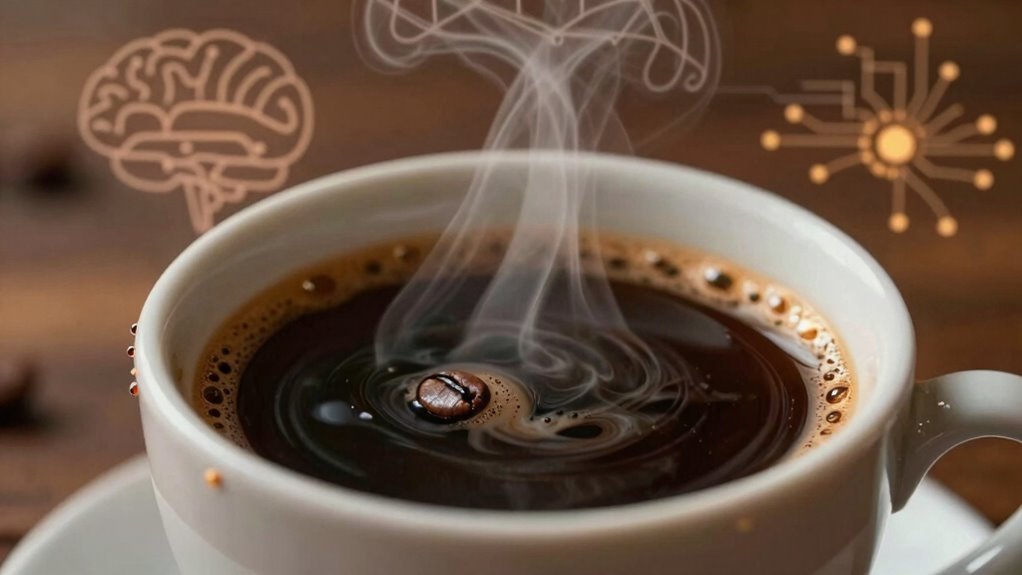
Caffeine mainly works by blocking adenosine receptors in your brain, which normally promote relaxation and sleepiness. This blockage leads to an increase in the release of neurotransmitters like dopamine and norepinephrine, boosting your alertness. As a result, your brain chemistry shifts to make you feel more awake and focused.
Adenosine Receptor Blockade
Adenosine is a naturally occurring neurotransmitter in your brain that promotes relaxation and signals your body to rest. When you consume caffeine, it acts as an adenosine receptor antagonist, blocking these receptors and preventing adenosine from binding. This process influences your brain chemistry by:
- Increasing alertness and reducing fatigue
- Interfering with sleep patterns
- Stimulating the central nervous system
- Modulating caffeine metabolism rates
- Enhancing the release of other neurotransmitters like dopamine
Because of adenosine receptor antagonism, you feel more awake and less tired. Your body processes caffeine through metabolism, which affects how long these effects last. This blockade explains why caffeine helps you stay alert but can also lead to dependence or jitters if overused.
Neurotransmitter Release Effects
By blocking adenosine receptors, caffeine prompts your brain to release more neurotransmitters like dopamine and norepinephrine. This increase enhances alertness, focus, and mood. Over time, your brain adapts, leading to caffeine tolerance, which means you need more to achieve the same effects. When you stop consuming caffeine, withdrawal symptoms such as headaches, fatigue, and irritability may occur as your neurotransmitter levels adjust. The table below summarizes key effects:
| Effect | Description |
|---|---|
| Increased alertness | Boosts focus and reduces perceived fatigue |
| Mood enhancement | Elevates dopamine, improving mood temporarily |
| Tolerance development | Reduced sensitivity with regular intake |
| Withdrawal symptoms | Headaches, drowsiness, irritability when stopping |
| Receptor adaptation | Brain adjusts receptor sensitivity over time |
How Caffeine Affects Your Heart Rate and Blood Pressure?

When you consume caffeine, it quickly stimulates your nervous system, leading to noticeable changes in your heart rate and blood pressure. This effect depends on your caffeine metabolism, which varies from person to person. You might experience a temporary increase in heart rate, sometimes feeling heart palpitations. Your blood pressure can also rise, especially if you’re sensitive or consume large amounts. Keep in mind:
Caffeine quickly stimulates your nervous system, raising heart rate and blood pressure depending on your metabolism and sensitivity.
- Caffeine blocks adenosine, increasing alertness
- Heart rate may spike briefly
- Blood pressure tends to elevate
- Sensitivity varies based on metabolism
- Excessive intake can cause heart palpitations
These responses are generally safe for most, but if you have heart conditions, you should monitor how caffeine affects you. Your body’s response hinges on how quickly you metabolize caffeine and your overall health.
How Does Caffeine Impact Your Sleep and Recovery?

Caffeine’s stimulating effects on your nervous system don’t just influence your heart—they also considerably impact your sleep and recovery. When you consume caffeine, your body begins Caffeine metabolism, which can take several hours. During this process, caffeine stays active in your system, making it harder to fall asleep or stay asleep, leading to sleep disruption. Even if you don’t feel alert, caffeine can interfere with the quality of your rest by reducing REM sleep and deep sleep stages. This hampers your body’s ability to recover fully overnight. The timing of your caffeine intake matters—a late afternoon or evening coffee can linger in your system, delaying recovery and leaving you feeling less refreshed the next day.
Can Caffeine Improve Your Physical Performance?

Caffeine can boost your physical performance by increasing alertness and reducing perceived effort during exercise. It helps you push harder and longer by stimulating your central nervous system. However, consider how caffeine and hydration interact; drinking caffeinated beverages like coffee, tea, or energy drinks can contribute to fluid intake but may also have diuretic effects. The type of caffeine in different beverages varies in absorption and strength, impacting your performance differently. To maximize benefits, opt for moderate amounts before workouts. Keep in mind:
- Caffeine improves endurance and focus
- It may delay fatigue
- It enhances muscle contraction efficiency
- Hydration levels influence performance
- Different beverages contain varying caffeine amounts
What Are the Risks and Side Effects of Drinking Too Much Caffeine?

Consuming too much caffeine can lead to a range of side effects that may harm your health. When your body struggles to process caffeine efficiently, it can cause jitteriness, anxiety, and sleep disturbances. Over time, high intake increases dependency risks, making it harder to function without your daily dose. Your caffeine metabolism varies, so what’s safe for one person might be harmful to another.
| Caffeine Effects | Description |
|---|---|
| Jitters | Feeling nervous or shaky |
| Insomnia | Difficulty falling asleep |
| Dependency | Craving caffeine regularly |
| Heart Issues | Elevated heart rate or palpitations |
Be mindful of your limits to avoid these risks.
How Can You Manage Caffeine Intake for Better Health?
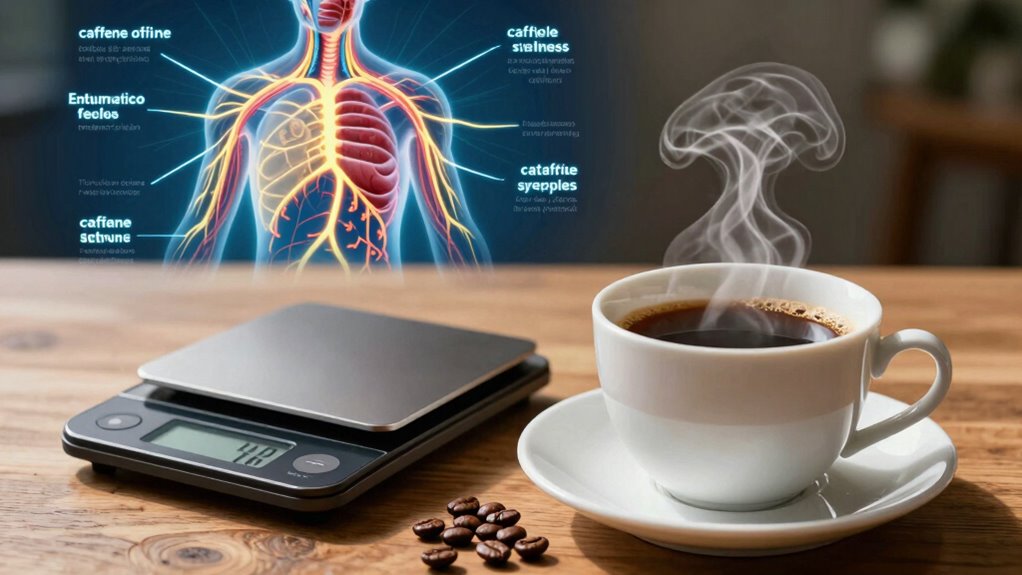
Managing your caffeine intake can help you enjoy its benefits without risking side effects. Understanding your caffeine metabolism is key—everyone processes caffeine differently, so adjust your consumption based on how your body reacts. To better manage intake, consider limiting consumption during late afternoons to avoid sleep disruptions. Be mindful of social caffeine consumption, like coffee breaks or energy drinks, which can add up quickly. Keep track of your daily intake to prevent overdoing it. Additionally, stay hydrated and opt for caffeine sources with lower caffeine content when possible. Listening to your body’s signals and setting personal limits helps maintain energy without jitters or crashes. By controlling your caffeine habits, you support overall health and well-being.
Frequently Asked Questions
Does Caffeine Have Any Long-Term Health Effects?
Yes, caffeine can have long-term health effects. It may impact your metabolic rate, potentially aiding weight management, but excessive intake could lead to metabolic disruption. Additionally, caffeine can cause sleep disruption, especially if you consume it late in the day, which over time might affect your overall health. Moderation is key to enjoying caffeine’s benefits while minimizing risks related to sleep and metabolism.
Can Caffeine Dependency Develop Over Time?
Yes, caffeine dependency can develop over time as your tolerance buildup increases, making you need more to achieve the same effects. You might also experience withdrawal symptoms like headaches, irritability, or fatigue if you suddenly stop consuming caffeine. These signs show your body has become accustomed to caffeine, highlighting the importance of moderating your intake to prevent dependence and manage withdrawal symptoms effectively.
How Does Caffeine Affect Different Age Groups?
Surprisingly, caffeine’s effects vary by age, thanks to age-specific metabolism and developmental sensitivity. While adults often enjoy alertness boosts, kids and teens might experience heightened anxiety or sleep issues because their bodies process caffeine differently. Seniors, with slower metabolism, could find even small amounts disrupting sleep or causing heart palpitations. So, your age truly dictates how caffeine hits, making it a surprisingly tailored stimulant across life stages.
Is Decaffeinated Coffee Completely Caffeine-Free?
Decaffeinated coffee isn’t completely caffeine-free, but it contains considerably less caffeine. During caffeine removal, most of the caffeine gets extracted, offering decaffeinated benefits like reduced jitters and better sleep for sensitive individuals. However, small amounts of caffeine remain, typically between 2 to 15 milligrams per cup. If you’re highly sensitive or need zero caffeine, it’s best to check the label or opt for herbal teas instead.
Can Caffeine Help With Mental Health Conditions?
Caffeine can temporarily boost your mood and may help reduce feelings of anxiety, but it’s not a cure for mental health conditions. When you consume caffeine, it stimulates your central nervous system, leading to increased alertness and a sense of well-being. However, too much can cause jitteriness or worsen anxiety. Use caffeine mindfully, and always consult a healthcare professional for ongoing mental health concerns.
Conclusion
Think of caffeine as a gentle breeze that stirs your mental garden, awakening your senses and sharpening your focus. While it can lift you over the clouds of fatigue, too much might cast shadows on your restful nights. By tuning into your body’s rhythm and savoring your coffee with care, you can enjoy its invigorating whisper without letting it drown out your natural harmony. Balance is your best brew for a vibrant, healthy you.
Fall Picks
fall essentials
As an affiliate, we earn on qualifying purchases.