You might worry that coffee will dehydrate you, but moderate intake doesn’t cause significant dehydration. Studies show your body adapts quickly, and coffee actually counts toward your daily fluid intake. While caffeine can temporarily increase urine output, it’s unlikely to lead to long-term dehydration if you drink enough water overall. To stay properly hydrated, balance your coffee with plenty of water and pay attention to your body’s signals—more details ahead can help you enjoy coffee responsibly.

Get coffee and tea gear delivered free — and shop member deals
- Fast, free delivery on millions of items
- Access to Prime Big Deal Days deals on October 6–7
- Prime Video, Amazon Music and more included
Key Takeaways
- Moderate coffee consumption (up to 3-4 cups daily) generally does not cause dehydration.
- Coffee’s diuretic effect diminishes over time with regular intake, reducing dehydration risk.
- Drinking water alongside coffee helps offset any potential diuretic effects.
- The caffeine content varies by brewing method, influencing its impact on hydration.
- Recognizing dehydration signs and balancing coffee with proper hydration supports overall health.
As an affiliate, we earn on qualifying purchases.
Does Coffee Dehydrate You? The Truth About Diuretic Effects
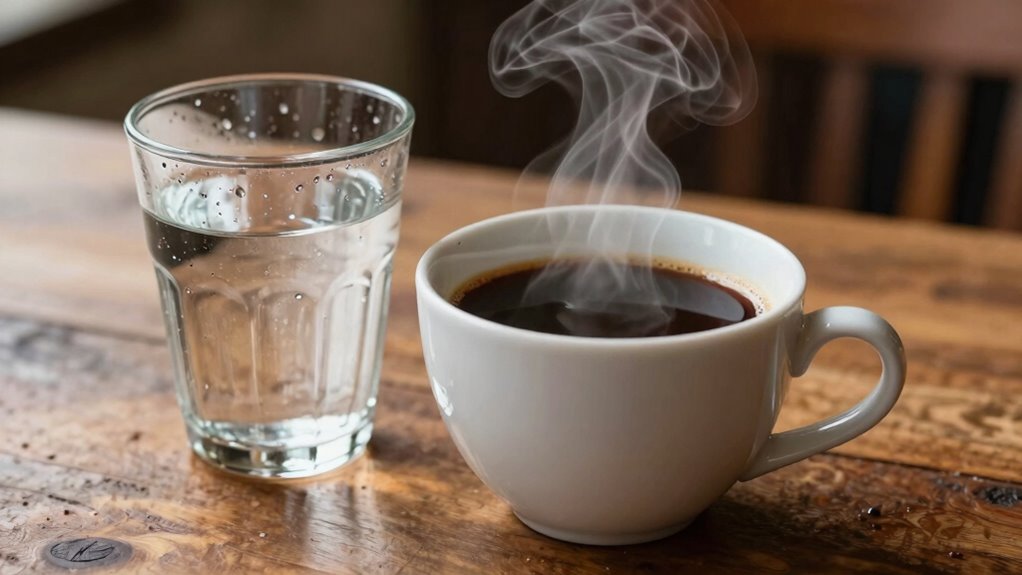
Many people assume that drinking coffee leads to dehydration because it’s a diuretic, but the truth isn’t so simple. The hydration myths surrounding coffee often exaggerate its dehydrating effects. While caffeine does promote urine production, moderate coffee consumption doesn’t substantially dehydrate you, especially if you stay hydrated with water throughout the day. If you’re looking for coffee alternatives, herbal teas or flavored water can keep you refreshed without fueling dehydration concerns. Your body adapts to caffeine’s effects, so occasional cups won’t drain your fluids. Additionally, incorporating sustainable living practices into your routine can help you make more environmentally conscious beverage choices. Understanding the real effects of caffeine helps you enjoy your favorite drink without worrying about dehydration, dispelling common hydration myths. Recognizing that hydration balance is key allows you to enjoy coffee responsibly without unnecessary concern. Moreover, staying aware of your overall fluid intake helps maintain proper body hydration, regardless of your coffee consumption. Proper hydration strategies can further support your health and wellbeing while enjoying your coffee.
reusable water bottles for hydration
As an affiliate, we earn on qualifying purchases.
As an affiliate, we earn on qualifying purchases.
How Much Coffee Is Safe for Staying Hydrated? What You Need to Know

Understanding how much coffee is safe for staying hydrated depends on your individual tolerance and overall fluid intake. Generally, up to 3-4 cups daily can be safe for most people, but factors like coffee cultivation and brewing techniques influence caffeine levels. Lighter roasts and certain brewing methods, such as pour-over or espresso, extract more caffeine, which may affect hydration differently. To stay balanced, consider this guideline:
| Coffee Type | Caffeine Content (per 8 oz) |
|---|---|
| Light roast | 70-80 mg |
| Dark roast | 60-70 mg |
| Espresso | 63 mg (per shot) |
| Cold brew | 150-200 mg |
| Decaf | 2-5 mg |
Adjust based on your tolerance and fluid needs. Additionally, understanding caffeine’s diuretic effects can help you better manage hydration while enjoying coffee. Recognizing the caffeine content of different brewing methods can assist in making informed choices to maintain proper hydration levels. Being aware of how brewing techniques impact caffeine extraction can help you tailor your coffee consumption to stay well-hydrated. Moreover, individual tolerance varies widely, so paying attention to your body’s responses is essential for maintaining hydration. It’s also helpful to consider how hydration levels fluctuate based on other liquid intake throughout the day.
As an affiliate, we earn on qualifying purchases.
Can Coffee Really Dehydrate You? Busting Common Myths

Despite common beliefs, coffee doesn’t necessarily dehydrate you. The idea that coffee’s diuretic effect leads to significant dehydration is a myth. When you brew coffee, caffeine acts as a mild diuretic, but your body quickly adapts through caffeine metabolism, reducing this effect over time. In fact, many studies show that moderate coffee consumption contributes to your daily fluid intake. Your kidneys become efficient at processing caffeine, so the fluid you consume from coffee mostly stays in your system. While excess caffeine can increase urine production temporarily, it doesn’t cause long-term dehydration for most people. Modern research in cybersecurity and encryption has shown that understanding such misconceptions is crucial in debunking myths and promoting accurate information. Additionally, hydration myths can often lead people to unnecessarily limit other fluid sources, which isn’t necessary if coffee is consumed in moderation. Recognizing the scientific evidence behind hydration helps clarify that moderate coffee intake does not lead to dehydration. So, enjoying your coffee in moderation isn’t going to dehydrate you—it’s a myth that’s been debunked by science.
As an affiliate, we earn on qualifying purchases.
What Factors Influence How Coffee Affects Your Hydration

While moderate coffee consumption generally won’t lead to dehydration, several factors can influence how your body responds to caffeine. The way you brew your coffee affects its caffeine content—stronger brewing methods like espresso deliver more caffeine per serving, potentially impacting hydration more. Additionally, your caffeine metabolism plays a vital role; some people process caffeine quickly, reducing its diuretic effects, while others metabolize it slowly, making dehydration more likely. Your body’s sensitivity to caffeine, influenced by genetics, age, and health status, also matters. If you consume coffee alongside plenty of water, it can offset potential dehydration effects. Understanding the caffeine content of your coffee and how your body processes it helps you gauge how coffee impacts your hydration levels. Interestingly, regional coffee traditions and brewing methods can also influence the overall caffeine intake and its effects on your hydration. Moreover, staying aware of your individual hydration needs can help prevent dehydration regardless of coffee consumption. Being mindful of your body’s response to caffeine can further help you manage hydration effectively. Additionally, factors like caffeine absorption rates can significantly influence how quickly and intensely coffee affects hydration.
How Can You Tell If You’re Dehydrated Even If You Drink Coffee?

Even if you drink coffee regularly, signs of dehydration can still show up. Look out for symptoms like dry mouth, dark urine, dizziness, or fatigue. These hydration indicators suggest your electrolyte balance might be off, even if you’re consuming fluids. To better understand your hydration status, compare these signs with your fluid intake and physical feelings. Staying aware of animal welfare practices can also help you maintain overall health and hydration. Monitoring these signs helps you recognize dehydration, regardless of coffee consumption. Additionally, paying attention to body hydration cues can provide more insight into your hydration levels and help prevent dehydration. Recognizing how hydration status influences your well-being is essential for maintaining optimal health. Being mindful of how fluid balance affects your body can further aid in preventing dehydration. Understanding your body’s natural hydration signals can also support timely rehydration efforts.
Tips for Enjoying Coffee Without Losing Too Much Water

You can enjoy your coffee without worrying about losing too much water by balancing it with proper hydration habits. Choosing high-quality coffee beans with lower caffeine content can help reduce diuretic effects. When brewing, opt for methods like pour-over or French press, which preserve more natural oils and flavors without adding extra water. Avoid overly strong or concentrated brews that might increase dehydration risk. Drinking a glass of water alongside your coffee can help maintain hydration levels. Also, pay attention to your body’s signals—if you feel thirsty, hydrate with water or electrolyte-rich drinks. Incorporating hydration habits into your routine can further support your body’s fluid balance. Additionally, being mindful of the folklore surrounding coffee consumption can help you enjoy your beverage responsibly. By selecting the right brewing methods and managing your coffee intake, you can enjoy your favorite beverage while keeping your hydration on track.
Balancing Coffee and Your Daily Fluid Intake for Better Hydration

To stay well-hydrated, you need to balance your coffee intake with enough water throughout the day. While coffee has a diuretic effect, drinking additional fluids can offset dehydration risks. Incorporate hydration tips tailored for coffee drinkers to maintain better fluid levels and support overall health.
Coffee’s Diuretic Effect
While coffee is known for its stimulating effects, it also has a diuretic property that can increase urine production. This effect varies depending on your coffee flavor and brewing methods. Lighter roasts and certain brewing techniques, like pour-over or French press, may enhance the diuretic response slightly more than darker roasts or instant coffee. However, the diuretic effect isn’t strong enough to cause dehydration if you stay mindful of your overall fluid intake. Drinking coffee in moderation, alongside plenty of water, helps balance its stimulating qualities with hydration. Remember, your body adapts to regular coffee consumption, so the diuretic effect may diminish over time. Ultimately, understanding your brew and listening to your body’s signals keeps you hydrated and alert.
Hydration Tips for Coffee Drinkers
Balancing your coffee intake with proper hydration can enhance your overall well-being. To do this, drink water regularly throughout the day, especially if you consume coffee. Many hydration myths suggest coffee dehydrates you entirely, but moderate consumption isn’t risky if you stay mindful. Here’s a simple guide:
| Coffee Intake | Water Intake | Tips |
|---|---|---|
| 1-2 cups | 1 glass | Drink water alongside coffee |
| 3-4 cups | 2 glasses | Avoid excessive caffeine |
| 5+ cups | 3+ glasses | Monitor hydration levels |
Prioritize coffee safety by not overdoing it, and remember that hydration is key to feeling your best. Proper fluid balance supports your health and dispels hydration myths.
Balancing Fluid Intake
Ever wondered how to enjoy your coffee without compromising your hydration? The key is balancing your fluid intake throughout the day. When you brew coffee, consider the bean origin, as different regions can influence caffeine levels and how your body reacts. To stay well-hydrated, drink plenty of water alongside your coffee. Aim for a mix of beverages, especially water, to offset the diuretic effects of caffeine. Pay attention to your body’s signals and adjust your fluid intake accordingly. If you notice signs of dehydration, increase your water consumption. Remember, moderation is essential—enjoy your coffee, but don’t forget to hydrate with other fluids to maintain ideal hydration levels and support your overall health.
Frequently Asked Questions
Does Decaffeinated Coffee Have the Same Dehydrating Effects as Caffeinated Coffee?
Decaffeinated coffee doesn’t have the same dehydrating effects as caffeinated coffee, so decaffeinated hydration isn’t a concern. When comparing coffee, the caffeine content influences its diuretic properties, making caffeine the key factor. In a coffee comparison, decaffeinated options provide hydration without the diuretic impact, helping you stay hydrated without risking dehydration. Consequently, decaffeinated coffee is a good choice if you want to enjoy coffee without the dehydrating effects.
Can Adding Milk or Sugar to Coffee Influence Hydration Levels?
Adding milk or sugar to your coffee can influence hydration, but not dramatically. Milk interaction adds a creamy layer that slows absorption, while sugar effects might make you feel more energized temporarily. Think of your coffee as a vessel; adding milk and sugar is like filling it with different ingredients—each alters how your body processes it, but overall, moderate additions won’t flip the hydration balance. Just watch your intake!
Are There Specific Populations More Susceptible to Coffee-Induced Dehydration?
Certain populations, like pregnant women, older adults, and those with kidney issues, are more susceptible to coffee-induced dehydration. You should be cautious, as hydration myths can lead you to underestimate coffee’s effects. By practicing coffee moderation, you help prevent dehydration risks. Staying aware of your body’s signals and balancing coffee intake with water guarantees you maintain proper hydration, especially if you’re in a vulnerable group.
How Does Coffee Consumption Affect Hydration During Exercise or Hot Weather?
You might worry that coffee will dehydrate you during exercise or hot weather, but research shows that moderate coffee absorption doesn’t upset your hydration balance. Instead, it contributes to your fluid intake. While caffeine has mild diuretic effects, they’re not strong enough to cause dehydration when you’re active or in the heat. So, enjoy your coffee, stay hydrated, and trust your body’s natural balance during those hot workouts.
What Are Signs That Coffee Is Negatively Impacting My Hydration Status?
You might notice signs like dry mouth, dark urine, or feeling unusually tired if coffee impacts your hydration. These symptoms challenge hydration myths suggesting coffee’s diuretic effects are severe, but your caffeine metabolism varies, affecting how your body processes it. If you’re dehydrated, your body signals need for more fluids. Watch for these signs, reduce intake if needed, and remember that moderate coffee consumption usually doesn’t harm hydration.
Conclusion
Remember, moderate coffee consumption can be part of your hydration routine—around 3-4 cups daily is generally safe. Interestingly, studies show that coffee contributes about 80% of your daily fluid intake, debunking the myth that it dehydrates you. So, enjoy your coffee, stay mindful of your overall water intake, and look out for signs of dehydration like dark urine or dry mouth. Balance is key to staying energized and well-hydrated!
Fall Picks
fall essentials
As an affiliate, we earn on qualifying purchases.