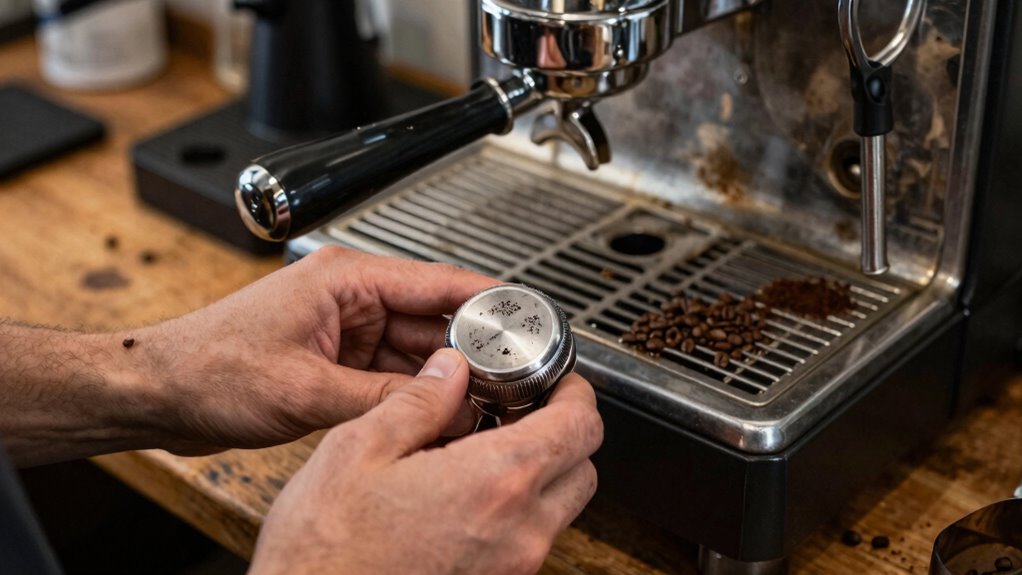

If you don’t adjust your grind properly, you risk wasting good beans through over- or under-extraction, resulting in bitter, sour, or weak coffee. Using too fine or coarse a grind impacts brew time and flavor, often causing you to toss out beans or end up with poor results. Regularly calibrate and clean your grinder to keep the grind consistent, and watch for signs like strange tastes or brewing times. Keep exploring to master avoiding these common mistakes and get the best from your beans.
Key Takeaways
- Using incorrect grind size can cause over- or under-extraction, wasting flavorful beans and producing poor-tasting coffee.
- Failing to calibrate and clean the grinder regularly leads to inconsistent grind, resulting in uneven extraction and wasted beans.
- Ignoring bean freshness and adjusting grind improperly can diminish flavor and cause unnecessary wastage.
- Not adjusting grind size for different brewing methods or roast levels results in poor extraction and wasted good beans.
- Over-tightening or misaligning burrs can damage grinder components and lead to inconsistent grinding and bean waste.

YOGOTEU Reference Cards,Stainless Steel Coffee Grind Reference Card Metal Coffee Grind Size Ruler Professional Grinder Accessories
- Material: Stainless steel for durability
- Precision: Accurate grind size measurements
- Conversion Charts: Quick brewing conversion diagrams
As an affiliate, we earn on qualifying purchases.
As an affiliate, we earn on qualifying purchases.
Why Proper Grind Adjustment Matters for Great Coffee
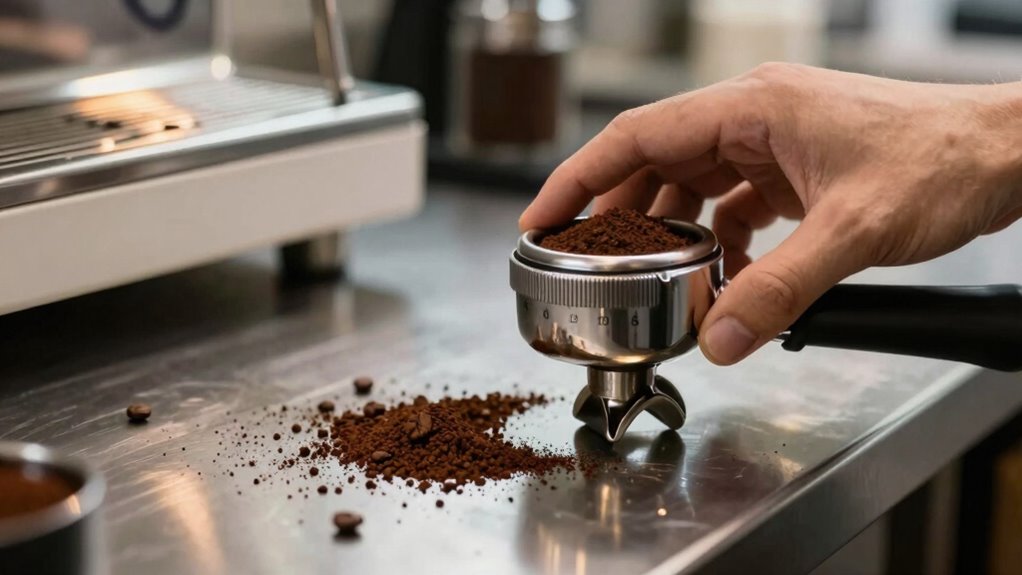
Achieving great coffee starts with the right grind size, because it directly influences how water extracts flavors from the beans. If your coffee beans aren’t fresh, a proper grind can help maximize their flavor potential. Fresh beans release more aromatic oils, making the grind’s consistency even more critical. When you choose the correct grind, water flows evenly through the grounds, extracting rich flavors without bitterness. Additionally, your grinder’s noise can give clues about its performance; loud grinding often signals an improper setting or worn blades, which can affect the grind size and consistency. Proper adjustment guarantees you get the most out of your beans, whether they’re fresh or a little older. A well-adjusted grind also ensures consistent extraction, leading to a more balanced and flavorful cup. Ultimately, a well-adjusted grind enhances flavor, aroma, and overall coffee quality.
Regularly checking your grinder’s performance can prevent common mistakes that compromise the quality of your brew.
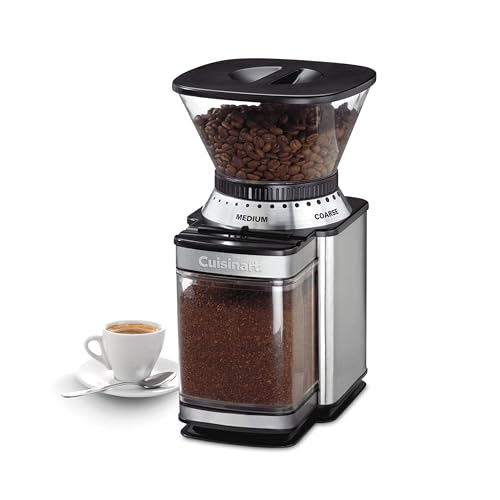
Cuisinart Electric Burr Coffee Grinder, 18-Position Selector, 4-18 Cups
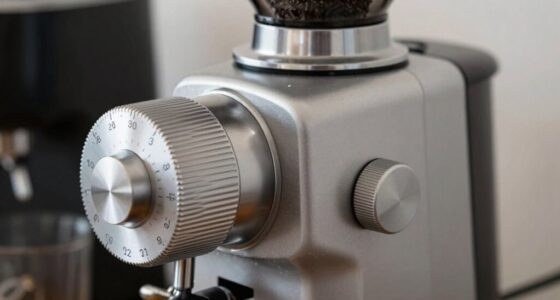
- 18-Position Grind Selector: Adjusts from ultra-fine to extra-coarse
- Removable Bean Hopper: Easily removable for cleaning and refilling
- Removable Grind Chamber: Holds grounds for 4 to 18 cups
As an affiliate, we earn on qualifying purchases.
As an affiliate, we earn on qualifying purchases.
How Grind Size Affects Coffee Extraction
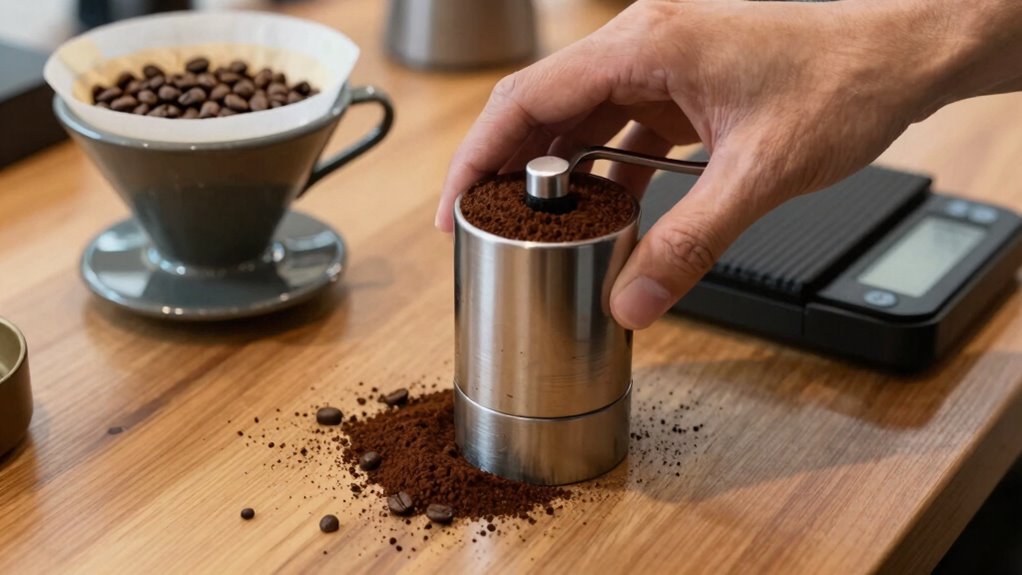
The size of your coffee grind plays a crucial role in determining how effectively water extracts flavors from the beans. A finer grind increases surface area, leading to quicker extraction and a more intense flavor profile. Conversely, a coarser grind results in slower extraction, often producing a milder taste. Adjusting grind size affects the grind texture, which directly impacts flavor development and overall brewing quality. Proper grind adjustment can help prevent common issues like over- or under-extraction, ensuring your coffee highlights the beans’ best qualities. Remember:
Finer grinds boost flavor intensity, while coarser grounds create milder, slower-extracted brews.
- Too fine a grind can cause over-extraction, making your coffee bitter.
- Too coarse a grind may lead to under-extraction, resulting in weak or sour flavors.
- Finding the right grind size guarantees ideal flavor extraction, highlighting the unique qualities of your beans. Additionally, understanding brew method compatibility can help refine your grind size choices for optimal results. Recognizing the importance of grind size consistency ensures uniform extraction and better control over your brewing process. Paying attention to grind size calibration is essential for maintaining reproducible and high-quality brews.

MIGAKU HOME Coffee Grinder Cleaning Kit – 5Pcs Large Soft Brush, Small Hard Brush, Group Head Brush, Long-reach Brush & Air Blower for Coffee & Espresso Machine Parts & Accessories
- Complete Cleaning Kit: Includes 5 brushes and air blower
- Versatile Compatibility: Suitable for coffee grinders and espresso machines
- Targeted Brush Types: Soft walnut for grounds, hard walnut for stains
As an affiliate, we earn on qualifying purchases.
As an affiliate, we earn on qualifying purchases.
How to Dial in Your Grind for Espresso and French Press
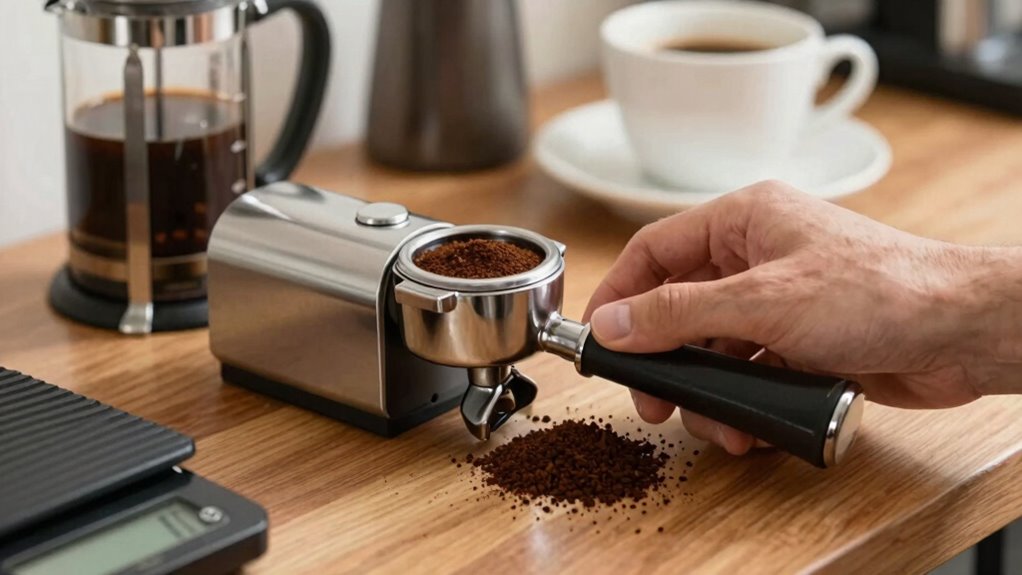
To get your espresso and French press just right, focus on adjusting your grind consistency and tuning your brew time. Small changes in grind size can notably impact extraction, so pay attention to how your coffee behaves. By fine-tuning these factors, you’ll improve flavor and avoid over- or under-extraction. Additionally, understanding brewing guides can help you better interpret how grind adjustments influence overall quality.
Adjusting Grind Consistency
- Use a high-quality grinder with precise settings
- Regularly clean your grinder to prevent clogs and buildup
- Adjust in small increments, testing after each change
- Keep track of your adjustments and results to develop a consistent routine for optimal extraction.
Tuning Brew Time
Tuning brew time begins with understanding how grind size directly impacts extraction speed. A finer grind increases surface area, making your brew faster and more intense, ideal for espresso. Conversely, a coarser grind slows extraction, perfect for French press. Coffee bean freshness also plays a role; fresher beans extract more quickly, so you might need to adjust your grind slightly coarser to prevent over-extraction. Brewing temperature influences brew time as well—higher temperatures accelerate extraction, so you may want to tweak your grind accordingly. Consistently monitor your brewing time and taste to find the sweet spot. Proper calibration ensures your coffee’s flavor isn’t compromised, saving good beans from being wasted due to over or under-extraction caused by incorrect grind size or brewing parameters. Being aware of brewing techniques can help you further refine your process for the best possible cup.
Cuisinart Coffee Grinder, Electric One-Touch Automatic Burr Coffee Grinder with 18-Position Grind Selector, Cup Size Selector for 4 – 18 Cups, DBM-8P1, Black Stainless
- 18-Position Grind Selector: Adjusts from ultra-fine to extra-coarse
- Removable Bean Hopper: Easily removable for cleaning and refilling
- Removable Grind Chamber: Holds grounds for 4 to 18 cups
As an affiliate, we earn on qualifying purchases.
As an affiliate, we earn on qualifying purchases.
How to Recognize When Your Grind Needs Adjustment
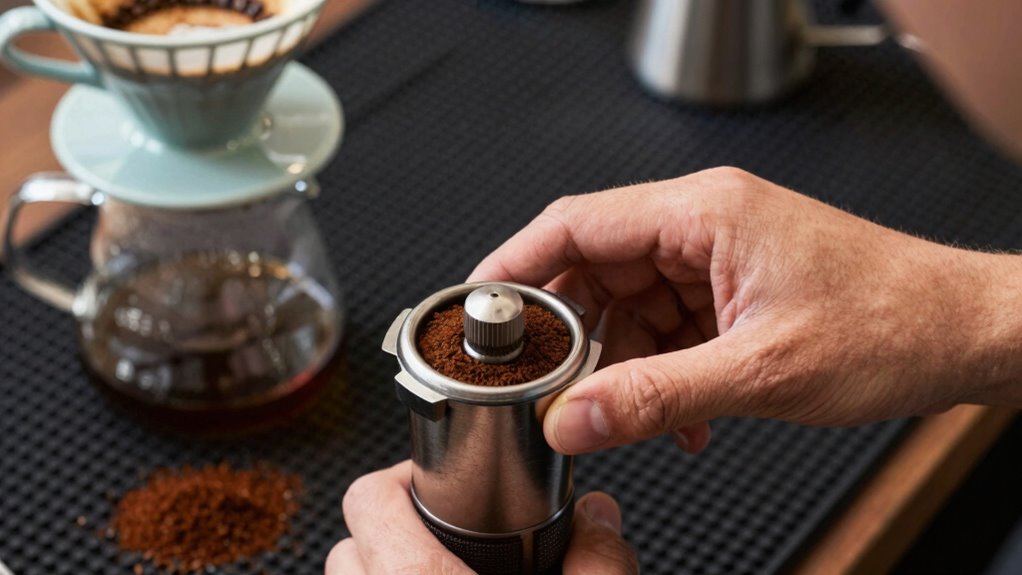
Recognizing when your grind needs adjustment is essential for consistently brewing great coffee. If your coffee tastes flat or sour, it might be too coarse, letting water flow too quickly and failing to extract flavors fully. Conversely, if it’s overly bitter or over-extracted, your grind could be too fine, causing slow flow and over-extraction. Pay attention to the overall coffee flavor; subtle off-notes often signal a need for adjustment. Also, consider bean freshness—stale beans may require a slightly different grind setting to compensate. Monitoring brewing consistency can help you fine-tune your grind for optimal results. You can identify grind issues by observing: – Unusual brewing times (too fast or too slow) – Weak or overly intense flavor – Inconsistent extraction results Adjust your grind when these signs appear to optimize flavor and preserve bean freshness.
Tips for Maintaining a Consistent Coffee Grind
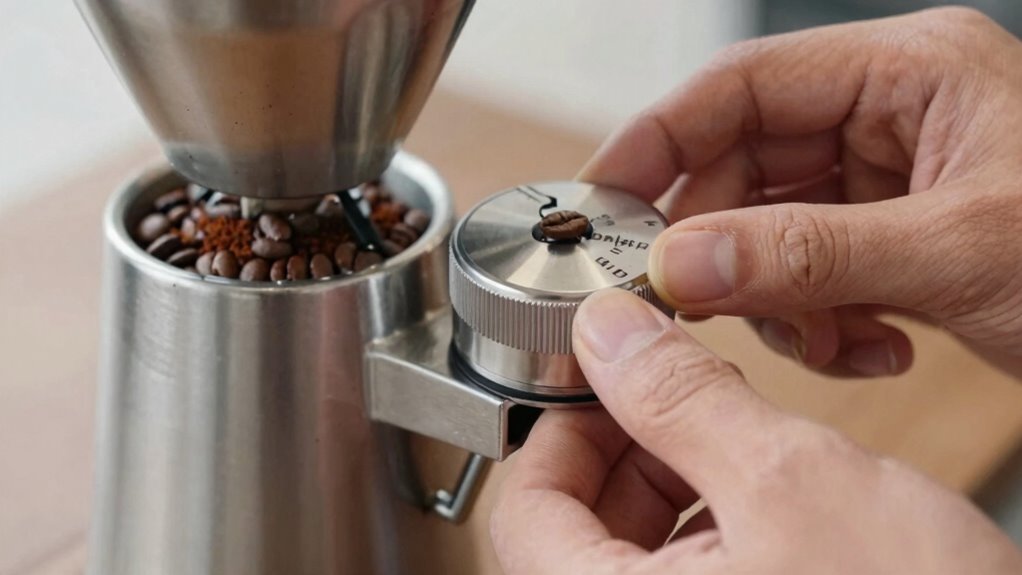
To keep your coffee grind consistent, start by using the proper equipment settings for your brewing method. Regularly calibrate your grinder to guarantee it stays accurate over time, and make adjustments gradually to prevent overcorrecting. Staying attentive to these details helps you achieve a steady, reliable grind every time. Incorporating interior design principles such as organized and functional kitchen spaces can also enhance your overall coffee brewing experience.
Use Proper Equipment Settings
Ensuring your grinder is set correctly is essential for achieving a consistent coffee grind. Proper equipment settings help preserve coffee bean freshness and optimize extraction. To maintain consistency, always adjust your grinder based on the brewing method, ensuring the grind size matches the desired extraction time. Remember, water temperature also plays a role in how your grind performs—using the right temperature prevents over-extraction or under-extraction. Regularly calibrating your grinder ensures you maintain the ideal grind consistency for every brew. Additionally, understanding how smart appliances like grinders can assist in maintaining precise settings can further improve your coffee experience. Using the right settings for your specific brew method can significantly reduce waste and improve flavor.
- Check your grind size after every adjustment to avoid inconsistencies
- Keep your grinder clean to prevent old coffee residues from affecting the grind
- Use the same water temperature for each brew to maintain flavor and extraction quality
Regularly Calibrate Grinder
Regularly calibrating your grinder is key to maintaining a consistent coffee grind, as it helps account for any wear and tear or build-up that can alter the grind size over time. Over time, grind consistency can decline due to burr wear or residue buildup, which affects flavor extraction. Frequent calibration ensures you’re grinding beans to the right size, preserving the quality of each brew. Additionally, bean freshness impacts how often you need to fine-tune; fresher beans can sometimes require finer adjustments. By staying on top of calibration, you prevent uneven extraction and wasted beans. Regular checks allow you to catch small deviations early, keeping your grind uniform and your coffee tasting its best. Proper calibration ultimately helps you maximize flavor and avoid costly mistakes.
Adjust Gradually for Consistency
Adjusting your grinder gradually is essential for maintaining a consistent coffee grind, especially when fine-tuning for different beans or brewing methods. Sudden changes can disrupt grind consistency, leading to over-extraction or under-extraction. To keep your coffee beans at their best, make small adjustments and record your settings. This approach helps you dial in the perfect grind without wasting good beans. Remember, even slight tweaks can profoundly impact flavor.
- Start with minor adjustments, then test.
- Keep a log of your settings for each bean type.
- Wait a few seconds after adjusting to see the full effect.
Signs You’re Using the Wrong Grind and How to Fix It
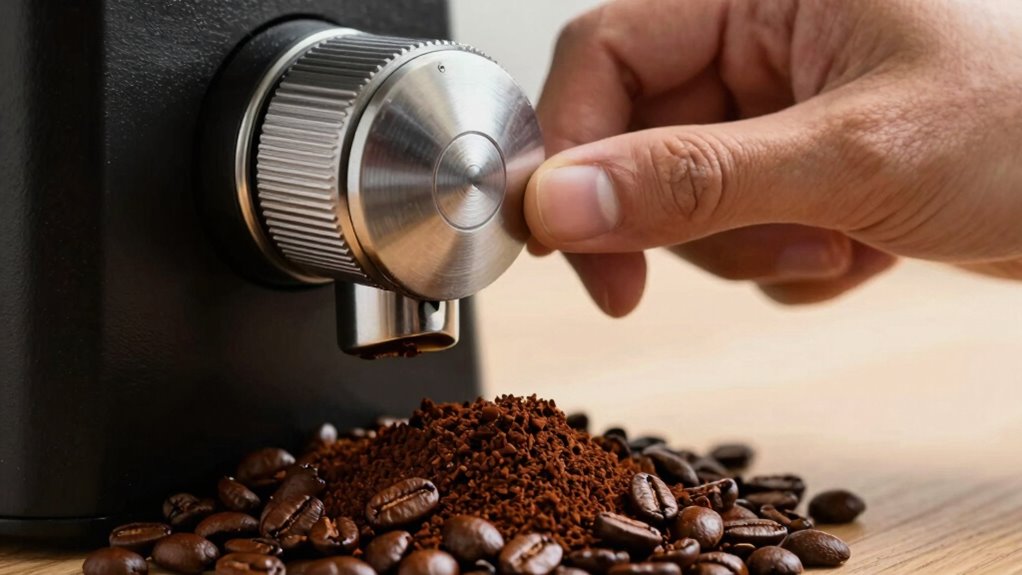
If your coffee consistently tastes flat or over-extracted, it might be a sign you’re using the wrong grind size. Different coffee bean varieties require specific grind levels to bring out their best flavors. For instance, lighter roasts often need a finer grind, while darker roasts can handle a coarser one. Additionally, brewing temperature plays a role—if your temperature is off, a grind adjustment can help compensate. When your coffee is too bitter or too weak, it’s likely your grind is too fine or too coarse, respectively. Adjust gradually, testing small changes. Remember, a too-fine grind can cause over-extraction, while a too-coarse one leads to under-extraction, both wasting good beans. Fine-tuning your grind guarantees balanced flavor and peak extraction.
How to Maintain and Calibrate Your Grinder Regularly

To keep your coffee tasting its best, you need to maintain and calibrate your grinder consistently. Regular grinder maintenance ensures that your coffee bean freshness is preserved and prevents uneven grind sizes. Calibration helps you dial in the perfect grind for your brewing method, avoiding over- or under-extraction. Proper calibration can also optimize image quality by ensuring the grinder produces a consistent grind size. To do this effectively: – Clean the burrs and other parts regularly to prevent buildup that can affect grind consistency. – Check and adjust the grind size according to your brewing needs, using manufacturer guidelines. – Replace worn burrs promptly to maintain sharpness and precision. Routine maintenance is key to preventing grinder issues before they impact your coffee. Additionally, understanding the importance of consistent grind size can significantly enhance your brewing results. Consistent maintenance and calibration not only improve flavor but also extend your grinder’s lifespan. By staying on top of these tasks, you’ll ensure every cup is fresh, flavorful, and perfectly ground. Regularly inspecting and adjusting your grinder is a crucial part of preventing issues and maintaining optimal performance. Maintaining your grinder also involves understanding the significance of calibration in achieving precise results.
Troubleshooting Common Grind Adjustment Issues
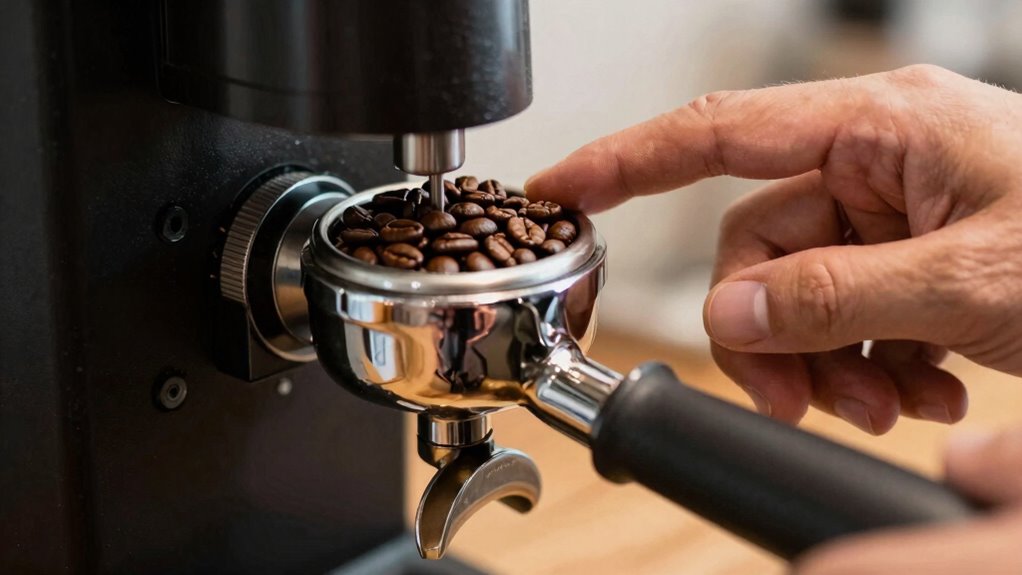
Even with careful calibration, you might encounter issues where your grind doesn’t produce the desired results. Fresh coffee beans can change how your grinder performs, so always consider coffee bean freshness when troubleshooting. If your grind is inconsistent or too coarse, your grinder noise levels might reveal the problem—excessive noise can indicate a clogged or misaligned burr. Conversely, if it’s unusually quiet and the grind is uneven, the burrs may be worn or misadjusted. Check for obstructions or buildup that could affect grind size. Make sure your grind settings are firmly in place, and re-calibrate if necessary. Sometimes, simply cleaning the grinder or adjusting for the age of your beans can resolve common issues without over-tweaking the settings. Additionally, understanding how airless paint sprayers operate can help you troubleshoot equipment-related inconsistencies, similar to how proper grinder maintenance ensures consistent coffee grounds. Being familiar with the parts and mechanisms of your grinder can also aid in diagnosing issues quickly, especially when combined with knowledge about grind adjustment techniques. Recognizing the impact of component wear on your grinder’s performance can further streamline your troubleshooting process. Regularly inspecting your grinder for signs of component deterioration can prevent more serious problems down the line.
When to Stop Tweaking Your Grind for the Best Results
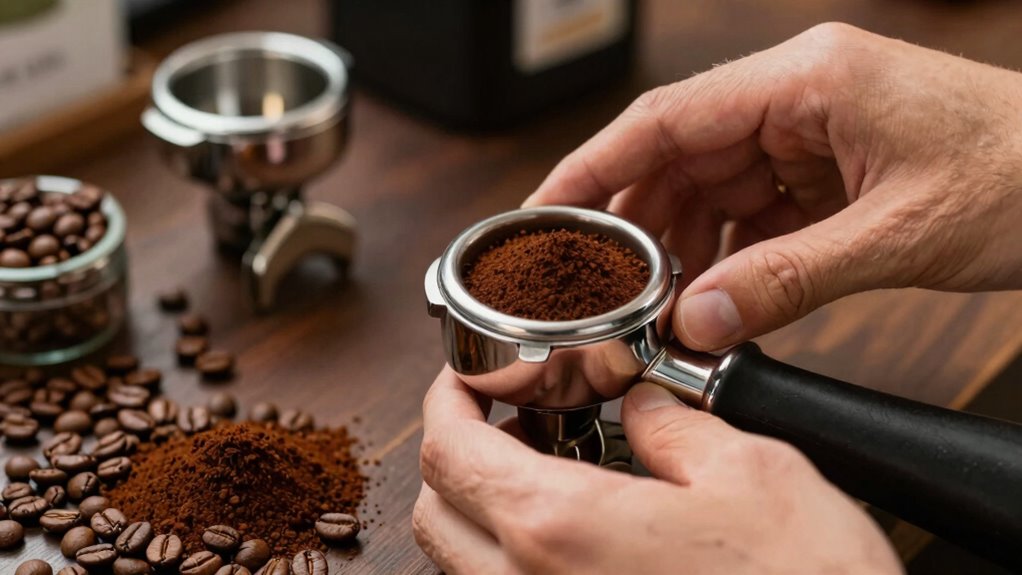
Knowing when to stop tweaking your grind is essential for achieving consistent, great-tasting coffee. Over-adjusting can lead to unnecessary frustration or waste good beans. Pay attention to how your coffee tastes after each change, and give your grinder time to settle. Keep in mind that factors like coffee bean storage, which can affect freshness, also influence grind consistency. Watch your grinder noise levels; increased noise may signal it’s time to pause adjustments and assess.
- Wait for your grind to settle before making further tweaks
- Monitor the taste after each adjustment to avoid over-correcting
- Recognize when changes no longer improve flavor, indicating it’s time to stop
Frequently Asked Questions
Can Grind Adjustment Mistakes Ruin My Coffee Flavor Completely?
Yes, grind adjustment mistakes can ruin your coffee flavor entirely. If you don’t calibrate your grinder properly, you might end up over or under-extracting, which affects taste. Even with fresh coffee beans, improper grind size can cause bitterness or sourness. Regularly check your grinder calibration and adjust it carefully to maintain the ideal grind size, preserving the coffee’s flavor and aroma.
How Often Should I Check My Grinder Settings?
You should check your grinder settings every few weeks, especially if you notice changes in flavor or extraction time. Studies show that coffee bean freshness declines rapidly after roasting, so consistent grinder maintenance helps preserve flavor. Regularly inspecting your settings guarantees ideal grind size, preventing waste. Keep an eye on your grinder’s performance and fine-tune as needed, maintaining the best possible flavor and aroma in your brew.
What Tools Help Ensure Precise Grind Adjustments?
To guarantee precise grind adjustments, you can use a digital caliper or a grind size gauge to check consistency regularly. These tools help you measure and compare grind size accurately, maintaining uniformity. Additionally, applying calibration methods like adjusting in small increments and recording settings can improve grind size consistency over time. Consistent use of these tools and methods prevents over- or under-extraction, preserving ideal coffee flavor.
Does Grind Size Impact Brew Time Significantly?
You’ll notice that changing grind size can impact brew time by up to 30%. Smaller grinds increase surface area, leading to faster extraction, while larger grinds slow it down. Achieving grind consistency is essential, especially with fresh beans that extract quickly. If your grind isn’t adjusted properly, you’ll either under-extract or over-extract, wasting good beans and affecting flavor. So, pay close attention to grind size for maximum brewing.
Are There Differences in Grind Adjustment Techniques for Different Coffee Machines?
Yes, there are differences in grind adjustment techniques for various coffee machines. You should focus on maintaining grind consistency for each machine type, as different brewers require specific grind sizes. Always calibrate your machine properly to guarantee accurate adjustments, especially when switching beans or grind settings. By understanding your machine’s unique needs and practicing consistent adjustments, you’ll optimize flavor extraction and avoid waste caused by improper grind changes.
Conclusion
Remember, the right grind makes all the difference in your coffee’s flavor. Don’t get discouraged if it takes a few tries—think of it like tuning a guitar. With patience and consistent adjustments, you’ll reveal the full potential of your beans. Picture perfect coffee every time isn’t just a dream; it’s within your reach when you understand how to tweak your grinder properly. Keep experimenting, and enjoy the delicious results!