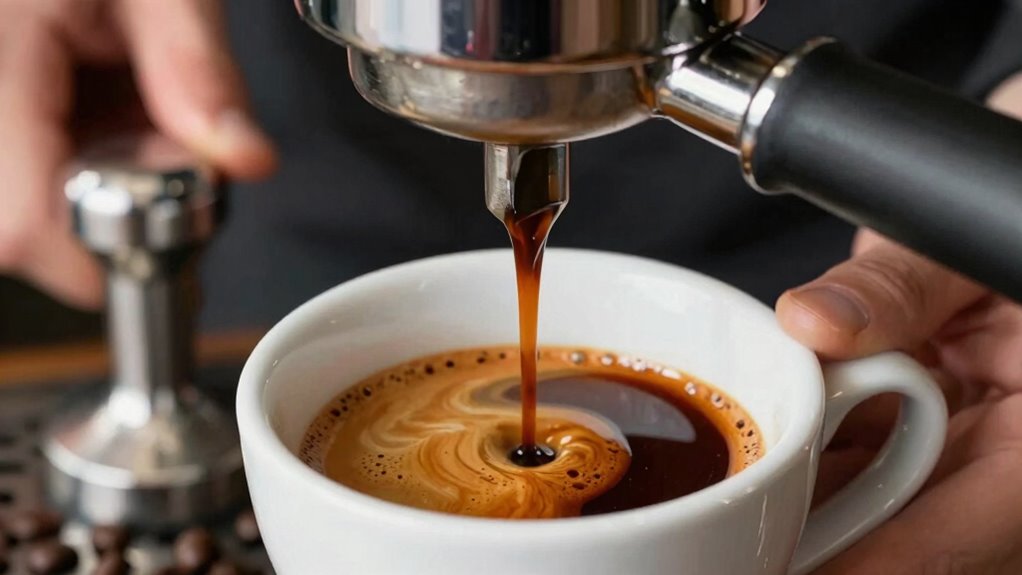

Dark roast espresso needs a different approach because its oily beans and bold flavors require careful adjustments in grind size, temperature, and extraction times to prevent bitterness. You’ll want a coarser grind, lower brewing temperature, and shorter contact time to avoid scorching oils and over-extraction. Proper tamping and consistent technique help bring out the full-bodied essence of the roast. Keep exploring these techniques, and you’ll reveal the rich potential behind every shot.

Get coffee and tea gear delivered free — and shop member deals
- Fast, free delivery on millions of items
- Access to Prime Big Deal Days deals on October 6–7
- Prime Video, Amazon Music and more included
Key Takeaways
- Dark roasts have higher oil content, requiring adjustments in grind size and brewing temperature to prevent bitterness.
- Extended roasting alters bean structure, making precise extraction techniques essential to avoid over-extraction.
- Lower brewing temperatures help prevent scorching oils and preserve the rich, smoky flavors.
- Coarser grind size reduces over-extraction, balancing intensity and bitterness.
- Proper tamping and flow control ensure even extraction, maximizing flavor without harshness.

If you’re looking to deepen the bold, robust flavors in your espresso, the dark roast approach offers a distinctive path. Unlike lighter roasts, dark roasts develop a flavor profile characterized by smoky, bittersweet, and sometimes charred notes that demand a different approach in brewing. These beans have been roasted longer, which changes their structure and oil content, making them inherently more intense and potent. Because of this, the way you handle brewing techniques must adapt to extract the best from these flavors without overpowering them or risking bitterness.
In terms of flavor profile, dark roasts tend to have a more pronounced body and less acidity than their lighter counterparts. This richness comes from the oils released during the extended roasting process, which coat the beans and influence the final taste. To preserve these bold qualities, you need to modify your brewing techniques accordingly. For instance, a slightly coarser grind may be more suitable to prevent over-extraction, which can lead to a bitter, burnt taste. You want to strike a balance where the water flows through the grounds efficiently, extracting the deep, smoky flavors without pulling out too many bitter compounds.
Temperature and extraction time are also critical. Dark roasts often require a slightly lower brewing temperature or a shorter contact time to avoid scorching the delicate oils and creating an overly bitter brew. This means paying close attention to your espresso machine’s temperature settings and dialing in your grind size precisely. If your grind is too fine, you’ll risk over-extraction, which can turn your espresso into a harsh, astringent shot. Conversely, if it’s too coarse, you might end up with a weak, underwhelming brew that lacks the intensity you’re after. Understanding how the roasting process influences the beans can help you better tailor your brewing approach for optimal flavor. Recognizing how the oil content changes during roasting can guide you in adjusting your extraction parameters. Being aware of these changes can also help prevent over-extraction, which is more common with darker beans due to their altered structure. Additionally, paying attention to brew temperature can further enhance the flavor extraction and prevent undesirable notes.
Another key point is tamping pressure. With dark roasts, a firm but even tamp ensures proper water flow and maximum extraction. Too much pressure can cause channeling, where water bypasses the grounds and results in uneven extraction, diminishing the flavor profile. Consistency in tamping and dosing becomes even more important when working with these beans, as it helps achieve a balanced, full-bodied shot that highlights the unique qualities of the dark roast. Moreover, mastering the coffee extraction process allows for better control over flavor development and ensures you don’t inadvertently over-brew or under-extract your espresso.
Ultimately, brewing dark roast espresso isn’t just about using the same techniques as lighter roasts; it’s about understanding how the roasting process alters the beans and tailoring your approach accordingly. By adjusting grind size, temperature, extraction time, and tamping, you can reveal the full potential of the bold, smoky, and complex flavors that make dark roast espresso a distinctive and satisfying choice.
dark roast espresso coffee grinder
As an affiliate, we earn on qualifying purchases.
As an affiliate, we earn on qualifying purchases.
Frequently Asked Questions
How Does Dark Roast Affect Espresso Crema Quality?
Dark roast espresso tends to produce a thinner, less persistent crema because its oils are more burned off, affecting the flavor profile and crema quality. You might notice a bolder, smoky taste, but the caffeine content remains similar to lighter roasts. To enhance crema, you should adjust your grind size and brewing pressure. This way, you maintain the rich flavor profile while improving crema appearance and texture.
What Brewing Variables Are Unique to Dark Roast Espresso?
Did you know that over 90% of baristas adjust brewing variables for dark roast espresso? You need to carefully control grind size, water temperature, and extraction time to achieve the perfect flavor profile. Dark roasts tend to have a bolder, less acidic taste, so balancing acidity is essential. You’ll want to fine-tune your variables to highlight the rich flavors while maintaining a smooth, well-rounded acidity balance.
Can Dark Roast Espresso Be Paired With Different Milk Types?
Yes, dark roast espresso pairs well with various milk types, but your choice affects flavor balancing. Whole milk adds creaminess, softening the bold, smoky notes, while skim milk keeps the intensity sharp and bright. Plant-based options like almond or oat milk offer unique flavor profiles that complement the roast’s richness. Experiment to find the milk compatibility that enhances your dark roast espresso, creating a balanced and satisfying drink tailored to your taste.
How Does Grind Size Influence Dark Roast Espresso Extraction?
If you want a perfect dark roast espresso, you need to pay attention to grind size because it directly impacts extraction timing. Uneven grind consistency causes uneven extraction, leading to bitter or sour flavors. When your grind is just right, extraction is smooth and balanced, highlighting rich, bold notes. Fine-tuning your grind size guarantees you get the full flavor profile, making every shot consistently delicious and satisfying.
What Are Common Mistakes When Brewing Dark Roast Espresso?
You often make the mistake of not adjusting your brewing temperature, which can overpower the dark roast’s flavor profile. Rushing the process or using too high a temperature leads to bitter, burnt flavors. Also, neglecting proper extraction time results in underdeveloped or over-extracted coffee. To improve, control your brewing temperature carefully and aim for balanced extraction, so the rich, bold flavors of dark roast espresso shine through without bitterness.
espresso machine temperature control
As an affiliate, we earn on qualifying purchases.
As an affiliate, we earn on qualifying purchases.
Conclusion
So, when you’re brewing dark roast espresso, remember it’s like tending a delicate flame—you need a different touch to bring out its full character. Adjust your grind size, water temperature, and extraction time, and you’ll unveil rich, bold flavors that dance on your palate. Don’t be afraid to experiment; each shot is a new adventure. With a little finesse, you’ll turn your espresso routine into a symphony of taste—your perfect cup is just a tweak away.
As an affiliate, we earn on qualifying purchases.
As an affiliate, we earn on qualifying purchases.
Fall Picks
fall essentials
As an affiliate, we earn on qualifying purchases.