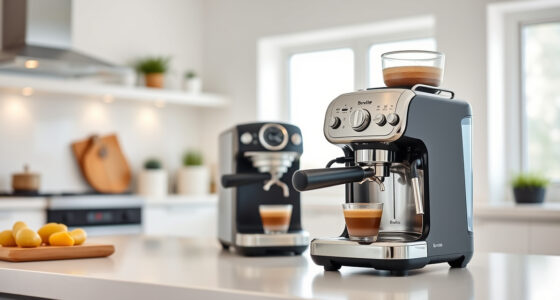
Choosing the right milk pitcher size is essential for learning latte art because it affects your control, technique, and confidence. Smaller pitchers are easier to handle and help you focus on creating precise, delicate designs without overwhelming flow. Larger pitchers can make detailed patterns more difficult and slow your progress. Using the right size allows you to develop fundamental skills comfortably. Keep exploring to discover how selecting the perfect pitcher can boost your latte art journey.

Get coffee and tea gear delivered free with Prime
- Fast, free delivery on millions of items
- Prime Video, Amazon Music and more included
- Member-only deals all year
Key Takeaways
- Smaller pitchers offer better control over milk flow, making it easier to master pouring techniques and latte art details.
- Pitcher size influences comfort and hand positioning, affecting overall precision and consistency during practice.
- Using appropriately sized pitchers helps develop foundational skills before progressing to larger, more complex designs.
- Larger pitchers can complicate delicate pouring maneuvers, hindering learning of fine control and intricate latte art patterns.
- Ergonomic and sustainable pitcher choices enhance comfort and promote effective, eco-conscious skill development.
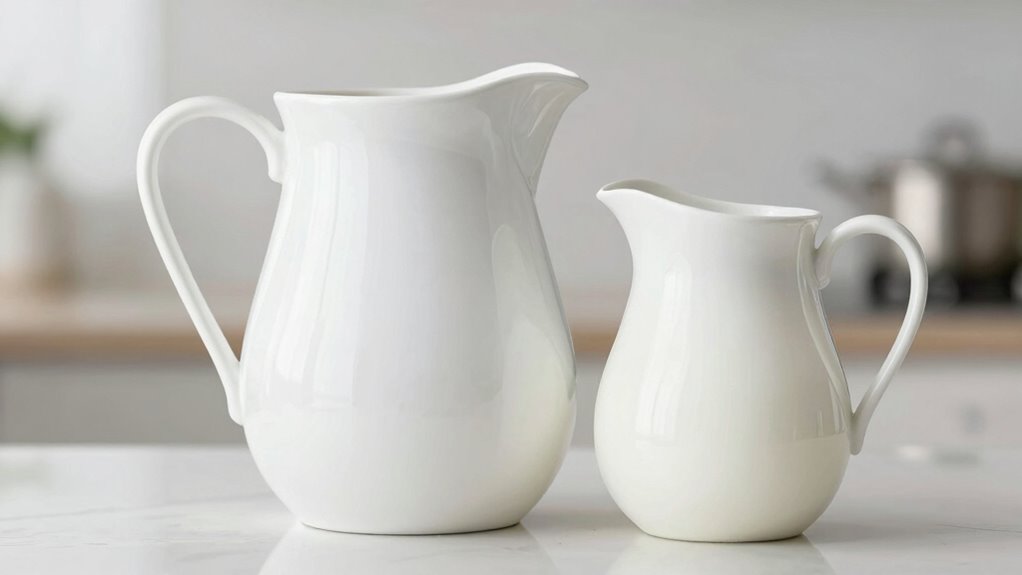
Choosing the right milk pitcher size is essential when learning to master latte art and perfect your brewing skills. The size of your pitcher directly impacts your ability to control milk texture and execute precise pouring techniques. If your pitcher is too large, you might find it challenging to create detailed designs because it’s harder to manage the flow and speed of the milk as you pour. Conversely, a small pitcher can limit the amount of milk you can steam at once, forcing you to make multiple pours or work faster, which can compromise your control and the quality of your latte art.
When you’re starting out, the milk texture is crucial. A properly textured milk with a silky, microfoam consistency allows for smoother, more controlled pours. The size of your pitcher affects how easily you can manipulate this milk. A smaller pitcher, such as a 12-ounce, offers better control over the milk flow, making it easier to develop your pouring techniques. You can experiment with different angles, speeds, and motions more precisely, which helps you learn the nuances of creating rosettas, hearts, or tulips. On the other hand, larger pitchers, like 20 ounces or more, tend to have a wider opening and a greater volume of milk, which can make it more difficult to pour with finesse, especially when you’re trying to achieve delicate designs.
Your choice of pitcher size also influences your hand positioning and overall comfort. A pitcher that fits well in your hand allows you to maintain consistent control over your pouring speed and height. These factors are vital because they directly impact the quality of the milk texture and the success of your pouring techniques. When starting out, it’s better to select a size that enables you to develop these skills gradually. As you improve, you might switch to larger pitchers for pouring larger designs or more milk, but initially, a smaller, more manageable size helps you focus on foundational techniques. Additionally, gadget ergonomics play a role in how comfortable and precise your pouring can be during practice sessions. Being aware of pouring control can further enhance your ability to refine your latte art skills over time. Moreover, understanding how biodiversity and sustainable practices influence equipment choices can help ensure you select tools that are environmentally friendly and ethically produced, supporting sustainable living practices. Recognizing the importance of environmentally friendly tools can also motivate you to choose products that promote sustainability and reduce waste. Choosing equipment made with sustainable materials can further contribute to eco-conscious practices in your barista journey.
Products Worth Considering

Cuisinart Stainless Steel Bread Maker, 12 Programs, 2 lb Capacity

Cuisinart 6-Quart Basket Air Fryer with Viewing Window, Stainless Steel and Black (AIR-200NAS)

De'Longhi Stilosa Compact Manual Espresso Machine with Milk Frother
As an affiliate, we earn on qualifying purchases.
Frequently Asked Questions
How Does Pitcher Size Impact Foam Quality?
A smaller pitcher allows you to control foam quality better because it offers improved temperature consistency and a more secure pitcher grip. When your grip is stable, you can focus on steaming milk evenly, creating finer, smoother foam. Larger pitchers can make it harder to maintain consistent temperature and control, leading to uneven or bubbly foam. So, choosing the right size helps you produce higher quality, velvety microfoam every time.
Is Smaller Pitcher Better for Beginner Latte Art?
Surprisingly, a smaller pitcher isn’t always better for beginners. While it might seem easier to handle, it can actually hinder your pouring control and milk texture. Smaller pitchers limit your ability to move milk smoothly, making it harder to create intricate designs. You might think you’re gaining precision, but in reality, you risk less control and more mess. Bigger pitchers give you the space to practice, improve, and master those latte art skills.
Can Pitcher Size Influence Milk Steaming Time?
Yes, pitcher size can influence milk steaming time. A smaller pitcher heats milk faster because of its reduced volume, making it easier to control milk temperature. Additionally, the pitcher grip becomes more manageable, allowing you to maintain steady control while steaming. Larger pitchers take longer to heat and require more effort to keep the milk at the right temperature, which can impact your ability to perfect latte art.
Does Pitcher Material Affect Learning Outcomes?
Think of the pitcher material as the foundation of your barista journey—solid or fragile, it influences your confidence. The material affects milk temperature control and pitcher ergonomics, shaping how comfortably you handle each pour. A well-chosen material helps you master milk steaming with precision, allowing you to focus on your craft. Ultimately, selecting the right pitcher material symbolizes a commitment to growth, making each learning step smoother and more meaningful.
What’s the Ideal Pitcher Size for Different Skill Levels?
For beginners, a smaller pitcher, around 12-20 oz, is ideal because it’s lightweight and easier to handle, helping you develop a comfortable grip. As your skills improve, move to a 32 oz pitcher for better control and efficiency. Your grip comfort and pitcher weight are essential; a well-balanced, appropriately sized pitcher reduces fatigue and enhances precision, enabling you to progress smoothly through different skill levels.
Conclusion
Choosing the right milk pitcher size might seem like a small detail, but it shapes your learning process just as much as your technique. While a larger pitcher offers more room for practice, it can also feel overwhelming, much like a vast canvas. Conversely, a smaller pitcher encourages precision but may limit your growth. Balancing size with your confidence creates harmony—reminding you that mastery isn’t just about tools, but how you adapt and grow with them.