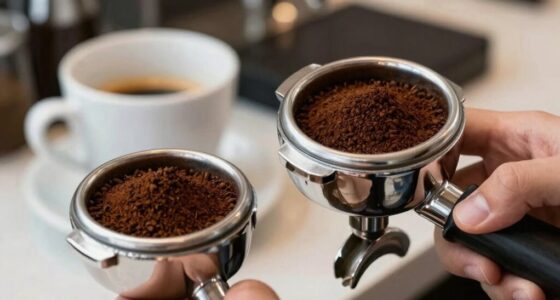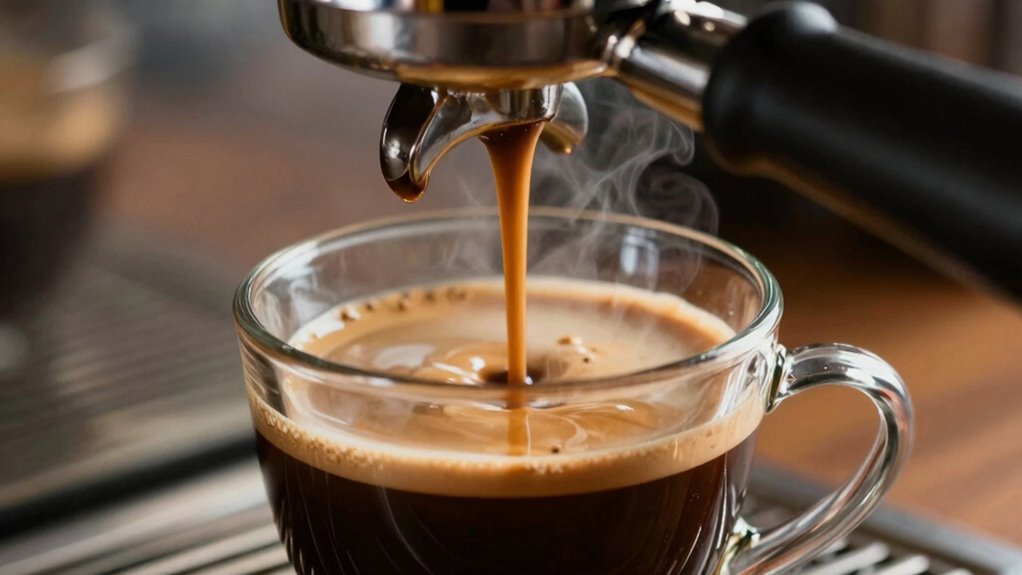

Pressure plays a vital role in shaping your espresso’s flavor, texture, and overall quality. It controls how water interacts with the coffee grounds, affecting extraction speed and balance. Too much pressure can cause bitterness, while too little leads to sour, weak shots. Maintaining consistent, ideal pressure—around 9 bars—is key to revealing rich crema and nuanced flavors. To fully master these secrets and elevate your espresso game, explore more about how pressure influences every step of the process.
Key Takeaways
- Pressure controls water flow, affecting extraction time, flavor balance, and aroma development in espresso brewing.
- Maintaining around 9 bars optimizes crema, richness, and prevents under- or over-extraction.
- Fluctuations in pressure can lead to inconsistent shots, impacting taste and texture.
- Adjusting pressure profiles during extraction reveals nuanced flavors and enhances overall espresso complexity.
- Proper pressure management transforms routine brewing into a precise, artful craft.

AlloverPower E61 Group Head Pressure Pump Gauge for Espresso Coffee Machine Brew Accesories
A MUST HAVE PRESSURE GAUGE: Special design for coffee machine with E-61 grouphead, help you monitor the extraction…
As an affiliate, we earn on qualifying purchases.
As an affiliate, we earn on qualifying purchases.
How Pressure Shapes Espresso Extraction and Flavor
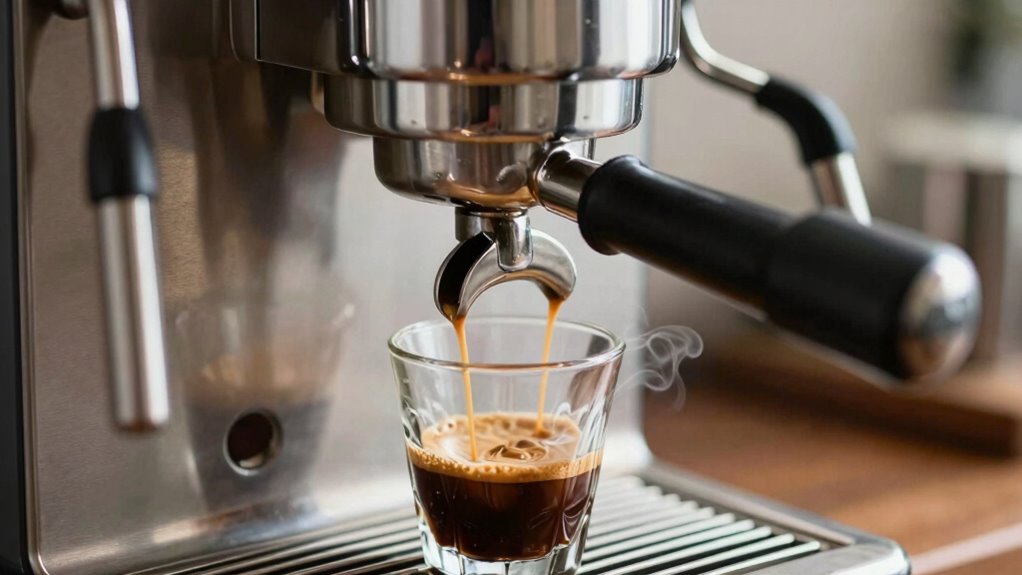
Pressure is a crucial factor that directly influences how espresso extracts and develops its flavor. When you select high-quality coffee beans, you set a strong foundation, but adjusting grind size is equally essential. A finer grind increases resistance, requiring more pressure to extract flavors properly, while a coarser grind reduces resistance. Too much pressure can over-extract, making your espresso bitter, while too little results in under-extraction, leading to sourness. By fine-tuning grind size, you help guarantee ideal pressure during brewing. Consistent pressure allows hot water to evenly pass through the coffee grounds, extracting balanced flavors and rich aromas. Proper pressure also helps prevent channeling, where water bypasses the grounds and results in uneven extraction. Paying attention to both coffee bean selection and grind size adjustment maximizes the benefits of pressure, producing a well-rounded, flavorful shot every time. Proper pressure is fundamental to achieving optimal flavor and aroma in every cup. Additionally, understanding how pressure stability influences extraction can help you troubleshoot issues and improve your espresso quality. Ensuring your espresso machine maintains consistent pressure can be challenging but is essential for maintaining espresso consistency, which directly impacts your overall brewing success.
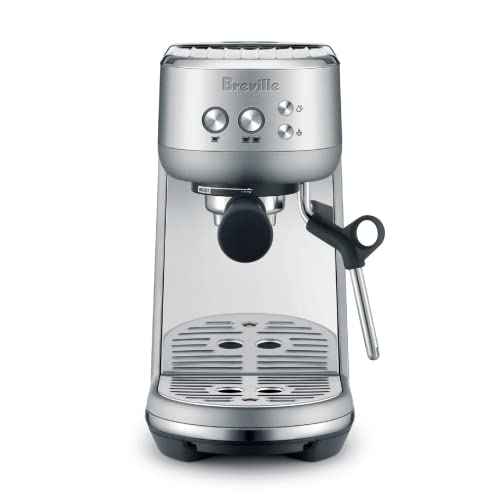
Breville Bambino Espresso Machine BES450BSS, Brushed Stainless Steel
Don't compromise on third wave specialty coffee. Achieve barista quality performance using a 54mm portafilter with 19 grams…
As an affiliate, we earn on qualifying purchases.
As an affiliate, we earn on qualifying purchases.
How Pressure Influences Brewing Dynamics in Espresso
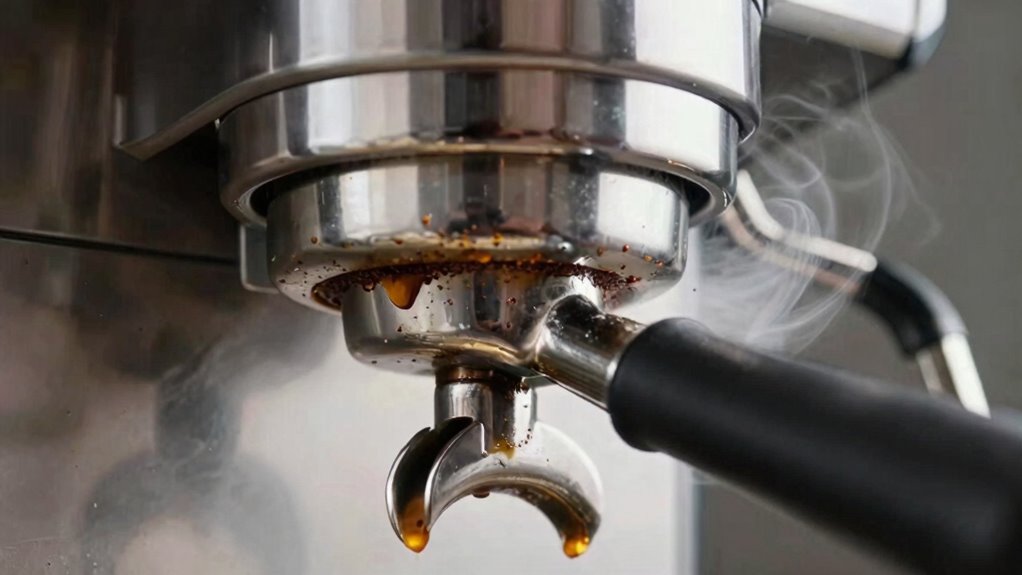
Understanding how pressure influences brewing dynamics is essential because it directly determines how water interacts with coffee grounds during extraction. When you control pressure, you affect how water penetrates the coffee bed, impacting extraction efficiency. Higher pressure increases the force pushing water through the grounds, resulting in a faster, more thorough extraction. Conversely, lower pressure may produce weaker flavors and under-extraction. Additionally, maintaining pressure stability is crucial for consistent brewing results. Proper pressure regulation is vital to prevent fluctuations that could compromise flavor quality. A stable pressure environment helps achieve optimal extraction and enhances flavor consistency. Managing pressure fluctuations is also important because they can lead to inconsistent flavors and uneven extraction. Pressure dynamics shape the flow rate and saturation of coffee grounds. Ideal pressure ensures even extraction and balanced flavors. Excessive pressure can cause over-extraction and bitterness. Insufficient pressure leads to under-extraction and sourness. Consistent pressure maintains stability in brewing, improving overall quality. Understanding the pressure profile during extraction can help baristas fine-tune their espresso machines for better results.

SHARDOR Electric Coffee Grinder, 70g Large Capacity Spice Grinder with Visual Timing Knob for Precise Grind, Quiet Coffee Bean Grinder for Espresso, French Press, Herbs and Grains, Black
【PRECISION GRINDING CONTROL】 Stop guessing how long to grind. Our electric coffee grinder features a clear timing knob…
As an affiliate, we earn on qualifying purchases.
As an affiliate, we earn on qualifying purchases.
Achieving the Right Pressure for Rich, Creamy Espresso

To achieve that signature rich, creamy espresso shot, you need to fine-tune the pressure to strike the perfect balance. Many believe that higher pressure always results in better flavor, but pressure myths can lead you astray. Excessive pressure might create flavor illusions, masking subtle notes and over-extracting bitter compounds. Conversely, too little pressure can produce a weak, insipid shot. The key is to find the optimal pressure—usually around 9 bars—that extracts maximum flavor without compromising crema. Focus on consistency and adjust your machine’s pressure settings carefully. Remember, it’s not just about pushing harder; it’s about understanding how pressure influences extraction and flavor. Pressure plays a crucial role in unlocking the full potential of your beans, delivering that luscious, creamy espresso every time. Proper pressure control is essential for achieving the best extraction and flavor profile. Developing an understanding of pressure regulation can significantly improve your espresso results. In addition, maintaining consistent pressure levels helps prevent under- or over-extraction, ensuring a balanced and flavorful shot.

BWT Bestmax Pressure Regulator, Inline Pressure Reducer Valve with Gauge, Manometer, Female 3/8" x Male 3/8", Compatible with BWT Bestmax Filter Head, for Espresso Machines & Water Filtration System
COMPATIBLE: Can be attached directly to your BWT Bestmax Filter Head.
As an affiliate, we earn on qualifying purchases.
As an affiliate, we earn on qualifying purchases.
Troubleshooting Common Pressure Problems in Espresso Making
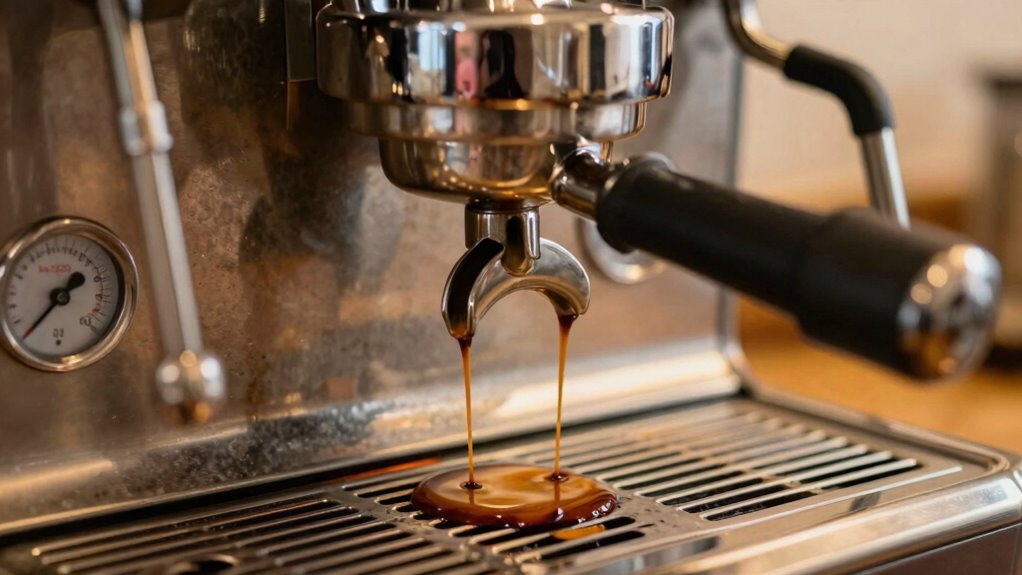
When your espresso pulls too quickly or drags on too long, pressure problems are likely to be blamed. These issues often stem from temperature fluctuations or inconsistent grind size, which affect how pressure builds during extraction. To troubleshoot:
- Check your grinder for grind consistency; too coarse or uneven grounds reduce pressure.
- Guarantee your machine’s temperature remains stable, as fluctuations can cause pressure drops.
- Adjust tamping pressure to create uniform resistance.
- Clean the portafilter and group head to prevent blockages that hinder pressure.
- Experiment with slight grind adjustments to optimize flow and pressure buildup.
- Pay attention to pressure stability during extraction, as it is crucial for consistent results.
- Monitoring temperature fluctuations can help prevent pressure inconsistencies that impact extraction quality.
How Pressure Profiling Improves Espresso Taste and Texture

By adjusting pressure during the extraction process, you can unlock deeper, more nuanced flavors in your espresso. This technique helps balance the richness of the body with the clarity of the taste, preventing it from becoming too bitter or too thin. Pressure profiling puts you in control of customizing each shot for ideal taste and texture.
Enhances Flavor Extraction
Pressure profiling allows you to control the extraction process more precisely, leading to richer and more nuanced flavors in your espresso. By adjusting pressure at different stages, you optimize flavor complexity and aroma enhancement. This technique unlocks hidden layers of taste, making each shot more vibrant and expressive. You can:
- Highlight unique coffee bean characteristics
- Enhance sweetness and reduce bitterness
- Extract more aromatic compounds
- Achieve a balanced, full-bodied profile
- Develop a richer, more inviting aroma
With pressure profiling, you fine-tune the extraction to reveal the coffee’s full potential. This control results in a more dynamic flavor experience, capturing subtle nuances that standard methods might miss. Ultimately, it’s about creating a more flavorful, aromatic cup that elevates your espresso enjoyment.
Balances Body and Clarity
Adjusting pressure profiles during extraction allows you to finely tune the balance between body and clarity in your espresso. Your choice of coffee bean selection influences how pressure impacts flavor, so select beans suited for your desired profile. By modifying grind size adjustments, you control the flow rate, which affects how pressure interacts with the grounds. A finer grind increases resistance, boosting body, while a coarser grind can enhance clarity by reducing extraction time. Using pressure profiling, you can start with higher pressure to develop richness, then lower it to sharpen brightness. This precise control helps you craft an espresso with the perfect harmony of full-bodied texture and crisp clarity, tailored to your taste preferences. Incorporating pressure profiling techniques into your process allows for more consistent and personalized results in espresso extraction. Additionally, understanding the pressure dynamics involved enables baristas to better optimize extraction parameters for different beans and roast levels, leading to a more balanced espresso.
Controlling Equipment and Technique for Consistent Pressure
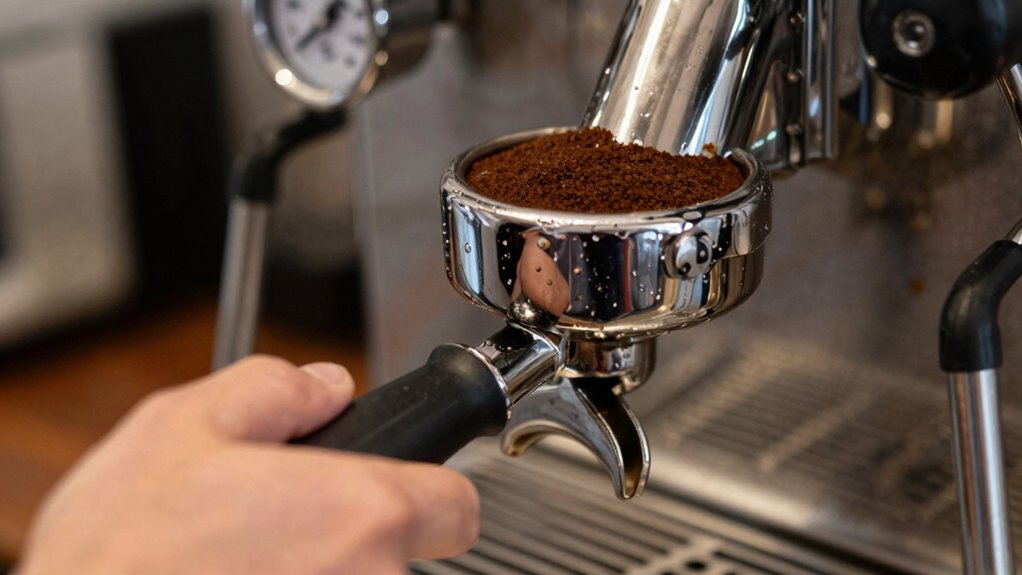
To keep your espresso shots consistent, you need to focus on equipment calibration, ensuring your grinder and machine are properly set up. Proper tamping and distribution help maintain even pressure throughout the extraction, preventing variability. Managing brew pressure levels during the pull guarantees you achieve the desired flavor profile every time. Additionally, understanding the pressure dynamics involved in espresso extraction can help you fine-tune your technique for optimal results. Being familiar with digital tools can assist in monitoring and adjusting your equipment settings more precisely.
Equipment Calibration Practices
Maintaining consistent pressure during espresso extraction hinges on proper calibration of your equipment and technique. Regularly check your pressure sensors to guarantee they read accurately, as faulty sensors can lead to inconsistent results. Follow specific calibration routines, such as zeroing your machine’s pressure gauge before each session, to maintain reliability. Additionally, monitoring the pressure gauges ensures your machine operates within optimal parameters. Use manufacturer-recommended calibration procedures. Record pressure readings during different extraction stages. Regularly clean and inspect pressure sensors for buildup or damage. Adjust grind size and tamping based on sensor feedback. Verify pressure consistency across multiple pulls. These practices help you identify and correct pressure fluctuations, ensuring your espresso extraction remains uniform and high quality. Proper calibration is key to controlling pressure and achieving the perfect shot.
Proper Tamp and Distribution
Achieving consistent pressure during espresso extraction relies heavily on proper tamping and distribution techniques. Your tamp technique should be firm and even, applying consistent pressure to create a level coffee bed. Use a steady, downward motion to avoid uneven surfaces that can cause channeling. Distribution methods, such as pre-infusion or using a distribution tool, help evenly spread the coffee grounds before tamping, ensuring uniform density. Proper distribution prevents weak spots that lead to uneven extraction and pressure fluctuations. Additionally, maintaining consistent pressure during tamping helps to optimize extraction quality. Focus on maintaining consistent pressure with your tamp and ensuring the coffee is evenly distributed across the basket. This control over the coffee bed’s density directly influences how pressure builds during extraction, leading to a more stable, balanced shot every time. Mastering knife skills can also help in preparing coffee grounds and equipment with precision, contributing to overall consistency in brewing. Understanding pressure dynamics is crucial for troubleshooting and refining your espresso technique for optimal results.
Managing Brew Pressure Levels
Controlling brew pressure levels starts with understanding how your equipment influences extraction. Your espresso machine’s pressure dynamics directly impact extraction efficiency and consistency. To manage pressure effectively:
- Use a reliable pressure gauge to monitor brew pressure during extraction
- Adjust the grind size to control flow rate and pressure buildup
- Fine-tune the machine’s pressure settings for ideal extraction
- Maintain consistent tamping pressure to prevent pressure fluctuations
- Regularly clean and calibrate your equipment to guarantee stable pressure levels
Mastering Pressure to Elevate Your Espresso Skills

Mastering pressure is essential to releasing the full potential of your espresso. It’s not just about numbers; pressure psychology influences how you approach each shot, helping you fine-tune your technique with confidence. When you understand pressure aesthetics, you learn to see it as an art form—balancing extraction and flavor complexity. Consistently controlling pressure allows you to develop a feel for your equipment and ingredients, making adjustments that improve taste and texture. Practice becomes more intentional, and your skills sharpen. By mindfully managing pressure, you’ll notice improvements in shot clarity, crema richness, and overall balance. Embracing pressure mastery transforms your espresso from a routine task into a precise craft, elevating your skills and giving your coffee the finesse it deserves.
Frequently Asked Questions
How Does Altitude Affect Pressure Requirements in Espresso Brewing?
You need to make altitude adjustments because higher elevations have lower atmospheric pressure, which affects espresso brewing. To compensate, you should increase the pressure during extraction to guarantee proper extraction. Additionally, bean density can change with altitude, often requiring adjustments in grind size and dose. By tweaking pressure and grind, you’ll maintain consistent flavor and avoid under-extraction or over-extraction, no matter the altitude.
What Role Does Water Temperature Play Alongside Pressure?
You might find that water temperature plays a subtle but essential role in your espresso’s charm, working hand-in-hand with pressure to perfect extraction balance. Warmer water enhances water chemistry, revealing richer flavors, while cooler temps can highlight delicate notes. When you adjust temperature carefully, you fine-tune how the coffee’s compounds dissolve, creating a harmonious shot. Keep experimenting with temperature to discover your ideal balance, and elevate your espresso experience.
Can Different Coffee Bean Types Require Unique Pressure Settings?
Yes, different coffee bean types can require unique pressure settings, especially considering bean texture and roast level. Light roasts often need slightly higher pressure to extract their delicate flavors, while darker roasts may need less to prevent over-extraction. Adjusting pressure based on bean texture helps optimize extraction, ensuring you get the best flavor profile. Experimenting with pressure settings according to bean type enhances your espresso experience.
How Does Pressure Impact Espresso Shot Longevity and Storage?
Pressure stability directly affects espresso shot longevity and storage, as consistent pressure guarantees proper extraction and flavor preservation. When pressure fluctuates, it can lead to over-extraction or under-extraction, diminishing shot quality over time. Maintaining stable pressure helps preserve the espresso’s freshness and aroma, making it easier to store and enjoy later. Consistent pressure also boosts extraction consistency, ensuring each shot remains flavorful and rich, even after storage.
Are There Health Risks Associated With Using High-Pressure Espresso Machines?
Using high-pressure espresso machines generally doesn’t pose significant health risks if you follow proper maintenance and safety guidelines. However, prolonged pressure exposure to machine components or handling high-pressure parts improperly might cause minor injuries or wear over time. Be aware of health concerns like burns or pinched fingers, and make certain you use the machine correctly. Regular maintenance reduces risks, so always handle your espresso machine with care and follow safety instructions.
Conclusion
Mastering pressure isn’t just about technique; it’s about revealing your espresso’s full potential. It’s about understanding how pressure shapes flavor, how it influences texture, and how it guides your brewing journey. It’s about patience, precision, and passion. When you control the pressure, you control the craft. And in that control, you find consistency, confidence, and the joy of every perfect shot. Embrace the pressure, elevate your skills, and let every espresso tell your story.