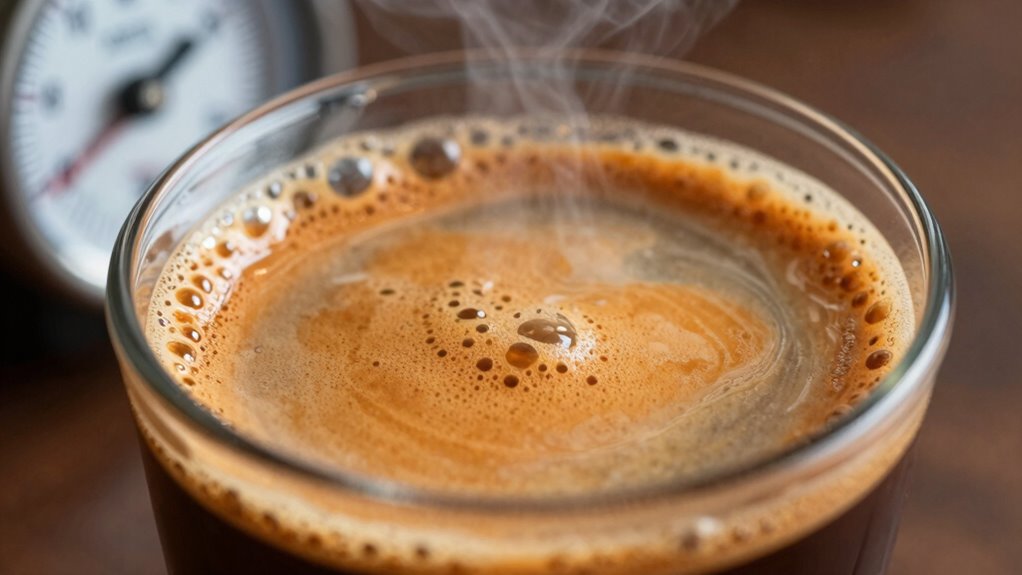

Water temperature plays a vital role in bringing out the sweetness in your espresso. When you brew at the ideal range of 195°F to 205°F, sugars dissolve effectively, enhancing natural sweetness. Too hot, and you’ll extract bitterness; too cold, and flavor compounds remain hidden. Fine-tuning your machine’s temperature helps you balance acidity and sweetness for a richer, more complex shot. Keep exploring how adjusting these settings can truly elevate your espresso experience.

Get coffee and tea gear delivered free — and shop member deals
- Fast, free delivery on millions of items
- Access to Prime Big Deal Days deals on October 6–7
- Prime Video, Amazon Music and more included
Key Takeaways
- Proper water temperature enhances sugar and acid solubility, resulting in a naturally sweeter espresso.
- Slight temperature increases can boost sugar extraction, enriching the overall flavor profile.
- Cooler water may limit sugar release, leading to a less sweet and more subdued taste.
- Maintaining consistent temperature prevents under- or over-extraction, preserving sweetness.
- Precise temperature control allows for tailored adjustments to highlight bean-specific sweetness.
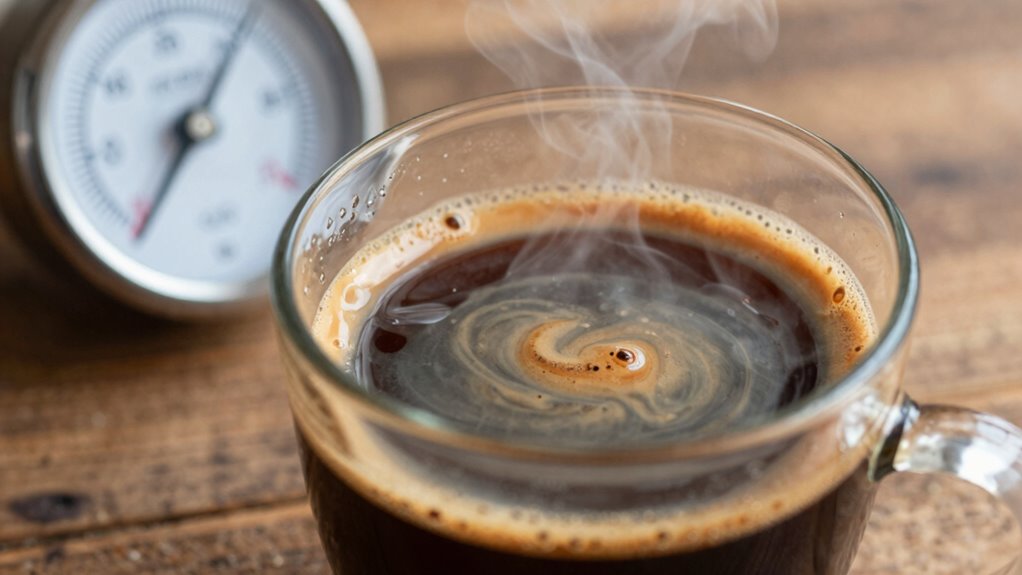
Water temperature plays a crucial role in shaping the sweetness of your espresso, influencing how the flavors develop during extraction. When you’re brewing, temperature control becomes necessary because it directly affects flavor extraction—the process through which the coffee’s oils, acids, and sugars are released into your cup. If the water isn’t at the right temperature, you might notice your espresso tasting flat, bitter, or overly sour, rather than balanced and sweet.
Water temperature is key to unlocking your espresso’s natural sweetness and balanced flavor.
Getting the temperature right means understanding how it impacts flavor extraction. Too hot, and you risk pulling out excessive bitter compounds and tannins that overshadow the coffee’s natural sweetness. Too cold, and the extraction can be incomplete, leaving behind the delicate sugars and aromatic compounds that give espresso its characteristic sweetness and complexity. You want to find that sweet spot—typically between 195°F and 205°F (90°C to 96°C)—where the heat allows the sugars and acids to dissolve effectively without extracting undesirable flavors.
Consistent temperature control is your best tool for achieving this balance. Many espresso machines come with adjustable temperature settings, allowing you to fine-tune the water’s heat. When you pay attention to these settings, you ensure that each shot of espresso undergoes a similar extraction process, leading to more predictable and sweeter results. If your machine lacks precise control, preheating your equipment and using freshly ground coffee can help mitigate fluctuations and improve flavor extraction overall. Additionally, knowing how temperature stability impacts extraction can help you troubleshoot issues and refine your brewing technique more effectively. Maintaining stable temperature conditions can also prevent over- or under-extraction caused by fluctuations during brewing.
Understanding the flavor extraction process can help you better tailor your brewing techniques for optimal sweetness. As you experiment with temperature, you’ll notice that even slight adjustments can make a significant difference in sweetness. Raising the temperature slightly might enhance the extraction of sugars, giving your espresso a richer, more rounded flavor. Conversely, lowering it can tone down bitterness, emphasizing brighter, fruitier notes. Incorporating temperature monitoring tools or techniques can further refine your control and consistency. Over time, you’ll develop an instinct for how your specific beans respond to different temperature settings, allowing you to craft espresso shots that highlight their natural sweetness. Monitoring temperature consistency is essential for achieving a balanced and delightful espresso experience.
espresso machine with temperature control
As an affiliate, we earn on qualifying purchases.
As an affiliate, we earn on qualifying purchases.
Frequently Asked Questions
Does Water Temperature Impact Espresso Crema Quality?
Yes, water temperature impacts espresso crema quality by affecting water viscosity and extraction consistency. When you use the right temperature, the water flows more smoothly through the coffee grounds, promoting even extraction. This consistency helps produce a thicker, richer crema with better foam stability. Too hot or cold water can cause uneven extraction, leading to a weaker or overly bitter crema. Adjusting temperature guarantees ideal viscosity and a beautiful, flavorful crema top.
How Does Water Mineral Content Influence Sweetness?
Think of your espresso as a symphony—minerals are the conductors that influence its flavor. When mineral content is balanced, flavor extraction is smooth, highlighting sweetness without harshness. Too many minerals can overpower delicate notes, making your brew taste dull or bitter. Proper mineral balance enhances sweetness by supporting ideal extraction, ensuring each sip is harmonious and vibrant. Keep an eye on mineral levels to craft the sweetest, most flavorful espresso.
Is There an Optimal Temperature Range for Different Coffee Beans?
Yes, there’s a ideal temperature range for different coffee beans, typically between 195°F and 205°F. You should consider bean freshness and grind size when dialing in your temperature, as fresher beans often need slightly lower temps to highlight sweetness, while coarser grinds might require a higher temp for proper extraction. Adjust within this range to find the sweet spot that enhances your beans’ unique flavor profile.
Can Temperature Changes Affect Espresso Brewing Time?
Yes, temperature changes can affect espresso brewing time. When you adjust the water temperature, it influences brewing consistency and extraction speed. Higher temperatures typically speed up extraction, reducing brewing time, while lower temperatures slow it down. This means you’ll notice variations in shot timing, and maintaining a stable temperature helps guarantee consistent results. So, controlling water temperature is key to achieving the perfect balance between flavor and brewing efficiency.
How Does Water Temperature Influence Acidity Levels?
Imagine water as a painter’s brush, shaping your espresso’s character. When you adjust the temperature, you influence the pH balance, making the brew more or less acidic. Hotter water tends to extract more acidic compounds, sharpening flavors and brightening the cup’s vibrancy. Conversely, cooler water yields a smoother, less acidic shot. Your temperature control acts as a maestro, directing flavor extraction and balancing acidity for the perfect espresso harmony.
As an affiliate, we earn on qualifying purchases.
Conclusion
Remember, tweaking water temperature isn’t just a minor detail—it’s the secret weapon that can transform your espresso into a symphony of sweetness. When you find that perfect balance, your shot will burst with flavor like a fireworks display in your cup. Don’t settle for anything less; experiment and discover how a few degrees can turn your morning brew into a heavenly experience. Embrace the power of temperature, and let your espresso shine like a star in the coffee universe!
As an affiliate, we earn on qualifying purchases.
adjustable temperature espresso machine
As an affiliate, we earn on qualifying purchases.
As an affiliate, we earn on qualifying purchases.
Fall Picks
fall essentials
As an affiliate, we earn on qualifying purchases.