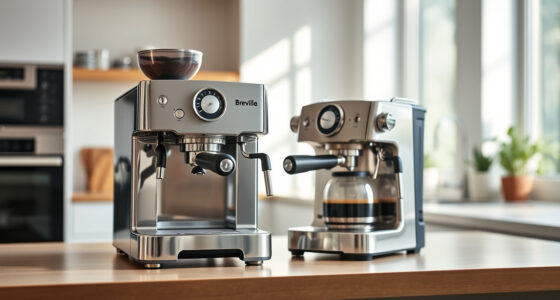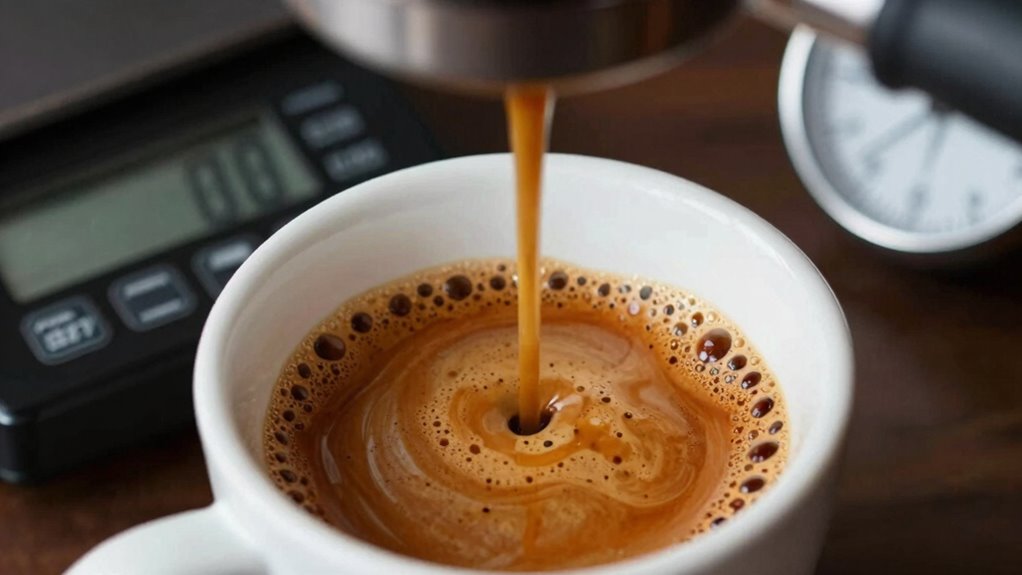

Dose, yield, and extraction time are key to making great espresso because they directly affect flavor, strength, and consistency. Adjusting the dose influences richness; controlling the yield ensures you extract the right amount of flavor; and timing affects the balance between sour and bitter notes. When these variables are in harmony, your espresso will taste balanced and satisfying. Keep exploring these concepts, and you’ll master the art of brewing perfect shots.
Key Takeaways
- Proper dose, yield, and time ensure optimal extraction, balancing flavors and preventing under- or over-extraction.
- Consistent yield maintains reliable flavor profiles and reduces variability in espresso shots.
- Extraction time influences flavor development, with ideal times producing balanced, complex tastes.
- Adjusting dose and yield fine-tunes strength, intensity, and overall flavor harmony.
- Monitoring these parameters helps troubleshoot issues and refine brewing techniques for better quality.
As an affiliate, we earn on qualifying purchases.
How Dose, Yield, and Time Shape Your Espresso’s Flavor
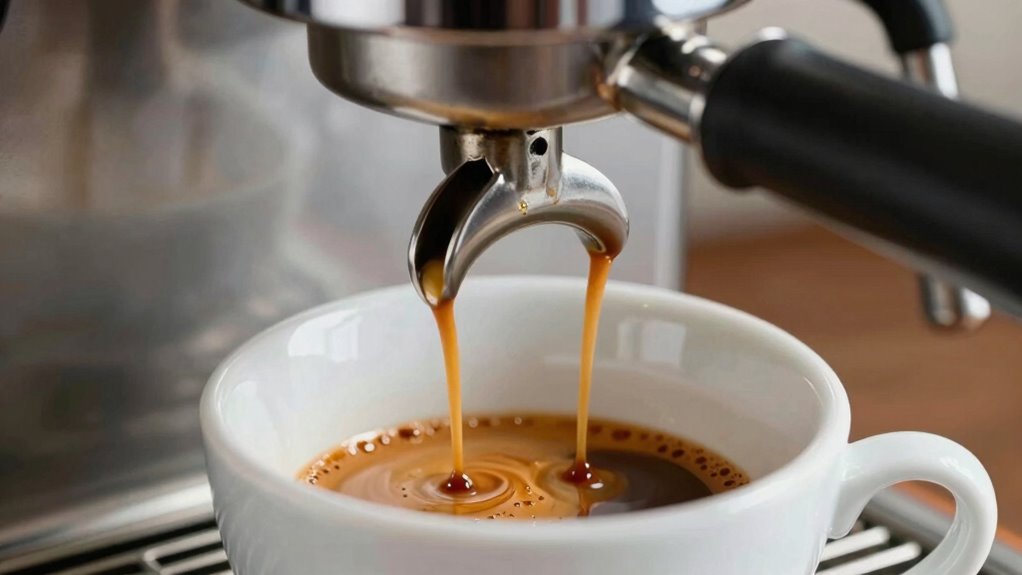
Understanding how dose, yield, and time interact is key to dialing in your perfect espresso. Your coffee freshness and grind size directly influence these variables. Fresh coffee ensures vibrant flavors, but if the grind size is too fine, extraction slows, increasing brew time and risking over-extraction. Conversely, a coarser grind speeds up extraction, possibly leading to underdeveloped flavors. The dose determines the amount of coffee in the basket, affecting both yield and how the water interacts with the grounds. Adjusting the dose alters extraction time and flavor balance. Proper extraction techniques are essential for achieving optimal flavor and consistency in your espresso. Consistent tamping pressure helps ensure even extraction and better flavor control. Additionally, monitoring brew ratio allows for more precise adjustments to enhance flavor extraction. Being aware of extraction variables can help you troubleshoot and refine your brewing method. Paying attention to the interaction of dose, yield, and time enables precise control over the brewing process. Ultimately, precise control over grind size, dose, and yield helps you optimize extraction, highlighting the coffee’s freshness and flavor nuances. Mastering these interactions allows you to craft espresso with clarity, richness, and perfect balance.

Maestri House S2 Espresso Coffee Scale with Timer 0.1g Precision Shot Scale
- Compact and Portable Design: Fits in palm, lightweight for travel
- High-Precision Measurement: 0.1g accuracy for perfect brewing
- Multiple Units and Timer Modes: Switch between g/oz/ml, auto/manual timer
As an affiliate, we earn on qualifying purchases.
As an affiliate, we earn on qualifying purchases.
Understanding the Role of Coffee Dose in Espresso
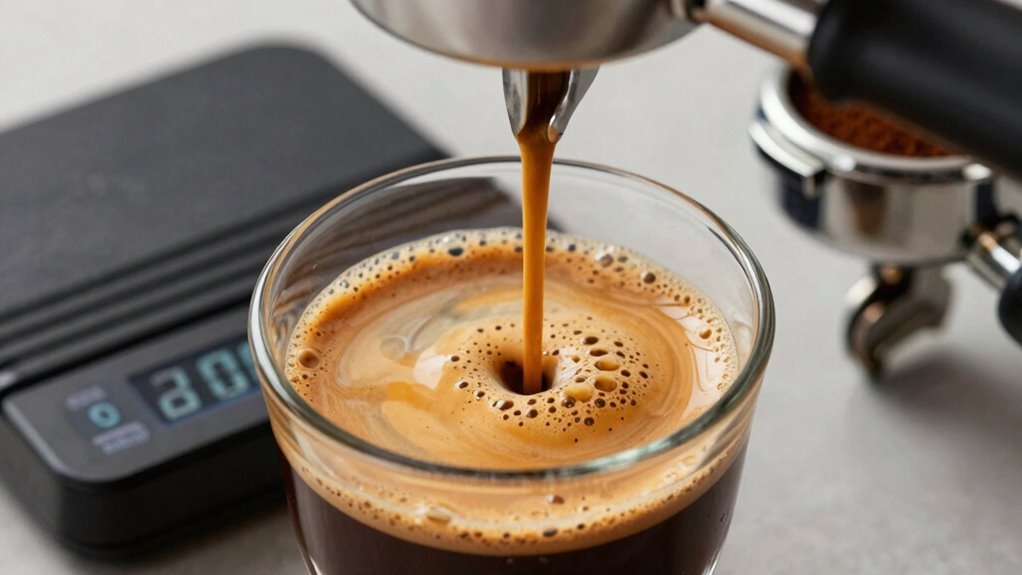
The amount of coffee you use directly impacts your espresso’s flavor and strength. A larger dose can intensify richness, while a smaller one may produce a lighter, more delicate shot. Understanding this balance helps you craft espresso that matches your desired taste and strength preferences. Additionally, proper knife skills are essential in preparing your coffee beans efficiently and consistently for optimal extraction. Mastering smart kitchen tools can also streamline your coffee preparation process, ensuring precision and consistency every time. Recognizing the importance of dose measurement can further improve your brewing results by maintaining uniformity in each shot. Being aware of background checks can also help ensure your equipment and ingredients are trustworthy and safe for optimal brewing quality. Proper timing during extraction is crucial, as it influences the flavor profile and overall quality of your espresso.
Impact on Flavor Profile
The amount of coffee you use directly influences the espresso’s flavor profile, shaping its intensity, balance, and complexity. Different coffee bean varieties respond uniquely to specific doses, highlighting distinct flavor notes and characteristics. For example, a lighter roast may reveal brighter acidity with a smaller dose, while a darker roast can develop richer, bolder flavors with a larger dose. Grinding techniques also play a vital role; a finer grind increases extraction and can enhance the espresso’s richness, whereas a coarser grind might produce a lighter, more delicate taste. Adjusting your dose allows you to fine-tune these elements, ensuring the final shot reflects the desired flavor profile. Paying attention to both bean variety and grinding technique helps you craft a more nuanced, balanced espresso. Additionally, understanding how dose and time impact extraction can help optimize flavor and consistency in your brewing process. Properly managing extraction parameters ensures you get the most out of your coffee’s potential. Exploring dose adjustments can further refine your espresso, revealing new flavor dimensions and improving overall quality. Being mindful of brew time is also essential, as it influences extraction and overall taste.
Influence on Brew Strength
Increasing the coffee dose in your espresso shot generally results in a stronger, more robust brew, while reducing it produces a lighter, more delicate cup. A higher dose means more coffee solids extract into the water, enhancing brew strength. Your coffee grind plays a role too; a finer grind increases surface area, boosting extraction and strength, while a coarser grind lowers it. Water temperature influences extraction efficiency—hotter water extracts more solubles, increasing strength, but too hot can cause over-extraction and bitterness. Balancing these factors ensures a desirable brew strength. Adjusting the dose carefully affects the overall body and intensity, making your espresso richer or lighter depending on your preference. Proper calibration of coffee grind, water temperature, and dose yields the perfect brew strength. Understanding the role of coffee dose is essential for consistent results and optimal flavor. Additionally, awareness of the extraction process helps in fine-tuning your espresso for the best possible taste.

Antonki 2 Pack Digital Timer for Kids Classroom Kitchen Timers for Cooking
- Dual Timing Modes: Count up and countdown functions
- Adjustable Alarm Settings: Loud or silent alarm options
- User-Friendly Design: Large screen and clear buttons
As an affiliate, we earn on qualifying purchases.
As an affiliate, we earn on qualifying purchases.
Why Yield Matters for Consistency and Flavor Balance
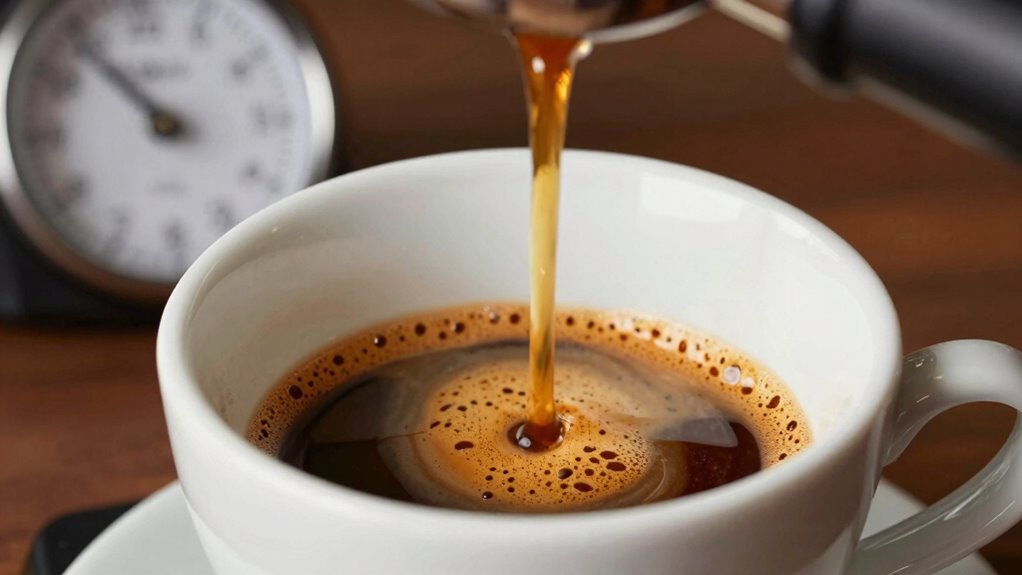
When you control your yield, you guarantee each shot is consistent, making your espresso predictable and reliable. Maintaining the right yield also helps balance flavors, so no single note overpowers the others. Ultimately, this consistency and balance create a better overall espresso experience.
Ensures Brew Consistency
Maintaining a consistent yield guarantees that each shot of espresso delivers the same amount of coffee, which is essential for achieving reliable flavor and strength. When your yield stays steady, you guarantee that factors like coffee bean origins and equipment maintenance don’t cause unexpected variations. Consistency helps you dial in your grind and extraction time more accurately, leading to a predictable shot every time. Consider this table to visualize how yield impacts your process:
| Aspect | Effect of Consistency | Why It Matters |
|---|---|---|
| Coffee Origin | Maintains flavor | Ensures beans’ unique profiles stay intact |
| Equipment Maintenance | Prevents fluctuations | Keeps performance stable |
| Extraction Time | Keeps strength uniform | Avoids over or under-extraction |
| Overall Quality | Ensures reliability | Builds confidence in every shot |
Additionally, understanding the role of measurement accuracy helps in fine-tuning your process for optimal results.
Enhances Flavor Balance
Consistent yield doesn’t just help with reliability—it plays a key role in balancing the flavors in your espresso. When your yield is predictable, you can better control factors like coffee freshness and grind size, which directly influence flavor. Proper yield helps extract the right amount of solubles, highlighting nuanced tastes. To enhance flavor balance, focus on:
- Using fresh coffee to preserve vibrant flavors
- Adjusting grind size for ideal extraction
- Maintaining consistent dose yield for uniformity
- Monitoring brew time to ensure optimal extraction
This control allows the espresso to showcase a harmonious blend of sweetness, acidity, and bitterness. When these elements are in equilibrium, your espresso becomes more enjoyable and complex. Ultimately, accurate yield management ensures every shot delivers a balanced, satisfying flavor profile.
As an affiliate, we earn on qualifying purchases.
How Extraction Time Impacts Taste and Overall Balance

Extraction time plays a crucial role in shaping the flavor profile of your espresso. It directly influences flavor development and extraction dynamics, determining whether your shot tastes balanced or off-balance. Short extraction times often lead to underdeveloped flavors, resulting in sourness and thin body. Longer times can cause over-extraction, making the espresso bitter and harsh. The key is finding the right window for your beans and equipment. Understanding extraction time helps you optimize your brewing process for better taste. Proper control over brewing parameters like time and temperature is essential for achieving the desired flavor profile. Here’s a quick comparison:
| Extraction Time | Flavor Profile | Characteristics |
|---|---|---|
| Short | Bright, acidic, light | Underdeveloped, sour |
| Ideal | Balanced, rich, complex | Perfect flavor development |
| Long | Bitter, harsh, astringent | Over-extracted, dull |
How to Balance Dose, Yield, and Time for Perfect Espresso

Balancing dose, yield, and time is key to achieving that perfect espresso shot, as each factor directly impacts flavor and body. To do this effectively, start with fresh coffee beans, as coffee freshness influences extraction and taste. Next, verify your grinder calibration is spot-on; a consistent grind size helps control extraction time. Then, focus on these steps:
- Adjust your dose based on the beans and your machine’s performance.
- Monitor and tweak your yield until it aligns with your desired strength.
- Use a timer to keep extraction time consistent, aiming for about 25-30 seconds.
- Regularly assess your process, considering how coffee freshness and other variables influence the final shot.
Avoid These Common Espresso Brewing Mistakes
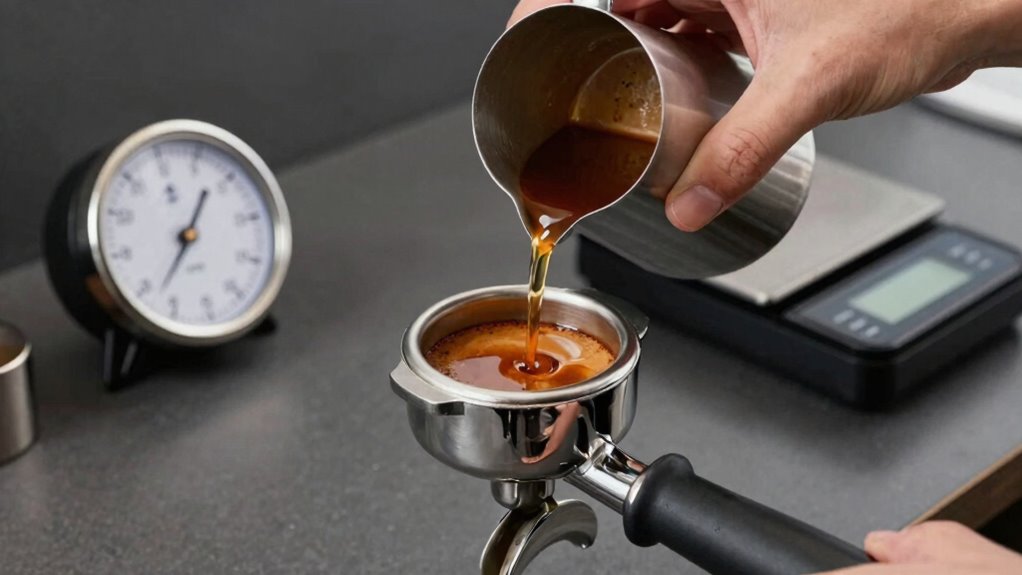
Many espresso beginners make simple mistakes that can ruin the shot before it even begins. One common error is using stale coffee, which affects flavor and crema. Always prioritize coffee freshness for vibrant taste. Another mistake is neglecting grinder calibration; inconsistent grind size leads to over- or under-extraction. Regular calibration ensures uniform extraction and ideal flavor.
| Mistake | Fix |
|---|---|
| Using stale coffee | Use fresh beans within a month of roast |
| Ignoring grinder calibration | Adjust grind size for consistent extraction |
| Not monitoring extraction time | Aim for 25-30 seconds for proper yield |
Avoid these pitfalls to improve your espresso and make every shot count.
Tips to Fine-Tune Your Espresso Using Key Variables
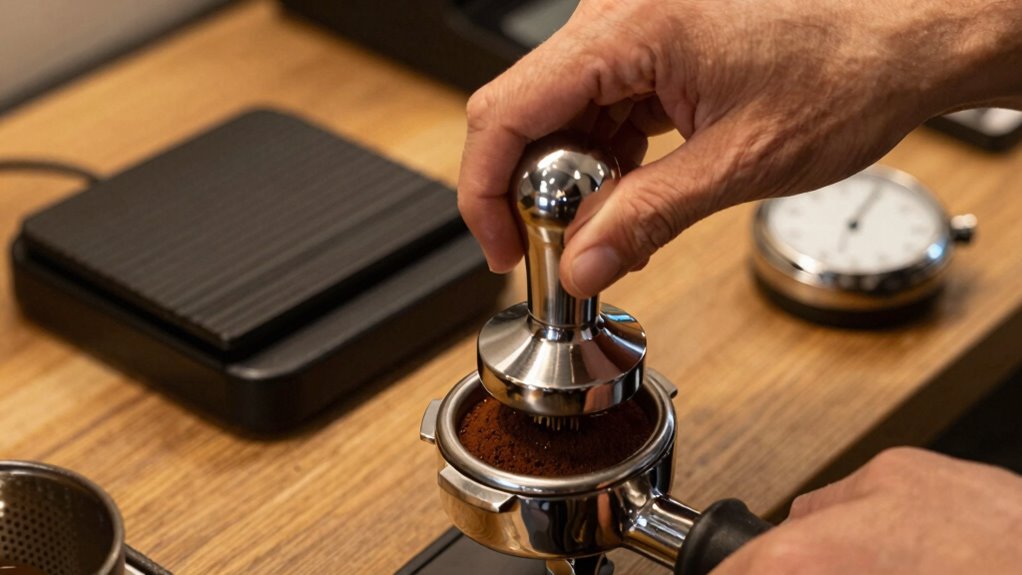
Once you’ve addressed common brewing mistakes, the next step is to fine-tune your espresso by paying close attention to key variables like dose, yield, and time. Understanding espresso history helps you appreciate how different techniques evolved, and selecting the right coffee bean types impacts flavor. To optimize your shot:
Fine-tune your espresso by adjusting dose, yield, and time for perfect flavor extraction.
- Adjust the dose based on your bean type—lighter roasts often need slightly more coffee.
- Monitor yield closely; too much or too little can alter taste and strength.
- Control extraction time to ensure proper flavor extraction without over-extraction bitterness.
Experimenting with these variables allows you to find the perfect balance, highlighting the nuances of your beans and your machine’s capabilities. Refine these factors elevates your espresso from good to exceptional.
Troubleshooting Espresso: Fixing Common Issues
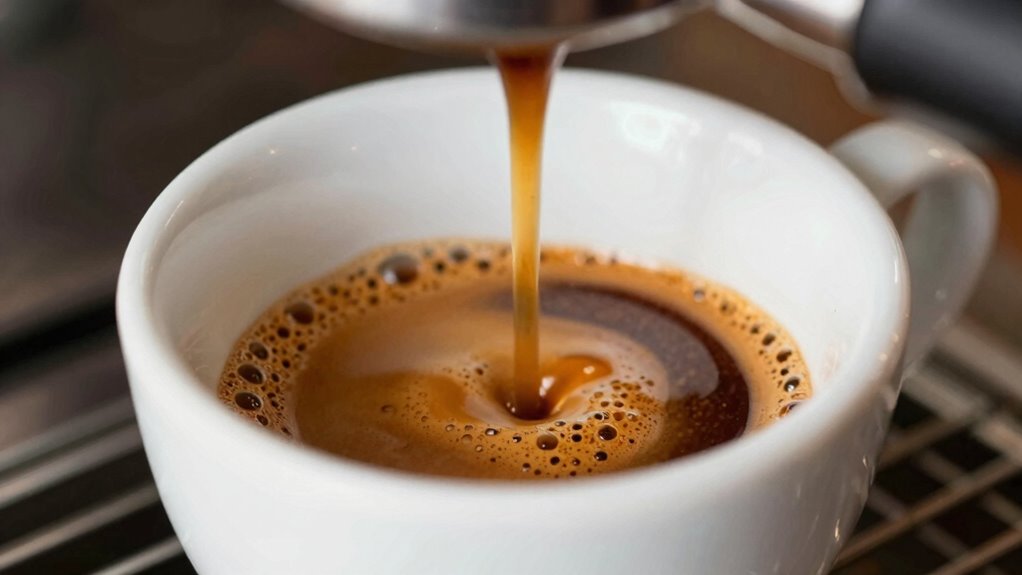
Even with perfect technique, espresso can still present some common issues that require troubleshooting. If your espresso lacks a rich, thick crema, it often points to inconsistent grind size. Grind consistency is vital; too fine can cause over-extraction, resulting in bitter, thin shots, while too coarse leads to under-extraction and weak flavor. If your shot pulls too quickly, try adjusting the grind to be finer, and vice versa. Also, uneven tamping can cause channeling, which affects extraction. Pay attention to your grind consistency and tamp pressure to guarantee even extraction. Remember, small adjustments can make a big difference in your espresso’s crema and overall quality. Troubleshooting these issues helps you refine your process for consistently better shots.
Safe Ways to Experiment and Improve Your Espresso Shots
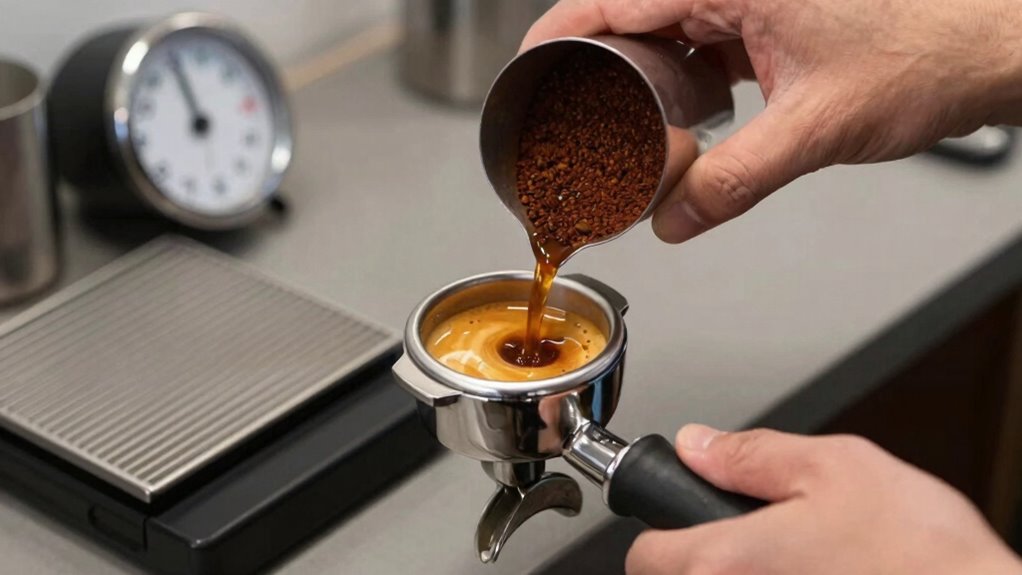
Experimenting with your espresso shots can be a rewarding way to improve quality without risking major setbacks. To do this safely, start with small adjustments. First, experiment with your brewing temperature—slightly raising or lowering it can enhance flavor. Second, consider your coffee plant’s origin; different beans respond uniquely, so try beans from different regions. Third, adjust your dose yield incrementally, ensuring you don’t over-extract or under-extract. Keep notes on each change to track what works best. Remember, patience is key—small tweaks over time lead to better shots. Always use fresh coffee and maintain consistent grind size. Safe experimentation allows you to discover your perfect espresso while preserving the integrity of your brewing process.
Frequently Asked Questions
How Does Grind Size Influence Dose, Yield, and Time?
Changing your grind size directly impacts dose, yield, and time because it affects grind consistency and particle size. A finer grind increases resistance, leading to longer extraction time and potentially more yield, while a coarser grind reduces extraction time and yield. You need to adjust your dose accordingly to maintain balance, ensuring your espresso isn’t over- or under-extracted. Fine-tuning grind size helps you control extraction and optimize flavor.
Can Environmental Factors Affect Espresso Extraction Variables?
Absolutely, environmental factors influence espresso extraction variables. Water temperature is essential—if it’s too hot or cold, it can under- or over-extract your shot. Ambient humidity also plays a part, affecting grind consistency and moisture levels in the beans. You notice, as humidity rises, your grind may clump or change, impacting yield and time. Staying attentive to these atmospheric aspects helps you fine-tune your technique for a perfect shot.
What Are Signs of Over-Extraction or Under-Extraction?
You’ll notice over-extraction in your espresso as bitter, harsh flavors, and a thin, dull body, indicating extraction is too long or intense. Under-extraction results in sour, sharp tastes with a thin or hollow body, meaning the coffee wasn’t brewed long enough or wasn’t ground properly. Both signs disrupt flavor balance and hinder extraction consistency. Adjust your grind size, dose, or brew time to fine-tune the process and achieve a balanced, smooth shot.
How Do Different Coffee Origins Impact Optimal Dose and Timing?
Different coffee origins influence your ideal dose and timing because of their unique Coffee bean varieties and flavor profiles. For example, African beans might require a slightly shorter extraction time to highlight bright, fruity notes, while South American beans may need more time for a balanced, nutty flavor. Conducting flavor profile analysis helps you dial in the right dose and extraction time, ensuring each shot highlights its origin’s best qualities.
Is There a Universal Best Dose and Yield for All Espresso Beans?
You won’t find a universal best dose and yield for all espresso beans because flavor consistency depends on your equipment calibration and the beans’ unique qualities. It’s like tuning a guitar—you need to adjust settings for each coffee to get the perfect sound. While general guidelines exist, experimenting guarantees you discover the ideal dose and yield, making each shot tailored to your beans and equipment.
Conclusion
Think of brewing espresso like tuning a musical instrument—you need the right strings, tension, and timing to hit the perfect note. When you adjust dose, yield, and time, you’re fine-tuning your shot for harmony. I once watched a barista tweak these variables, and suddenly, a bitter mess transformed into a symphony of flavors. Remember, small adjustments can make a big difference—so keep experimenting until your espresso sings just right.