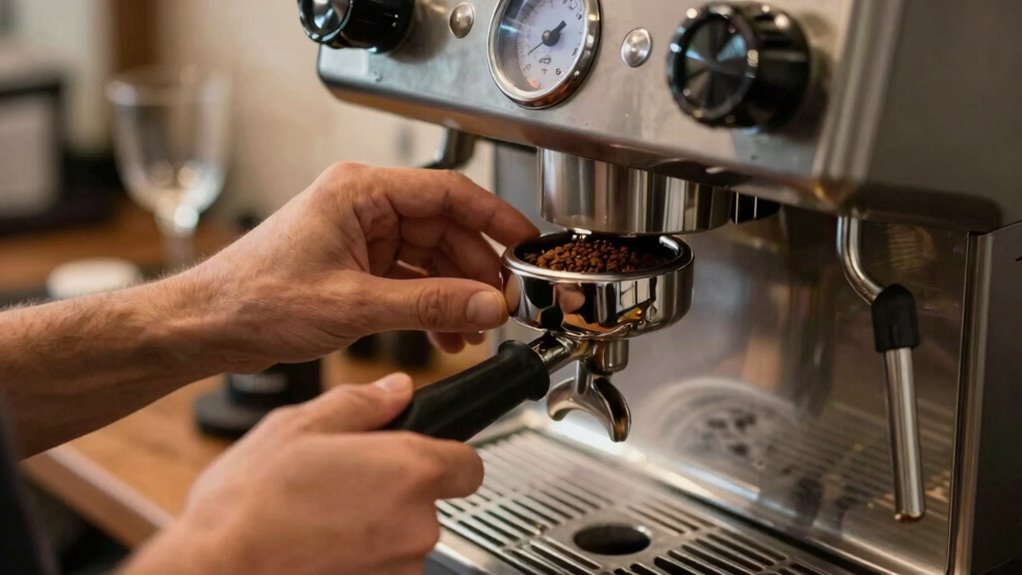

To dial in espresso without guessing, focus on precise measurements like grind size, dose, and extraction time, using a scale and timer to track each shot. Pay attention to brewing temperature and tamp evenly for consistent results. Adjust the grind to tweak flavor and avoid over- or under-extraction. Keep detailed notes of your changes, so you can make informed tweaks. If you want to master this process and produce perfect shots every time, there’s more to explore.
Open a free Amazon Business account
Business pricing, bulk buying and tax-exempt orders.
As an affiliate, we earn on qualifying purchases.
Key Takeaways
- Maintain detailed logs of grind size, dose, tamp pressure, and extraction time to identify consistent patterns and guide precise adjustments.
- Use a calibrated scale and timer to measure variables accurately, reducing reliance on guesswork during each shot.
- Regularly assess flavor profiles and record results to fine-tune parameters based on sensory feedback and data trends.
- Keep equipment clean and well-maintained to prevent variability and ensure reliable extraction conditions.
- Adjust grind size, dose, and brew time systematically, using flavor cues and recorded data for informed, consistent dial-in.
As an affiliate, we earn on qualifying purchases.
Understanding the Basics of Espresso Dial-In
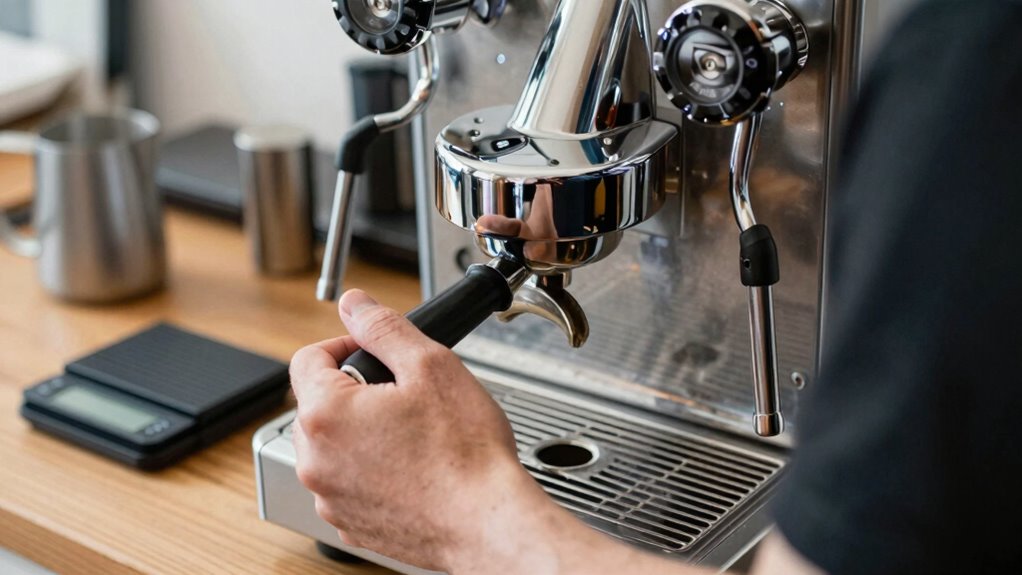
Have you ever wondered why your espresso doesn’t taste quite right, even after following a recipe? It often comes down to understanding the basics of espresso dial-in. The key is balancing espresso flavor, which depends heavily on brewing temperature. If your temperature’s too high, you might get bitter, over-extracted shots; too low, and your espresso could taste sour or weak. Consistent brewing temperature guarantees your coffee extracts properly, highlighting the right flavors. Dialing in means adjusting your grind size, dose, and brew time to match your machine’s temperature. Proper temperature control ensures consistent shot quality and allows you to fine-tune your espresso more precisely. By paying close attention to these factors, you can fine-tune your shot for the perfect balance of crema, body, and flavor. Once you master temperature control, dialing in becomes straightforward and reliable. Proper temperature control is essential for achieving optimal extraction and flavor clarity in your espresso. Additionally, understanding temperature stability can help prevent fluctuations that negatively impact your shot quality.
coffee grinder calibration tools
As an affiliate, we earn on qualifying purchases.
As an affiliate, we earn on qualifying purchases.
Choosing the Right Coffee and Equipment
Selecting the right coffee and equipment is crucial to achieving a great espresso shot. Start with fresh coffee beans; their flavor and aroma diminish quickly, so use beans roasted within the last few weeks. Freshness guarantees your shot has vibrant flavor and proper extraction. When choosing equipment, prioritize quality machines that are easy to maintain and clean. Regular equipment maintenance prevents buildup and ensures consistent performance, which is indispensable for dialing in. Keep your grinder calibrated and clean so your coffee grounds are uniform. Investing in reliable equipment simplifies the process and reduces guesswork. Remember, consistent results depend on both fresh coffee and well-maintained equipment, helping you achieve the perfect espresso shot every time. Additionally, selecting equipment with easy-to-clean parts can make ongoing maintenance more manageable. Ensuring your coffee grinder remains calibrated and clean is essential for consistent grind size and extraction. Maintaining proper fluid management in your setup can also enhance overall consistency and flavor. Proper temperature stability in your brewing process further contributes to achieving optimal extraction and flavor. Incorporating routine calibration into your maintenance routine can help maintain optimal performance over time.
As an affiliate, we earn on qualifying purchases.
How to Measure Your Shots With a Scale and Timer
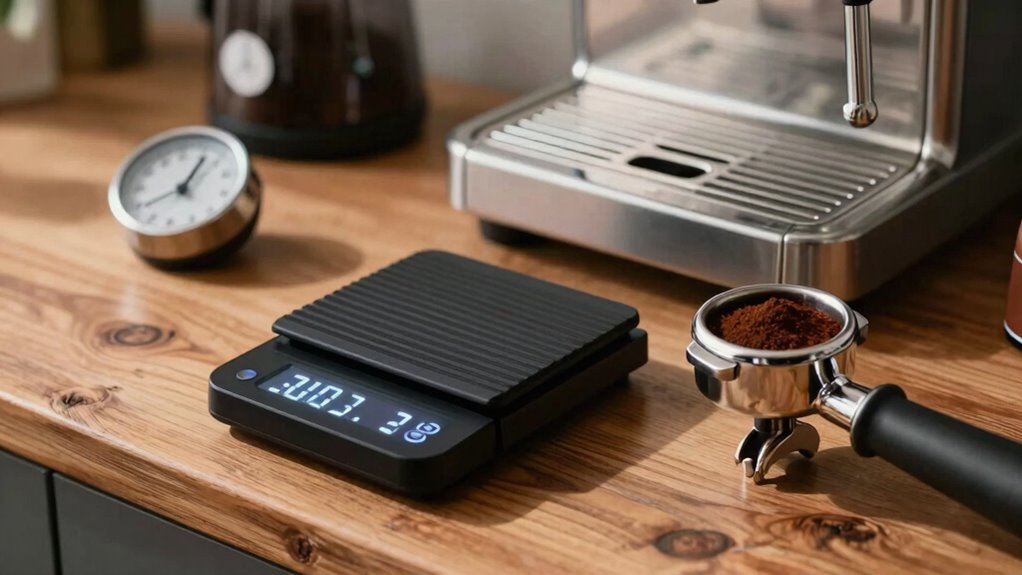
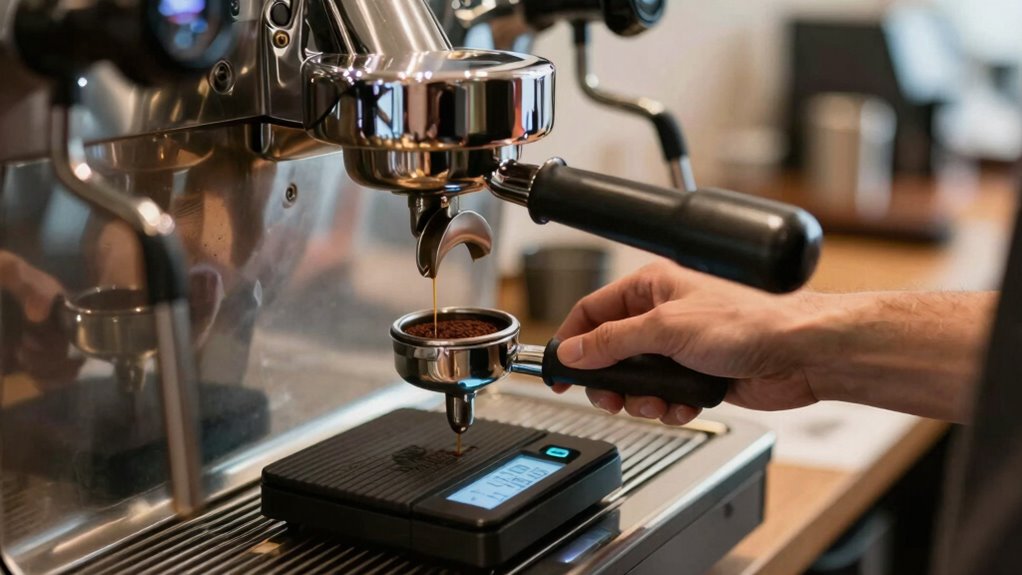
Using a scale and timer is crucial for dialing in your espresso because consistent measurements guarantee you replicate successful shots. Accurate weight and timing help you understand the relationship between coffee storage, freshness, and extraction. Knowing espresso history reveals that precise measurements evolved with modern equipment, improving consistency. To get started:
- Weigh your coffee dose before brewing to guarantee uniformity.
- Use a timer to track extraction time, aiming for around 25-30 seconds.
- Record your measurements to fine-tune variables for ideal flavor.
temperature control espresso machine
As an affiliate, we earn on qualifying purchases.
As an affiliate, we earn on qualifying purchases.
Adjusting Grind Size and Dose for Better Extraction
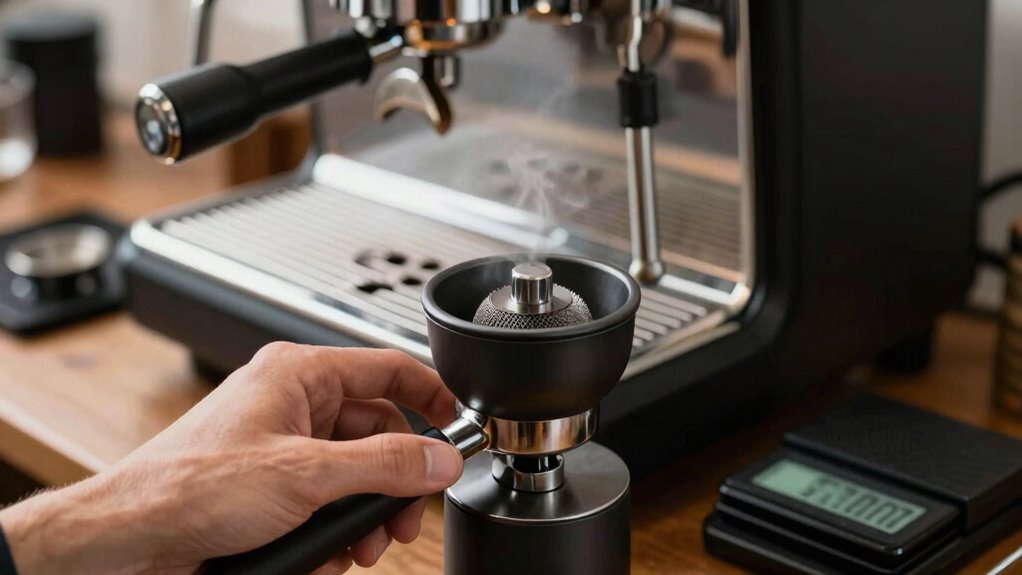
After measuring your coffee dose and timing your shots, tweaking the grind size and dose can markedly improve extraction quality. Smaller adjustments can enhance flavor balancing and improve grind consistency, leading to richer, more balanced espresso. Use the table below as a guide:
| Grind Size | Dose (grams) | Effect |
|---|---|---|
| Fine | 18-20 | More body, slower flow |
| Medium | 18-20 | Balanced extraction |
| Coarse | 18-20 | Faster flow, lighter flavor |
| Grind Size | Dose (grams) | Effect |
| Very Fine | 17-19 | Increased resistance, richer flavor |
| Medium-Fine | 18-20 | Ideal flavor, consistent shot |
Adjusting both parameters helps control flavor and consistency, and understanding how grind size impacts extraction can further refine your brewing process.
Taste and Evaluate Your Espresso to Improve Results
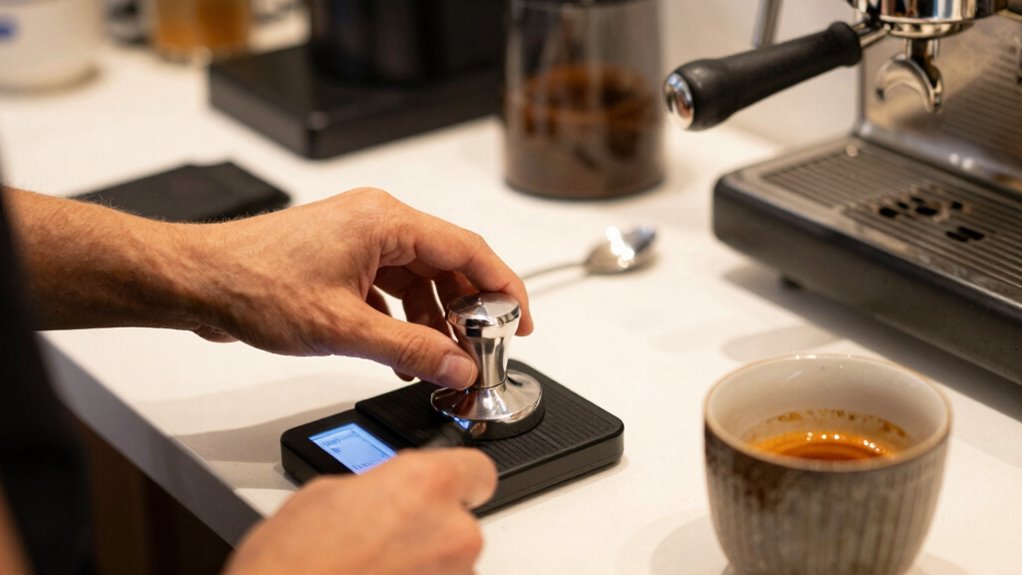
You should taste your espresso carefully, paying attention to common flavors like sweetness, acidity, and bitterness. Note its texture and body—whether it feels smooth, thin, or heavy—and how those qualities match your preferences. Use what you learn to adjust your grind or brewing method, aiming for a balanced, flavorful shot. Incorporating light therapy devices can also help improve your focus and consistency during brewing sessions. Being mindful of your sensory perception can enhance your ability to evaluate and refine your espresso. Developing a palate awareness through regular tasting can further sharpen your ability to discern subtle flavor differences, especially when you understand the sensory evaluation process involved. Additionally, understanding coffee chemistry can help you recognize how different variables influence flavor and aroma, leading to more precise adjustments.
Recognize Common Tastes
Recognizing common tastes in espresso is essential for refining your brewing skills. By identifying flavor profiles and aroma characteristics, you can better understand what your shot needs. Here are three key aspects to focus on:
- Sweetness: A well-balanced shot has natural sweetness, often with hints of caramel or fruit, indicating proper extraction.
- Bitterness: Excessive bitterness suggests over-extraction, while too little may mean under-extraction.
- Sourness: A bright, acidic note can be desirable in moderation but signals under-extraction if too sharp. Paying attention to these taste elements helps develop your tasting skills and improves your ability to dial in the perfect shot. Understanding extraction principles can further enhance your ability to recognize these flavors and make precise adjustments.
Note Texture and Body
Pay close attention to the texture and body of your espresso, as these qualities reveal a lot about the brewing process. A rich, full-bodied shot often indicates proper extraction, while a thin or watery texture suggests under-extraction. The origin of your coffee beans influences body—some beans naturally produce a heavier, creamier mouthfeel, while others are lighter. Be aware of common espresso brewing myths; for instance, that darker roasts always yield thicker body—this isn’t always true. Instead, focus on how the beans’ origin and roast level contribute to the shot’s texture. Evaluating these sensory cues helps you fine-tune grind size, dose, and extraction time, ultimately guiding you toward a balanced, satisfying espresso without guesswork. Recognizing the body and texture as sensory cues can significantly enhance your ability to troubleshoot and improve your brewing results. Understanding brewing variables can further help you achieve consistent, high-quality shots. Additionally, paying attention to dose consistency allows for more precise control over your espresso’s final characteristics. Being mindful of extraction time is crucial, as it directly impacts the shot’s overall body and flavor profile. Remember, proper tamping also plays a vital role in ensuring even extraction and consistent texture.
Adjust Based on Flavor
Tasting and evaluating your espresso is essential for refining your brewing process. When you identify the flavor profile, you can make targeted adjustments. Consider these key factors:
- Flavor pairing: If your shot tastes flat or dull, tweak the grind size or extraction time to enhance brightness or richness.
- Bean freshness: Fresh beans usually produce vibrant flavors; stale beans may lead to dull or sour notes. Use fresh beans for better flavor clarity.
- Balance and complexity: Adjust parameters based on whether the espresso is too bitter, sour, or weak, aiming for a harmonious, layered taste. Paying attention to home safety when handling hot equipment can help prevent accidents during your brewing process. Additionally, understanding how flavor profiles develop with different beans can guide your adjustments more precisely.
- Consistent evaluation: Developing a routine of flavor assessment can help you remember what adjustments worked best over time and improve your overall technique.
Keep a Record of Your Adjustments and Results
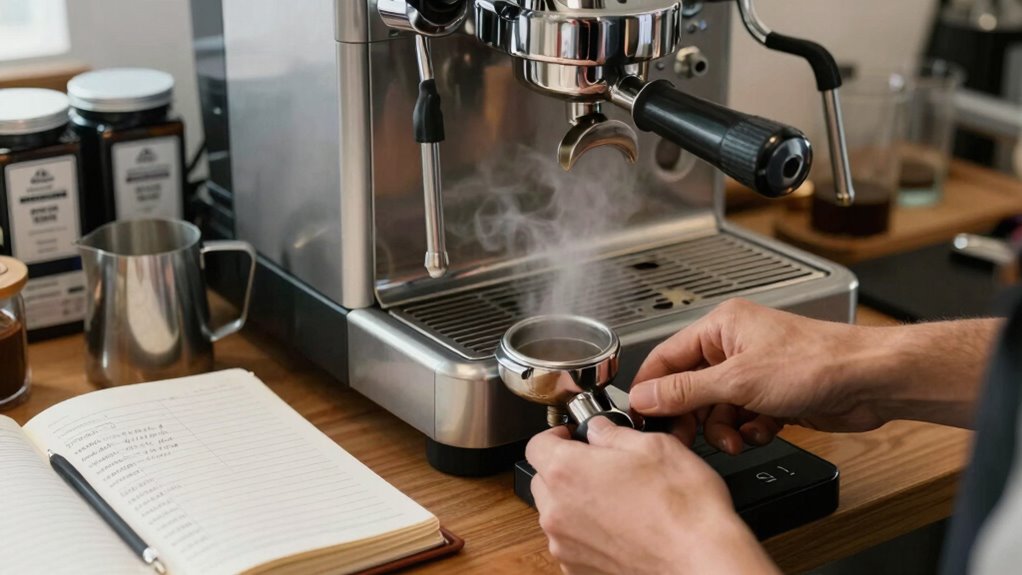
To improve your espresso brewing, keeping a record of your adjustments and results is essential. This habit helps you understand how different variables affect your coffee flavor and guarantees consistency over time. Track details like grind size, dose, tamp pressure, and extraction time after each shot. Note any changes you make and the resulting taste, aroma, and body. Consistently logging this information allows you to identify patterns and refine your technique efficiently. Additionally, recording maintenance routines for your equipment ensures peak performance and prevents issues that could compromise your shots. By maintaining detailed notes, you create a reliable reference, making future adjustments quicker and more precise. This systematic approach leads to better espresso quality and a more enjoyable brewing experience.
Common Mistakes That Ruin Your Espresso Consistency

One of the biggest hurdles to consistently great espresso is making avoidable mistakes that throw off your shot. These errors can sabotage your efforts despite understanding espresso recipes and coffee origins.
To keep your shots on track, avoid these common mistakes:
- Using inconsistent grind sizes, which affects extraction and shot timing.
- Ignoring the freshness of coffee origins, leading to dull or sour flavors.
- Rushing the tamping process or applying uneven pressure, resulting in uneven extraction.
Each of these mistakes can cause variability in your espresso, making it harder to replicate desired results. By paying attention to grind consistency, selecting high-quality, fresh coffee, and tamping evenly, you’ll improve your chances of dialing in perfect shots every time.
Troubleshooting Over-Extraction and Under-Extraction
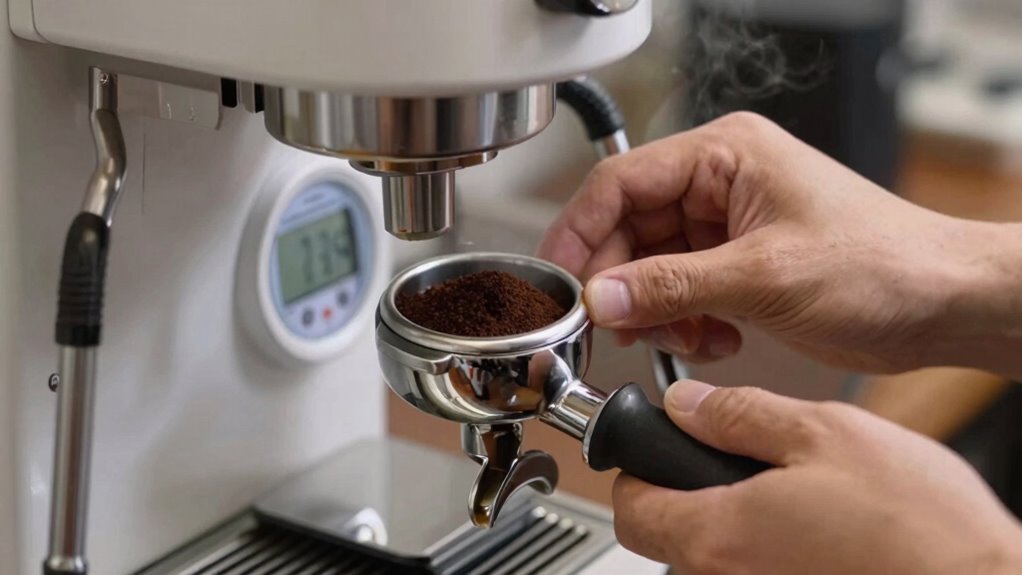
When your espresso tastes bitter, sour, or flat, it’s often a sign that something’s off with the extraction process. Over-extraction pulls too many flavors, resulting in bitterness and a loss of brightness. Under-extraction, on the other hand, leaves your shot sour, weak, and unbalanced. To troubleshoot, focus on adjusting grind size, tamp pressure, and brew time. Proper equipment maintenance guarantees consistent flow and temperature, preventing uneven extraction. Use this guide to identify flavor profiles:
| Issue | Cause | Solution |
|---|---|---|
| Bitter taste | Over-extraction, stale beans | Shorten brew time, adjust grind finer |
| Sour taste | Under-extraction, coarse grind | Lengthen brew time, grind finer |
| Flat flavor | Poor tamp, equipment issues | Ensure consistent tamp, clean equipment |
| Weak body | Insufficient extraction | Increase brew time, check grind settings |
| Off-flavors | Dirty equipment, stale beans | Regular maintenance, fresh beans |
Developing a Simple Routine for Perfect Espresso Every Time
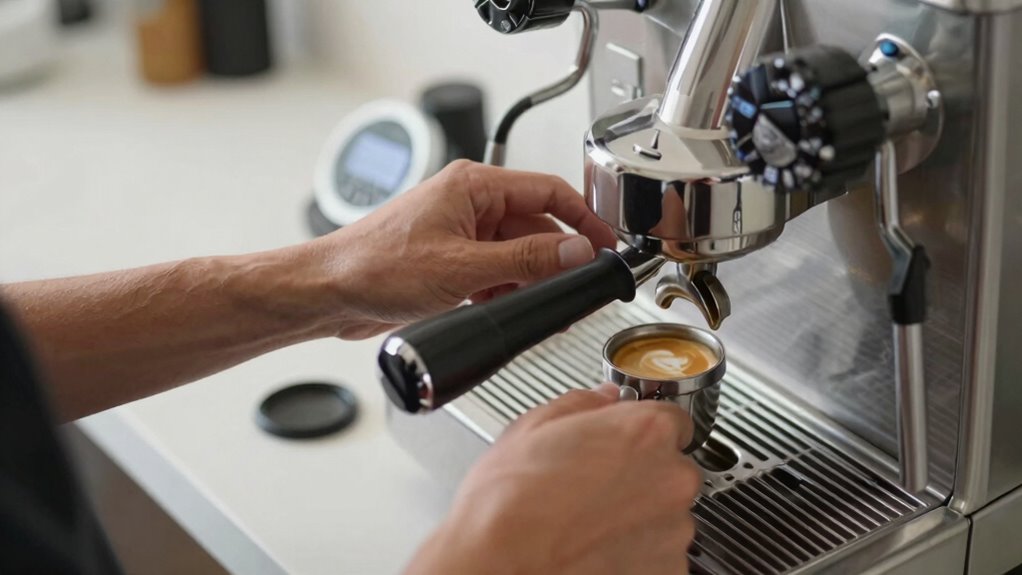
Perfecting your espresso starts with establishing a straightforward, consistent routine. This helps you avoid common espresso myths and guarantees your equipment stays in top shape. A simple routine minimizes guesswork and produces reliable results.
To build your routine, focus on:
- Consistent grind size and dose—measure precisely each time to prevent over- or under-extraction.
- Regular equipment maintenance—clean and calibrate your machine to maintain peak performance.
- Standardized extraction time—stick to a set shot duration to develop a familiar taste profile.
Frequently Asked Questions
How Often Should I Clean My Espresso Equipment for Optimal Results?
You should clean your espresso equipment at least once a week for ideal results. Regular cleaning helps maintain coffee bean freshness and prevents buildup that can affect flavor. Be sure to clean the grinder, including calibration adjustments, to guarantee consistent grind size. Additionally, clean the portafilter, basket, and group head regularly. This routine keeps your espresso tasting fresh and makes sure your machine functions smoothly, making every shot perfect.
What Are the Signs of a Properly Dialed-In Espresso Shot?
A properly dialed-in espresso shot has a rich, balanced flavor, with a smooth, velvety body. You’ll notice consistent extraction timing, typically around 25-30 seconds, and the grind remains uniform in size. The shot should flow steadily, without rushing or stalling. If your espresso has a sweet aroma, good crema, and no sour or bitter tastes, you’re on the right track, indicating ideal grind consistency and extraction.
Can Different Beans Require Different Dialing Techniques?
Yes, different beans require different dialing techniques. You need to adjust for factors like bean freshness and grind consistency, which influence extraction. For fresh beans, you might grind slightly coarser to avoid over-extraction, while older beans may need a finer grind. Each bean variety’s unique characteristics demand that you tweak your grind size and tamping pressure, ensuring you dial in precisely without guessing every shot.
How Does Ambient Temperature Affect Espresso Extraction?
Ambient temperature can secretly influence your espresso extraction, making it harder to dial in. As temperatures rise or fall, ambient humidity shifts, affecting bean moisture and grind consistency. You might notice subtle changes in shot timing or flavor. To stay on top, regularly recalibrate your machine, especially when weather shifts. Keep a close eye on your environment, because even slight temperature swings can throw off your perfect shot.
Is It Necessary to Adjust Settings for Different Espresso Styles?
Yes, you should adjust your settings for different espresso styles. Changes in grind consistency and tamp pressure influence extraction and flavor, so tweaking your grinder or tamping can help achieve your desired profile. For a richer, full-bodied shot, slightly coarser grind and firmer tamping work well, while a lighter, brighter shot benefits from finer grind and gentler tamp. Always fine-tune these variables to match the style you’re aiming for.
Conclusion
Mastering espresso is like tuning a fine instrument—you’ll find harmony through patience and precise adjustments. With each shot, you’re composing a symphony of flavors, learning to read the subtle notes of grind, dose, and timing. Keep a steady hand and a curious mind, tweaking and tasting until your perfect brew emerges like a rare jewel. Embrace the journey, and soon, every cup will sing with the richness of your craftsmanship.
Fall Picks
fall essentials
As an affiliate, we earn on qualifying purchases.