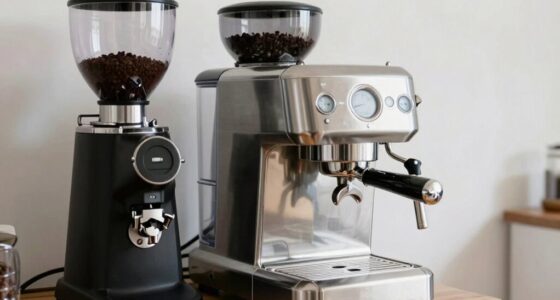
Stepped grinders have preset grinding levels, making them easy to use and ensuring consistent results, ideal for simple brewing methods. Stepless grinders allow continuous adjustment, giving you more control for precise extraction, perfect for specialty brews. The choice depends on whether you prioritize convenience or fine control over grind size. Want to know which type suits your brewing style best? Keep exploring, and you’ll discover more helpful tips.

Get coffee and tea gear delivered free — and shop member deals
- Fast, free delivery on millions of items
- Access to Prime Big Deal Days deals on October 6–7
- Prime Video, Amazon Music and more included
Key Takeaways
- Stepped grinders have preset, fixed grinding levels for quick, consistent adjustments; stepless grinders offer infinitely adjustable, precise settings.
- Stepped models are simpler and require less maintenance, while stepless grinders allow fine-tuning but may need more calibration.
- For consistent extraction, stepped grinders ensure uniform grind sizes; stepless grinders provide customization for specific brewing needs.
- Stepped grinders are typically quieter and easier to operate, whereas stepless grinders offer higher control at the cost of increased complexity.
- Choose based on preference for ease of use and speed (stepped) versus precision and versatility (stepless).
As an affiliate, we earn on qualifying purchases.
What Are Stepped and Stepless Coffee Grinders?
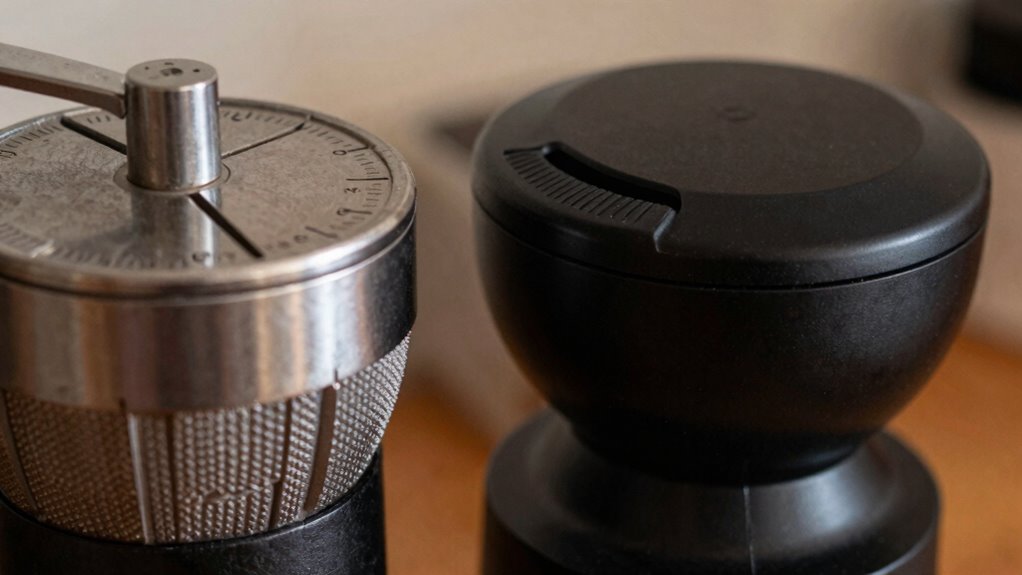
Understanding the difference between stepped and stepless coffee grinders is essential for choosing the right equipment for your brewing needs. Stepped grinders feature preset grinding levels, making it easy to switch between coarse and fine settings quickly. This provides consistent grinding, which helps maintain uniform extraction and flavor. Conversely, stepless grinders offer infinitely adjustable settings, allowing you to fine-tune grind size precisely. This flexibility can improve grinding consistency, especially for specific brewing methods. When it comes to maintenance requirements, stepped grinders tend to be simpler, with fewer moving parts that need regular attention. Stepless models might require more frequent calibration to keep settings accurate. Additionally, understanding grinding precision can help you optimize your coffee experience and achieve the desired flavor profile. Your choice depends on whether you prioritize ease of use or precision, but understanding these differences guarantees you select the best grinder for your needs. For example, some users find that adjustment control plays a crucial role in their brewing process. Moreover, knowing how user experience influences your satisfaction can help you make a more informed decision.
As an affiliate, we earn on qualifying purchases.
Pros and Cons of Stepped vs. Stepless Grinders
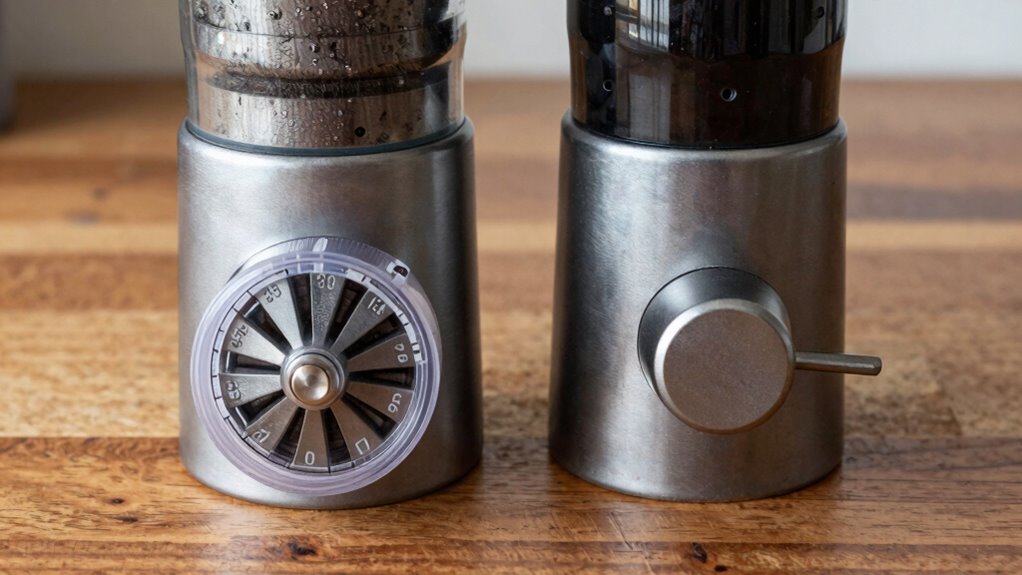
When weighing the advantages and disadvantages of stepped versus stepless grinders, it’s important to take into account how each type aligns with your brewing style and preferences. Stepped grinders offer predefined adjustable settings, making it easy to switch between brew types. They typically provide consistent grind sizes, ensuring grind consistency. However, they lack fine control, which might limit precision for certain brewing methods. Stepless grinders allow continuous adjustment, giving you more precise control over grind size. This flexibility benefits those seeking perfect extraction but can require more attention to detail. Additionally, the grind adjustment mechanism plays a crucial role in how easily and accurately you can modify the grind size. Understanding the latest trends in digital innovation can also help you choose grinders with advanced features for better performance.
adjustable coffee grinder for espresso
As an affiliate, we earn on qualifying purchases.
As an affiliate, we earn on qualifying purchases.
Which Coffee Grinder Is Best for Your Brewing Style?
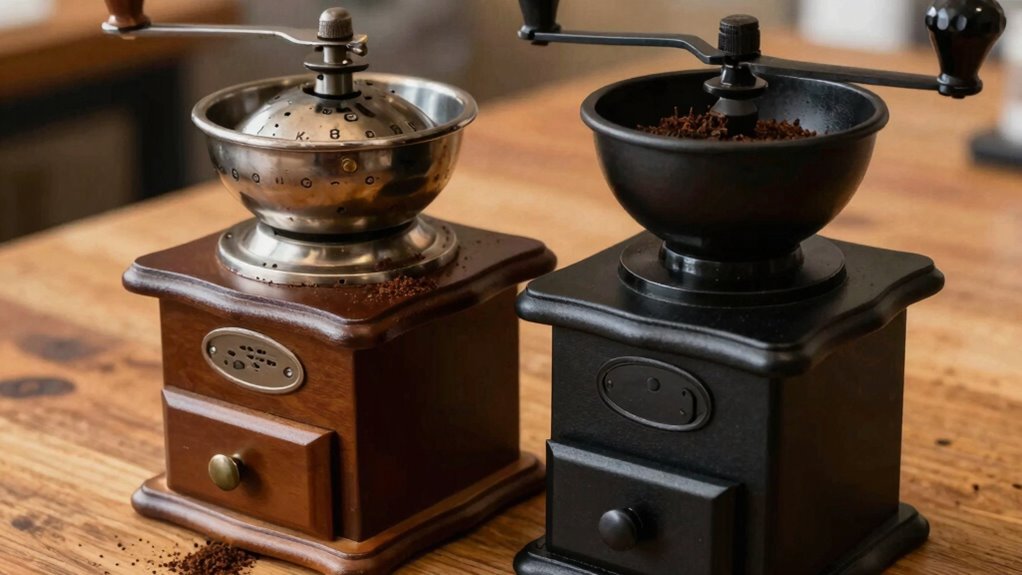
Choosing the right coffee grinder depends largely on your brewing style and the level of control you want over your grind size. If you prefer precision and consistent results, a grinder with excellent grinding consistency is ideal, especially for methods like espresso or pour-over. Stepless grinders often provide finer control, allowing you to adjust grind size smoothly, which is great for brewing styles requiring precise extraction. On the other hand, if noise levels are a concern, especially in the mornings, stepped grinders tend to be quieter and easier to operate. Consider how much control you need over your grind and how important noise is in your routine. Matching your brewing method with a grinder tailored to your preferences ensures maximum flavor and a more enjoyable coffee experience. Additionally, understanding biodiversity and sustainable practices can help you choose eco-friendly appliances and support environmentally conscious brands.
manual coffee grinder with infinite settings
As an affiliate, we earn on qualifying purchases.
As an affiliate, we earn on qualifying purchases.
How to Choose the Right Coffee Grinder for Your Needs
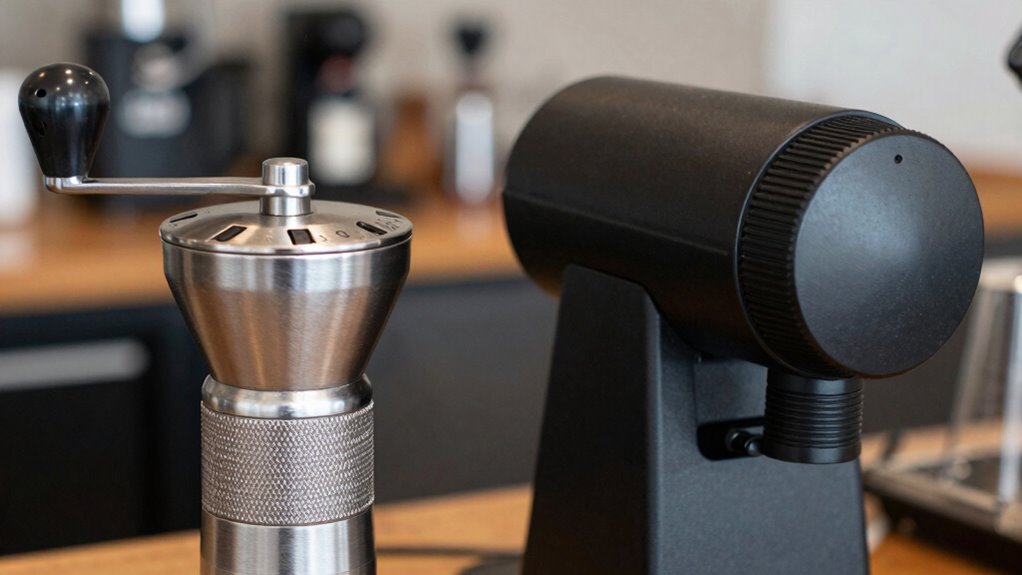
Deciding on the right coffee grinder starts with evaluating your brewing habits and preferences. Consider how you brew daily—whether you prefer espresso, French press, or drip—as this impacts your choice. To preserve coffee bean quality, look for grinders with consistent grind size and easy cleaning options. When selecting, keep these tips in mind:
- Opt for burr grinders over blade for better consistency
- Choose a grinder with adjustable settings for precision
- Prioritize models with easy-to-access parts for grinder maintenance
- Consider your storage space and noise level requirements
- Read reviews on durability and coffee bean preservation
A good grinder helps maintain flavor and aroma, so regular grinder maintenance tips, like cleaning to prevent oil buildup, are essential for long-term performance. Additionally, understanding grinding technology can help you make more informed decisions and ensure your coffee stays fresh and flavorful. Being aware of grinder types can also guide you toward the most suitable option for your specific needs. Exploring different grinding methods can further enhance your overall coffee experience. It’s also beneficial to learn about filtering options, which can affect the consistency of your grind and overall brewing results.
Final Tips for Picking the Perfect Coffee Grinder
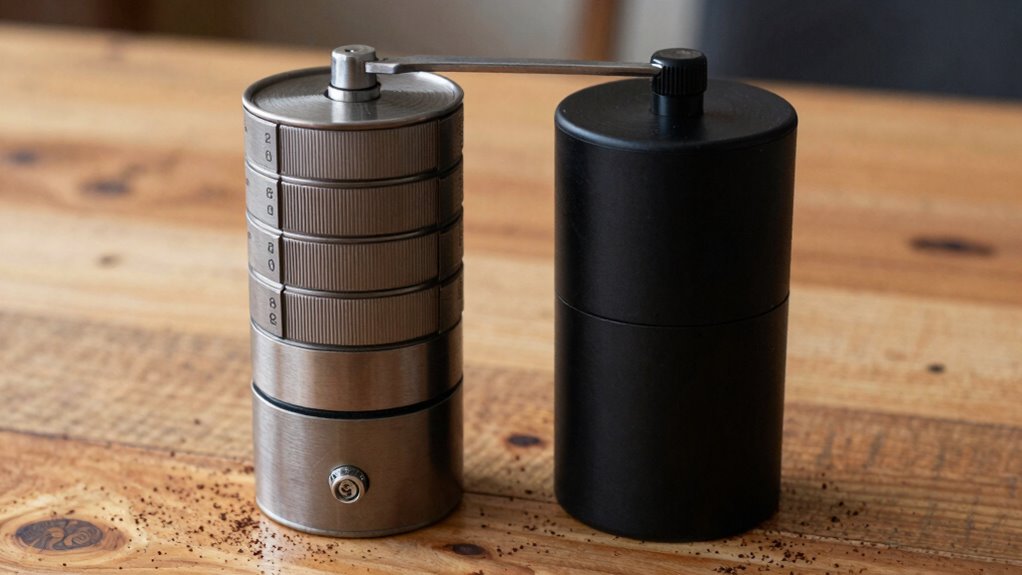
To pick the perfect coffee grinder, focus on your brewing style and daily routine to guarantee it fits seamlessly into your coffee ritual. Pay attention to grind consistency, as uniform grounds ensure ideal extraction and flavor. If you prefer precision, stepless grinders offer finer control, but stepped grinders can still deliver good results with more convenience. Consider noise levels, especially if you make coffee early in the morning or in shared spaces—quiet models make the process less disruptive. Think about your budget and space as well. A grinder that matches your needs and preferences will improve your overall coffee experience. Additionally, understanding grinder types can help you make a more informed decision. For those interested in customization, adjustable grind settings can provide more versatility for different brewing methods. Choosing the right grinder also involves considering grind adjustment mechanisms, which can influence how easily you can switch between grind sizes. Taking into account the ease of use can also make a significant difference in your daily routine. Ultimately, selecting a grinder that balances grind consistency, noise levels, and usability will help you enjoy better-tasting coffee every day.
Frequently Asked Questions
Can I Convert a Stepped Grinder to a Stepless One?
You can often convert a stepped grinder to a stepless one through grinder modification, but it depends on your specific model. Some grinders have adjustable adjustment mechanisms or modifications that allow for smoother, continuous settings. You’ll need to carefully research your grinder’s design and possibly install a new adjustment mechanism or upgrade existing ones. Keep in mind, this process may require technical skills and could void your warranty.
Do Stepless Grinders Require More Maintenance Than Stepped Ones?
Stepless grinders generally require more maintenance than stepped ones because their continuous adjustment mechanisms can accumulate more residue and dust. You’ll need to clean them more frequently to maintain grinder durability and guarantee smooth operation. Regular cleaning prevents build-up that can clog or damage the grinder’s components. While stepless models offer precise control, their maintenance demands are higher, so you should be prepared for more consistent cleaning to keep them functioning effectively.
Are Stepless Grinders Suitable for All Types of Coffee Beans?
While stepless grinders are versatile, they might not be ideal for every coffee bean type, especially those requiring precise grind settings. You’ll want to take into account your coffee bean storage and how often you clean your grinder, as stepless models need more attentive grinder cleaning tips to keep performance at its best. With careful maintenance and appropriate bean storage, a stepless grinder can handle a variety of beans, enhancing your brewing experience.
How Do Grind Consistency and Flavor Differ Between the Two Types?
You’ll notice that stepless grinders offer more precise grind consistency, allowing you to fine-tune your brew strength perfectly. This precision enhances flavor extraction, leading to richer, more nuanced coffee. On the other hand, stepped grinders provide consistent but limited grind settings, which might result in less ideal flavor control. If you prioritize grind precision and tailored flavor, a stepless grinder helps you achieve a more balanced, flavorful cup.
Are There Any Safety Concerns With Stepless Grinders?
There are minimal safety concerns with stepless grinders, but you should always prioritize grinder safety to prevent accidents. Because they offer continuous adjustment, you might accidentally over-tighten or mishandle the grinding mechanism, which could cause discomfort or damage. To guarantee user comfort and safety, handle your grinder carefully, keep fingers away from moving parts, and follow the manufacturer’s instructions. Regular maintenance also helps keep the grinder functioning safely and smoothly.
Conclusion
Choosing between a stepped and stepless grinder depends on your brewing style and preference. While stepless grinders offer precise control, they might seem intimidating at first. But don’t worry—practice makes perfect, and you’ll soon enjoy consistently perfect grounds tailored to your taste. Remember, the best grinder is the one that fits your routine and helps you savor each cup. Trust your instincts, and you’ll find the perfect match to elevate your coffee experience.
Fall Picks
fall essentials
As an affiliate, we earn on qualifying purchases.