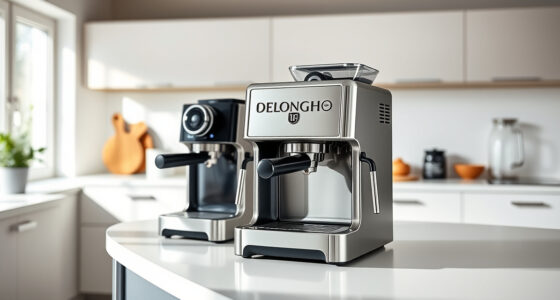
Light roast espresso is harder to dial in because it has delicate flavors and higher acidity that can be easily lost or exaggerated with small adjustments. You need to be precise with grind size, extraction, and brewing variables like water temperature and contact time. Small changes can markedly impact flavor, leading to inconsistencies. Mastering these subtle controls takes patience, but the rewards are complex, vibrant shots. Keep exploring—there’s more to uncover about perfecting your technique.

Get coffee and tea gear delivered free with Prime
- Fast, free delivery on millions of items
- Prime Video, Amazon Music and more included
- Member-only deals all year
Key Takeaways
- Light roasts are more delicate, making small adjustments in grind or time significantly affect extraction quality.
- Their higher acidity and nuanced flavors are easily lost with improper or inconsistent brewing parameters.
- Fine grind size needed for light roasts increases risk of channeling and uneven extraction.
- Variability in bean density and freshness impacts how light roasts respond to dialing in.
- Precise control of water temperature, contact time, and grind is essential, making the process more sensitive and challenging.
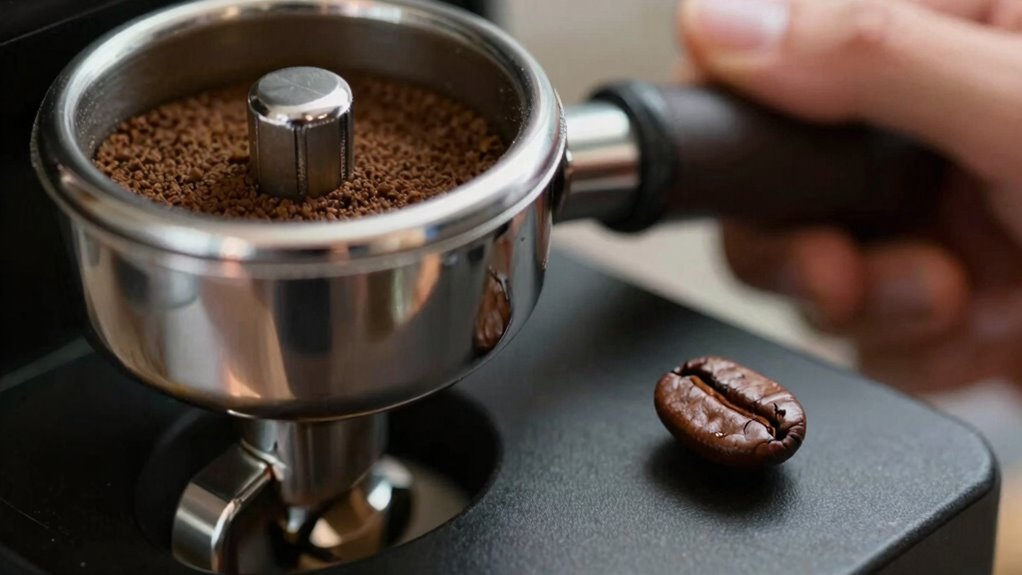
Light roast espresso often feels harder to dial in because its unique characteristics make it more sensitive to small adjustments in grind size, dose, and extraction time. Unlike darker roasts, which tend to be more forgiving, light roasts preserve the beans’ original flavors and acids, making them more delicate. This delicacy means even tiny changes in your brewing variables can greatly impact the shot’s quality. For example, a slight tweak in grind size can cause inconsistent grain retention, affecting how evenly water passes through the coffee. If the grind is too fine, you might notice excessive channeling, leading to uneven extraction and a sour or underdeveloped flavor. Conversely, a grind that’s too coarse results in under-extraction, dulling the shot’s brightness and complexity. Because of this sensitivity, you need to be precise with each adjustment to achieve ideal flavor extraction.
Light roasts require precise adjustments; even small changes greatly impact flavor and extraction quality.
Another factor that complicates dialing in light roasts is the relationship between grind size and grain retention. Grain retention refers to the amount of coffee grounds left in the portafilter after brewing. When you don’t get this right, it can throw off your dose consistency and, ultimately, your flavor extraction. Too much retention may suggest over-compaction or improper grind size, which can hinder water flow and cause uneven extraction. Too little retention might mean your grind is too coarse or your tamping pressure is inconsistent. Both scenarios lead to unpredictable results, making it harder to replicate the perfect shot. Achieving a balanced grain retention ensures your coffee is uniformly compacted, allowing water to extract flavors evenly and thoroughly. Additionally, understanding how bean density impacts grind size and extraction can help you better tailor your brewing process for light roasts. Recognizing the importance of consistent tamping pressure can also improve your shot consistency and overall flavor. A thorough understanding of extraction yield can further refine your technique, ensuring you maximize the potential of each shot. Furthermore, mastering these variables can help mitigate the effects of bean freshness on extraction, which is particularly critical with light roasts.
Flavor extraction is at the core of your challenge with light roasts. Because these beans retain more of their original characteristics, they often require a more precise approach to brewing. Small changes in grind size, dose, or extraction time can drastically alter the flavor profile. Light roasts tend to have higher acidity and more nuanced aromatics, which are easily lost if extraction isn’t carefully controlled. Over-extracting can result in harsh, bitter notes, while under-extraction leaves the shot flat and dull. To master flavor extraction, you need to pay close attention to variables like water temperature, pressure, and contact time, all while maintaining consistent grind and dose. Fine-tuning these elements helps reveal the beans’ complex flavors, but it demands patience and precision. Proper technique plays a vital role in ensuring that these delicate flavors are extracted optimally.
In essence, brewing light roast espresso is a balancing act that hinges on subtle adjustments. Your focus on grain retention, careful modulation of grind size, and understanding how these influence flavor extraction will ultimately make the process less frustrating and more rewarding. Achieving the perfect shot means embracing the delicate nature of light roasts and honing your technique to bring out their full potential.
As an affiliate, we earn on qualifying purchases.
Frequently Asked Questions
How Does Roast Level Affect Extraction Time?
Roast level directly impacts extraction time because lighter roasts have denser beans, requiring longer extraction to develop their flavor profile and achieve a balanced acidity. As you dial in, you’ll notice that lighter roasts need more precise timing to reveal their nuanced flavors and maintain proper acidity balance. Darker roasts extract faster, so adjusting your grind size and brew time ensures you get the desired flavor profile without over or under-extracting.
Can Grind Size Adjustments Compensate for Light Roast Hardness?
Yes, grind size adjustments can help compensate for light roast hardness, but it requires precise control. You need to maintain grind consistency to guarantee even extraction. Slightly coarser grinding can reduce resistance, making extraction smoother. Keep in mind, the flavor profile of light roasts is delicate, so small tweaks matter. Experiment carefully, and remember that consistent grind size is key to dialing in the perfect shot without sacrificing flavor.
Does Bean Origin Influence Dialing in Light Roasts?
Think of bean origin as the story behind each coffee’s flavor profile—each origin has unique character traits that influence your brew. These bean characteristics shape how light roasts respond to your adjustments. As you dial in, you’ll notice some origins demand a more delicate touch, making the process feel like decoding a secret language. Recognizing these subtle differences helps you craft a perfect shot, no matter the bean’s birthplace.
Are There Specific Brewing Techniques Ideal for Light Roasts?
Yes, specific brewing techniques suit light roasts well. You should focus on adjusting grind size for ideal extraction, which enhances the flavor profile and aroma development. Use a slightly finer grind and longer extraction time to bring out the bright, complex notes typical of light roasts. Additionally, controlling water temperature helps prevent under-extraction, ensuring you capture the full aroma and vibrant flavors without bitterness.
How Does Freshness Impact Light Roast Espresso Consistency?
Freshness greatly impacts your light roast espresso’s consistency, especially regarding flavor stability. As beans age, flavors can become dull or uneven, making it harder to dial in shots. To maintain ideal freshness, store your beans in airtight containers away from heat, light, and moisture. Proper storage methods help preserve delicate nuances, ensuring your espresso remains vibrant and easier to calibrate, giving you more control over your final shot.
As an affiliate, we earn on qualifying purchases.
Conclusion
So, next time you find light roast espresso your nemesis, just remember—it’s not you, it’s the beans. Embrace the challenge, because nothing says “coffee connoisseur” like spending hours tweaking grind size and brew time. After all, who needs simplicity when you can have the thrill of a never-ending quest for perfect extraction? Happy dialing!
As an affiliate, we earn on qualifying purchases.
water temperature control espresso machine
As an affiliate, we earn on qualifying purchases.
As an affiliate, we earn on qualifying purchases.
Halloween Picks
halloween
As an affiliate, we earn on qualifying purchases.