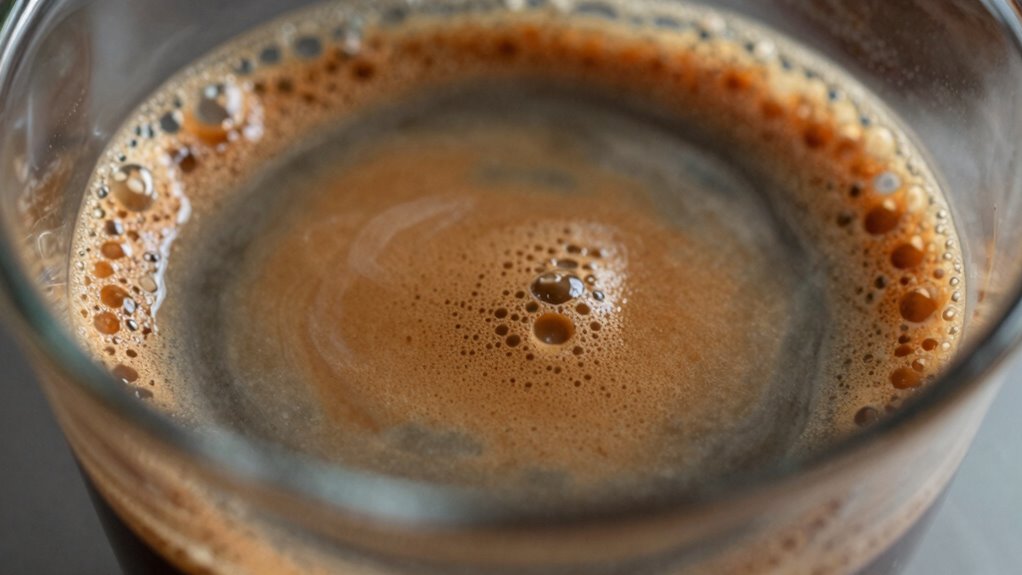

A hollow-tasting espresso often happens when your beans are stale or your brewing temperature is off. Stale beans lose oils and aroma, resulting in a flat, dull flavor. If your water isn’t at the right temperature—between 195°F and 205°F—you may under-extract, creating weak and insipid shots. To fix this, focus on using fresh beans and maintaining proper temperature control. If you want to find out more ways to improve your espresso, keep going.

Get coffee and tea gear delivered free — and shop member deals
- Fast, free delivery on millions of items
- Access to Prime Big Deal Days deals on October 6–7
- Prime Video, Amazon Music and more included
Key Takeaways
- Using stale or improperly stored beans lacking essential oils reduces flavor complexity.
- Brewing at temperatures outside the ideal 195°F–205°F range causes under- or over-extraction.
- Incorrect grind size or tamping can lead to uneven extraction, resulting in a hollow taste.
- Insufficient extraction time prevents full flavor development, producing a weak, insipid shot.
- Flawed brewing conditions or low-quality beans diminish aromatic compounds, leading to a flat espresso.
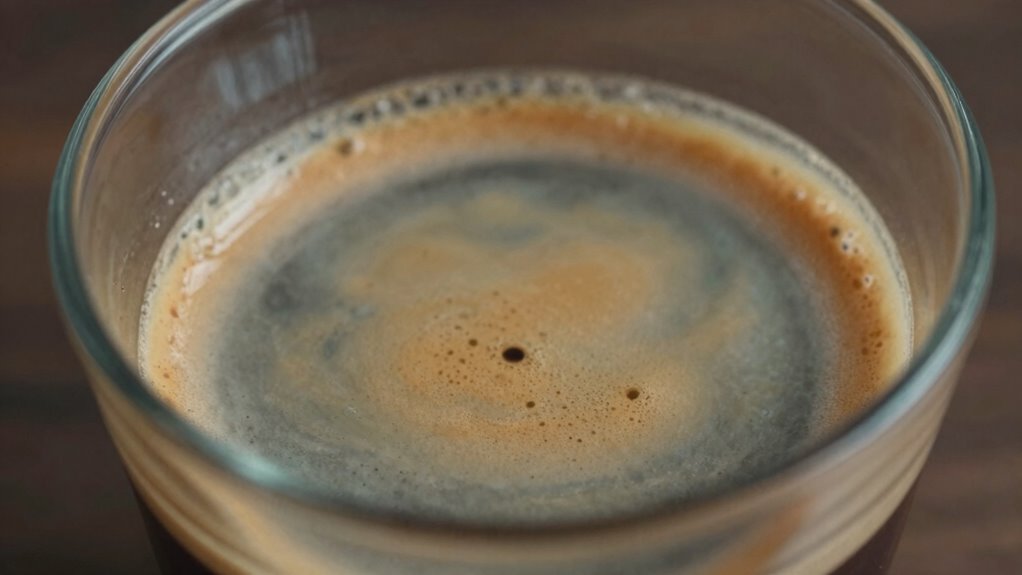
A hollow-tasting espresso shot often results from issues with extraction, where the coffee lacks the richness and depth you expect. When your espresso falls flat, it’s usually because the process didn’t bring out the coffee’s full potential. Two key factors that influence this are coffee bean freshness and brewing temperature. If you’re not paying attention to these, your shot can easily turn bland or hollow.
First, consider coffee bean freshness. Freshly roasted beans have a vibrant, complex flavor profile that’s essential for a rich espresso. When beans sit for too long, they lose their essential oils and aromatic compounds, which diminishes the depth of flavor. Using stale beans can make your shot taste flat, weak, and uninspired. If you want a shot with real character, always choose freshly roasted beans—ideally within a few weeks of roasting. Store them properly in an airtight container away from light and heat to preserve their freshness. Additionally, proper storage helps maintain the integrity of the beans’ essential oils, which are crucial for flavor. Regularly checking the roast date can also help ensure you’re using the freshest beans possible. Proper storage conditions are vital to prevent flavor degradation over time.
Freshly roasted beans preserve essential oils and aroma, ensuring a rich, flavorful espresso.
Next, brewing temperature plays a significant role in extraction quality. If your water isn’t hot enough, the coffee grounds won’t fully release their flavors, resulting in a weak, hollow shot. Conversely, too high a temperature can cause over-extraction, leading to bitterness and a flat taste. The ideal brewing temperature for espresso is typically between 195°F and 205°F. Maintaining this range ensures the water extracts the right balance of oils, acids, and sugars. If your machine’s temperature isn’t consistent or the temperature is set too low or high, you’ll notice a significant difference in flavor. Regularly calibrate your espresso machine or use a thermometer to monitor water temperature, guaranteeing you hit that perfect point every time.
Beyond these factors, other issues like grind size, tamping pressure, and extraction time can impact the shot’s quality. But if your espresso still tastes hollow after adjusting these, check your coffee bean freshness and brewing temperature first. They’re the foundation for a flavorful shot. Fresh beans provide the essential oils and aromatic compounds, while the correct temperature ensures proper extraction. Neglect either one, and your espresso might lack the depth and richness you crave. Proper temperature control is essential for consistent quality and flavor.
In the end, making a great espresso isn’t just about technique; it’s about understanding and controlling these fundamental factors. When you pay close attention to your coffee bean freshness and brewing temperature, you set the stage for a shot full of flavor and complexity—not hollow, insipid, or dull.
As an affiliate, we earn on qualifying purchases.
Frequently Asked Questions
Can Water Quality Affect Espresso Shot Taste?
Yes, water quality considerably impacts your espresso shot’s flavor. If the water has poor mineralization, it can dull the taste or cause imbalance. Too high or low pH levels can also alter extraction, making your shot taste flat or sour. Use water with proper mineral content and a balanced pH to enhance flavor clarity. Clean, well-maintained equipment further guarantees your espresso tastes vibrant and full-bodied.
Does the Type of Coffee Bean Influence Hollow Flavors?
Yes, the type of coffee bean, like different coffee varietals, influences hollow flavors in your espresso shot. Some beans naturally have more subtle or muted profiles, which can result in a hollow taste. Additionally, if your beans aren’t fresh, they lose essential oils and flavors that contribute to a rich, vibrant shot. To avoid hollow flavors, choose fresh beans and experiment with varietals that suit your taste preferences.
How Does Grind Size Impact Espresso Flavor?
You might think that grind size doesn’t matter, but it’s essential for flavor. Inconsistent grind size or uneven particle size can lead to over-extraction or under-extraction, making your espresso taste hollow. When your grind isn’t uniform, water flows unevenly through the coffee, resulting in a dull, flat flavor. To avoid this, guarantee grind consistency, aiming for uniform particle size, which helps extract the right flavors and prevents that hollow taste.
Can Brewing Time Cause a Hollow Taste?
Yes, brewing time can cause a hollow taste in your espresso. If the extraction duration is too short, flavor development remains incomplete, resulting in a dull or hollow flavor. Conversely, too long a brew can lead to over-extraction, pulling out bitter or undesirable notes. To avoid this, aim for a ideal extraction duration that balances flavor development, ensuring your espresso tastes rich, vibrant, and well-rounded.
Does Machine Temperature Play a Role in Flavor?
Yes, machine temperature plays a vital role in flavor. When your machine isn’t well-calibrated or lacks temperature consistency, it can lead to uneven extraction, causing dull or hollow-tasting espresso. You should regularly calibrate your machine and monitor the temperature to guarantee it stays steady during brewing. Consistent temperature helps extract full flavor from your beans, giving you a richer, more vibrant shot every time.
As an affiliate, we earn on qualifying purchases.
Conclusion
Ultimately, a hollow-tasting espresso leaves you craving its richness, yet it offers only emptiness. You expect bold, vibrant flavors, but instead, you get a dull echo of what should be. The contrast between the full-bodied promise and the lackluster reality emphasizes how essential proper extraction and fresh beans are. It’s a reminder that quality and attention in your process transform an ordinary shot into a memorable experience, filling your cup with depth rather than hollow echoes.
espresso machine temperature calibration tool
As an affiliate, we earn on qualifying purchases.
As an affiliate, we earn on qualifying purchases.
As an affiliate, we earn on qualifying purchases.
Halloween Picks
halloween
As an affiliate, we earn on qualifying purchases.