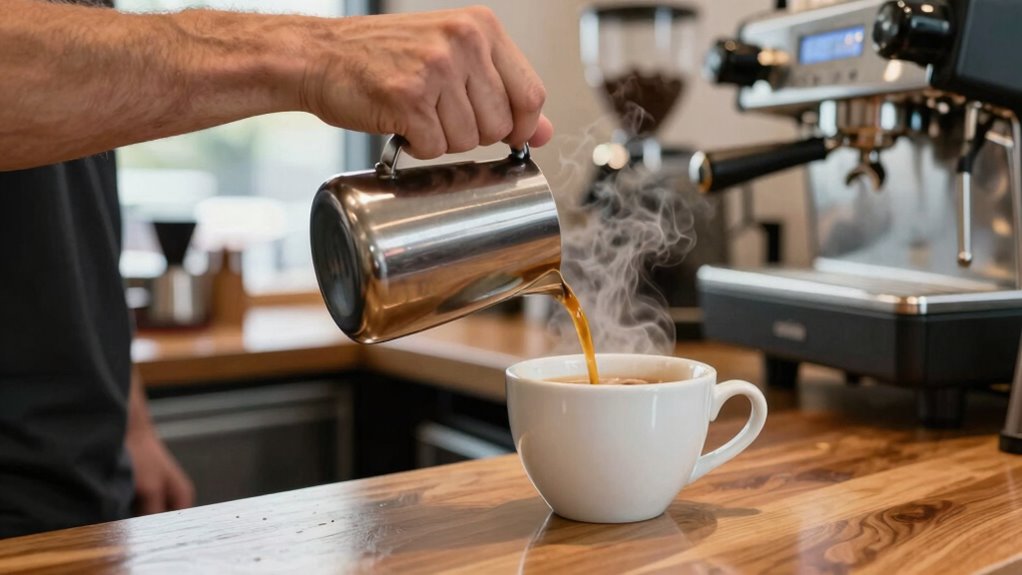

Third Wave Coffee is all about treating coffee like an art form. You’ll notice it focuses on transparency, ethical sourcing, and highlighting unique flavors from different origins. Baristas use precise brewing methods and carefully roasted beans to bring out the coffee’s full potential. It emphasizes sustainability, quality over consistency, and sharing the story behind each cup. If you want to understand how these practices make your coffee special, you’ll find plenty more to discover as you explore further.
Key Takeaways
- Third Wave Coffee treats coffee as an artisanal craft, emphasizing quality, transparency, and unique flavors.
- It focuses on direct sourcing from farmers and sustainable, ethical farming practices.
- Precise brewing methods like pour-over and AeroPress highlight the coffee’s natural flavors.
- Roast profiles are carefully controlled to enhance and preserve delicate, complex flavors.
- Consumers are encouraged to appreciate the story, origin, and craftsmanship behind each cup.

Bodum 34oz Pour Over Coffee Maker, High-Heat Borosilicate Glass with Reusable Stainless Steel Filter and Cork Grip – Made in Portugal
Pour Over Coffee: Manual Pour Over Coffee Maker allows you to brew an excellent cup of Coffee in…
As an affiliate, we earn on qualifying purchases.
As an affiliate, we earn on qualifying purchases.
What Is Third Wave Coffee and Why Does It Matter?
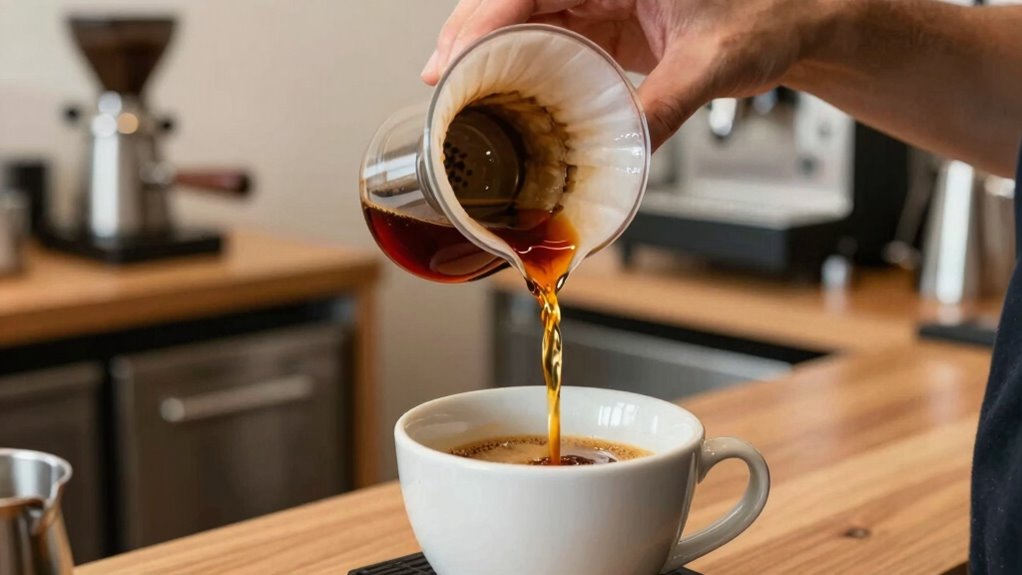
Have you ever wondered what sets third wave coffee apart from other coffee movements? It’s all about a deeper appreciation for coffee culture and a focus on quality. Third wave coffee emphasizes transparency, sourcing beans directly from farmers, and highlighting unique flavors. Brewing innovations play a key role, with baristas using precise techniques like pour-over and AeroPress to reveal complex profiles. This movement values craftsmanship and elevates coffee from a mere beverage to an artisanal experience. It’s not just about caffeine anymore; it’s about understanding where your coffee comes from and how it’s made. By prioritizing quality and transparency, third wave coffee transforms your daily cup into a celebration of craftsmanship and innovation. Embracing sourcing practices can also enhance your appreciation for mindful consumption and sustainable farming methods, promoting environmental and social responsibility in coffee production. Additionally, a greater focus on direct trade helps ensure that farmers receive fair compensation, encouraging sustainable development practices.

AeroPress Original Coffee Press – All-in-One French Press, Pour-Over & Espresso Style Manual Brewer, 2 Min Brew for Less Bitterness, More Flavor, Small Portable Coffee Maker, Travel & Camping
The Brewer That Started It All – AeroPress Original was the first single cup coffee maker to combine…
As an affiliate, we earn on qualifying purchases.
As an affiliate, we earn on qualifying purchases.
How Third Wave Coffee Differs From Traditional Coffee Styles
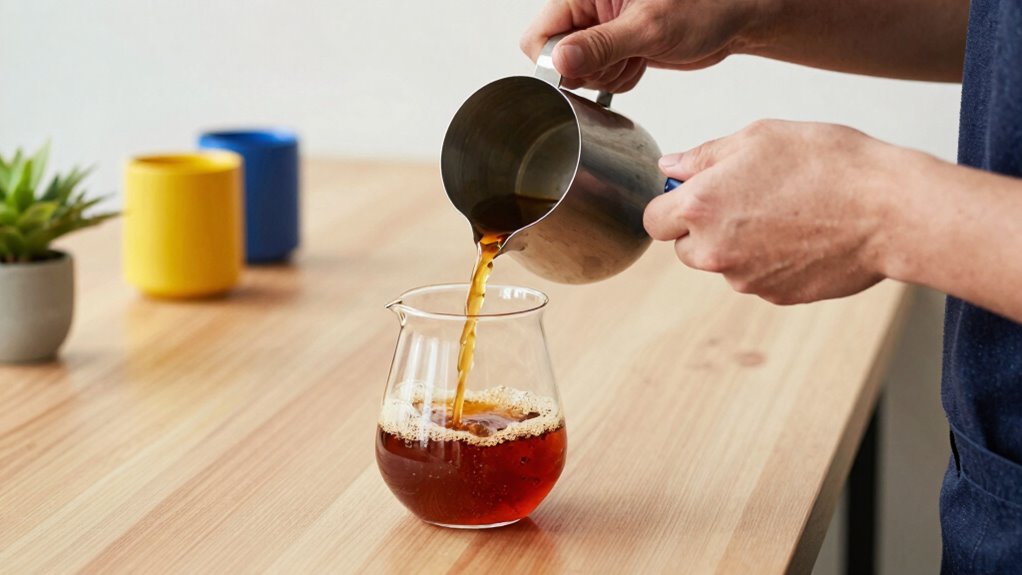
Third wave coffee differs markedly from traditional coffee styles by prioritizing quality, transparency, and the unique characteristics of each bean. In this coffee culture, you focus on highlighting distinct flavor profiles, often showcasing the specific origins and processing methods. Unlike traditional methods that emphasize consistency and speed, third wave coffee encourages exploration of nuanced tastes, such as fruity, floral, or earthy notes. This approach values direct relationships with farmers and sustainable practices, ensuring you get a higher-quality product. The emphasis on craftsmanship means you’re more likely to taste the complex, vibrant flavors that make each cup unique. Additionally, the focus on biodiversity in coffee cultivation supports resilient ecosystems and sustainable farming practices, helping to preserve the variety of flavor profiles that make each coffee distinct. Recognizing the importance of sustainable agriculture, third wave coffee promotes environmentally responsible farming methods that benefit both the planet and the quality of the beans. These practices often include shade-grown coffee cultivation, which preserves natural habitats and promotes ecosystem health.

Jim’s Organic Coffee – Colombian – Single Origin, Medium Roast – Whole Bean 12 oz Bag
MEDIUM ROAST SINGLE ORIGIN – Tasting Notes: Deeply rich and opulent with milk chocolate like notes.
As an affiliate, we earn on qualifying purchases.
As an affiliate, we earn on qualifying purchases.
The Core Principles of Third Wave Coffee
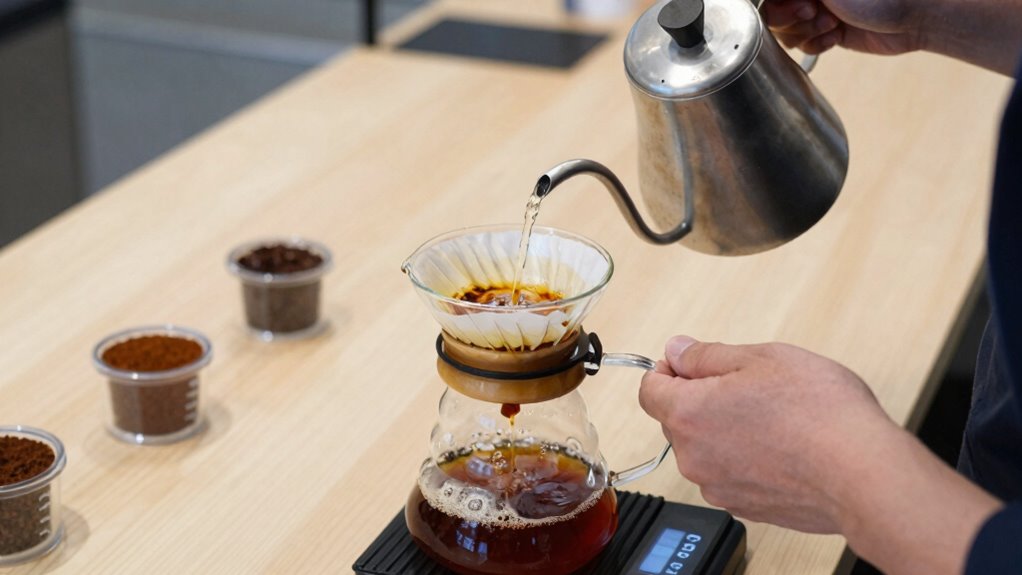
At the heart of third wave coffee are core principles that guide how coffee is sourced, prepared, and enjoyed. You focus on highlighting unique flavor profiles by carefully selecting beans and using precise brewing equipment. This approach emphasizes transparency, craftsmanship, and respect for the coffee’s origin. You pay attention to details like grind size, water temperature, and extraction time to bring out the best in each cup. A deep understanding of coffee chemistry can further enhance the brewing process by optimizing flavor extraction. Here’s a quick overview:
| Principle | Explanation |
|---|---|
| Flavor Profiles | Emphasize distinct tastes from different origins. |
| Brewing Equipment | Use precise tools like pour-over or AeroPress. |
| Sourcing Transparency | Know exactly where your coffee comes from. |
| Preparation Technique | Focus on meticulous, artisanal brewing methods. |
These principles ensure a fresh, expressive coffee experience, and understanding the core principles helps enthusiasts appreciate the artistry behind each brew. Recognizing the importance of sourcing transparency ensures that consumers are aware of the journey from farm to cup, which is central to the third wave philosophy. Additionally, embracing craftsmanship in every step fosters a deeper connection to the coffee.
By adhering to these core principles, coffee lovers can truly appreciate the artistry behind each brew and enjoy a richer sensory experience.

Coffee Roasting Kit by OurHands – Learn to Roast Green Coffee at Home with Your Oven – Includes 6 Varieties of Unroasted Coffee, Detailed Instructions and Coffee Roasting Tools
DIY COFFEE ROASTING KIT: Roast green coffee beans at home with our Coffee Roasting Kit. Ideal for coffee…
As an affiliate, we earn on qualifying purchases.
As an affiliate, we earn on qualifying purchases.
How Third Wave Coffee Is Sourced and Roasted
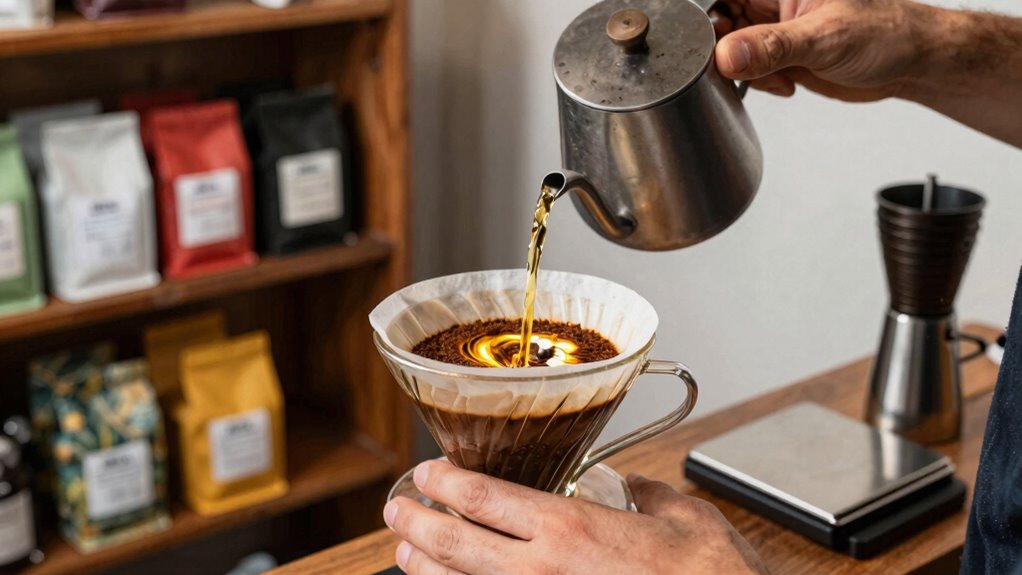
You can taste the difference when coffee is ethically sourced, ensuring farmers are paid fairly and communities benefit. Roasters then use precise techniques to bring out unique flavors without overpowering the beans. This careful approach makes every cup a reflection of quality and responsibility. Additionally, single-origin beans are often preferred in third wave coffee for their distinct taste profiles. Sourcing practices also emphasize transparency, allowing consumers to understand exactly where their coffee comes from and how it is produced, promoting ethical coffee sourcing. Recognizing the importance of sustainable farming practices helps ensure the longevity and health of coffee ecosystems for future generations. Incorporating environmentally friendly methods further supports the health of these ecosystems and underscores the commitment to sustainability.
Ethical Sourcing Practices
How do third wave coffee companies guarantee their beans are ethically sourced? They prioritize transparency and fairness through practices like Fair Trade certification and direct trade relationships. Fair Trade ensures farmers receive fair wages and work under safe conditions, supporting sustainable communities. Direct trade involves coffee roasters building direct relationships with farmers, cutting out middlemen, and paying premium prices for high-quality beans. This approach encourages better farming practices and provides farmers with more control over their product. By focusing on these methods, third wave companies emphasize ethical sourcing, certifying farmers are rewarded fairly and environmentally responsible practices are maintained. Additionally, many third wave companies are committed to environmentally sustainable farming, which helps protect ecosystems and ensures the longevity of coffee production. They often incorporate traceability systems to verify the origin and ethical standards of their beans, giving consumers confidence in their purchases. Moreover, adopting sustainable farming methods further reinforces their commitment to environmental stewardship. These practices also promote fair labor conditions, ensuring that workers are treated ethically throughout the supply chain. You can enjoy your coffee knowing it’s been sourced with integrity, supporting sustainable livelihoods and better quality beans. Including transparency measures helps consumers make informed decisions about the ethical implications of their coffee choices.
Precise Roasting Techniques
Third wave coffee companies employ highly precise roasting techniques to bring out the nuanced flavors of carefully sourced beans. You play a vital role in how the beans develop, as small adjustments in time and temperature can greatly enhance flavor. Precision roasting guarantees that each batch highlights the unique qualities of the bean selection, whether fruity, floral, or nutty. By controlling the roast profile meticulously, roasters maximize flavor enhancement without overpowering the bean’s natural characteristics. This approach avoids the one-size-fits-all method of traditional roasting, instead tailoring each roast to the specific beans’ profile. As a result, you experience a cleaner, brighter cup, where the true complexity of the coffee shines through. Precision roasting techniques ensure that the delicate flavors are preserved and accentuated throughout the process.
Brewing Techniques That Make Third Wave Coffee Special
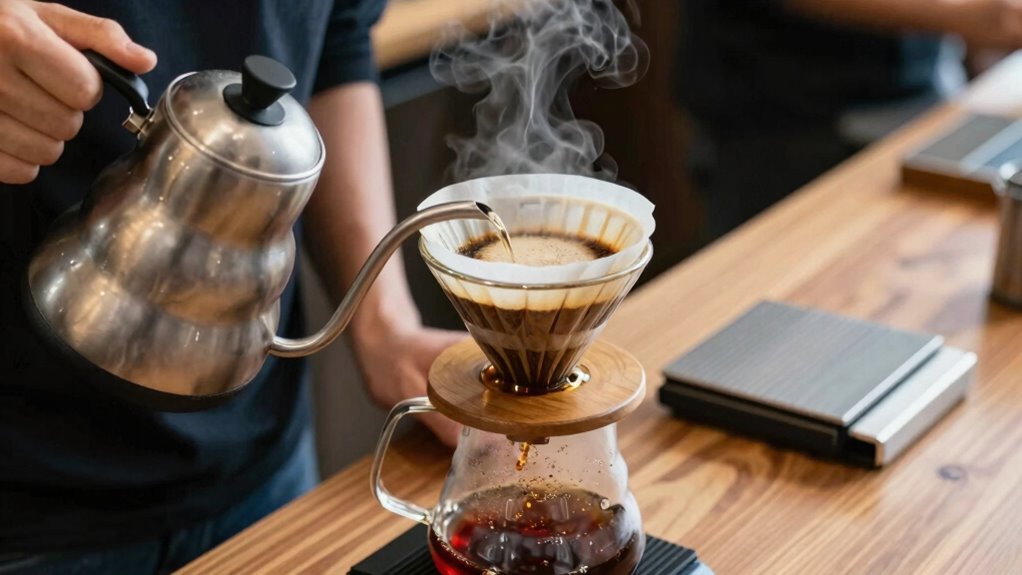
One of the defining aspects of third wave coffee is its emphasis on precise brewing techniques that highlight the unique flavors of each bean. You can experiment with different brewing methods like pour-over, AeroPress, and siphon to bring out specific flavor profiles. These techniques allow you to control variables such as water temperature, extraction time, and grind size, ensuring you capture the coffee’s nuanced notes. For example, a pour-over emphasizes clarity and brightness, revealing fruity or floral flavors, while AeroPress can produce a rich, full-bodied cup. By carefully selecting and mastering these brewing methods, you unlock the full potential of each coffee, making every cup a tailored experience that showcases its distinct characteristics.
Why Transparency and Sustainability Are Key Values

You can build trust with coffee consumers by being open about your sourcing and practices. When you support ethical methods, you show your commitment to quality and fairness. Transparency and sustainability aren’t just values—they’re essential for lasting relationships and a better coffee industry.
Building Trust Through Openness
Why is transparency so essential in the world of specialty coffee? Because it builds trust and strengthens your connection with customers. When a coffee shop openly shares its sourcing, farming practices, and sustainability efforts, you feel more confident in your choices. This openness encourages customer education, helping you understand the journey from farm to cup. It also demonstrates brand authenticity, showing that the business genuinely cares about ethical practices.
Here are three reasons transparency matters:
- It fosters loyalty by showing honesty and integrity.
- It empowers you to make informed decisions about your coffee.
- It creates a community built on trust, where your values align with the brand’s.
Building trust through openness isn’t just good ethics—it’s good business.
Supporting Ethical Practices
Building on the importance of transparency, supporting ethical practices guarantees that your coffee choices align with your values. When you choose coffee with fair trade certification, you’re ensuring farmers receive fair wages and work in better conditions. Organic certification means the coffee is grown without harmful chemicals, protecting both the environment and your health. Supporting these practices promotes sustainability, helping small farmers thrive and preserving ecosystems. By prioritizing fair trade and organic options, you’re actively contributing to a more equitable and environmentally friendly coffee industry. Your choices matter, and they can drive positive change from farm to cup. Choosing ethically sourced coffee isn’t just about taste; it’s about supporting a system that values people and the planet.
How to Recognize and Enjoy Third Wave Coffee at Your Local Shop
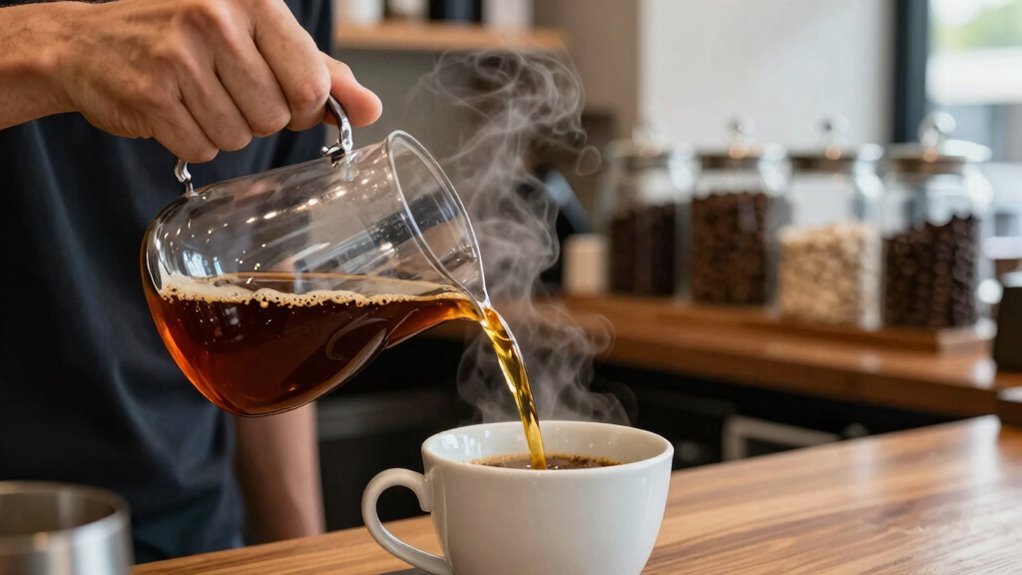
Recognizing third wave coffee at your local shop starts with paying attention to how the beans are sourced and prepared. Look for transparency about the coffee’s origin, as it reveals the unique coffee flavor profiles crafted by careful sourcing. Observe the brewing equipment—third wave shops often use pour-over, AeroPress, or siphon methods that highlight these flavors. To enjoy the experience:
- Ask about the beans’ origin and processing methods to connect with the story behind your coffee.
- Notice the brewing method, which influences the coffee’s brightness, acidity, and complexity.
- Savor each sip, paying attention to the nuanced flavors that come from expert preparation and fresh, quality beans.
This approach transforms your coffee break into an appreciation of craft and artistry.
Frequently Asked Questions
How Did the Third Wave Movement Originate in Coffee?
You might find that the third wave movement in coffee originated from a shift in coffee culture, emphasizing quality and transparency. Coffee enthusiasts started to care more about bean sourcing, seeking ethically sourced, single-origin beans, and a focus on roasting techniques. This movement aims to elevate coffee to an artisanal level, much like wine, encouraging consumers to appreciate the nuances of flavor and the story behind each cup.
What Are the Main Differences Between Third Wave and Specialty Coffee?
You’ll notice that third wave coffee emphasizes quality and transparency more than general specialty coffee. It focuses on precise coffee grading, highlighting unique flavors and origins. You also prioritize sustainable sourcing, ensuring farms use eco-friendly practices. Unlike traditional specialty coffee, third wave emphasizes craftsmanship, direct relationships with farmers, and artisanal brewing methods. This approach celebrates coffee as an artisanal product, elevating it beyond simple beverage status to a craft worth appreciating deeply.
How Does Third Wave Coffee Impact Local Coffee Communities?
Third wave coffee positively impacts local communities by prioritizing coffee sustainability and fostering community engagement. You’ll notice that it promotes fair trade practices, supporting farmers and ensuring ethical sourcing. This approach encourages local cafes to build strong relationships with producers and customers alike. As a result, you’re part of a movement that values transparency and quality, strengthening community bonds and promoting responsible consumption—making a meaningful difference in the local coffee scene.
Are Third Wave Coffee Beans More Expensive Than Traditional Beans?
Yes, third wave coffee beans are generally more expensive than traditional beans. This is due to a focus on high-quality, ethically sourced beans, often from direct bean sourcing relationships. The price comparison reflects the emphasis on premium beans, meticulous processing, and sustainable practices. As a coffee enthusiast, you’ll notice these cost differences, but they often translate into richer flavors and supporting better practices within the coffee industry.
Can I Replicate Third Wave Brewing Methods at Home Easily?
Yes, you can replicate third wave brewing methods at home easily with the right equipment essentials. Start with a good pour-over or AeroPress, a burr grinder, and a scale for precise measurements. Follow the same principles of quality beans, proper grind size, and controlled water temperature. With attention to detail, you’ll enjoy craft-quality coffee at home, capturing the nuanced flavors that define third wave coffee.
Conclusion
Imagine walking into a coffee shop and tasting a brew that’s as unique as a fingerprint—each sip revealing a story from farm to cup. That’s the essence of third wave coffee. It’s a journey of transparency, quality, and craftsmanship that transforms your daily caffeine fix into an experience worth savoring. So next time you order, remember: you’re not just drinking coffee—you’re celebrating a craft that values every bean, every step, and every moment.