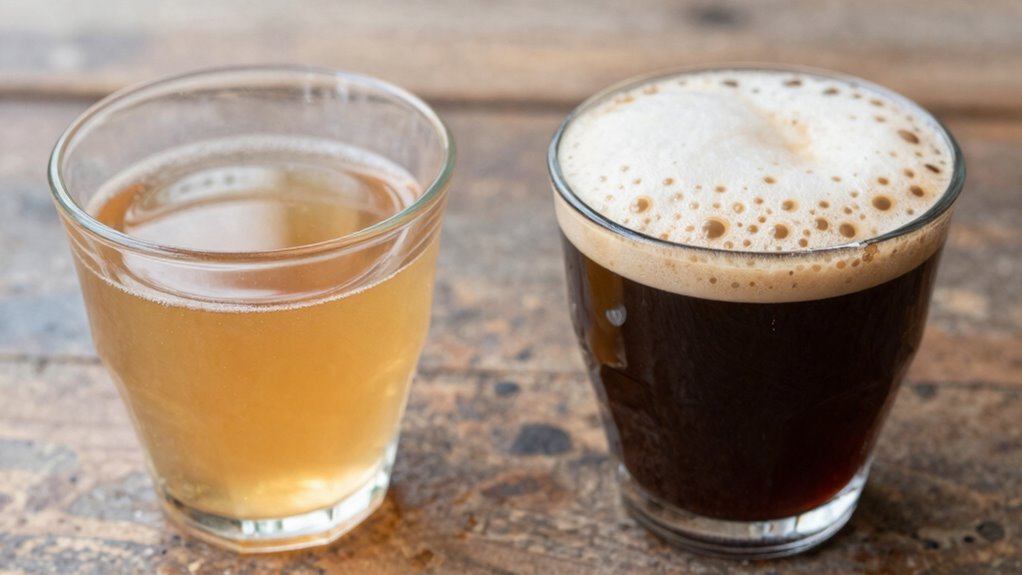

The taste difference comes down to how the beans are grown, processed, roasted, and brewed. For a clean flavor, you’ll want beans from high-altitude regions, washed processing, and brewing methods like pour-over that highlight bright, crisp notes. Heavy coffees often come from natural processing, darker roasts, and full-bodied brewing methods like French press. Exploring these factors can help you find your perfect cup—there’s more to discover as you explore further.
Key Takeaways
- Brewing methods like pour-over emphasize clarity, highlighting bright, clean flavors, while immersion methods like French press produce heavier, fuller-bodied cups.
- Processing techniques, such as washed vs. natural, significantly influence a coffee’s brightness or fruitiness, affecting perceived cleanliness.
- Light roasts preserve delicate, bright notes, making coffees taste cleaner; dark roasts add oils and depth, resulting in heavier flavors.
- Origin and growing conditions, like high-altitude regions, contribute to brighter, more refined flavor profiles versus earthier, heavier ones.
- Coffee’s overall flavor profile depends on a combination of origin, processing, roasting, and brewing, shaping whether it tastes clean or heavy.

The difference between a clean and a heavy-tasting coffee often comes down to how it’s grown, processed, and brewed. When you’re tasting coffee, the flavor profiles reveal a lot about its origin and treatment. Clean coffees tend to have bright, crisp notes—think citrus, floral, or tea-like qualities—whereas heavy coffees often carry deeper, more complex, sometimes even earthy or spicy flavors. Your choice of brewing techniques plays a significant role in highlighting these characteristics. For example, pour-over or Chemex brewing tends to produce cleaner cups because they emphasize clarity and subtlety, making it easier to discern the delicate flavor profiles. On the other hand, methods like French press or espresso often result in a heavier, more full-bodied cup, as they extract more oils and solubles, contributing to a richer, sometimes more intense taste.
The growing process also impacts whether a coffee ends up on the clean or heavy side. Coffees from high-altitude regions with well-maintained farms often develop brighter, more refined flavor profiles. These beans are usually processed using washed or wet methods, which involve removing the fruit from the beans before drying. This process results in a cleaner, more transparent cup, allowing you to taste the natural brightness of the coffee. Conversely, coffees from lower-altitude regions or those processed using natural or dry methods tend to have a denser, more robust flavor. In these processes, the beans dry with the fruit still attached, imparting heavier, fruitier qualities to the final brew. Additionally, the processing method can influence how pronounced these flavor differences are, with washed processes generally producing cleaner cups and dry methods leaning toward heavier profiles. Understanding these processing techniques can help you select beans that align with your flavor preferences. Moreover, the climate and soil conditions where the coffee is cultivated also play a role in shaping its flavor profile.
Your brewing technique can either amplify or mute these inherent flavor profiles. For a clean-tasting coffee, use a method that emphasizes extraction control, like pour-over, which allows you to manage water temperature and flow rate carefully. This precision ensures that delicate notes come through without over-extracting bitter compounds. If you prefer a heavier taste, brewing methods that involve longer contact with the grounds, like French press or AeroPress with a longer steep, will extract more oils and solids, giving your coffee a fuller, more textured mouthfeel. Additionally, the roast level can also influence whether the coffee tastes lighter or heavier, with lighter roasts highlighting brightness and darker roasts adding depth and body. Factors like bean origin can also significantly influence the flavor profile, as beans from different regions naturally possess distinct characteristics.
Ultimately, whether your coffee tastes clean or heavy depends on the combination of how it’s grown, processed, and brewed. By understanding these factors, you can choose the right beans and brewing techniques to match your flavor preferences. If clarity and brightness appeal to you, opt for lighter roasts and methods that highlight those qualities. If you enjoy a richer, more substantial cup, go for darker roasts and brewing styles that extract more oils and solids. The key is to experiment and find what best fits your taste, appreciating how each step influences the final flavor profile.

Bodum 34oz Pour Over Coffee Maker, High-Heat Borosilicate Glass with Reusable Stainless Steel Filter and Cork Grip – Made in Portugal
Pour Over Coffee: Manual Pour Over Coffee Maker allows you to brew an excellent cup of Coffee in…
As an affiliate, we earn on qualifying purchases.
As an affiliate, we earn on qualifying purchases.
Frequently Asked Questions
How Does Water Quality Affect Coffee Flavor?
Your water quality directly impacts coffee flavor because water mineral content and pH balance influence extraction. If your water has high mineral levels, it can make your coffee taste heavy or dull. Conversely, balanced mineral content and a neutral pH (around 7) help draw out bright, clean flavors. Using filtered or mineral-balanced water guarantees your coffee tastes clear and vibrant, letting the true flavors shine through without overpowering heaviness or dullness.
Can Storage Methods Change Coffee Taste?
Storing your coffee carefully can subtly influence its flavor. If you keep beans in an airtight container away from light and heat, it preserves bean freshness and maintains the roasted level, preventing staleness. Proper storage keeps oils intact, ensuring cleaner, brighter flavors. Conversely, poor storage can lead to flavor dullness or heaviness. So, think of your storage as a gentle steward, safeguarding the delicate balance of your coffee’s taste journey.
Do Brewing Equipment Materials Influence Coffee Heaviness?
Yes, brewing equipment materials influence coffee heaviness. Metal leaching from certain metals can add unwanted flavors or heaviness, especially if the metal reacts with the coffee. Additionally, material porosity affects extraction; porous materials like unglazed ceramic or certain plastics can retain oils and residues, leading to a heavier taste. Choosing non-reactive, smooth surfaces like stainless steel or glass helps guarantee a cleaner, brighter coffee flavor.
How Does Altitude Impact Coffee Flavor Profiles?
You might think altitude doesn’t matter, but it greatly influences coffee flavor profiles. Higher altitudes cause beans to mature slowly, enhancing acidity and bright, clean flavors. Lower elevations often produce heavier, fuller-bodied coffees with earthy notes. Altitude influence creates distinct flavor differentiation, so when you choose coffee from different elevations, you’ll notice the vibrant brightness or deep richness, making every cup a unique tasting experience.
Are There Specific Coffee Bean Varieties Linked to Taste Clarity?
You’ll find that certain coffee cultivars, like Bourbon or Geisha, naturally produce beans with a clearer, more refined taste. The bean origin also plays a role; coffees from high-altitude regions often yield brighter, cleaner flavors. When selecting beans for clarity, look for specific cultivars and origins known for their delicate, crisp profiles. These factors combine to give you that fresh, transparent cup of coffee you’re after.

Veken French Press Coffee Maker 34oz, No Plastic Touching Cafe,Thickened Glass Stainless Steel Brewer, Cold Brew Cafetera Tea pot for Kitchen Travel Camping, Gifts, Decor, Bar Accessories, Dark Pewter
No Plastic Touching Food: Made with 304 stainless steel and food-grade silicone, our French press keeps all brewing…
As an affiliate, we earn on qualifying purchases.
As an affiliate, we earn on qualifying purchases.
Conclusion
Ultimately, choosing between a clean or heavy coffee is like selecting a canvas—one offers clarity and precision, revealing the soul of the bean, while the other invites depth and mystery, hiding stories beneath its weight. Your preference shapes your experience, much like a brushstroke defines a masterpiece. By understanding these flavors, you become both artist and audience, appreciating the subtle symbolism in each sip—each cup a reflection of your own taste and the journey it represents.

Blue Bottle Whole Bean Organic Coffee, Balanced, Medium Roast, 12 Ounce bag (Pack of 1)
SMOOTH AND BALANCED BLEND: This 12 oz. bag of whole bean organic coffee is a medium-light roast that's…
As an affiliate, we earn on qualifying purchases.
As an affiliate, we earn on qualifying purchases.

Amazon Fresh, Just Bright Whole Bean Coffee Light Roast, 32 Oz
Light roast with a crisp and clean flavor
As an affiliate, we earn on qualifying purchases.
As an affiliate, we earn on qualifying purchases.