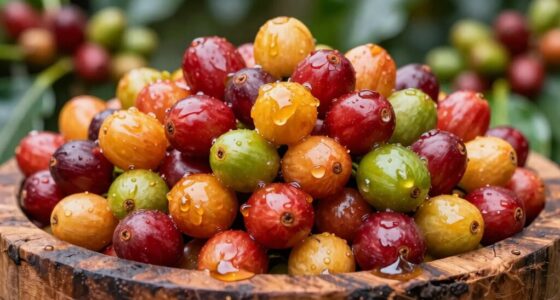

Washed coffee is processed by peeling the cherries, fermenting to remove mucilage, and washing thoroughly, resulting in a brighter, cleaner, and more acidic cup. Natural coffee keeps the fruit intact during drying, leading to a fuller body, fruitier flavors, and sweetness. Your choice depends on whether you prefer crisp, precise brews or rich, fruity profiles. To understand the nuances better and find the perfect match, exploring how each method impacts flavor and environment can guide your selection.

Get coffee and tea gear delivered free — and shop member deals
- Fast, free delivery on millions of items
- Access to Prime Big Deal Days deals on October 6–7
- Prime Video, Amazon Music and more included
Key Takeaways
- Washed coffee is cleaner, brighter, and more consistent, while natural coffee is fruitier, full-bodied, and often more variable.
- The processing method impacts flavor: washed emphasizes clarity; natural enhances fruitiness and richness.
- Washed coffee uses significant water for fermentation and cleaning; natural processing relies less on water and is more eco-friendly.
- Brewed washed coffee suits pour-over and light roasts; natural coffee performs well with French press and cold brew.
- Visual and aroma cues: washed beans are uniform with crisp scents; natural beans look irregular with fruity, fermented aromas.
As an affiliate, we earn on qualifying purchases.
What Are Washed and Natural Coffee Processing Methods?
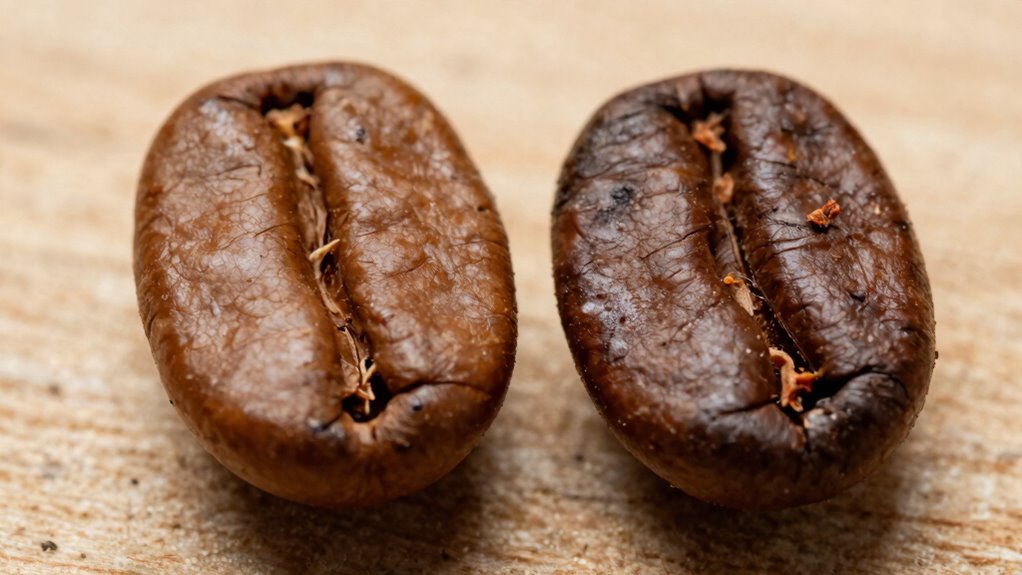
When it comes to coffee processing, the methods used can considerably influence the flavor and aroma of the final product. Washed coffee, processed with water to remove fruit, often results in a cleaner, brighter cup, emphasizing acidity and clarity. Natural coffee, dried with the fruit intact, delivers a richer, fruity profile with more body. Your brewing techniques can highlight these differences, so understanding the processing method helps you choose the right grind size and extraction method. Proper coffee storage preserves the unique flavors, whether you prefer the crispness of washed or the sweetness of natural coffee. Knowing these distinctions allows you to enjoy each cup at its best. Additionally, the processing method can influence how quickly your coffee loses freshness, so selecting appropriate storage techniques is essential to maintain its optimal flavor profile. A deeper understanding of biodiversity in coffee cultivation can also help consumers appreciate the environmental impact of different processing techniques and promote more sustainable choices. Recognizing the environmental impact of each method can guide more eco-conscious purchasing decisions.
As an affiliate, we earn on qualifying purchases.
How Are Washed and Natural Coffee Made?

The process of making washed and natural coffee begins with harvesting ripe coffee cherries, but the key differences lie in how these cherries are handled afterward. Your coffee cultivation process and harvesting techniques determine the final flavor. For washed coffee:
The key differences in processing washed and natural coffee lie in handling after harvesting, shaping their unique flavors.
- Cherries are mechanically or manually peeled, then fermented to remove mucilage.
- The beans are washed thoroughly with water to eliminate remaining pulp.
- They’re dried uniformly to preserve quality.
Additionally, the fermentation process can influence the coffee’s flavor profile, adding complexity and brightness. The processing method plays a crucial role in defining the coffee’s final taste and aroma.
In contrast, natural coffee involves:
- Leaving cherries on the plant longer to develop sweetness.
- Drying whole cherries under sun exposure, often on patios or raised beds.
- Turning cherries regularly to prevent mold and ensure even drying.
This method emphasizes minimal processing, highlighting unique fruit flavors.
As an affiliate, we earn on qualifying purchases.
How Do Environmental Factors Affect Coffee Processing?
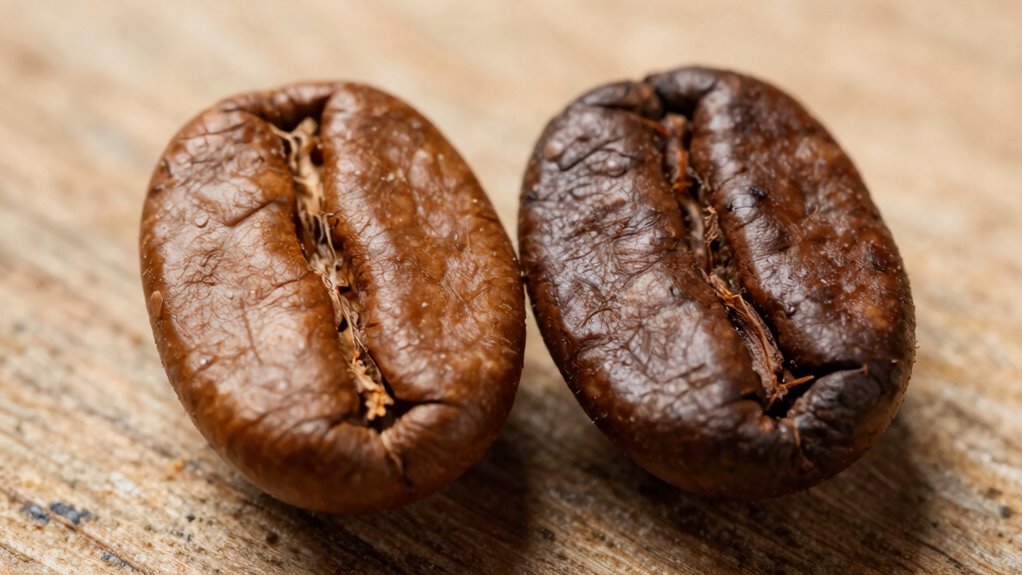
Environmental factors play an essential role in coffee processing, directly impacting the quality and flavor of the final product. Climate impact influences how coffee cherries ripen, affecting harvest timing and the consistency of the beans. Warmer temperatures may accelerate ripening, leading to uneven harvests, while cooler climates can slow growth, altering flavor profiles. Water usage is equally important; processing methods like washed coffee require significant water for cleaning and fermentation, which depends on local water availability. Excessive water use can strain resources and increase costs, while limited water may hinder proper processing, leading to defects. You need to take into account these environmental factors carefully, as they shape the entire processing chain and ultimately influence the taste, quality, and sustainability of your coffee. Additionally, the availability of natural resources in the region can impact the feasibility of certain processing methods and the overall environmental footprint of coffee production. Sustainable practices are increasingly vital to minimize environmental impacts and ensure long-term viability of coffee cultivation. Understanding the impact of climate on coffee growth helps producers adapt their strategies to changing conditions and maintain consistent quality. Recognizing how environmental conditions affect each stage of processing is crucial for producing high-quality coffee while supporting ecological balance. Moreover, implementing climate-resilient techniques can help mitigate some of the adverse effects caused by environmental variability.
As an affiliate, we earn on qualifying purchases.
What Are the Flavor Differences Between Washed and Natural Coffee?
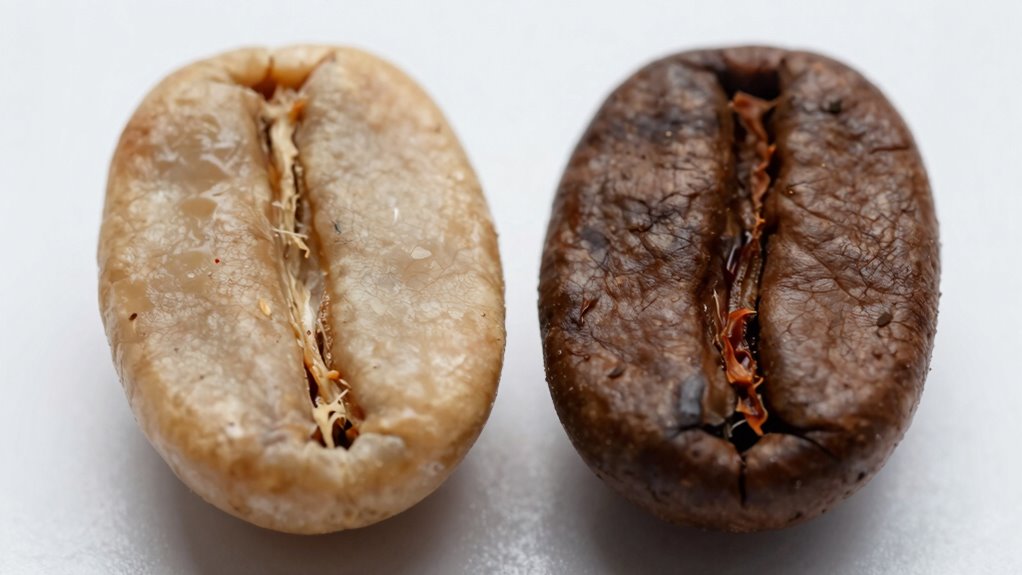
You’ll notice that washed coffees tend to have brighter, more pronounced acidity, making their flavors feel lively and crisp. Natural coffees often boast fruitier notes and a fuller body, giving them a richer, more complex profile. These flavor differences can profoundly influence your overall coffee experience. Additionally, the processing method can impact the coffee’s flavor profile, further shaping your tasting notes. The processing method also affects the coffee’s aromatic qualities and how the beans develop during roasting, contributing to these distinct taste characteristics. Understanding the processing techniques helps enthusiasts appreciate the subtle nuances that differentiate washed and natural coffees, especially since each method influences the fermentation process, which plays a crucial role in flavor development.
Brightness and Acidity Levels
Consider these points:
- Washed coffee tends to have higher acidity, offering a crisp, lively flavor.
- Natural coffee usually exhibits lower acidity, with a sweeter, fruitier profile.
- Grain variability in natural processing can lead to more complex acidity levels, while washed processing produces more consistent brightness.
Your experience of brightness and acidity will depend on the processing method, making it essential to understand how each influences the flavor.
Fruitiness and Body Characteristics
The processing method considerably influences the fruitiness and body of the coffee, shaping its overall flavor profile. With natural processing, you’ll notice a more pronounced fruit profile, often featuring berry or tropical notes, and a fuller body texture. This method preserves more of the fruit’s natural sugars, giving the coffee a richer, thicker mouthfeel. In contrast, washed coffee tends to have a cleaner, brighter taste, with a lighter body that highlights clarity and acidity. The washed process removes much of the fruit’s residual pulp, resulting in a more subdued fruitiness but a crisp, invigorating mouthfeel. Your experience with each depends on your preference: fuller-bodied, fruit-forward coffees versus brighter, cleaner cups with a lighter body.
What Are the Pros and Cons of Each Processing Method?

Each processing method for coffee—washed and natural—offers distinct advantages and disadvantages that can influence your overall experience.
Washed coffee typically has a brighter flavor profile with cleaner, more focused notes, making it versatile for different brewing methods. However, it can lack the fruitiness and body found in natural processed beans. Natural coffee retains more of the fruit and sweetness, creating richer flavor profiles, but it may be more challenging to brew consistently due to its variability.
Additionally, the processing methods can impact the sustainability and environmental footprint of the coffee, which is an important consideration for many consumers.
- Flavor profiles: Washed coffees tend to be cleaner and brighter, while natural coffees emphasize fruitiness and body.
- Brewing compatibility: Washed beans often perform better with precise brewing techniques, whereas natural beans can be more forgiving but require attention to extraction.
- Processing disadvantages: Washed processing is more water-intensive, while natural processing can introduce variability.
How Can You Decide Which Coffee Processing Method Is Right for You?

Choosing between washed and natural coffee depends largely on your personal preferences and brewing habits. If you prefer a bright, clean cup with crisp acidity, washed coffee might suit you best, especially with brewing techniques like pour-over or AeroPress that highlight clarity. On the other hand, natural coffees often have a fruity, fuller body, which pairs well with methods like French press or cold brew that emphasize bold flavors. Your coffee tasting experience guides your choice—consider trying both to see which profile you enjoy more. Think about how you like your coffee to taste and how much effort you want in brewing. Additionally, understanding the processing method can help you anticipate the flavor profile and choose accordingly. Being aware of processing techniques can also help you better appreciate the unique characteristics of each coffee type. Recognizing the impact on flavor of different methods can enhance your overall coffee experience. Exploring the flavor development during processing can further deepen your appreciation for each coffee’s distinct qualities. When you understand how processing impacts flavor, you can make more informed decisions based on your preferred taste profiles.
How to Identify Washed and Natural Coffees When Shopping
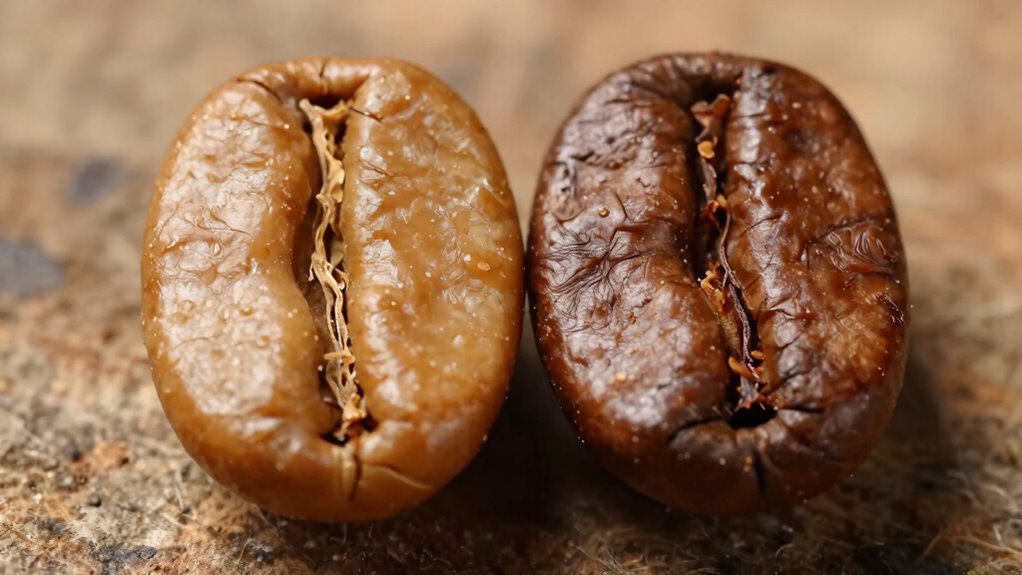
Wondering how to tell if a coffee is washed or natural? When shopping, focus on visual and sensory clues rooted in coffee bean cultivation and processing. First, check the beans’ appearance: washed coffees tend to be more uniform and clean, while natural coffees often look more irregular and fruity. Second, read the label or ask about the processing method, especially if you prefer certain roasting preferences—washed beans usually have a brighter, cleaner flavor, while natural beans may offer a fruitier profile. Third, smell the coffee: washed coffees often have a crisp, clarified aroma, whereas natural coffees might smell more fruity and fermented. Recognizing these differences helps you select the right coffee for your taste and brewing style. Additionally, understanding coffee processing methods can deepen your appreciation and assist in making more informed choices. For example, learning about processing techniques can help you identify subtle flavor nuances associated with each method.
Frequently Asked Questions
Is One Processing Method More Environmentally Sustainable Than the Other?
Natural coffee processing generally has a lower environmental impact because it requires less water and energy compared to washed processing. By using sustainability practices like water conservation and waste management, both methods can reduce their environmental footprint. If sustainability is your priority, choosing naturally processed coffee often aligns better with eco-friendly practices. However, it’s crucial to evaluate specific farm practices and certifications to truly assess each method’s environmental sustainability.
How Do Processing Methods Impact Coffee Shelf Life?
Processing methods considerably impact coffee shelf life, with natural processed beans lasting up to two weeks longer than washed ones due to better flavor preservation. Natural processing retains more of the bean’s original sugars, which helps maintain freshness, but it also increases processing complexity. This complexity can introduce variability, potentially affecting shelf stability. Ultimately, choosing the right method depends on balancing flavor preservation with processing effort and desired shelf life.
Can Processing Techniques Influence Caffeine Content?
Processing techniques can influence caffeine content slightly, though they mainly aim for flavor preservation and processing efficiency. For example, washed methods may slightly dilute caffeine due to water rinsing, while natural processing retains more caffeine as beans absorb flavors during drying. However, the primary factors affecting caffeine levels are the coffee bean variety and growing conditions, not the processing method itself.
Are There Regional Preferences for Washed or Natural Coffee?
Like a map guiding your taste buds, regional preferences for washed or natural coffee vary widely. You’ll find that Latin America often favors washed coffee for its clarity, while Ethiopia embraces the natural process for bold, fruity flavors. Cultural influences shape these choices, reflecting local traditions and climate. So, your preference might mirror where you’re from, but exploring different regions can introduce you to exciting, diverse coffee experiences.
How Do Processing Methods Affect Coffee Bean Appearance?
Processing methods markedly impact the appearance of coffee beans. With washed beans, you’ll notice a cleaner, brighter look since the beans are thoroughly cleaned and de-pulped, often resulting in a shiny surface. Natural processed beans tend to look more uneven, with a darker, sometimes mottled appearance due to drying with the fruit still on. These bean processing techniques influence the coffee flavor profiles, giving washed beans a brighter taste and natural beans a fruitier, fuller body.
Conclusion
As you explore washed and natural coffees, you might notice how a simple sip can transport you—like catching a whiff of fresh rain or the warmth of sun-dried beans. Whether you prefer the clean clarity of washed or the bold fruitiness of natural, your choice becomes a reflection of your taste and environment. So next time you brew a cup, remember, it’s more than coffee—it’s a story brewed from nature’s own hand.
Fall Picks
fall essentials
As an affiliate, we earn on qualifying purchases.