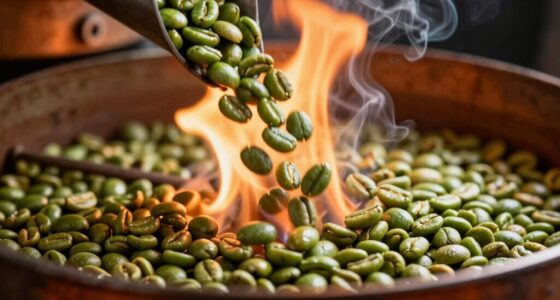
Your coffee bean density greatly influences how your brew develops. Denser beans resist water, slowing extraction and often highlighting subtle flavors, while less dense beans release flavors quicker, creating a brighter, more acidic cup. Adjustments like grind size and brew time are key to balancing these differences. If you want to understand how to optimize your brewing techniques for varying densities, keep exploring how each factor affects your perfect cup.
Key Takeaways
- Denser beans resist water penetration, requiring finer grind and longer extraction for optimal flavor.
- Less dense beans release flavors quickly, often producing brighter, more acidic cups.
- Roast level interacts with density, affecting how beans crack and influence brewing times.
- Proper storage maintains consistent density, preventing variations that can lead to uneven extraction.
- Adjusting grind size based on bean density improves extraction efficiency and flavor clarity.
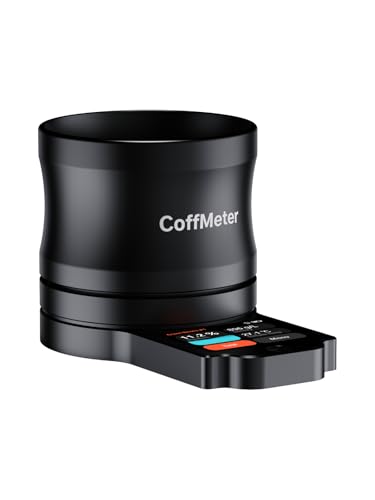
Coffee Moisture Tester for Moisture Content, Density, Sample Temperature, Patented Bean Distributor, HD Touchscreen, Portable, Real-Time Accuracy, for Professional Roasters & Coffee Enthusiasts
- 3-in-1 Measurement: Moisture, density, and temperature
- Patented Technology: Cloud connectivity and OTA upgrades
- High Precision: Adaptive capacitance and temperature sensors
As an affiliate, we earn on qualifying purchases.
As an affiliate, we earn on qualifying purchases.
How Bean Density Affects Coffee Extraction and Flavor
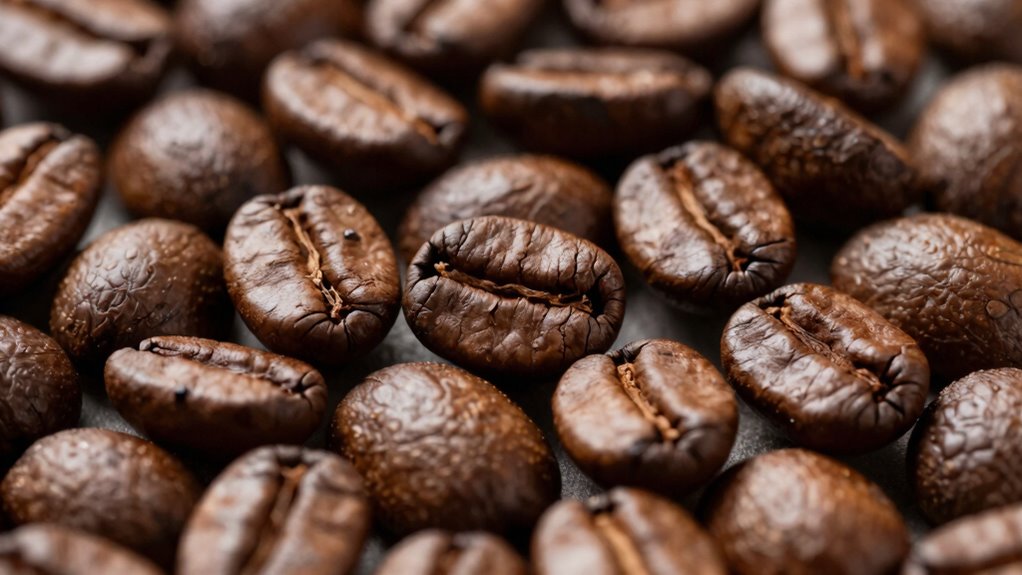
When it comes to coffee extraction, bean density plays a crucial role in how flavors develop during brewing. Denser beans tend to have a more compact structure, which affects how water interacts with the coffee grounds. This, in turn, influences the overall flavor profile, often resulting in a more balanced extraction. Roast level also interacts with density; darker roasts usually have a different impact on extraction compared to lighter roasts. Dense beans can slow down extraction, highlighting subtle flavors and nuances in the brew. Additionally, density measurement methods can help you determine the best approach for your preferred brewing style. Understanding how bean density impacts extraction allows for better control over brewing variables and can help you optimize flavor outcomes. Less dense beans may release their flavors more quickly, sometimes producing a brighter or more acidic cup. Recognizing the physical properties of beans can further enhance your ability to fine-tune brewing parameters to achieve your desired flavor profile. For example, knowing the density variations among different beans can be further supported by laboratory testing, which provides precise data to inform brewing adjustments.

Hamilton Beach Fresh Grind Electric Coffee Grinder For Up To 12 Cups
- Hidden Cord Storage: Keeps cable neat and concealed
- Quiet Operation: Less noise than competitors
- Dishwasher Safe Bowl: Removable and easy to clean
As an affiliate, we earn on qualifying purchases.
As an affiliate, we earn on qualifying purchases.
Why Denser Beans Brew Differently Than Less Dense Ones
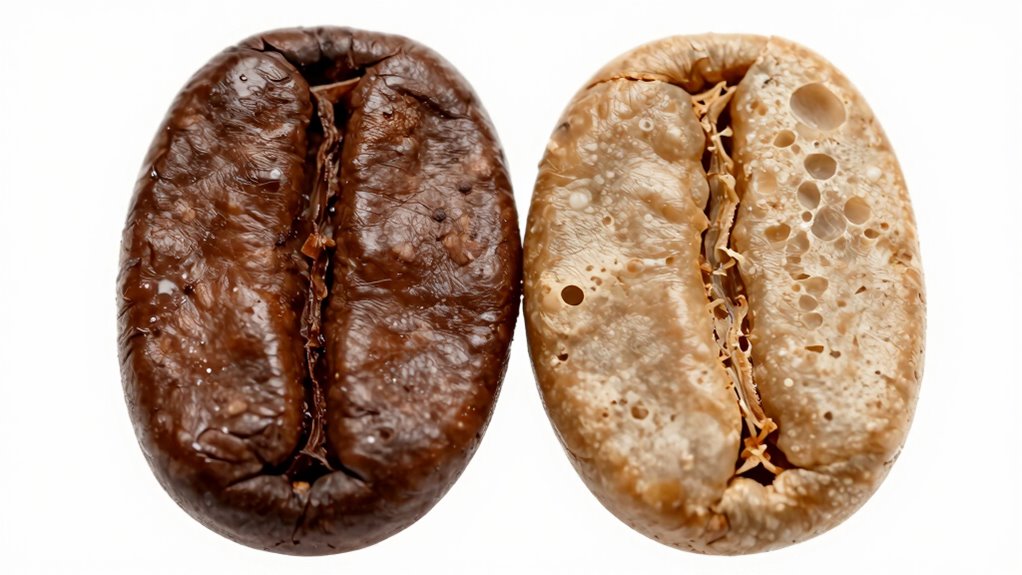
Dense coffee beans typically brew differently than less dense ones because their compact structure resists water penetration. This affects extraction, leading to a different flavor profile. To enhance your brewing:
Dense coffee beans resist water, requiring adjustments for optimal flavor extraction and a richer brew.
- Store beans properly—airtight containers prevent moisture that can alter density and flavor.
- Be mindful of bean aging—older, denser beans may require longer brew times.
- Adjust grind size—finer grounds help water penetrate denser beans more effectively.
- Monitor brewing time—dense beans often need slightly longer extraction to release full flavor.
- Staying informed about market trends can help you select beans with optimal density for your preferred brewing method. Additionally, understanding coffee bean density can guide you in choosing the right beans for your taste preferences.
- Properly managing bean storage ensures consistent density and flavor quality over time. Recognizing how density changes over time can also influence your storage and brewing decisions for the best results. Being aware of density variability can further assist in customizing your brewing process for consistent results.
Understanding how density impacts water absorption helps you refine your process. Proper coffee storage keeps beans fresh, maintaining ideal density. Recognizing the effects of bean aging allows you to adjust your brewing approach for a richer, balanced cup.
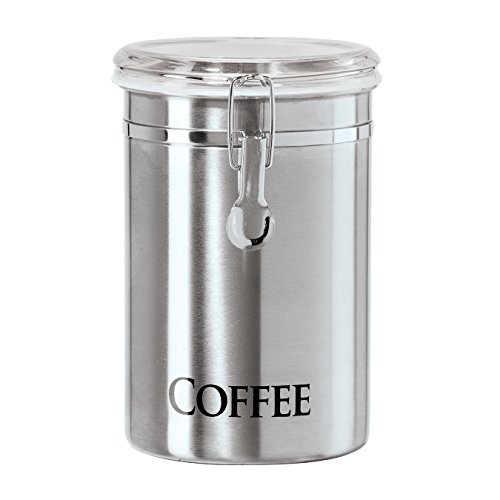
Oggi Stainless Steel Coffee Canister 62 fl oz – Airtight Clamp Lid, Clear See-Thru Top – Ideal for Coffee Bean Storage, Ground Coffee Storage, Kitchen Storage, Pantry Storage. Large Size 5" x 7.5".
- Capacity: 62 fl oz large storage capacity
- Material: Durable stainless steel construction
- Lid Type: Airtight clamp lid with silicone gasket
As an affiliate, we earn on qualifying purchases.
As an affiliate, we earn on qualifying purchases.
Adjusting Your Brewing Method for Different Bean Densities
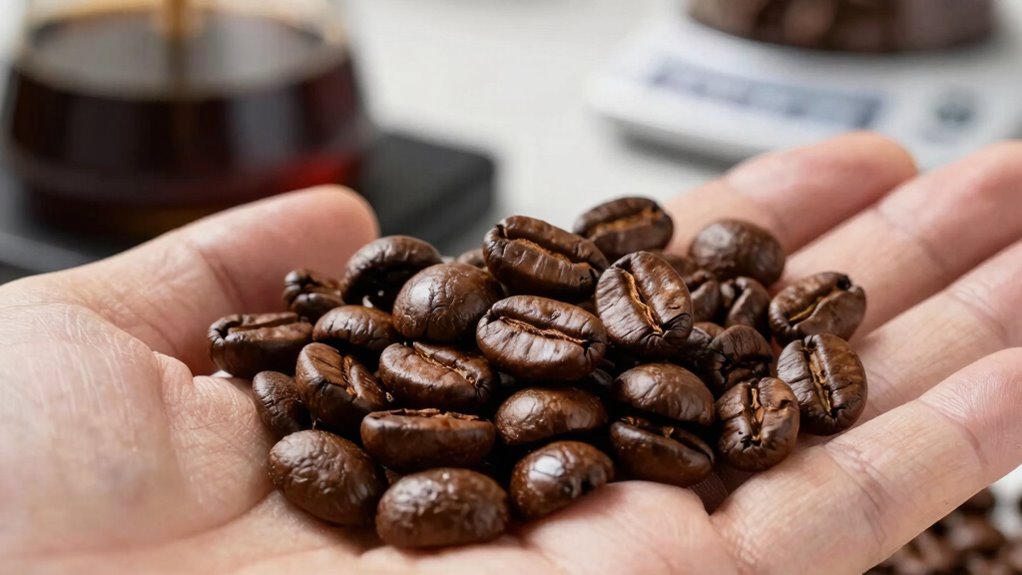
Adjusting your brewing method is essential to maximize flavor extraction from beans with different densities. Denser beans often require a finer grind to guarantee water penetrates fully, unlocking their complex flavor profiles. Conversely, less dense beans may need a coarser grind to prevent over-extraction and bitterness. Pay attention to grind adjustments based on bean density to balance the brew’s strength and clarity. For dense beans, slightly longer extraction times or a finer grind can enhance sweetness and body, while lighter beans benefit from shorter brew times and coarser grounds. These tweaks help you highlight the unique characteristics of each bean, ensuring you get the most flavorful and well-rounded cup. Small modifications in grind size can make a significant difference in achieving ideal flavor profiles. Additionally, understanding bean density can guide you in selecting the appropriate brewing parameters for optimal extraction, and recognizing how particle size affects water flow is crucial for refining your brewing technique. Being aware of the roast level can also influence how you adjust your grind and brew time to suit the beans’ properties.

Maestri House S2 Espresso Coffee Scale with Timer 0.1g Precision Shot Scale
- Compact and Portable Design: Fits in palm, lightweight for travel
- High-Precision Measurement: 0.1g accuracy for perfect brewing
- Multiple Units and Timer Modes: Switch between g/oz/ml, auto/manual timer
As an affiliate, we earn on qualifying purchases.
As an affiliate, we earn on qualifying purchases.
How to Spot Density Variations During Coffee Selection and Roasting
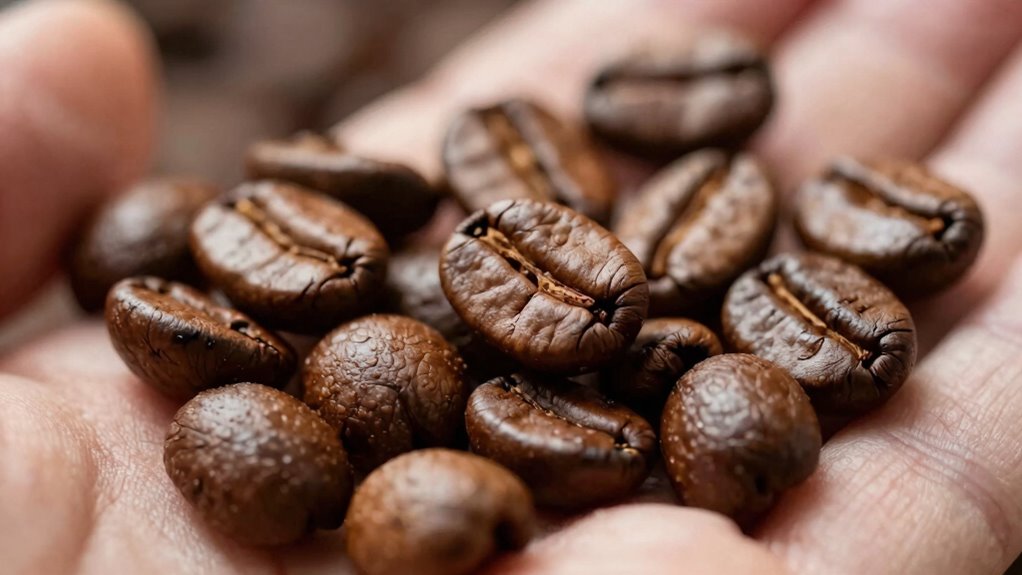
Identifying density variations during coffee selection and roasting can substantially influence your brewing results. To spot these differences, consider the bean’s origin, as it often reflects density traits tied to climate and altitude, which hold cultural significance. During roasting, look for changes in appearance and sound—denser beans tend to crack later and sound different. Here’s what to observe:
- Bean size and uniformity – Denser beans usually appear smaller and more uniform.
- Color development – Density affects roasting time, influencing color and roast level.
- Crack timing – Listen for the first crack; denser beans crack later.
- Surface texture – Denser beans often have a smoother surface, reflecting their origin and cultural significance.
These signs help you select beans suited to your desired brewing behavior.
Troubleshooting Common Brewing Issues Caused by Bean Density
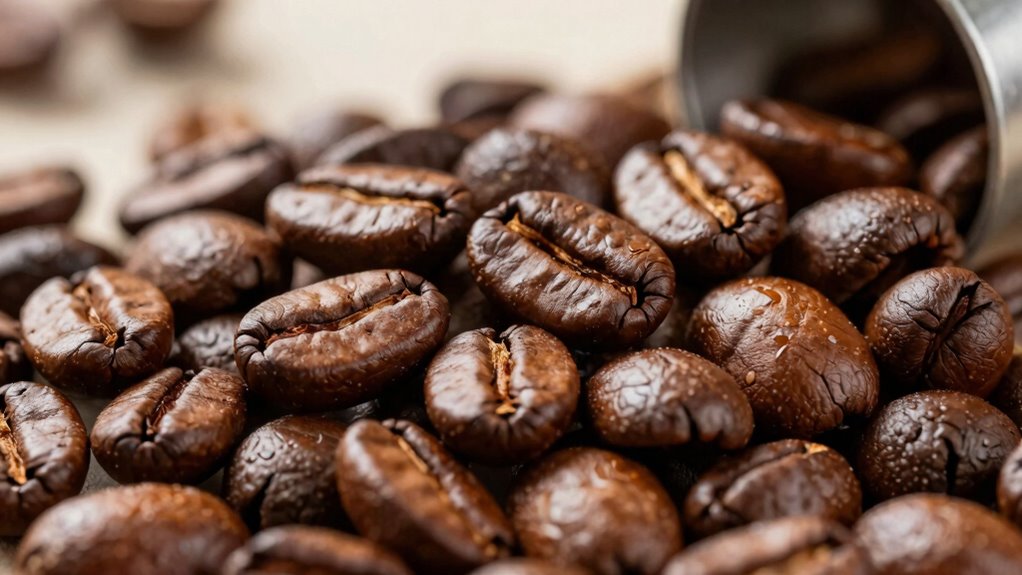
When bean density varies more than expected, it can lead to brewing issues that impact flavor and extraction. Poor coffee storage practices, like exposing beans to moisture or air, can alter density and cause uneven extraction. To troubleshoot, first assess your storage conditions and verify beans are kept in a cool, airtight container. Adjust your grind size; denser beans often require a finer grind, while lighter beans may need a coarser setting. Also, consider bean roasting techniques—darker roasts tend to be less dense and brew more quickly, so modify your brewing time accordingly. Consistently monitoring bean density and making these adjustments helps you achieve a balanced extraction, improving flavor and consistency in every cup. Additionally, bean density can be affected by storage and roasting methods, so paying attention to these factors can help maintain optimal brewing results. Proper measurement of bean moisture content can also assist in maintaining consistent density and brewing performance. Regularly calibrating your grinder based on the density of your beans ensures more precise control over extraction and flavor. Being aware of storage conditions is essential to prevent density fluctuations that could compromise your brew quality. Furthermore, understanding how storage environment impacts bean properties can help you better manage freshness and density stability.
Frequently Asked Questions
Does Bean Density Influence Coffee Shelf Life and Storage?
Yes, bean density impacts your coffee’s storage stability and shelf life. Denser beans tend to have better moisture resistance, helping extend shelf life and prevent spoilage. You should store high-density beans in airtight containers away from light and heat, ensuring ideal freshness. Proper storage techniques capitalize on the natural stability of denser beans, ultimately promoting shelf life extension and maintaining flavor quality over time.
Can Roasting Times Be Adjusted Based on Bean Density?
Yes, you can adjust roasting times based on bean density to improve roasting consistency and optimize flavor extraction. Denser beans often require slightly longer roasting to develop evenly, while less dense beans roast faster. By monitoring density, you can fine-tune your roasting profile to achieve uniformity and enhance flavor complexity. This customization helps uphold consistent quality and ensures each batch delivers the desired taste profile.
How Does Altitude Affect Bean Density During Growth?
Altitude effects during growth stages make beans lighter and fluffier as you go higher, thanks to thinner air and less pressure. You might think the plants are just showing off, but really, they’re adapting to the altitude’s challenge. As elevation increases, the beans develop differently, resulting in lower density. So, if you’re climbing mountains for your coffee, expect a lighter, more delicate bean that’s perfect for nuanced brewing.
Are Certain Coffee Varieties More Prone to Density Variations?
Yes, certain coffee bean varieties are more prone to density variations. You’ll find that Arabica beans, especially those grown at higher altitudes, tend to have more consistent density due to specific cultivation methods. On the other hand, Robusta beans often show greater density differences, influenced by factors like soil quality and harvest timing. Understanding these variations helps you predict brewing outcomes and select the best beans for your preferred flavor profile.
Does Bean Density Impact the Caffeine Content in Brewed Coffee?
You might think bean density affects caffeine content, but it mainly influences brewing efficiency and caffeine extraction, not the final caffeine levels. Denser beans can slow down extraction, making it trickier to get consistent strength. However, if you adjust your grind size and brewing time accordingly, you’ll still extract the desired caffeine amount. So, bean density impacts how you brew, not how much caffeine ends up in your cup.
Conclusion
Now that you know how bean density influences brewing, are you ready to experiment and discover your perfect cup? Don’t be surprised if your next brew surprises you—small changes can lead to big flavors. Keep an eye on density variations during selection and roasting, and watch your coffee game elevate. The secret to revealing richer, more nuanced flavors might just be hiding in those beans you thought you knew. Are you prepared to uncover them?