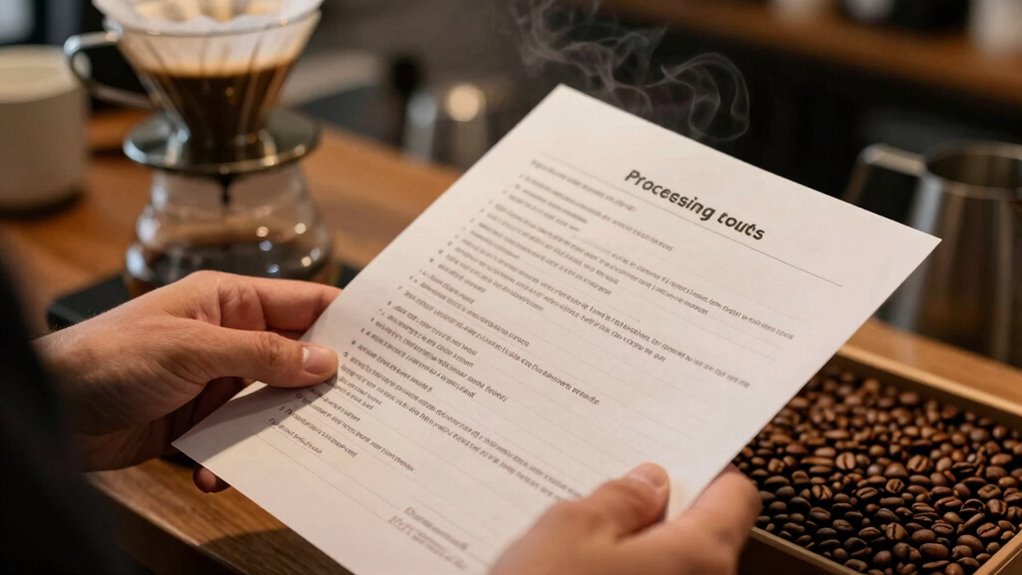

Keeping detailed processing notes helps you understand how specific variables like grind size, brew time, and bean type impact your coffee’s flavor. By recording your experiments, you’ll notice patterns and learn which adjustments refine your results. Consistent notes make it easier to replicate successful batches and avoid repeating mistakes. Over time, this organized approach boosts your brewing skills and enhances flavor focus. Stick around to discover more ways these notes can elevate your coffee experience.

Get coffee and tea gear delivered free — and shop member deals
- Fast, free delivery on millions of items
- Access to Prime Big Deal Days deals on October 6–7
- Prime Video, Amazon Music and more included
Key Takeaways
- Detailed notes enable precise adjustments to brewing variables for improved flavor consistency.
- They help identify patterns and correlations between processing methods and taste outcomes.
- Systematic documentation supports replicating successful batches and refining techniques over time.
- Linking technical practices to sensory feedback enhances understanding and flavor development.
- Organized notes facilitate informed decisions, leading to higher-quality, nuanced coffee experiences.
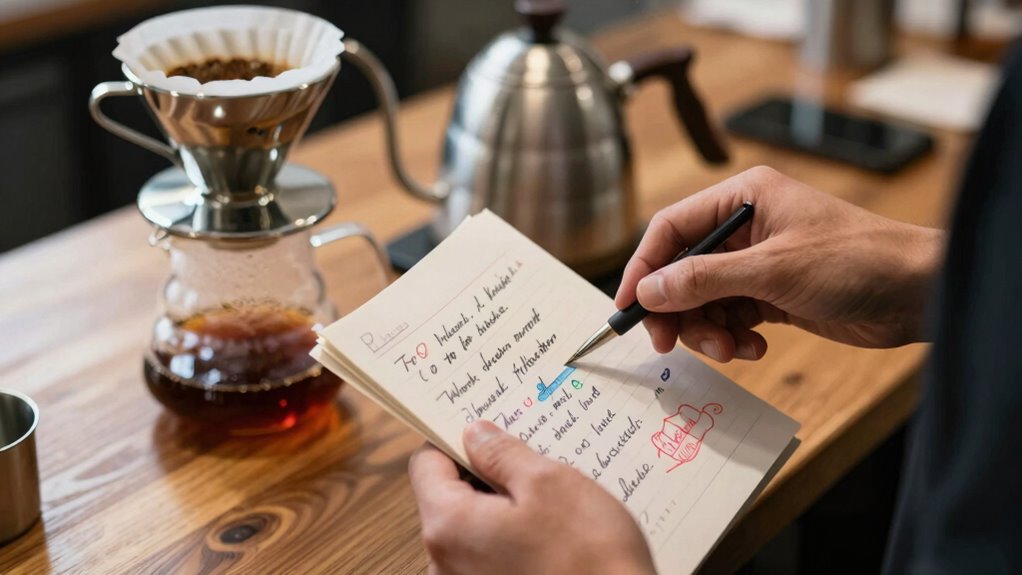
Have you ever wondered how small details in processing can profoundly improve your brew? Keeping detailed processing notes can be a game-changer, allowing you to refine your techniques and consistently produce better coffee. When you document your steps, you gain insight into how different variables influence flavor, helping you develop a more precise flavor profiling. This process isn’t just about tracking what you did; it’s about understanding how each change impacts the final cup. For instance, noting the temperature, grind size, and extraction time helps you identify patterns that lead to your ideal flavor profile. Over time, these notes become a valuable reference, guiding you to replicate successful batches or adjust for desired flavor shifts.
Equally important is the role of equipment calibration. When you record how your grinder, espresso machine, or brewing device is calibrated, you create a baseline for consistent results. If your equipment isn’t calibrated correctly, even small variations can lead to inconsistent flavors, making it difficult to pinpoint what adjustments are necessary. By keeping detailed calibration notes, you can guarantee your equipment operates at peak performance, reducing variables that might otherwise throw off your brew. This precision allows for more accurate control over extraction, which directly affects flavor profiling. When you know your grinder settings are consistent and your brewing temperature is steady, you can focus more on fine-tuning variables like brew time and grind size to achieve the flavor nuances you desire.
Processing notes also serve as a record of experimentation. When you try new beans, different roast levels, or alternative brewing methods, jotting down your observations helps you evaluate what works best. Without detailed notes, it’s easy to forget subtle differences or repeat mistakes. With thorough documentation, you can compare batches side by side, noticing how small adjustments contribute to flavor complexity. This ongoing record-keeping sharpens your palate and understanding of how processing impacts taste. Additionally, maintaining detailed notes aligns with the importance of equipment calibration, ensuring your brewing setup remains consistent over time. Recognizing the role of consistent parameters can also help you identify the root causes of flavor inconsistencies and improve your overall process.
Furthermore, understanding the impact of processing variables on flavor can help you develop a more targeted approach to brewing. Over time, it empowers you to tailor your approach, balancing extraction and flavor development to craft the perfect cup. Incorporating sensory analysis into your notes can deepen your appreciation of flavor nuances and guide your adjustments more effectively. In essence, maintaining detailed processing notes is a simple yet powerful habit that elevates your brewing. It links your technical practices—like equipment calibration—to your sensory experience, allowing you to make informed decisions. By systematically tracking your process, you turn trial and error into a structured learning journey. This consistency and attention to detail ultimately help you unlock the full potential of your coffee, creating richer, more nuanced flavors in every cup.
As an affiliate, we earn on qualifying purchases.
Frequently Asked Questions
How Do I Organize My Processing Notes Effectively?
To organize your processing notes effectively, categorize them by brewing techniques and flavor profiles. Use clear headings and consistent formatting to make info easy to find. Keep detailed records of each batch, noting variables like grind size, water temperature, and extraction time. Regularly review and update your notes to track improvements. This approach helps you identify successful methods and refine your brewing process for better flavor profiles.
What Details Are Essential to Include in Processing Notes?
You should include fermentation timelines, ingredient variations, and brewing conditions in your processing notes. Document the start and end times for fermentation, noting any changes or anomalies. Record ingredient variations, such as different beans or roast levels, and how they impact flavor. Track brewing conditions like temperature, grind size, and water chemistry. These details help you identify what works best, refine your process, and consistently brew better coffee.
How Can Processing Notes Improve Consistency in Brewing?
Processing notes improve your consistency by allowing you to track ingredients and flavor profiling details for each batch. When you record specific measurements, roasting times, and tasting notes, you create a clear reference for future brews. This helps you identify what works best, adjust variables precisely, and maintain the same quality. Over time, these notes become your personalized guide, ensuring every batch consistently meets your flavor expectations.
Should I Review My Processing Notes After Each Brew?
Yes, you should review your processing notes after each brew. Doing so helps you track recipe variations and how they affect flavor profiling. By analyzing your notes, you identify what worked well and what didn’t, enabling you to refine your process. This habit guarantees consistency, improves your skills, and helps you create better, more tailored brews over time. Regular review makes your brewing journey more intentional and rewarding.
How Do Processing Notes Help Troubleshoot Brewing Issues?
Processing notes help you troubleshoot brewing issues by tracking flavor profiling and equipment calibration. When you notice inconsistency, review your notes to identify patterns, such as changes in grind size or water temperature. This allows you to pinpoint what might be causing off-flavors or poor extraction. Over time, detailed notes help you fine-tune your process, ensuring each brew improves and issues become easier to resolve.
coffee grinder calibration tools
As an affiliate, we earn on qualifying purchases.
As an affiliate, we earn on qualifying purchases.
Conclusion
By keeping processing notes, you’ll reveal the secrets behind each brew, much like a seasoned alchemist refining their craft. These notes serve as your ancient scrolls, guiding future experiments and helping you avoid repeating past mistakes. Remember, even the greatest brewers of yore knew the value of reflection. So, embrace this habit, and soon you’ll find yourself wielding a mastery that’s as timeless as a knight’s code—making every cup a legendary experience.
As an affiliate, we earn on qualifying purchases.
As an affiliate, we earn on qualifying purchases.
Evergreen bestsellers Picks
bestsellers
As an affiliate, we earn on qualifying purchases.