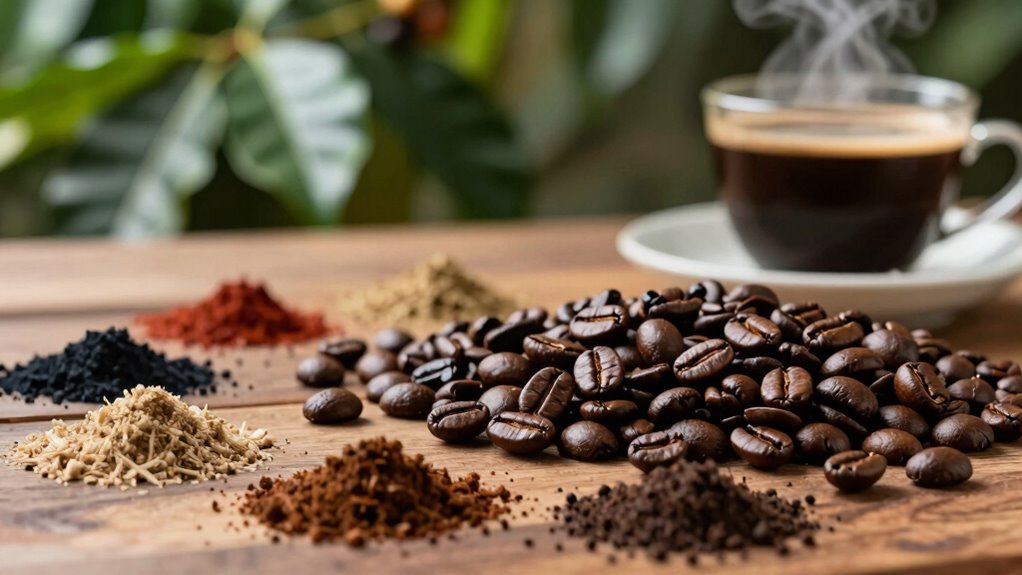

Coffee terroir is about how the environment shapes your coffee’s flavor. Factors like soil, altitude, and climate influence its taste, making each region’s beans unique. High-altitude farms often produce brighter, more complex cups, while soil types can add mineral or smoky notes. Microclimates and growing methods also play a role. Understanding these influences helps you appreciate the diverse characteristics of coffee from different places. Keep exploring to discover how land and climate truly craft every cup.

Get coffee and tea gear delivered free — and shop member deals
- Fast, free delivery on millions of items
- Access to Prime Big Deal Days deals on October 6–7
- Prime Video, Amazon Music and more included
Key Takeaways
- Coffee terroir refers to environmental factors like soil, altitude, and climate that influence flavor, similar to wine but distinct in its context.
- Unlike wine, coffee terroir impacts flavor through growing conditions such as microclimates and soil types, not fermentation or aging.
- The taste of coffee varies regionally based on land, weather, and cultivation practices, making each origin unique.
- Recognizing terroir in coffee helps appreciate its environmental roots without the complexities of wine terminology.
- Understanding how terroir affects coffee enhances enjoyment and exploration of different regional profiles.
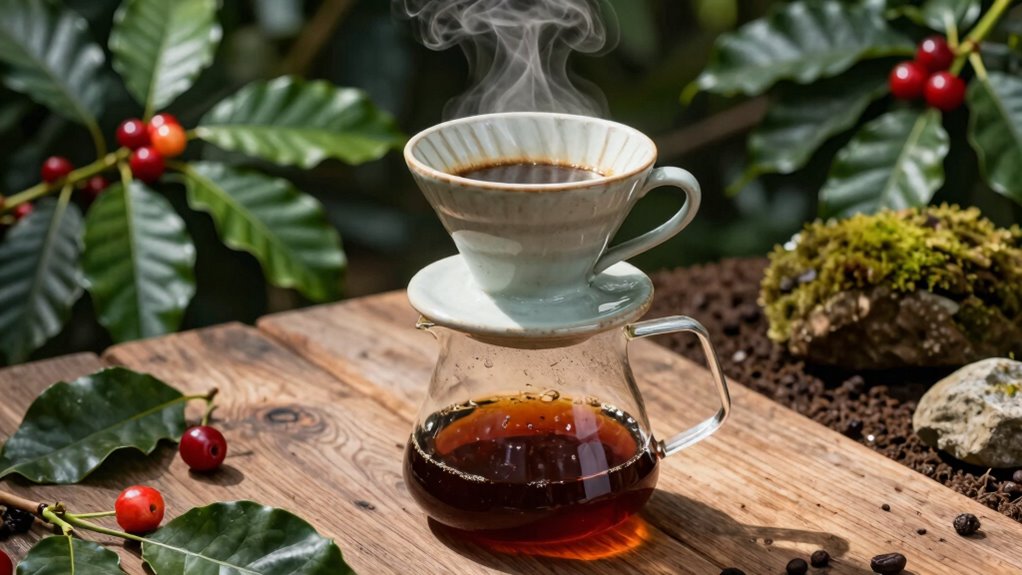
Coffee terroir refers to the unique environmental factors that influence the flavor and character of coffee beans, much like wine grapes. When you think about what makes a coffee taste specific to a region, it’s these very factors that come into play. The flavor profile of your coffee isn’t just about the variety or roast; it’s shaped by the growing conditions—altitude, climate, soil, and even local microclimates. These elements work together to produce beans with distinct tastes, aromas, and textures. For example, high-altitude regions tend to produce beans with brighter acidity and more complex flavor notes, while lower-altitude farms might yield beans that are more full-bodied and earthy. Understanding this helps you appreciate why coffee from different regions can taste so different, even if they’re processed and roasted similarly. Recognizing the influence of environmental factors on flavor can deepen your appreciation for the complexity of each cup. Additionally, soil composition can vary significantly even within small areas, contributing further to the unique characteristics of each harvest. A better grasp of growing conditions also highlights how climate change could impact coffee quality worldwide.
Coffee’s unique flavors are shaped by environmental factors like altitude, soil, and climate, giving each region its distinctive taste.
Your growing conditions have a direct impact on the beans’ development. Soil composition, for instance, can add mineral notes to the coffee, making it taste more vibrant or muted depending on the nutrients present. If the soil is volcanic, you might notice a certain smoky or spicy undertone in the final cup. The climate also plays an essential role—temperature swings, rainfall, and sunlight exposure influence how the coffee cherries ripen and develop their flavor compounds. In areas with consistent, moderate temperatures, beans tend to develop more balanced and nuanced flavors, whereas unpredictable weather can lead to variations in taste from harvest to harvest. Microclimate variations can further contribute to subtle differences in flavor even within the same region. These variations highlight how nuanced and dynamic coffee cultivation really is. The specific growing techniques used by farmers, such as shade-grown or hand-picking, also have a notable impact on the final flavor profile.
Altitude is another key factor that shapes the flavor profile. Coffee grown at higher elevations usually matures more slowly, allowing the beans to develop more intricate flavors and acidity. Conversely, beans from lower altitudes grow faster, often resulting in a bolder, more straightforward taste. The microclimate of a specific farm or region—such as shade cover or wind exposure—can further influence how the beans grow and what flavors they ultimately deliver. These environmental influences are why coffee isn’t just a commodity but a product of its environment, offering a spectrum of tastes that reflect where and how it was cultivated. This connection to the land is what makes coffee terroir so fascinating and worth exploring. Once you understand how growing conditions shape the flavor profile, you’ll start to see coffee as more than just a caffeine source. It becomes a reflection of its terroir, a tangible connection to the land and climate where it was cultivated. This awareness deepens your appreciation for the diversity of coffees available worldwide and encourages you to seek out beans from different regions to experience their unique characteristics firsthand.
As an affiliate, we earn on qualifying purchases.
Frequently Asked Questions
How Does Altitude Specifically Affect Coffee Flavor?
Altitude effects profoundly influence coffee flavor by enhancing flavor development. As you go higher, cooler temperatures slow down bean maturation, allowing more complex sugars and acids to develop. This results in brighter, more nuanced flavors with vibrant acidity. You’ll notice that high-altitude coffees often have a cleaner, more refined profile. So, altitude plays a key role in shaping the overall taste, making these coffees especially prized for their depth and clarity.
Can Soil Type Be Changed to Alter Coffee Taste?
Think of soil as the canvas for your coffee’s flavor masterpiece; you can’t just repaint it overnight. Soil composition influences taste, but changing it involves careful farming techniques, like adding organic matter or adjusting pH levels. While you can modify the soil to some extent, it’s a slow process that requires patience. The right techniques help craft a unique profile, but nature’s influence still plays a starring role in your coffee’s character.
What Role Do Local Microbes Play in Coffee Terroir?
Local microbes play a vital role in coffee terroir by influencing fermentation impacts and microbial diversity. As you process your coffee, these microbes interact with the beans, shaping flavor profiles through natural fermentation. Different microbial communities can enhance or modify acidity, sweetness, and aroma, making each batch unique. By understanding and managing microbial diversity, you can subtly influence your coffee’s character, highlighting the significance of local microbial ecosystems in defining terroir.
How Does Climate Change Impact Coffee Terroir?
You might think climate change is just a distant threat, but it’s already shaking up coffee terroir. Rising temperatures and unpredictable weather challenge your coffee’s unique flavors, demanding climate adaptation. To guarantee coffee resilience, growers must innovate and adapt quickly. Ironically, the very climate that molds terroir could also diminish its distinctiveness, making your favorite brew less unique—yet more essential to protect and sustain.
Are There Specific Coffee Varieties Suited for Certain Terroirs?
Yes, certain coffee varieties thrive better in specific terroirs, thanks to their unique flavor profiles. When you select varieties suited to a region’s climate and soil, you support coffee cultivation that preserves those distinct flavors. By matching varieties to terroirs, you help maintain flavor preservation across harvests, ensuring the coffee’s character remains consistent and true to its origin. This targeted approach enhances quality and celebrates regional uniqueness.
As an affiliate, we earn on qualifying purchases.
Conclusion
So, savor the subtle symphony of soil, climate, and caretakers shaping your coffee’s character. Recognize the richness rooted in regions, revealing a remarkable range beyond mere flavor. Embrace the essence, experience the environment, and enjoy the journey from bean to brew. By understanding coffee terroir, you deepen your delight, discovering distinct differences and delicious diversity in every cup. Truly, it’s the story of soil, sunshine, and skilled hands, all blending beautifully in your morning brew.
As an affiliate, we earn on qualifying purchases.
As an affiliate, we earn on qualifying purchases.
Fall Picks
fall essentials
As an affiliate, we earn on qualifying purchases.