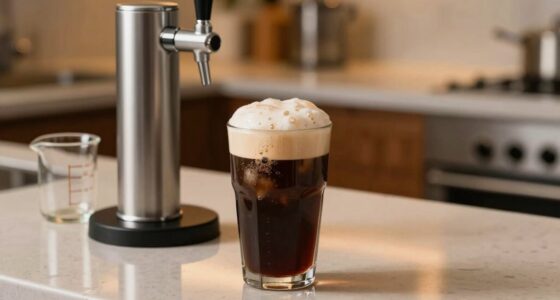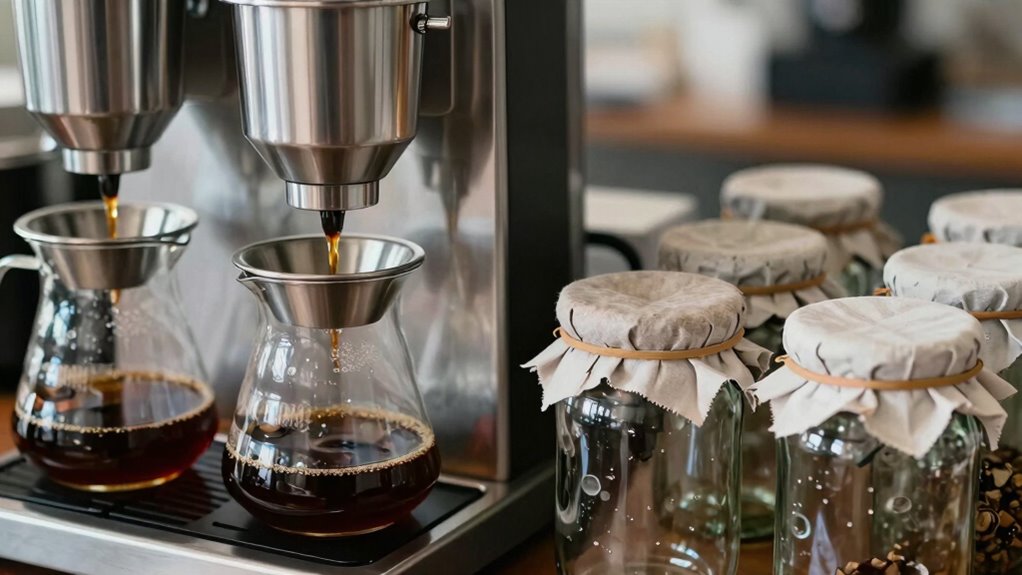

Cold brew makers offer a simple, consistent process with built-in filters and preset brewing times, making it easy to get a smooth, rich flavor with minimal fuss. DIY containers give you more control, allowing you to experiment with ingredients and customize the brewing process to your taste, but they require careful monitoring and adjustments. Both methods can produce great cold brew—if you keep the basics in mind, you’ll find which suits your style best as you explore further.
Key Takeaways
- Cold brew makers offer convenience, consistent results, and built-in filters, while DIY containers provide greater customization and control.
- DIY setups allow experimenting with ingredients and brewing times, unlike the more straightforward cold brew machines.
- Cold brew makers typically have preset brewing durations, whereas DIY containers require manual monitoring for optimal flavor.
- Storage practices are crucial for both methods to maintain freshness and flavor quality.
- Overall, cold brew makers prioritize ease and predictability, while DIY containers focus on personalization and experimentation.
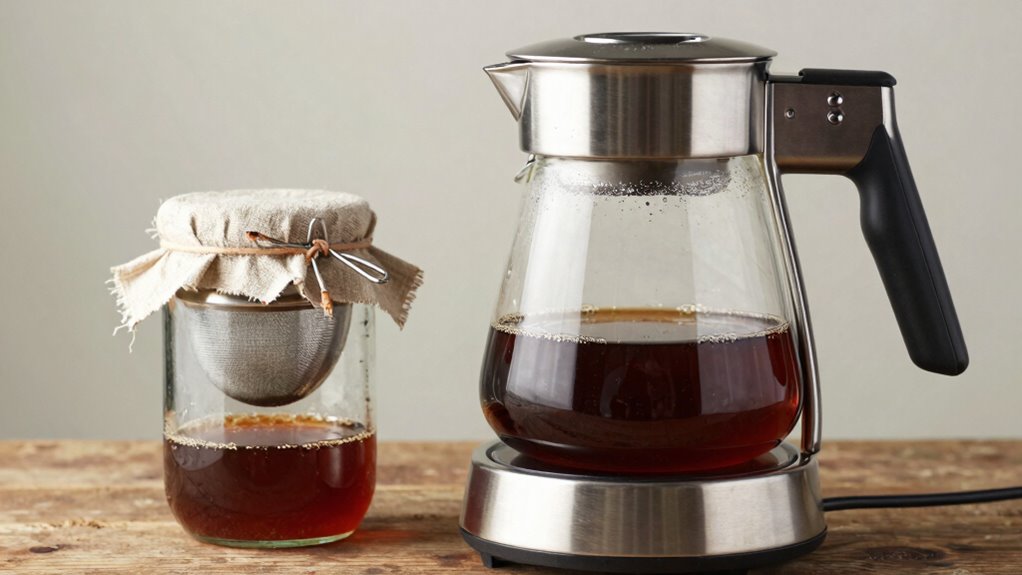
When it comes to making cold brew coffee at home, you have two main options: investing in a dedicated cold brew maker or crafting your own DIY container. Each approach has its advantages, but your choice depends on how hands-on you want to be and what results you’re aiming for. Cold brew makers are designed specifically for ease and consistency. They typically feature built-in filters and a straightforward process, allowing you to set and forget. With a cold brew machine, you can easily experiment with flavor infusions by adding spices, vanilla beans, or fruit during the brewing process, giving your coffee a customized twist. These machines often come with recommended brewing durations, usually around 12 to 24 hours, ensuring you get a smooth, rich flavor without much fuss. The consistency of brewing duration is a major plus because it guarantees a predictable outcome every time.
On the other hand, DIY containers give you more control over the process. You can repurpose jars, pitchers, or even build a custom setup that fits your space and preferences. Using a DIY container requires a bit more attention, as you need to monitor the brewing duration more carefully and decide when the coffee has reached your desired strength. This method also opens up more opportunities for flavor infusions since you can add ingredients directly to your container at any stage, experimenting with different combinations to craft your perfect brew. While it might take longer to perfect your technique, making cold brew with a DIY setup can be more satisfying because you’re customizing every step. Plus, you can adjust the brewing duration based on your taste—shorter for a lighter brew, longer for a more intense flavor. Additionally, understanding brewing duration is essential for achieving the desired flavor profile. Knowing how to measure brewing time accurately can help refine your process and avoid over- or under-extraction. In fact, mastering brewing techniques can greatly enhance the quality of your cold brew. Proper storage methods are also crucial in maintaining the freshness and flavor of your brew after it’s made, especially when using DIY setups. Being familiar with proper storage methods can also help maintain freshness and flavor after brewing.
Speed isn’t a factor with either method, since cold brew always takes several hours to develop its full flavor. But if you’re after convenience and consistency, a dedicated cold brew maker simplifies the process and minimizes guesswork. If you enjoy experimenting with flavors and don’t mind overseeing the process, a DIY container offers more flexibility. Ultimately, both options allow you to create delicious cold brew at home, but your choice hinges on whether you prefer a set-it-and-forget-it approach or a more hands-on, customizable experience. Whichever you choose, understanding the importance of flavor infusions and brewing duration will help you craft a cold brew that’s perfectly tailored to your taste buds.

Ninja Hot & Iced XL Coffee Maker with Rapid Cold Brew, 4 Brew Styles, 8 Sizes Small Cup to Travel Mug, Single-Serve Coffee Brewer, 12-Cup Carafe, Permanent Filter, Removable Reservoir, Black, CM371
4 BREW STYLES: Select from Classic, Rich, Over Ice, and Cold Brew for coffee any way you like…
As an affiliate, we earn on qualifying purchases.
As an affiliate, we earn on qualifying purchases.
Frequently Asked Questions
How Long Does Cold Brew Last in DIY Containers?
You can expect cold brew in DIY containers to stay fresh for about 1 to 2 weeks, depending on storage conditions. To maximize flavor retention, keep it in an airtight container in the fridge. Proper storage extends the duration, but over time, the flavor may begin to diminish. Always smell and taste your cold brew before drinking if it’s been stored for a while, to verify it’s still good.
Are Cold Brew Makers Easier to Clean Than DIY Setups?
Cleaning a cold brew maker is like tending to a well-oiled machine—more straightforward than DIY setups. Cold brew makers usually feature integrated filters and fewer parts, making cleaning convenience a breeze and equipment durability more reliable over time. DIY containers often require more scrubbing and careful disassembly, which can be messier and less durable. So, if you value ease and longevity, a cold brew maker is the smarter choice.
What Materials Are Best for DIY Cold Brew Containers?
For DIY cold brew containers, stainless steel or glass are your best options because of their durability, material safety, and ease of cleaning. Choose containers with good insulation to keep your brew cold longer. Avoid plastics that aren’t food-safe or that may absorb flavors. Insulated stainless steel or glass containers help maintain temperature, ensuring your cold brew stays fresh, while also being safe and simple to clean.
Can Cold Brew Makers Make Hot Coffee?
Cold brew makers are designed specifically for cold brewing, so they don’t heat the coffee, meaning you can’t use them to make hot coffee directly. If you want hot coffee, you’ll need to brew it with a different method, like drip or French press. However, some cold brew makers can be used to create concentrated coffee that, when heated, offers flavor enhancement and quicker brewing speed for hot beverages.
Is One Method More Environmentally Friendly Than the Other?
You’ll find that DIY containers are generally more environmentally friendly because they often use reusable filters and involve less energy consumption. Cold brew makers usually require electricity, which adds to their environmental impact. By choosing simple DIY methods, you reduce waste and energy use, making it a greener option. Plus, you can customize your setup, minimizing waste and maximizing reusable materials, making it better for the environment overall.

Snap! Cold Brew Do-it-Yourself Kit, 22L/5 Gallon Capacity, Instructions, Black/white, Cold Brew Coffee Set, BVCBRBDIK02
Build your own cold brew coffee system – Easy DIY setup for home brewing
As an affiliate, we earn on qualifying purchases.
As an affiliate, we earn on qualifying purchases.
Conclusion
Whether you choose a cold brew maker or craft your own DIY container, it’s funny how sometimes, the simplest method turns out to be your favorite. Maybe it’s the feel of the jar or the ease of customizing your brew just right. In the end, it’s about finding what fits your routine—because sometimes, the best coffee moments happen when you least expect them, right in your own kitchen.

Tiesta Tea – 6-Pack Cold Brew Variety, Loose Leaf, Medium to Non-Caffeinated, Assorted Tea Sample Set, Cold Brew Packets, Each Makes a 64oz Pitcher (Pack of 6)
DELECTABLE COLD BREW TEA SELECTION: Stay refreshed with Tiesta Tea's Cold Brew Iced Tea Variety Pack, offering 6…
As an affiliate, we earn on qualifying purchases.
As an affiliate, we earn on qualifying purchases.

Cold Brew Coffee Maker,64 oz Mason Jar Pitcher with Stainless Steel Filter, Pour Spout Handle Lid, Heavy Duty Glass Airtight & Leak-Proof for Iced Coffee,Tea & Lemonade
【What You Will Get】:1 Pcs / 64 oz mason jar pitcher with pour spout lid, 1 stainless stell…
As an affiliate, we earn on qualifying purchases.
As an affiliate, we earn on qualifying purchases.