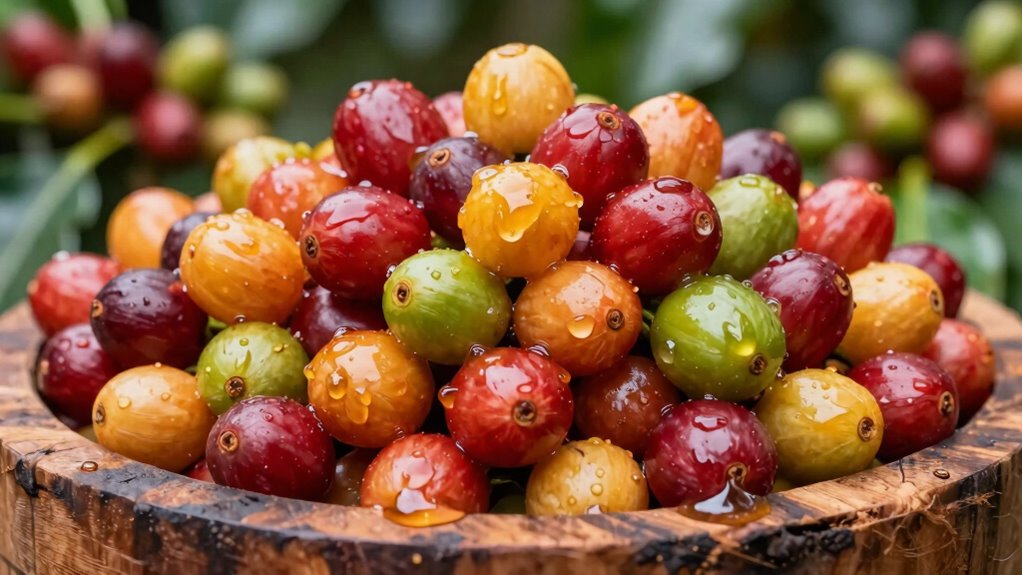

Honey process coffee is a method where some fruit mucilage remains on the beans during drying, creating a balanced flavor with sweetness and fruitiness. It falls between washed and natural processing, offering rich berry, citrus, and caramel notes. This technique uses less water and supports sustainability. You can identify high-quality honey process beans by their glossy appearance and fruity aroma. To discover more about how this process impacts flavor and quality, keep exploring the details below.

Get coffee and tea gear delivered free — and shop member deals
- Fast, free delivery on millions of items
- Access to Prime Big Deal Days deals on October 6–7
- Prime Video, Amazon Music and more included
Key Takeaways
- Honey process coffee involves partial mucilage retention during drying, creating a balance between washed and natural processing.
- It enhances flavor complexity with sweetness, fruitiness, and body, often featuring berry, citrus, or caramel notes.
- Visual cues like sticky, glossy beans and even coloration indicate high-quality honey process coffee.
- The method supports sustainability by reducing water usage compared to washed processes.
- Brewing methods like pour-over or AeroPress can highlight the coffee’s sweetness and full-bodied profile.
As an affiliate, we earn on qualifying purchases.
What Is Honey Process Coffee and How Is It Different?

Honey process coffee is a method that falls between the washed and natural processing techniques, and it’s gaining popularity among coffee enthusiasts. This approach balances flavor complexity and fruitiness while supporting coffee sustainability efforts by reducing water use compared to traditional washed methods. During processing, the mucilage remains on the beans, which are then dried with some of the fruit still attached. This method requires specialized processing equipment to carefully control fermentation and drying. Unlike fully washed coffee, honey process beans aren’t rinsed thoroughly, offering a unique flavor profile with sweetness and body. The process’s efficiency and the use of appropriate equipment help preserve the beans’ natural qualities, making honey processed coffee a distinctive choice for those seeking vibrant, well-balanced brews. Additionally, processing techniques play a crucial role in determining the final flavor and quality of honey processed coffee, with mucilage retention being a key factor in its unique taste profile. The specific fermentation process involved in honey processing contributes significantly to its complexity and depth of flavor. Understanding the processing stages can help coffee drinkers appreciate the nuanced differences in flavor that honey processed coffee offers. Furthermore, controlled fermentation is essential for developing the coffee’s rich and balanced flavor characteristics.
As an affiliate, we earn on qualifying purchases.
How Is Honey Process Coffee Made? From Cherry to Cup
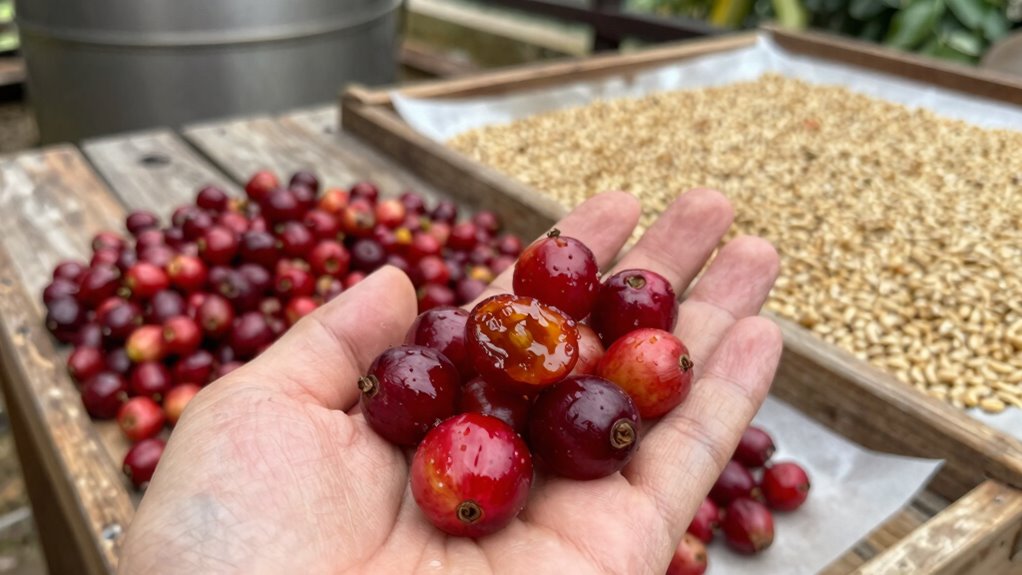
The journey of honey process coffee begins right after the cherries are harvested from the coffee plants. Your first step is selecting ripe cherries, often using specific harvesting techniques to guarantee quality. Once picked, the cherries undergo a controlled fermentation process, which helps break down the mucilage layers while leaving some on the beans, giving honey process its signature sweetness. Unlike washed methods, the mucilage remains partially intact, and the cherries are then dried on patios or raised beds. During drying, you need to monitor moisture levels carefully to prevent mold and over-fermentation. This careful process enhances the coffee’s flavor complexity. Proper drying techniques are essential to ensure the beans develop their full potential without spoilage. Additionally, climate considerations can significantly influence the drying process and final flavor profile. The post-harvest processing methods used further impact the beans’ characteristics, making the process both an art and a science. Understanding the mucilage layer’s properties helps in managing fermentation and drying effectively. Moreover, controlling temperature during drying is crucial for preserving the desired honeyed flavor notes. Ultimately, the beans are hulled, sorted, and roasted, transforming from cherry to rich, honeyed coffee ready for brewing.
As an affiliate, we earn on qualifying purchases.
What Are the Typical Flavors and Tasting Notes of Honey Process Coffee?
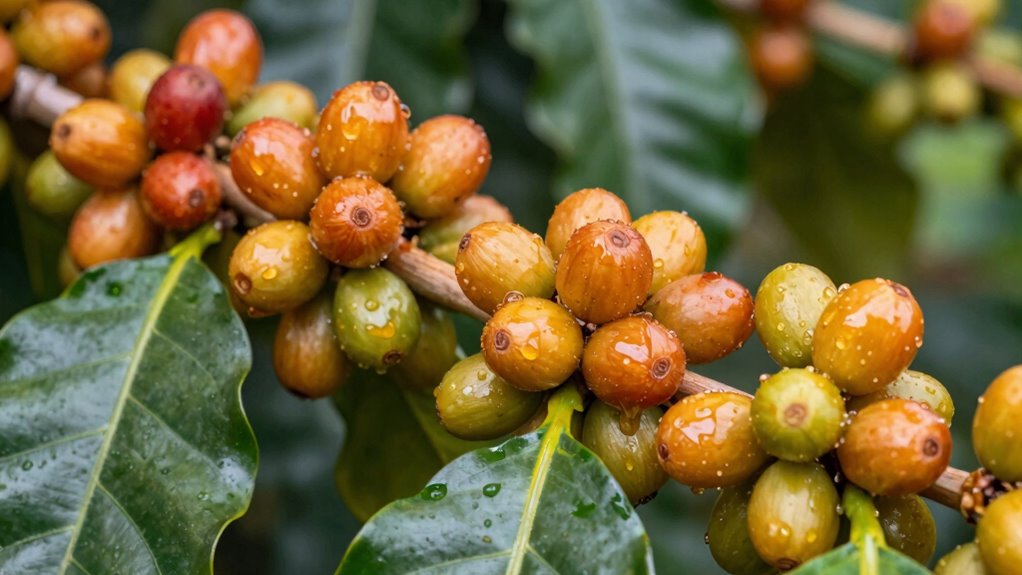
When you taste honey process coffee, you’ll notice it often has sweet and fruity profiles that brighten your palate. You might also pick up caramel and honey notes that add richness, along with bright citrus flavors that give a lively finish. These distinctive tasting notes make honey processed beans truly stand out. Additionally, the unique processing method can influence the flavor complexity, making each cup a distinct experience. The fermentation process involved in honey processing also contributes to the development of these complex flavors, enhancing the coffee’s overall profile.
Sweet and Fruity Profiles
Because the honey process involves leaving some of the mucilage on the coffee beans during drying, it often results in a cup with vibrant, fruity flavors. You’ll notice bright notes like berry, peach, and apple, complemented by a natural sweetness. The unique combination of coffee bean genetics and sustainable farming practices influences these flavors, making each cup distinctive. The mucilage retention enhances the fruitiness while maintaining a balanced sweetness. The process allows the fruit’s natural sugars to develop, creating a lively tasting experience. Here’s a quick overview:
| Flavor Profile | Typical Notes | Characteristics |
|---|---|---|
| Berry | Strawberry, Raspberry | Bright, lively |
| Stone Fruit | Peach, Plum | Juicy, smooth |
| Apple | Green Apple | Crisp, invigorating |
Enjoy discovering how these elements combine in honey-processed coffee.
Caramel and Honey Notes
Honey process coffee often delights the palate with rich caramel and honey notes that add a smooth, sweet layer to the cup. These flavors emerge from the unique processing method, which preserves more of the fruit’s natural sugars. As a result, you’ll notice a luscious, syrupy sweetness that complements the coffee’s body. Variations in harvesting season can influence these tasting notes, with later harvests sometimes producing deeper caramel flavors due to increased fruit ripeness. Additionally, coffee farm sustainability practices—like shade-grown or organic farming—can enhance the richness of these notes by promoting healthier cherry development. Overall, honey process coffees deliver a balanced, sweet profile that emphasizes the natural sugars and contributes to a more sustainable, flavor-rich coffee experience.
Bright Citrus Flavors
Honey process coffee often presents a lively burst of bright citrus flavors that invigorate the palate. These vibrant notes come from the coffee’s unique processing, which preserves more fruitiness while balancing sweetness. The citrus hints can range from zesty lemon and lime to hints of orange or grapefruit, adding a invigorating complexity. The flavor profile is influenced by bee pollination, which impacts the coffee’s floral and fruity characteristics, and hive maintenance, ensuring healthy plants that produce high-quality beans. This process allows the sugars from the honey-like mucilage to develop, intensifying these bright citrus notes. As you sip, you’ll notice the lively acidity and clarity that make honey process coffee stand out. It’s an energetic, flavorful experience rooted in nature’s delicate balance.
As an affiliate, we earn on qualifying purchases.
Why Do Coffee Farmers Choose Honey Processing?
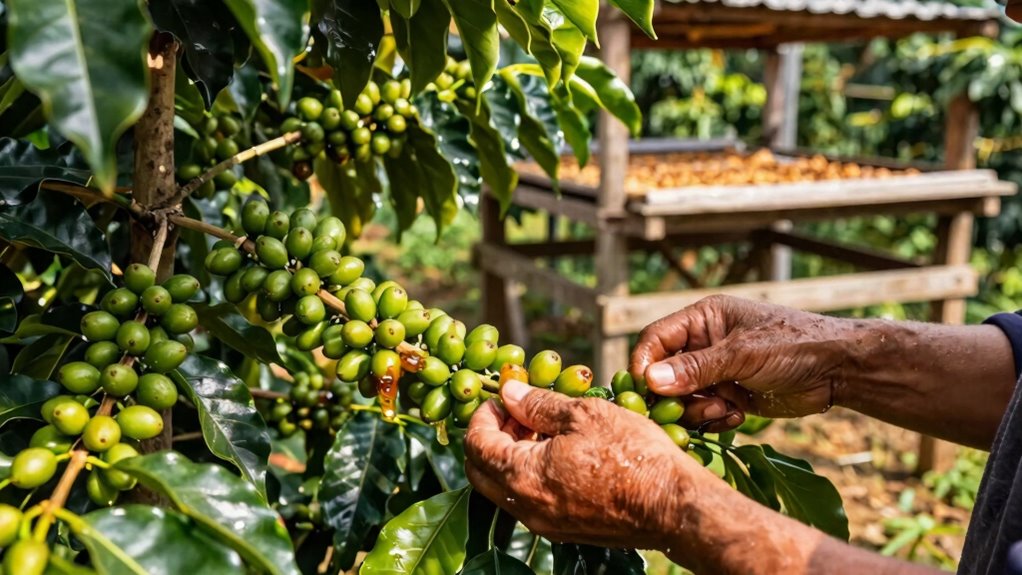
Many coffee farmers opt for honey processing because it offers a balance between traditional washed methods and natural dry processing, allowing them to enhance flavor complexity without sacrificing quality. This method supports sustainable farming practices by reducing water usage compared to washed processes, making it more environmentally friendly. Farmers also find honey processing economically beneficial, as it often yields higher-quality beans that can command better prices in the market. Additionally, honey processing can improve crop resilience, as it encourages selective harvesting and careful handling, reducing waste. By choosing this method, farmers can optimize their resources, improve their income, and promote eco-friendly practices—all while producing distinctive, flavorful coffee that appeals to discerning consumers. honey processing also encourages innovative techniques that can further improve both sustainability and bean quality. Furthermore, adopting sustainable farming practices can help farmers access certifications and markets that prioritize environmental responsibility.
How to Spot High-Quality Honey Process Coffee

To identify high-quality honey process coffee, look for beans with visible fruit residue, which indicates careful processing. Smell the beans for a sweet aroma with strong intensity, a sign of proper fermentation. Also, check for consistent bean color, reflecting even processing and quality control. Additionally, examining the processing method can help determine the overall quality and flavor profile of the coffee. Paying attention to the harvesting techniques used can also provide insight into the beans’ quality, as careful harvesting often results in a better final product. Recognizing quality control measures during processing can further ensure the beans meet high standards. Understanding the traditional skills involved in processing can give deeper appreciation for the craftsmanship behind each batch.
Visible Fruit Residue
Visible fruit residue on the coffee beans is a key indicator of high-quality honey process coffee. When examining beans, look for natural fruit residue clinging to the surface, which serves as a strong visual cue of proper processing. This residue indicates that the mucilage was carefully retained during drying, contributing to the coffee’s flavor complexity. High-quality honey process beans often display a sticky, slightly glossy appearance from the remaining fruit layer. Be cautious of beans that are overly clean or completely stripped of residue, as they may have undergone a different processing method. By observing these visual cues, you can identify beans that preserve the right amount of fruit residue, ensuring a richer, more nuanced cup. This attention to detail helps you select premium honey process coffee. Additionally, understanding the processing method can give you deeper insight into the flavor profile and quality of the beans. Recognizing the mucilage retention during processing can also help you distinguish between different honey process styles and their resulting flavors. Being familiar with processing techniques can further enhance your ability to select coffee based on your taste preferences. A good way to gauge the processing quality is by assessing the residue consistency, which can vary between batches but still reflect the careful handling during processing. Moreover, paying attention to the visual appearance of the beans can provide additional clues about the overall processing quality.
Sweet Aroma Intensity
A strong, sweet aroma is one of the most telling signs of high-quality honey process coffee. When you smell the coffee, the honey aroma should be rich and inviting, reflecting a well-balanced fermentation process. This sweet aroma hints at the coffee’s flavor intensity, signaling that it’s likely to deliver a bold, memorable taste. High-quality honey process beans often emit a vibrant, fruity sweetness combined with subtle floral notes, making the aroma a key indicator of their overall quality. If the honey aroma is weak or dull, the coffee may lack the depth and complexity you’re seeking. Trust your nose—an intense, sweet aroma usually correlates with a well-processed bean that promises a flavorful, satisfying cup.
Bean Color Consistency
Consistent bean color is a strong indicator of high-quality honey process coffee, reflecting careful handling and uniform fermentation. When inspecting beans, look for a uniform bean color that suggests even processing. Variations in color can indicate uneven fermentation or processing issues. High-quality honey process beans typically display a balanced hue, neither overly dark nor pale. The consistency of the bean color shows you the level of control during processing. A consistent appearance can also help identify processing quality, ensuring the beans have been handled with care. To identify quality, observe the beans for:
- Even coloration without blotches or spots
- A consistent hue across the batch
- No signs of over-fermentation or under-processing
- Beans that match the expected honey color spectrum
- Uniform appearance indicating careful handling
Additionally, understanding the visual cues associated with honey process coffee can assist in making accurate assessments. This consistency in bean color signals a well-crafted honey process.
Comparing Honey, Washed, and Natural Coffee Processing Methods
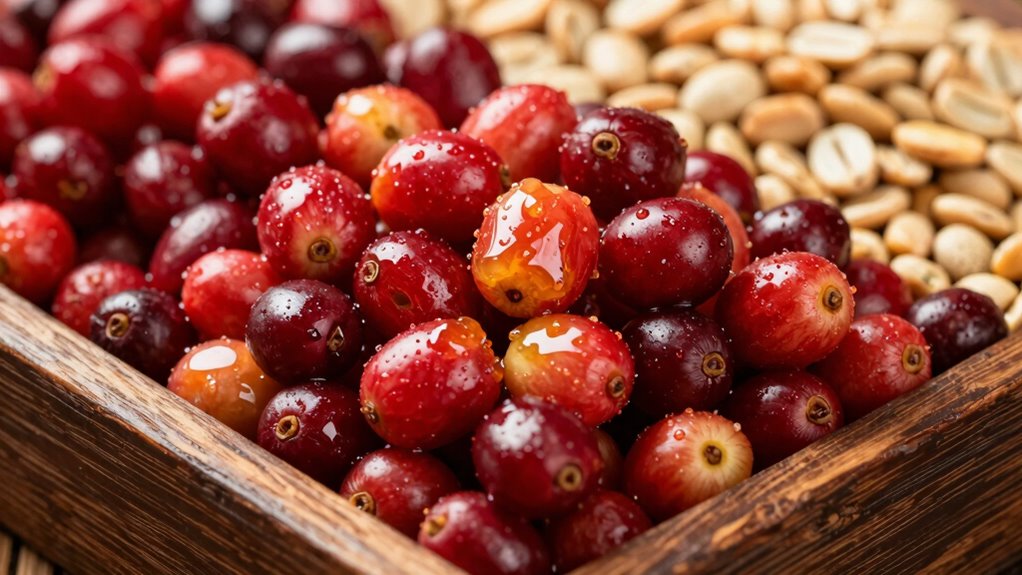
Understanding the differences between honey, washed, and natural coffee processing methods can help you choose the flavor profile that suits your taste. Honey processing involves leaving some mucilage on the bean, which adds sweetness and body, while washed processing uses extensive washing to remove mucilage, resulting in brighter, cleaner flavors. Natural processing allows beans to dry inside the fruit, creating more fruity and complex profiles. Each method impacts coffee sustainability differently; honey and natural processes often require less water, reducing environmental impact. Processing equipment varies accordingly: washed methods need fermentation tanks and washers, while honey and natural methods rely more on drying patios or raised beds. Knowing these differences helps you appreciate how processing choices influence flavor and sustainability, guiding you to select coffees aligned with your preferences.
How to Brew Honey Process Coffee for the Best Flavor
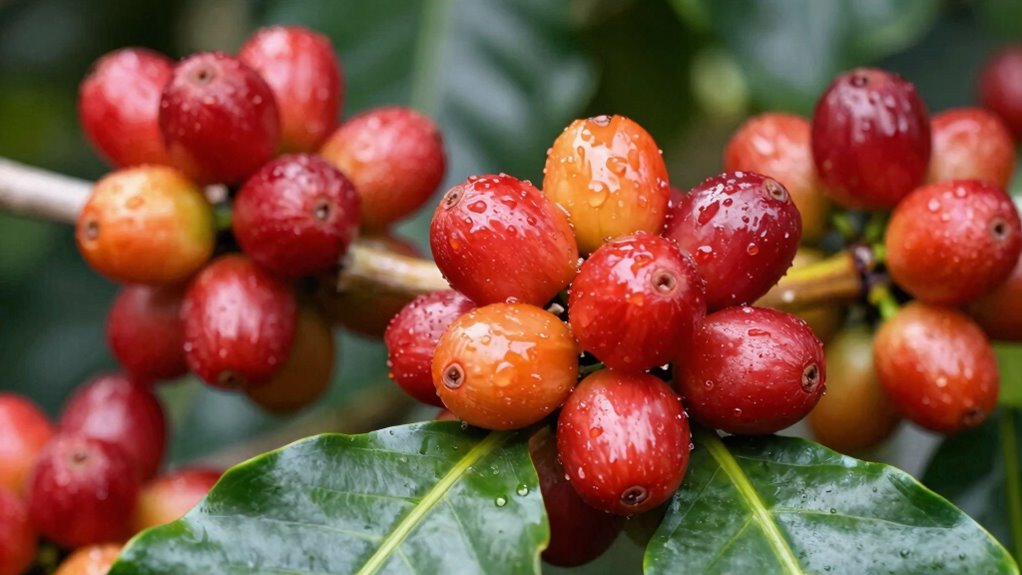
To bring out the best flavor in honey process coffee, your brewing method should complement its unique sweetness and body. Opt for brewing techniques that highlight its smooth, fruity notes without overpowering them. Use quality processing equipment, like a pour-over or AeroPress, to control extraction precisely. Maintain consistent grind size and water temperature to avoid bitterness and preserve the coffee’s natural sweetness. Consider brewing multiple smaller batches to enhance flavor complexity. Since honey process coffee emphasizes sustainability, choose eco-friendly equipment and methods to support coffee sustainability efforts. Be mindful of the coffee’s natural oils, which contribute to its rich mouthfeel. Adjust brewing time to balance sweetness and acidity, ensuring you enjoy the coffee’s full profile with each cup.
Frequently Asked Questions
Is Honey Processing Environmentally Sustainable?
Yes, honey processing is environmentally sustainable. It offers environmental benefits by reducing water use compared to washed processes, which lowers the ecological footprint. This method minimizes wastewater and chemical runoff, helping to protect local ecosystems. Plus, it often requires less energy, making it a more eco-friendly choice for coffee producers. By choosing honey-processed coffee, you support farming practices that prioritize ecological health and sustainability.
How Does Honey Process Impact Coffee Bean Size?
Honey processing can influence coffee bean size, though the impact varies due to fermentation variability. You might notice less consistency in bean size compared to other methods, especially if fermentation isn’t carefully controlled. This process often results in a mix of larger and smaller beans, affecting uniformity. To achieve better bean size consistency, monitor fermentation closely, as it plays a key role in how evenly the beans develop during honey processing.
Are Honey Processed Coffees More Expensive?
Yes, honey processed coffees tend to be more expensive due to their unique production methods. This process involves less washing, which increases labor and time, leading to higher costs. The flavor profile of honey processed coffee offers a richer, sweeter taste with complex notes, making it desirable. Because of these distinct characteristics and the labor-intensive process, producers often charge a premium for honey processed beans.
Does Honey Processing Affect Caffeine Content?
Imagine brewing a honey-processed coffee and wondering if it’s stronger. Honey processing generally preserves more caffeine than washed methods, thanks to less removal during processing. So, your honey processed coffee likely has a higher caffeine retention, giving you a balanced boost and a unique flavor profile. While it varies, you can expect a slight increase in caffeine content, making it both flavorful and energizing.
Can Honey Process Coffee Be Used in Espresso?
Yes, honey process coffee can be used for espresso. Its unique flavor profile, often featuring a sweet, fruity, and balanced taste, enhances the espresso experience. You might find that the honey process’s natural sweetness and complexity bring out rich flavors during brewing. Since espresso requires a fine grind and high pressure, this process’s characteristics work well, making it a versatile choice for various brewing methods, especially espresso.
Conclusion
As you savor honey process coffee, remember it’s more than just a brew — it’s a journey through a delicate dance of nature and craftsmanship. Like a honeybee’s unwavering dedication, each sip reveals the intricate layers of flavor and tradition. Embrace this coffee as a symbol of patience and artistry, reminding you that the sweetest moments often come from the most careful, passionate efforts. Let each cup inspire you to find beauty in the process.
Fall Picks
fall essentials
As an affiliate, we earn on qualifying purchases.