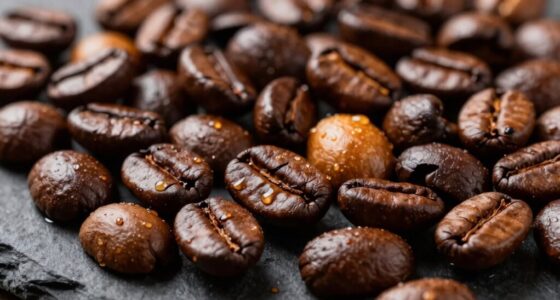
As your beans age, you’ll notice their crema becomes thinner and less stable, and the flavor loses vibrancy and brightness. Over time, oils and aromatic compounds break down, resulting in duller, flatter brews. Proper storage slows this process, but older beans still produce less lively crema and weaker taste. If you want to keep your coffee flavorful and creamy, it’s crucial to understand how aging impacts these qualities—keep going to discover how to maximize freshness.

Get coffee and tea gear delivered free — and shop member deals
- Fast, free delivery on millions of items
- Access to Prime Big Deal Days deals on October 6–7
- Prime Video, Amazon Music and more included
Key Takeaways
- Older beans produce thinner, less resilient crema due to oil and aromatic compound depletion.
- Aging diminishes aromatic oils, resulting in flatter, less vibrant coffee flavor.
- Fresh beans generate richer crema with better emulsification during extraction.
- Proper storage can slow aging, maintaining crema stability and flavor intensity.
- Roasting adjustments can partially mitigate flavor and crema loss caused by bean aging.

When you brew coffee with beans of different ages, you’ll notice that both the crema and flavor change noticeably. The freshness of your beans plays a significant role in the quality of your coffee, especially in how the crema forms and the overall taste. Coffee bean storage is crucial here—if you store your beans improperly, they’ll quickly lose their oils and aroma, resulting in a dull, flat brew. Keep your beans in an airtight container, away from light and heat, to preserve their freshness longer. The longer beans sit exposed to air, the more their flavor diminishes, and the less vibrant your crema will be. This is why using freshly stored beans makes a visible difference during extraction; you’ll see a richer, more stable crema that indicates good emulsification. Proper storage helps slow down the aging process, ensuring your beans maintain their optimal crema and flavor longer. Roasting duration is another key factor influencing how bean age impacts your coffee. When beans are roasted for a shorter duration, they retain more of their original oils, which contribute to a lively crema and bright flavor profile. Conversely, longer roasting times tend to break down oils and volatile compounds, making older beans less capable of producing a thick crema. If you’re using beans that have been roasted for a long time, their aging process becomes even more noticeable. They tend to produce a thinner, less resilient crema and a flatter flavor, especially if they’ve been stored for a while. Shorter roasting durations preserve the bean’s freshness, which is especially important when you’re working with older beans. You’ll notice that fresher, lightly roasted beans create a more aromatic, complex cup with a robust crema, while older, heavily roasted beans often produce a more muted flavor and thinner crema. Additionally, the storage environment can significantly influence how well your beans retain their qualities over time. Proper storage conditions can help slow down the deterioration process and keep your beans flavorful for longer periods. In fact, oxygen exposure is one of the main factors that accelerates the aging process, so limiting contact with air is essential. A well-maintained storage environment can also prevent moisture absorption, which might otherwise lead to mold or spoilage. Ultimately, the age of your beans directly affects the crema and flavor, but how you store and roast them can mitigate some of the effects of aging. Proper coffee bean storage slows down the aging process, preserving oils and aromatic compounds that are essential for a full-bodied, flavorful brew with a rich crema. Meanwhile, paying attention to roasting duration helps you maximize the potential of your beans, whether fresh or older. If you want the best crema and flavor, aim for freshness and choose a roasting profile that suits the age of your beans. When you combine good storage practices with mindful roasting, you’ll consistently enjoy a vibrant, flavorful coffee with a beautiful, stable crema that highlights the quality of your beans.
airtight coffee storage container
As an affiliate, we earn on qualifying purchases.
As an affiliate, we earn on qualifying purchases.
Frequently Asked Questions
How Does Bean Storage Temperature Affect Crema and Flavor?
You’ll notice that storage conditions, especially temperature, substantially impact crema and flavor. Keep your beans in a cool, consistent environment to preserve their freshness and prevent flavor degradation. Cold storage slows oxidation, maintaining the beans’ aromatic oils, which enhances crema quality and flavor richness. Avoid heat and humidity, as they accelerate staling and diminish the coffee’s vibrant taste, ensuring your brew stays fresh and flavorful for longer.
Do Different Coffee Bean Varieties Age Differently?
Like fine wines, different coffee bean varieties age uniquely, influencing flavor development over time. You’ll notice that some beans, such as robusta, maintain their boldness longer, while others like arabica develop nuanced, complex flavors as they age. Your choice of bean variety impacts how crema and flavor evolve, allowing you to craft distinct coffee experiences. Embrace the aging process, and your palate will thank you with deeper, richer taste profiles.
Can Aging Beans Improve or Worsen Crema Stability?
Aging beans can both improve and worsen crema stability, depending on how long they’re stored. Slight aging may enhance flavor development, adding complexity to your coffee, but excessive aging leads to loss of bean freshness, which weakens crema. If you want stable crema, it’s best to use freshly roasted beans. Proper storage helps maintain freshness longer, ensuring your crema stays rich and stable while flavor continues to develop subtly over time.
How Long Is Optimal for Aging Beans Before Use?
Think of your beans as fine wine—they benefit from a gentle rest. For ideal aging effects, wait about 1 to 2 weeks after roasting before brewing. This window allows bean freshness to mellow and flavors to deepen, enhancing crema stability and richness. Beyond this, beans may start losing vibrancy, so don’t let them sit too long. Proper aging balances freshness and complexity, giving your coffee that perfect, flavorful bloom.
Does Roasting Date Impact How Bean Age Influences Flavor?
Roasting date greatly influences how bean age affects flavor because it directly impacts bean freshness. When beans are roasted closer to their roasting date, you’ll notice better flavor development, with more vibrant and complex notes. As beans age, even if roasted recently, their flavor becomes less lively and more muted. So, using freshly roasted beans guarantees the best flavor, allowing you to enjoy the full potential of your coffee’s aroma and taste.
As an affiliate, we earn on qualifying purchases.
Conclusion
As you savor each sip, imagine the rich, golden crema gently settling atop your coffee, its velvety texture whispering tales of time. Fresh beans burst with lively, vibrant flavors, like a morning sunrise, awakening your senses. Older beans, however, offer a deeper, more nuanced aroma, like a cozy fireplace crackling in the quiet night. By understanding how bean age shapes crema and flavor, you can craft each cup to be a perfect, memorable moment.
As an affiliate, we earn on qualifying purchases.
As an affiliate, we earn on qualifying purchases.
Fall Picks
fall essentials
As an affiliate, we earn on qualifying purchases.