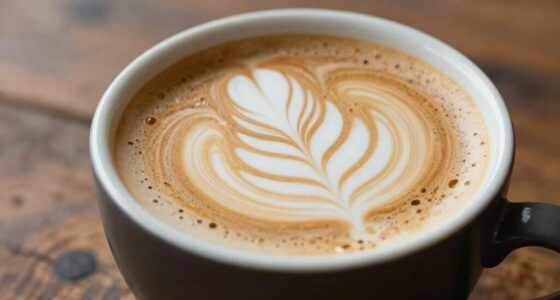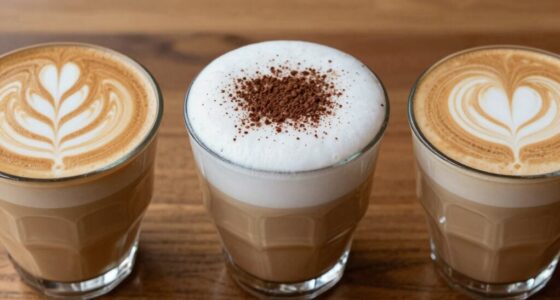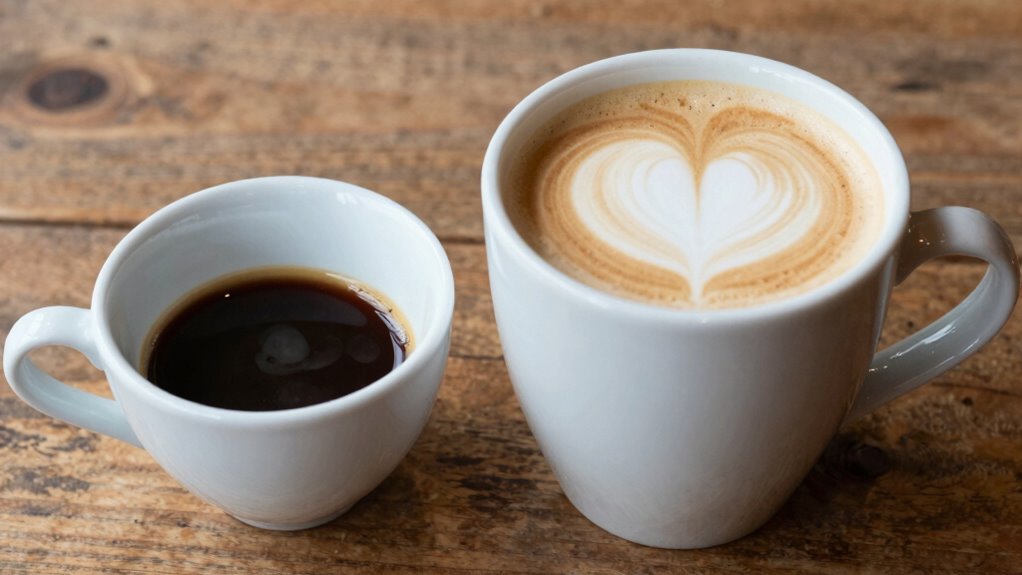
Your perception of coffee strength is heavily influenced by the size of your cup. Smaller cups tend to emphasize bold flavors, making the coffee feel stronger and richer, while larger cups produce a milder, more diluted experience. The size guides your expectations and how intense you think the coffee is, often more than the actual caffeine content. If you’re curious about how different cup sizes shape your coffee experience, there’s much more to discover.
Key Takeaways
- Smaller cups enhance the perception of coffee’s intensity and richness, making it seem stronger than larger cups.
- Larger cups dilute flavors, leading to a milder perception of coffee strength.
- Cup size influences aroma concentration, affecting perceived strength before tasting.
- The combination of brewing method and cup size alters subjective strength perception.
- Changing cup size shifts sensory experience, impacting how strength is visually and aromatically interpreted.
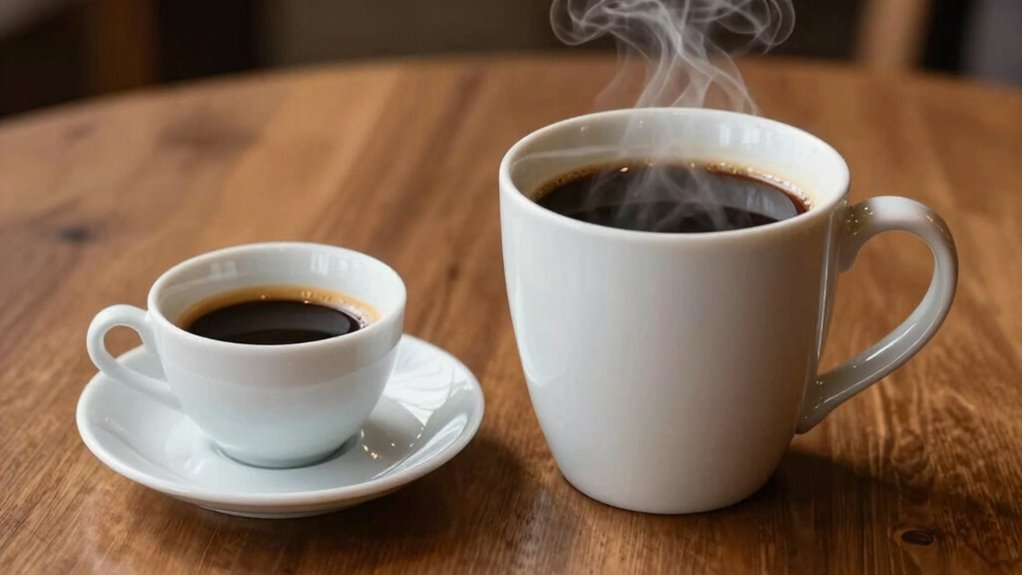
Have you ever wondered how your choice of cup size impacts the strength of your coffee? It’s more than just a matter of volume; it influences how you perceive the coffee’s flavor profiles and how you approach brewing techniques. When you opt for a smaller cup, you tend to focus on the intensity of each sip. The concentrated flavors stand out more clearly, making the coffee seem stronger and richer. Conversely, larger cups often mean you’re drinking a more diluted version of the same brew, which can lessen the perception of strength, even if the actual caffeine content remains unchanged.
Your perception of coffee strength is closely tied to flavor profiles. A smaller cup amplifies the nuances—bitterness, acidity, sweetness, and body—making each characteristic more pronounced. This means that if you prefer a bold, robust taste, a smaller cup encourages you to savor those intense notes. Larger cups, on the other hand, tend to mellow out these flavors, giving you a more balanced, less overpowering experience. The size you choose subtly guides how you interpret the coffee’s profile, influencing whether you see it as strong or mild.
Smaller cups highlight bold flavors, while larger ones mellow the profile for a balanced, milder coffee experience.
Brewing techniques also play an essential role in this dynamic. For example, if you brew your coffee using a method like espresso, which produces a concentrated shot, pouring it into a small cup enhances its perceived strength. The high concentration of coffee oils and flavors fills the cup, making each sip feel potent. On the other hand, brewing methods like drip or pour-over can be scaled to larger cups, which spread out the flavors and reduce the impression of strength. The choice of brewing technique combined with cup size creates a perception that’s subjective but powerful—larger cups can make the same brew seem milder, while smaller cups intensify its boldness. Additionally, understanding the biodiversity of coffee plant varieties can influence how different beans respond to brewing methods, further affecting perceived strength. Recognizing how varietal characteristics interact with brewing styles can help you customize your coffee experience more precisely. Incorporating cup size as a factor in your brewing process can also impact the overall aroma concentration, subtly influencing your perception of strength even before tasting.
Ultimately, the size of your cup shapes how you think about and experience coffee strength. It influences the flavor profiles you notice and the brewing techniques you favor, which in turn affect your overall perception. When you switch from a small espresso cup to a large mug, you’re not just changing volume—you’re altering how your senses interpret the coffee’s strength. Recognizing this connection allows you to tailor your coffee experience intentionally, choosing cup sizes that match the flavor journey you’re seeking.

Qipecedm Espresso Cups Set of 2, 4 OZ Double Spouts Cups, Shot Glasses, Milk Cup with Handle, Clear Glass, Espresso Accessories for Machine, Small
【ESPRESSO MACHINE ACCESSORIES】The capacity of 4 oz allows you to fill 2 servings of espresso at one time….
As an affiliate, we earn on qualifying purchases.
As an affiliate, we earn on qualifying purchases.
Frequently Asked Questions
Do Larger Cups Always Mean Stronger Coffee?
No, larger cups don’t always mean stronger coffee. Your perception of coffee strength is influenced by your drinking habits and the coffee’s aesthetics. If you fill a big cup with weak brew, it might seem less strong despite the size. Conversely, a smaller cup with a concentrated shot feels stronger. Cup size alone doesn’t determine strength; how you prepare and serve your coffee shapes your experience.
How Does Cup Shape Affect Perceived Coffee Strength?
The shape of your cup influences perceived coffee strength through a visual illusion and psychological perception. A taller, narrower cup makes the coffee seem stronger because it looks more concentrated, even if the actual strength is the same. Conversely, a wider, shallower cup gives the impression of a milder brew. Your mind’s perception is tricked by the shape, affecting how you experience the coffee’s strength.
Are There Cultural Differences in Cup Size Preferences?
You’ll notice cultural differences in cup size preferences, shaped by traditional sizes and rituals. For example, in Italy, espresso cups are small, emphasizing strong, concentrated coffee, while in the US, larger mugs reflect a more relaxed, casual approach to coffee drinking. These preferences influence how people perceive coffee strength, with cultural rituals guiding choices. Your own preferences often align with local traditions, creating unique coffee experiences worldwide.
Does the Material of the Cup Influence Coffee Perception?
You might think the taste of your coffee is all in your head, but the material influence actually shapes your perception bias. A fancy ceramic mug can make your brew feel richer, while a flimsy paper cup might dull the flavor. Ironically, the cup’s material tricks your senses, proving that perception isn’t just about taste but also about the vessel’s influence on how you experience your coffee.
Can Cup Size Impact the Brewing Process or Coffee Flavor?
Yes, cup size can impact your brewing process and coffee flavor. When brewing, larger cups may cause your coffee to cool faster, affecting your coffee temperature and overall taste. You might need to adjust brewing techniques, like using a different grind size or brew time, to maintain ideal flavor. Smaller cups keep coffee hotter longer, helping preserve aroma and flavor, so choose your cup size based on how you like your coffee served.

Morandi Color Ceramic Coffee Mugs Set of 6 (Large),18 oz Coffee Cups with Handle, Latte Mug, Big Mug for Women, Men, Great for Tea Hot Chocolate, Microwave Safe, Modern, Unique Style for Any Kitchen
18 OZ COFFEE MUG SET – 6 Pcs reusable 18 ounces large coffee mug set perfect for a…
As an affiliate, we earn on qualifying purchases.
As an affiliate, we earn on qualifying purchases.
Conclusion
So next time you sip from that giant mug, remember—you’re not just drinking coffee; you’re unwittingly auditioning for the role of the caffeine connoisseur. Bigger cups might make you feel like a true coffee aficionado, but it’s all just a clever illusion. Whether it’s a tiny espresso or a massive mug of joe, your perception of strength is as much about the size as it is about the brew. Cheers to your imaginary caffeine prowess!

glastal Espresso Cup Set of 4, 4 Oz (full capacity) Double Wall Glasses Espresso Coffee Glass Cups, Small Coffee Glasses Tea Cups with Handle for Iced Americano, Macchiato, Birthday for Mum Dad
Double Wall: keeps the cup safe to touch with hot drinks and free of condensation with cold ones….
As an affiliate, we earn on qualifying purchases.
As an affiliate, we earn on qualifying purchases.

JoyJolt Savor Double Wall Insulated Glasses – Coffee Mugs (Set of 2) – 13.5-Ounces
SAVOR DAYS, EVERYDAY: Ahh, the comfort of the diner mug. Thick walled and narrow in the middle, it’s…
As an affiliate, we earn on qualifying purchases.
As an affiliate, we earn on qualifying purchases.