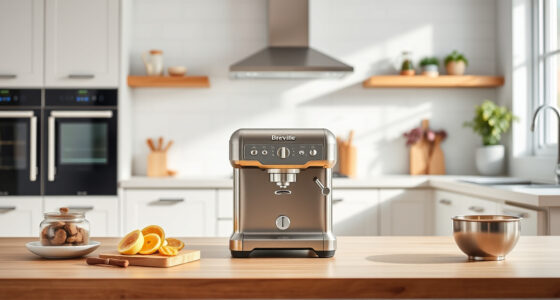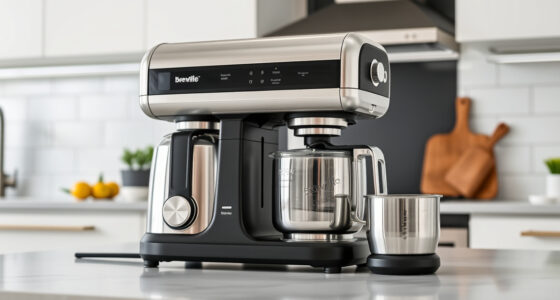
Hard water causes mineral buildup inside your espresso machine’s components, like the boiler and pipes, which restricts water flow and reduces heating efficiency. Over time, calcium and magnesium deposits can lead to blockages and costly repairs. Without proper filtration and regular descaling, your machine’s performance drops and flavors suffer. Staying aware of water quality and maintenance needs helps prevent these issues—if you want to find out how to keep your machine running smoothly, keep going.

Get coffee and tea gear delivered free with Prime
- Fast, free delivery on millions of items
- Prime Video, Amazon Music and more included
- Member-only deals all year
Key Takeaways
- Hard water minerals cause internal buildup, leading to blockages and reduced machine efficiency.
- Mineral deposits damage heating elements, increasing repair costs and shortening machine lifespan.
- Mineral buildup impairs water flow and heat transfer, causing inconsistent espresso quality.
- Lack of regular descaling allows deposits to accumulate, making maintenance more complex and time-consuming.
- Untreated hard water accelerates internal corrosion and component wear, raising ongoing maintenance needs.
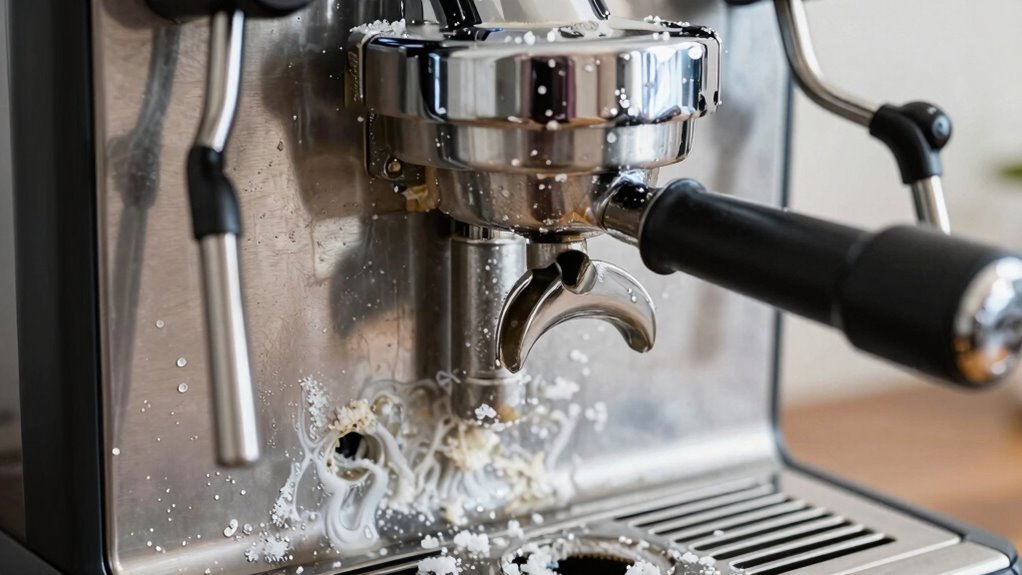
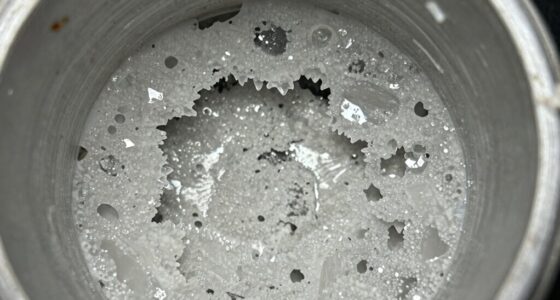
If you rely on your espresso machine regularly, you’ve probably noticed that hard water can cause more trouble than you might expect. One of the main issues it causes is mineral buildup inside the machine’s components. Over time, minerals like calcium and magnesium in hard water settle in the boiler, steam wand, and water pipes. This buildup can restrict water flow, reduce heating efficiency, and eventually lead to costly repairs or replacements. It’s frustrating because these deposits aren’t always visible until they start causing operational problems.
To combat mineral buildup, many espresso enthusiasts turn to water filtration systems. These filters are designed to remove or significantly reduce minerals from tap water before it reaches your machine. By filtering water, you’re not only protecting your investment but also helping ensure that your coffee tastes consistent and pure. Water filtration acts as a frontline defense, preventing mineral deposits from forming in the first place. It’s a simple step that can extend the lifespan of your espresso machine and keep maintenance manageable. Without proper filtration, the minerals in hard water will inevitably cling to internal parts, making cleaning more frequent and time-consuming. Proper water treatment can significantly decrease the frequency of descaling and maintenance tasks. Additionally, understanding your water’s hardness level can help you tailor your maintenance routine more effectively. Regularly testing your water can also reveal variations in mineral content that might require adjustments in your maintenance approach.
Using water filters protects your espresso machine and keeps your coffee tasting pure and consistent.
However, even with water filtration, some mineral residue can still accumulate over time. That’s why regular descaling becomes essential, especially if you live in an area with very hard water. Descaling involves using special solutions to dissolve mineral deposits, restoring your machine’s performance. Neglecting this process can cause mineral buildup to become severe enough to impair heating elements or block water flow altogether. The key is to stay ahead of these issues by integrating routine maintenance into your coffee routine. Incorporating water testing can help you monitor water quality more accurately and adapt your maintenance schedule accordingly.
Moreover, the risk of mineral buildup isn’t just about performance; it also affects the flavor of your espresso. Minerals can alter water chemistry, resulting in a less refined taste. Using filtered water minimizes these flavor distortions, giving you a richer, more consistent cup every time. It’s a small investment that pays off in better-tasting coffee and less maintenance hassle. Regularly checking for mineral deposits can help catch issues early before they impact your machine’s operation. Additionally, being aware of your water’s mineral content can help you make more informed decisions about maintenance and filtration options.
As an affiliate, we earn on qualifying purchases.
Frequently Asked Questions
Can Using Filtered Water Prevent Hard Water Buildup?
Yes, using filtered water can prevent hard water buildup. Filtered water reduces water mineralization, which is responsible for mineral deposits in your espresso machine. The effectiveness of your filtration system plays a key role in this; high-quality filters effectively remove minerals like calcium and magnesium. By using filtered water, you minimize scale accumulation, prolong your machine’s lifespan, and guarantee consistently great-tasting espresso without the hassle of frequent maintenance.
How Often Should I Descale My Espresso Machine?
You should descale your espresso machine every 3 to 6 months, depending on your water mineralization. Studies show that hard water can cause scale buildup in as little as three months, reducing machine performance. Regular descaling prevents mineral deposits from clogging components and prolongs your machine’s lifespan. Adjust your descaling frequency based on local water hardness—more mineralization means more frequent maintenance, ensuring your espresso stays flavorful and your machine runs smoothly.
Are There Specific Water Softeners for Espresso Machines?
Yes, there are specific water softeners designed for espresso machines, focusing on water softening and reducing mineral buildup. These softeners help prevent limescale, which can damage your machine and affect coffee quality. Look for products labeled for coffee equipment, as they effectively reduce mineral deposits. Regular use guarantees your espresso machine stays in top shape, delivering great-tasting coffee and avoiding costly repairs caused by hard water-related mineral buildup.
Does Hard Water Affect Different Machine Brands Differently?
Hard water affects different machine brands differently, like varying armor levels against corrosion. Some brands have better built-in defenses, making them more resilient to water mineralization, while others are more vulnerable. Your machine’s durability depends on its design and materials, so hard water can accelerate wear and tear in less fortified models. To protect your investment, choose a machine with robust water management features and consider using water softeners.
What Are the Long-Term Costs of Ignoring Hard Water Issues?
Ignoring hard water issues leads to significant long-term costs. You’ll face mineral deposits and scale buildup inside your espresso machine, which can clog components and impair performance. Over time, this damage increases repair expenses and shortens your machine’s lifespan. You may also spend more on energy and cleaning solutions. Regular maintenance and water softening help prevent these issues, saving you money and ensuring your machine runs smoothly for years.
descaling solution for espresso machines
As an affiliate, we earn on qualifying purchases.
As an affiliate, we earn on qualifying purchases.
Conclusion
Sure, it might seem like dealing with hard water is just another hassle, but think about the joy of your perfect espresso. By investing in a good water filter and regular descaling, you’ll protect your machine and keep that rich, flavorful shot coming. Don’t let hard water steal your coffee moments. Take action now—your mornings, and your taste buds, will thank you for it. After all, your best brew deserves the best care.
hard water test kit for coffee machines
As an affiliate, we earn on qualifying purchases.
As an affiliate, we earn on qualifying purchases.
As an affiliate, we earn on qualifying purchases.
Halloween Picks
halloween
As an affiliate, we earn on qualifying purchases.