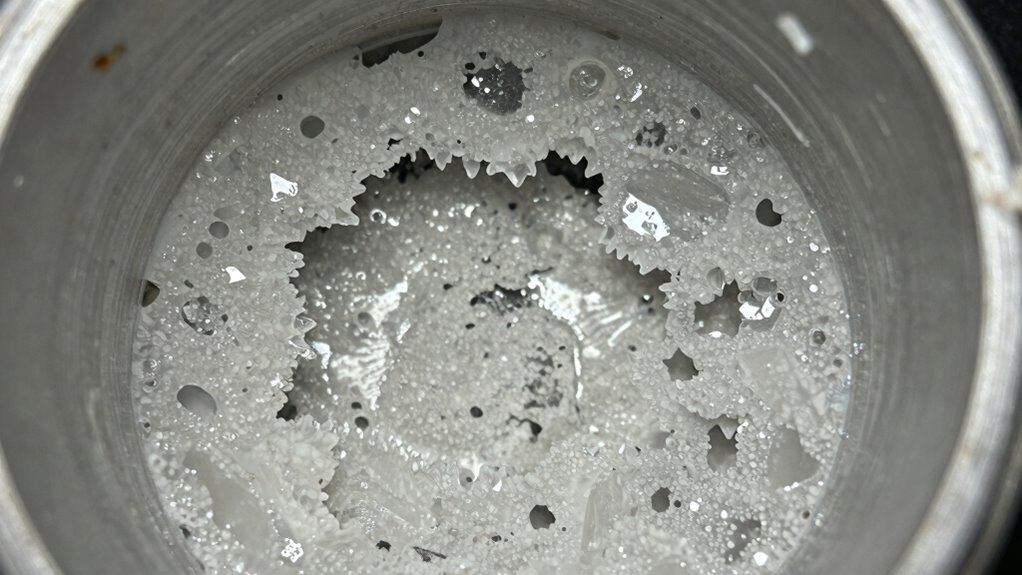

Before mineral scale becomes a problem, you’ll notice faint white or cloudy films and powdery deposits forming around fixtures and where water pools. These early signs are subtle and easy to wipe away, often appearing as haze or patches near edges. Over time, these deposits get thicker and rougher, eventually causing issues with water flow and fixture function. Keep going, and you’ll uncover more tips to spot these signs early and keep your fixtures in top shape.

Get coffee and tea gear delivered free — and shop member deals
- Fast, free delivery on millions of items
- Access to Prime Big Deal Days deals on October 6–7
- Prime Video, Amazon Music and more included
Key Takeaways
- Faint white or cloudy films appear on fixtures and surfaces.
- Thin, powdery deposits form around water pooling areas.
- Early scale manifests as haze or barely perceptible buildup that’s easy to wipe away.
- Deposits are located where water drips or pools, indicating initial mineral accumulation.
- Recognizing these signs allows for preventative cleaning before significant buildup occurs.
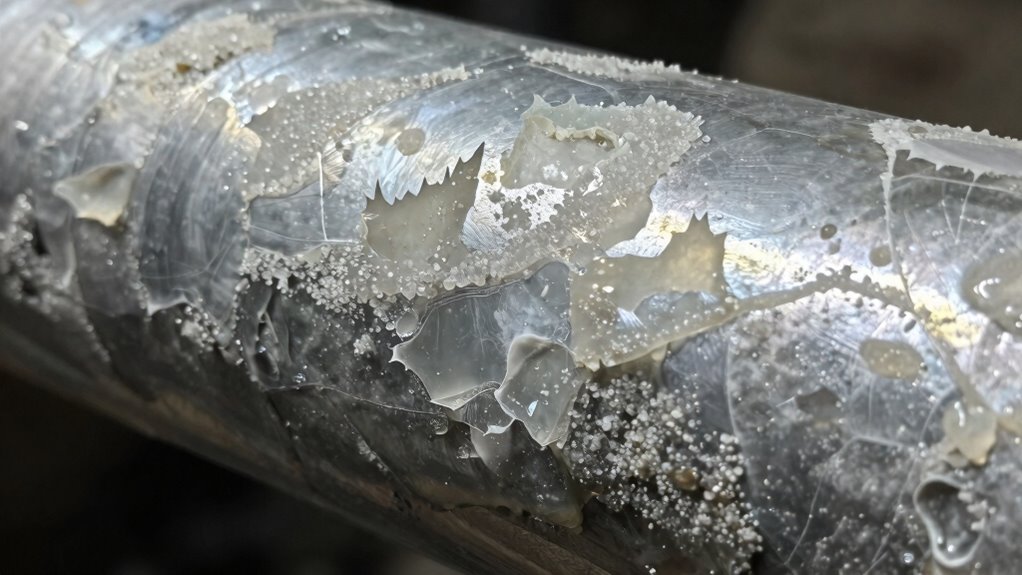
Have you ever noticed a faint white or cloudy film forming on your faucets or showerheads? That’s often a sign of water hardness starting to make its presence known. Water hardness refers to the amount of dissolved minerals, primarily calcium and magnesium, in your water. When these minerals are present in high concentrations, they tend to leave behind deposits as the water evaporates or dries, resulting in the formation of mineral scale. Before this buildup becomes a real problem, you’ll observe certain scale formation patterns that serve as early warning signs.
Faint white or cloudy films on fixtures signal early water hardness and mineral buildup.
Initially, the deposits are thin, barely perceptible layers that look like a faint haze or a powdery film. This film may appear on the surface of your fixtures, especially around the edges or in areas where water tends to pool or drip. It’s usually white or cloudy in appearance and can be wiped away easily at first. These early scale formation patterns are subtle but persistent. Over time, if you continue to use hard water without any treatment, the deposits will become more noticeable, thicker, and more stubborn. You might see rough patches or crusty spots starting to develop, which indicates that mineral scale is beginning to accumulate in earnest.
As water hardness persists, the patterns of scale formation become more prominent, often forming intricate, crusty rings or layers around your fixtures. These deposits are not only unsightly but can also interfere with the proper functioning of faucets and showerheads. You might notice that water flow diminishes or that fixtures become less responsive because the mineral buildup creates a barrier. The scale formation patterns tend to be more uniform near areas where water regularly contacts surfaces, such as around the spout or the base of a showerhead. In these spots, the scale often appears as white, chalky patches or flaky layers that are difficult to remove. Recognizing these early signs is essential because addressing water hardness before the buildup turns into a significant problem can save you money and effort. Using water softeners or installing filtration systems can effectively reduce mineral content. Regular cleaning, combined with preventative measures, can keep the scale formation patterns in check, preventing them from becoming a stubborn, damaging issue. Paying attention to these subtle clues—faint films and light crusts—can help you maintain your fixtures longer and keep your water flowing smoothly. Additionally, understanding the formation of mineral scale can help you take proactive steps to prevent escalation. Properly managing water quality, including water treatment methods, can also extend the lifespan of your plumbing system and fixtures by minimizing mineral deposits that cause blockages and corrosion. Recognizing early signs of water hardness can lead to more cost-effective maintenance strategies.
water softener for mineral scale removal
As an affiliate, we earn on qualifying purchases.
As an affiliate, we earn on qualifying purchases.
Frequently Asked Questions
How Long Does It Take for Mineral Scale to Form Visibly?
Mineral scale can start forming visibly within weeks or months, depending on your water chemistry and scaling patterns. If your water has high mineral content, especially calcium and magnesium, scale buildup may appear faster. You might notice white spots or film forming on surfaces, indicating early deposits. Regular monitoring and adjusting water chemistry can slow this process. Addressing scaling patterns early helps prevent more significant, costly problems down the line.
Can Mineral Scale Be Completely Removed Once It Appears?
Yes, mineral scale can be completely removed once it appears. You need to focus on effective scale removal methods, such as descaling agents, vinegar, or professional cleaning tools, to dissolve mineral deposits. Regular maintenance helps prevent buildup from becoming stubborn. Keep in mind, persistent mineral deposits may require multiple treatments, so stay consistent with your cleaning routine to guarantee all scale is thoroughly eliminated and your equipment functions smoothly.
What Are the Early Signs of Mineral Scale Buildup?
You’ll notice early signs of mineral scale buildup through increased water hardness, which causes your fixtures to have a chalky or cloudy appearance. You may see white or grayish deposits around faucets, showerheads, or in the kettle. As scale formation begins, water flow might slow down, and your appliances could become less efficient. Catching these signs early helps prevent more serious buildup and keeps your plumbing running smoothly.
Does Mineral Scale Vary by Water Type or Source?
Yes, mineral scale varies by water type or source due to water hardness and source variation. Hard water, rich in calcium and magnesium, tends to produce more scale, especially in areas with high mineral content. Your water source—whether well, municipal, or surface water—affects mineral levels, so some sources are more prone to scale buildup. Monitoring water quality helps identify potential problems before scale causes damage.
Are There Preventive Measures to Stop Mineral Scale Formation?
You can prevent mineral scale formation by using chemical inhibitors that disrupt crystal growth, reducing buildup. Water softening is also effective, as it removes calcium and magnesium ions responsible for scale. Regularly maintaining your systems, such as flushing pipes and using descaling agents, further minimizes risks. Combining these methods helps keep your water equipment clean and efficient, preventing mineral scale from becoming a costly problem.
As an affiliate, we earn on qualifying purchases.
Conclusion
Before mineral scale turns into a major issue, recognize its early signs—white, chalky deposits or film buildup on surfaces. Did you know that mineral scale can reduce water heater efficiency by up to 48%? Catching these signs early can save you money and prevent costly repairs. Keep an eye out for warning indicators, and take action before scale causes real damage. Staying vigilant now means fewer headaches later, so stay proactive and protect your appliances.
As an affiliate, we earn on qualifying purchases.
As an affiliate, we earn on qualifying purchases.
Halloween Picks
halloween
As an affiliate, we earn on qualifying purchases.