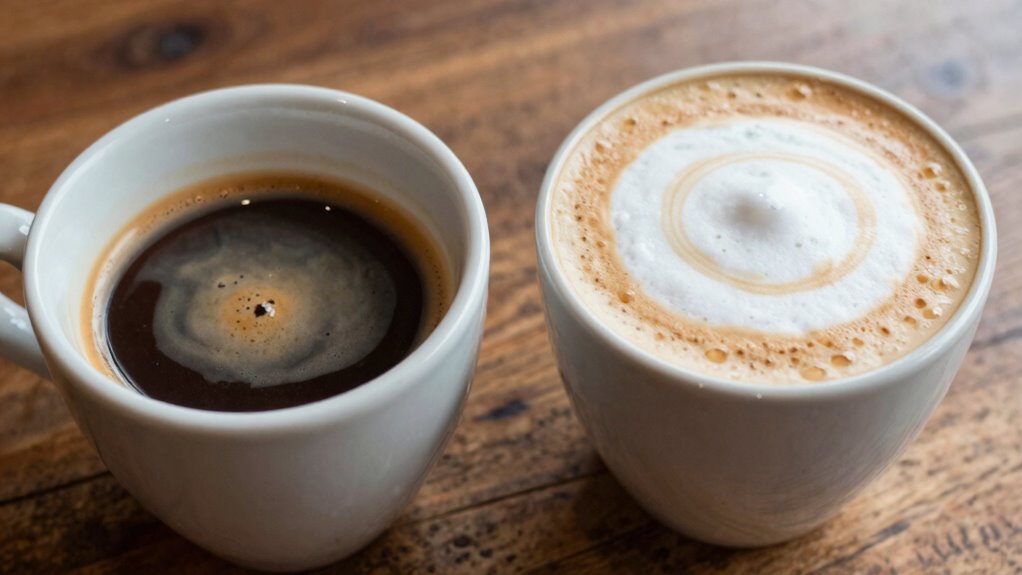
Strength in coffee refers to how full-bodied or intense the brew feels, influenced by bean type, roast level, and brewing temperature. Flavor, on the other hand, is about the taste profile shaped by roast level and chemical changes during roasting. You can tweak strength without altering flavor by adjusting your coffee-to-water ratio, but it’s easy to confuse the two. If you want to discover how to perfect both, keep exploring these details.
Key Takeaways
- Coffee strength relates to perceived body and intensity, influenced by bean type, roast, and brewing temperature.
- Flavor is determined by roast level and chemical changes, affecting taste nuances like brightness or smokiness.
- Darker roasts produce stronger, bolder brews, while lighter roasts offer more nuanced and brighter flavors.
- Brewing method impacts flavor complexity and strength, with methods like French press emphasizing body and aroma.
- Adjusting coffee-to-water ratio alters strength without changing inherent flavor profiles.

Veken French Press Coffee Maker 34oz, No Plastic Touching Cafe,Thickened Glass Stainless Steel Brewer, Cold Brew Cafetera Tea pot for Kitchen Travel Camping, Gifts, Decor, Bar Accessories, Dark Pewter
No Plastic Touching Food: Made with 304 stainless steel and food-grade silicone, our French press keeps all brewing…
As an affiliate, we earn on qualifying purchases.
As an affiliate, we earn on qualifying purchases.
What’s the Difference Between Coffee Strength and Flavor?
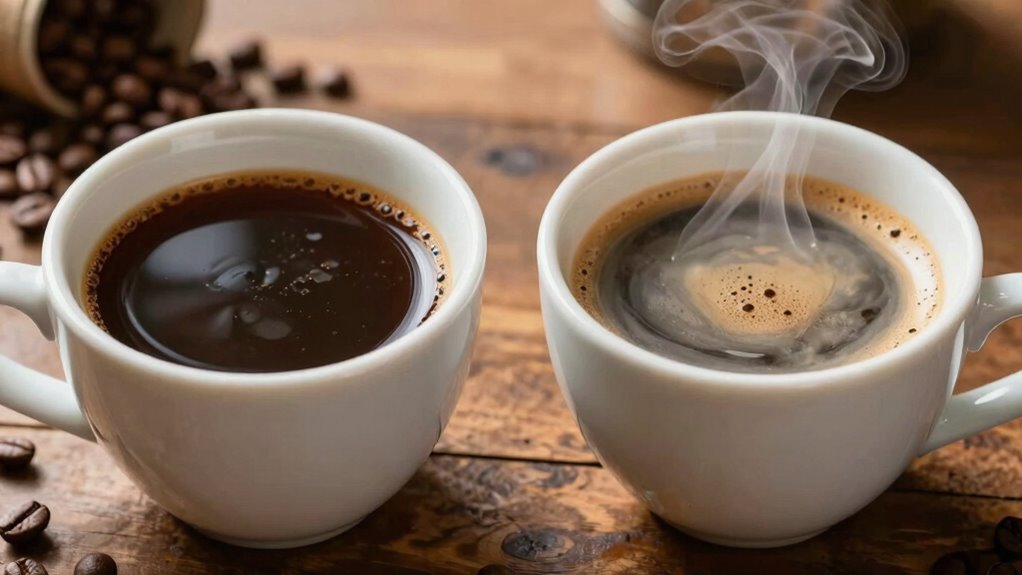
Although the terms “strength” and “flavor” are often used interchangeably, they actually refer to different aspects of your coffee. Strength mainly relates to how intense or full-bodied your coffee feels, often influenced by factors like coffee bean varieties and brewing temperature. For example, darker beans tend to produce a stronger brew, while lighter beans offer a milder taste. Brewing temperature also plays a role; higher temperatures extract more solubles, resulting in a bolder strength. Roast level significantly impacts flavor, contributing to the coffee’s overall taste profile. Knowing this distinction helps you tweak your brewing process for both a robust strength and a rich, complex flavor. Additionally, understanding how bean origin affects flavor can help you select coffees that match your desired taste experience. Exploring processing methods can also influence how the flavor develops during roasting and brewing. Recognizing the interplay between strength and flavor can lead to a more tailored and enjoyable coffee experience, especially when considering how different brewing techniques can emphasize either strength or flavor.

Maestri House S3 Coffee Scale with Timer, 3kg/0.1g Rechargeable Digital Scale, 3 Brew Modes, Adjustable Ratios & Flow Rate Display, Barista-Grade for Pour-Over, Espresso, French Press – Black
【3 Smart Modes, 0.1g Pro Precision】Unlock precise control with 0.1g accuracy and 3 smart modes: Auto Timer for…
As an affiliate, we earn on qualifying purchases.
As an affiliate, we earn on qualifying purchases.
How Does Roast Level Affect Coffee Flavor?
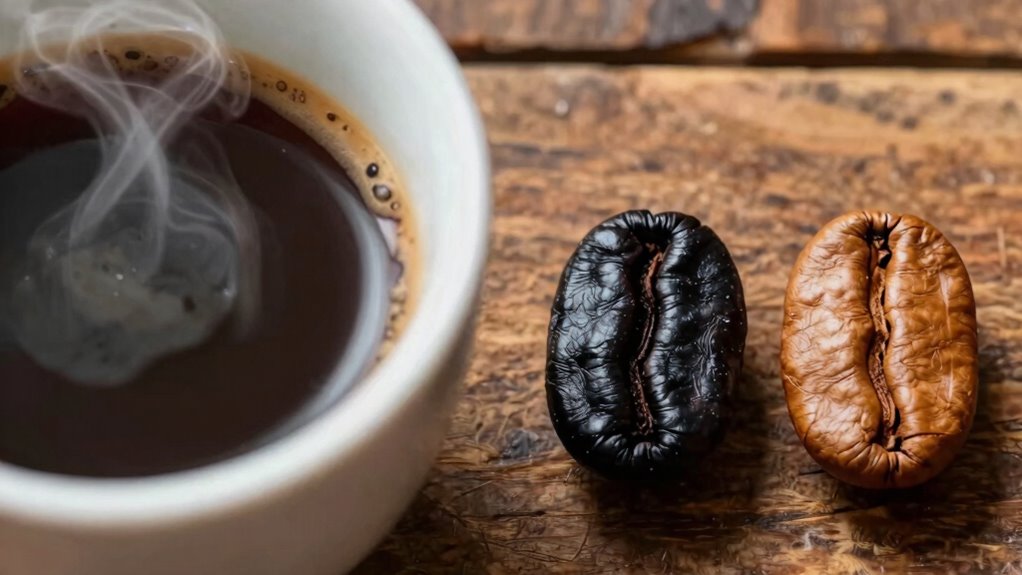
Roast level plays a pivotal role in shaping the flavor profile of your coffee by transforming the beans’ chemical composition. Lighter roasts preserve more of the original coffee bean processing flavors, resulting in higher complexity and bright, fruity notes. Medium roasts balance acidity and sweetness, highlighting a smoother, well-rounded profile. Dark roasts develop bold, smoky flavors, often masking some original bean characteristics. The roasting process emphasizes different aspects of flavor profile complexity depending on the level. Here’s a quick overview:
| Roast Level | Coffee Bean Processing | Flavor Profile Complexity |
|---|---|---|
| Light | Preserves processing notes | Bright, fruity, nuanced |
| Medium | Slightly develops beans | Balanced, sweet, complex |
| Dark | Roasted further | Bold, smoky, less nuanced |
Your choice of roast influences not just strength but also the depth of flavor you experience. Additionally, the roasting process significantly impacts the chemical changes in the beans, which ultimately affects the flavor. The chemical changes that occur during roasting are responsible for creating the diverse flavor profiles associated with each roast level. Understanding how these chemical reactions differ at various roast levels can help you better appreciate the nuances in your coffee. Recognizing the chemical transformation involved can deepen your appreciation for the artistry behind roasting.

Copper Moon Dark Roast Whole Bean Coffee, Sumatra Blend, 2 Lb
CAFÉ QUALITY COFFEE BREWED BY YOU: Sumatra coffee is enjoyed by those who prefer a more bold and…
As an affiliate, we earn on qualifying purchases.
As an affiliate, we earn on qualifying purchases.
How Do Brewing Methods Impact Coffee Strength and Taste?

Brewing methods directly influence both the strength and flavor of your coffee by extracting different compounds from the beans. For example, methods like French press or AeroPress tend to produce a richer coffee with a fuller aroma, emphasizing bold flavors and body. Conversely, drip brewing offers a cleaner, more delicate taste, highlighting subtle coffee aroma nuances. The choice of bean selection also plays a vital role; darker beans often yield a stronger brew, while lighter beans showcase brighter, more complex flavors. Your brewing technique determines how much of these aromas and flavors are released, affecting both strength and taste. Additionally, extraction process plays a key role in shaping the final profile of your coffee, influencing how the flavors develop during brewing. Understanding brewing techniques and how they impact extraction can help you craft your ideal cup. By understanding how different methods extract compounds, you can tailor your brewing process** to match your preferred coffee profile. Recognizing how extraction time influences flavor extraction can further refine your brewing approach. A greater understanding of coffee chemistry** can enhance your ability to control the final taste and strength of your brew.
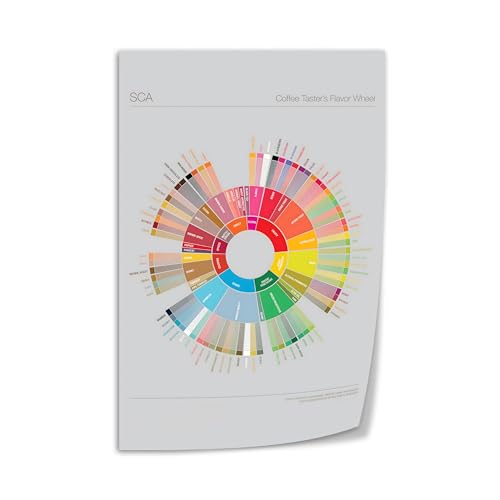
SCA Coffee Taster's Flavor Wheel Poster Canvas Print, Multi-Colored, Wall Art for Living Room Office Bedroom 16x24inch(40x60cm) Unframe-style
Material: Fabric cloth, nicer than paper poster, can preserve in a long period and not easy destroyed.Great addition…
As an affiliate, we earn on qualifying purchases.
As an affiliate, we earn on qualifying purchases.
What Factors Influence Coffee Strength and Body?

Your coffee’s strength and body are largely shaped by the roast level and brewing method you choose. Darker roasts tend to produce a bolder, fuller feel, while lighter roasts highlight brightness and complexity. Similarly, brewing techniques like espresso or French press extract different levels of intensity and richness from the beans. Understanding brewing techniques and equipment can help you tailor your coffee to your preferred strength and flavor profile. Additionally, factors like water quality can significantly influence the final taste and strength of your coffee. The roast level also impacts how the beans interact with water during brewing, further affecting the overall profile. Recognizing how coffee chemistry influences extraction can deepen your appreciation for the nuances in your brew. Being aware of air quality in your environment can also impact your overall coffee experience, especially in spaces where air circulation affects temperature and humidity.
Roast Level Impact
The level of roast considerably influences a coffee’s strength and body, with darker roasts generally delivering a bolder, fuller texture. As you move from light to dark roasts, the beans undergo chemical changes that deepen flavor and increase perceived body. Coffee bean varieties also play a role, as some naturally have higher caffeine content and contribute to a stronger feel, regardless of roast level. While roasting can slightly diminish caffeine, darker roasts often seem more robust because of their intense flavors and oil-rich surface. Keep in mind, though, that strength isn’t solely about caffeine; it’s also about how the roast enhances the coffee’s overall mouthfeel. So, choosing a roast level tailored to your preference will shape your coffee’s strength and body. Additionally, coffee bean varieties influence the overall caffeine content and flavor profile, further affecting the strength and body of your brew. Understanding how chemical changes during roasting impact flavor can help you select the perfect roast for your desired coffee experience. Recognizing the role of roasting levels in developing flavor and texture can guide you in making a more informed choice. Moreover, knowing how chemical transformations affect aroma and taste can enhance your appreciation of different roast profiles. A deeper understanding of roasting techniques can also reveal how different methods influence these chemical processes and final product qualities.
Brewing Method Influence
The method you choose to brew coffee considerably influences its strength and body. For example, a French press extracts more oils, resulting in a fuller, bolder brew with enhanced coffee aroma and richer mouthfeel. Conversely, drip brewing produces a lighter body and milder flavor. The brewing time and temperature also play critical roles; longer, hotter extraction pulls more solubles, increasing strength. Additionally, bean origin affects how the brewing method impacts the final cup; beans from different regions have unique compounds that respond differently to extraction. For instance, African beans often have bright, floral notes that shine through in lighter brews, while South American beans yield a smooth, medium body with nuanced aroma. Your choice of brewing method shapes not just strength but the overall profile of your coffee. Understanding background checks can help you better appreciate the complexities behind each coffee type and brewing technique.
How Can You Adjust Coffee Strength Without Changing the Flavor?
You can tweak the coffee-to-water ratio to make your brew stronger or weaker without altering its flavor profile. Adjusting the brewing time also helps control strength—longer extraction yields a bolder cup. Both methods let you customize your coffee’s strength while keeping its flavor consistent.
Adjust Coffee-to-Water Ratio
Adjusting the coffee-to-water ratio is a straightforward way to modify the strength of your brew without altering its flavor profile. By increasing or decreasing the amount of coffee grounds relative to water, you control how intense your coffee tastes. Keep in mind that factors like coffee bean origin and brewing temperature also influence overall strength. For example, a darker roast from a specific region may need a different ratio to maintain balance. Use the table below to see how adjustments impact strength:
| Coffee-to-Water Ratio | Effect on Strength | Notes |
|---|---|---|
| Higher ratio (more coffee, less water) | Stronger brew | Use for a bolder taste |
| Lower ratio (less coffee, more water) | Milder brew | Ideal for lighter flavors |
| Consistent ratio with temperature | Balanced strength | Adjust brewing temperature if needed |
| Vary ratio for desired strength | Customization | Consider origin and roast level |
Modify Brew Time
Modifying your brew time is an effective way to control coffee strength without altering its flavor profile. By adjusting how long your coffee brews, you influence the extraction process, impacting strength directly. Shorter brew times typically result in a milder coffee, while longer ones increase strength. The coffee bean origin plays a role, as some beans extract more quickly, affecting how brew time impacts strength. Additionally, brewing temperature affects extraction speed; higher temperatures can accelerate extraction, allowing you to achieve the desired strength more efficiently. Keep in mind, changing brew time doesn’t *considerably* alter flavor notes if you maintain consistent temperature and bean origin. Experimenting with brew duration lets you fine-tune strength without compromising the unique flavors each coffee offers.
How to Enhance Coffee Flavor Without Increasing Caffeine?
Enhancing the flavor of your coffee without increasing caffeine involves focusing on brewing techniques and ingredient additions that intensify taste without extra caffeine content. You can do this by exploring different coffee bean varieties, which offer unique flavor profiles without boosting caffeine levels. Using quality brewing accessories, like pour-over cones or French presses, also helps extract richer flavors. Additionally, consider adding natural flavor enhancers like spices, vanilla, or cocoa to deepen taste. Ultimately, adjusting grind size and brew time can maximize flavor extraction without increasing caffeine.
- Experiment with coffee bean varieties for diverse flavors
- Use high-quality brewing accessories for better extraction
- Incorporate natural flavor enhancers like spices or vanilla
- Adjust grind size and brew time to optimize flavor extraction
Common Mistakes That Mix Up Strength and Flavor
Many people confuse the strength of their coffee with its flavor, leading to common mistakes that can diminish your overall experience. For example, using darker roast beans might seem like a way to boost strength, but it can actually mask subtle flavors. Similarly, increasing brewing temperature to extract more caffeine often results in bitter, overly strong coffee without enhancing flavor nuance. Recognizing that strength relates to caffeine content and flavor to bean varieties and roast profiles is key.
| Coffee Bean Varieties | Brewing Temperature |
|---|---|
| Light vs. Dark Roast | Too high can cause bitterness |
| Single-origin beans | Too low may under-extract |
| Blend choices | Proper temp reveals flavor |
Tips for Customizing Your Coffee for the Perfect Balance
Achieving the perfect balance between strength and flavor in your coffee requires intentional adjustments based on your taste preferences. To customize your brew effectively, consider these tips:
- Choose quality coffee bean sourcing—select beans with the flavor profile you desire, whether fruity, nutty, or bold.
- Adjust brewing temperature—aim for around 195-205°F; higher temperatures extract more strength, while lower ones highlight delicate flavors.
- Modify grind size—a finer grind increases strength, while a coarser grind emphasizes nuanced flavors.
- Experiment with brewing time—longer extraction boosts strength, but be cautious to avoid over-extraction that can dull flavor.
How to Read Coffee Labels to Understand Strength and Flavor
Reading coffee labels is a practical way to decode what’s inside your bag and make informed choices about strength and flavor. Labels often list the coffee’s origin, which influences flavor nuances, and the roast level, affecting strength. You’ll also find brewing temperature recommendations that impact extraction and flavor balance. For example, consider this table:
| Coffee Bean Origin | Roast Level | Brewing Temperature |
|---|---|---|
| Ethiopia | Light | 195-205°F |
| Colombia | Medium | 200-210°F |
| Sumatra | Dark | 205-215°F |
| Guatemala | Medium-Dark | 200-210°F |
Understanding these details helps you select beans that match your desired strength and flavor profile, ensuring a satisfying brew every time.
Simple Tricks to Adjust Coffee Strength and Flavor at Home

Adjusting the strength and flavor of your coffee at home is straightforward with a few simple techniques. First, experiment with the coffee bean origin; beans from different regions have unique flavor profiles that can enhance or mellow your brew. Second, tweak the brewing temperature—hotter water extracts more flavor and strength, while cooler water produces a milder taste. Third, modify your grind size: a finer grind increases extraction, boosting strength, whereas a coarser grind softens it. Fourth, adjust the coffee-to-water ratio; using more coffee results in a stronger brew, while less creates a lighter flavor. These small changes let you control both strength and flavor, allowing you to tailor each cup precisely to your taste preferences.
Frequently Asked Questions
Can Decaffeinated Coffee Still Vary in Strength and Flavor?
Yes, decaffeinated coffee can still vary in strength and flavor. The decaffeination process affects caffeine content but doesn’t eliminate all flavor nuances. Factors like the type of beans and roasting method influence the coffee aroma and overall taste. You might notice differences in strength, with some decaf options being milder or bolder, depending on how they’re processed. So, you can definitely find decaf that suits your preferred strength and flavor profile.
How Does Water Mineral Content Influence Coffee Strength and Taste?
Water mineral content greatly influences your coffee’s strength and flavor through mineral balance and water chemistry. High mineral levels can improve extraction, making your brew more robust and flavorful, but too much may lead to bitterness. Conversely, low mineral content results in a gentler taste. Properly balancing minerals in your water guarantees the best extraction, emphasizing the coffee’s unique flavors while maintaining the desired strength. Adjust your water chemistry for a perfect cup.
Are There Specific Beans Better for Strong or Flavorful Coffee?
You’ll find that certain coffee bean varieties, like Arabica for nuanced flavors or Robusta for boldness, are better suited for strong or flavorful coffee. Roasting profiles also matter—dark roasts amplify strength, while lighter roasts highlight complex flavors. Think of it as choosing the right paintbrush for your masterpiece; selecting the right beans and roast profile creates the perfect balance of strength and flavor in your cup.
Does Storage Duration Affect Coffee’s Strength and Flavor Quality?
Yes, storage duration impacts your coffee’s strength and flavor. Over time, coffee loses its freshness, diminishing both qualities. Proper storage methods, like keeping beans in an airtight container away from light and moisture, help preserve your coffee’s flavor and strength longer. If you want the best taste, use your coffee within a few weeks of roasting and avoid exposure to air, heat, or humidity, which accelerate flavor loss.
What Role Does Grind Size Play in Perceived Coffee Strength?
Your grind size directly impacts perceived coffee strength by influencing extraction efficiency. A finer grind increases extraction, making your coffee taste stronger because more solubles are released quickly. Conversely, a coarser grind results in lower extraction, giving a milder flavor. Adjusting your grind size helps control how much flavor and strength you get from your brew, allowing you to customize your coffee to match your preferred strength level.
Conclusion
Now that you know the difference between strength and flavor, you’re all set to craft your perfect cup. It’s funny how a simple change—like adjusting brew time or grind size—can transform your experience unexpectedly. Keep experimenting, and you might just discover your ideal coffee balance when you least expect it. Sometimes, the best moments happen when you’re not even looking for them, all starting with understanding what makes each sip uniquely yours.