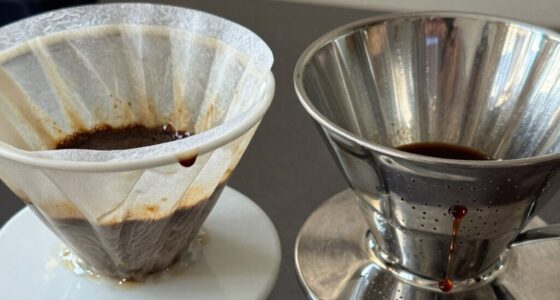

Japanese iced coffee is a simple method where you brew hot coffee directly over ice, locking in bright, vibrant flavors like citrus or floral notes. To do this at home, use good-quality, freshly roasted beans and a pour-over setup for even extraction. The rapid cooling preserves the coffee’s crispness and clarity, making it perfect for a invigorating summer drink. Keep experimenting with variables—you’re close to mastering a delicious, balanced cold brew every time.
Key Takeaways
- Japanese iced coffee is brewed directly over ice to preserve bright, clean, and vibrant flavors.
- Use high-quality, freshly roasted beans with a medium roast for optimal flavor.
- Employ pour-over or drip methods for even extraction and precise control.
- Rapidly cool the brew by pouring hot water over ice, preventing muddiness and maintaining clarity.
- Adjust variables like grind size, brew strength, and ice amount to customize flavor profiles.

To get started, you’ll want to choose a good-quality coffee that suits your flavor preferences. Light to medium roasts often work best because they highlight bright, fruity, or floral notes, which shine through when iced. When it comes to coffee brewing, precision matters. Use a pour-over or dripper setup to pour hot water evenly over your coffee grounds, allowing the water to extract the full spectrum of flavors. As you do this, aim to pour directly over a bed of ice placed in your carafe or mug. The hot water hits the ice immediately, creating a rapid cooling process that preserves the coffee’s vibrant flavor profile. This technique ensures the coffee doesn’t become over-extracted or watered down, which can happen if you brew hot and then add ice later. Brewing method can significantly impact the clarity and brightness of your iced coffee. Additionally, controlling variables like brew time and grind size can further optimize flavor extraction for a crisp, clean taste.
The flavor profiles you’ll notice in Japanese iced coffee are often bright, clean, and well-defined. Because you’re brewing directly over ice, the coffee’s inherent qualities—such as citrusy brightness, berry sweetness, or subtle floral notes—remain intact. This contrasts with traditional iced coffee, which might taste dull or watered down if brewed hot and then cooled. The quick cooling process also prevents the muddiness that can occur when hot brewed coffee sits with ice for too long. As a home brewer, you have the advantage of adjusting variables like grind size, brew strength, and ice amount to suit your taste. Experimenting with different beans and brewing times will help you discover your preferred flavor profiles, making each batch uniquely yours. Paying attention to coffee freshness can further enhance the overall flavor and aroma of your brew. Incorporating proper coffee storage techniques helps maintain optimal freshness and prevents staling. Remember, freshly roasted beans will produce a more vibrant and aromatic iced coffee, so sourcing quality beans is crucial. Exploring brew temperature during extraction can also influence the clarity and brightness of your final cup, giving you even more control over your flavor outcomes.
In essence, Japanese iced coffee combines thoughtful coffee brewing with strategic cooling, resulting in a beverage that’s both refreshing and complex. By focusing on how you brew and how quickly you cool your coffee, you unlock a fresh, crisp flavor experience that’s perfect for summer days. It’s a simple yet sophisticated way to enjoy your favorite beans, emphasizing their natural flavors while providing a cool, invigorating drink. So next time the heat hits, remember that making Japanese iced coffee at home is straightforward—just follow these principles, and you’ll enjoy a beautifully balanced, flavorful brew every time.

Bodum 34oz Pour Over Coffee Maker, High-Heat Borosilicate Glass with Reusable Stainless Steel Filter and Cork Grip – Made in Portugal
Pour Over Coffee: Manual Pour Over Coffee Maker allows you to brew an excellent cup of Coffee in…
As an affiliate, we earn on qualifying purchases.
As an affiliate, we earn on qualifying purchases.
Frequently Asked Questions
What Type of Coffee Beans Are Best for Japanese Iced Coffee?
You should choose medium to dark roast coffee beans for Japanese iced coffee, as their rich, bold flavors hold up well when chilled. Opt for freshly roasted beans, because bean freshness greatly impacts flavor. Look for beans roasted within the last few weeks, and consider beans with bright, lively notes that complement the cold brew process. This combination guarantees a smooth, flavorful iced coffee experience at home.
How Does Water Temperature Affect the Brewing Process?
Did you know that water temperature can change the extraction rate by up to 50%? When brewing Japanese iced coffee, using the right water temperature is essential. Hotter water increases the extraction rate, pulling more flavors from your beans quickly, resulting in a richer taste. Too hot, and you risk over-extraction; too cold, and you under-extract. Find the perfect balance for a smooth, flavorful brew every time.
Can I Make Japanese Iced Coffee Without a Specialty Dripper?
Yes, you can make Japanese iced coffee without a specialty dripper. Simply brew your coffee using your preferred method, like a pour-over or French press, with hot water. Then, immediately pour the hot brew over a glass filled with ice. This quick brewing method preserves the coffee’s bright, vibrant flavor, giving you that signature smoothness and clarity typical of Japanese iced coffee. It’s a simple way to enjoy great coffee flavor without special equipment.
What Is the Ideal Coffee-To-Water Ratio for Brewing?
You should aim for a coffee-to-water ratio of about 1:15 to 1:17 for Japanese iced coffee. Use a medium-coarse grind for ideal extraction, which balances flavor and clarity. Keep your brewing time around 3 to 4 minutes to prevent over-extraction. This ratio and grind size allow the coffee to brew quickly, preserving brightness and smoothness, perfect for pouring over ice without dilution.
How Long Should Japanese Iced Coffee Be Stored Before Drinking?
You should enjoy your Japanese iced coffee within 24 hours for maximum flavor stability. Think of it like a fresh flower—its vibrant aroma and taste fade quickly over time. Proper coffee preservation is key; store it in a sealed container in the fridge. After that, the flavor begins to degrade, losing its freshness. Drinking it sooner ensures you experience the rich, bright flavors as intended.
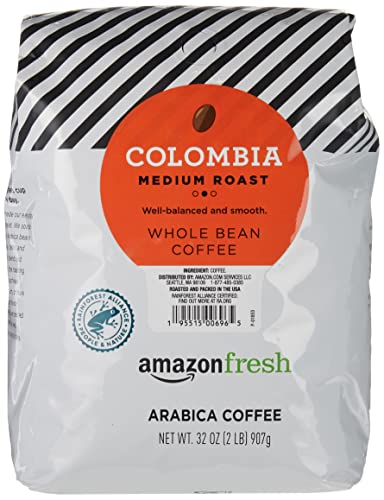
Amazon Fresh, Colombia Whole Bean Coffee Medium Roast, 32 Oz
Balanced, full-bodied medium roast with a smooth finish
As an affiliate, we earn on qualifying purchases.
As an affiliate, we earn on qualifying purchases.
Conclusion
Now that you’ve learned how to brew Japanese iced coffee at home, you’re ready to enjoy a invigorating, café-quality drink anytime. Think of it as your personal secret weapon, like a cool breeze on a hot day. With a little practice, you’ll master the perfect balance of rich coffee and icy chill, turning everyday mornings into a special treat. So grab your beans and start brewing—your ideal summer refreshment is just a pour away.

Mini Manual Coffee Grinder with 40 Adjustable Settings, Portable Hand Coffee Bean Mill with 30g Capacity, Conical Burr Coffee Grinder with Crank for Travel, Camping, Office, Espresso, Pour Over, etc
40 EXTERNAL ADJUSTABLE GRIND SETTINGS – Unlike traditional grinders with internal adjustments, our manual coffee grinder offers 40…
As an affiliate, we earn on qualifying purchases.
As an affiliate, we earn on qualifying purchases.

68oz Coffee Carafe Airpot Insulated Coffee Urn Stainless Steel Vacuum Thermal Pot Flask for Coffee, Hot Water, Tea, Hot Beverage – Keep 12 Hours Hot, 24 Hours Cold
12HR HOT & 24HR COLD: GearRoot coffee carafe uses advanced double-wall vacuum insulated technology to lock the temperature,…
As an affiliate, we earn on qualifying purchases.
As an affiliate, we earn on qualifying purchases.