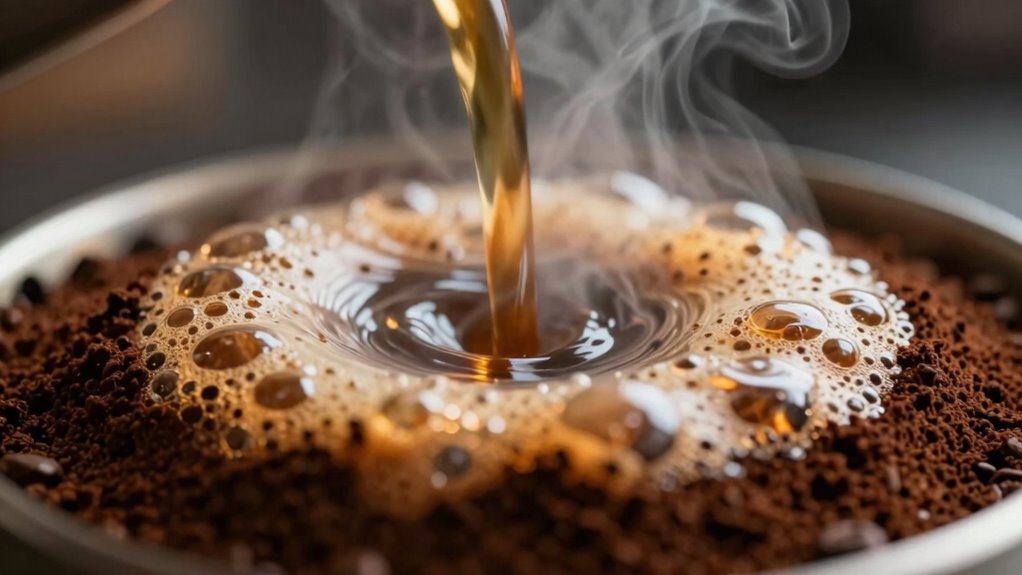

When you bloom coffee, hot water triggers the release of trapped gases like carbon dioxide, causing the grounds to expand and bubble. This process helps release fresh flavors and aromatic compounds, resulting in a richer, more balanced cup. Proper blooming prevents off-flavors from trapped gases and improves extraction. If you keep exploring, you’ll discover how to perfect your technique for even better aroma and taste every time.
Key Takeaways
- Blooming releases trapped gases, mainly carbon dioxide, from freshly ground coffee, signaling freshness and improving extraction.
- It enhances aroma and flavor by allowing volatile compounds to escape, resulting in a more fragrant brew.
- Proper blooming prevents uneven extraction, reducing sour or dull flavors caused by trapped gases.
- It promotes even saturation of coffee grounds, leading to a balanced and richer flavor profile.
- The technique and timing of blooming significantly influence overall coffee quality and taste.
coffee blooming pour over kettle
As an affiliate, we earn on qualifying purchases.
As an affiliate, we earn on qualifying purchases.
What Is Coffee Blooming and Why Is It Important?

Coffee blooming is the process that occurs when hot water first contacts freshly ground coffee, causing the coffee to release gases and expand. This step is vital because it activates the coffee’s flavors, making the brewing process more effective. The coffee plant produces beans rich in complex compounds, but these aren’t fully released until bloom begins. When water hits the grounds, trapped carbon dioxide escapes, creating a visible bloom. This indicates the coffee is fresh and ready for full extraction. Skipping this step can lead to underdeveloped flavors, as the gases prevent water from evenly penetrating the grounds. Understanding what coffee blooming does helps you optimize your brewing process and guarantees you get the best flavor from your coffee. Additionally, recognizing the complex compounds in coffee can help you appreciate how blooming influences the extraction of nuanced flavors. Knowing how freshness indicators like blooming work allows you to better assess the quality of your beans before brewing. In fact, observing the bloom size can also serve as a quick visual cue for the freshness of your beans, since fresher beans tend to produce a larger bloom. This knowledge can also guide you in selecting beans that are properly roasted and stored.
As an affiliate, we earn on qualifying purchases.
How Blooming Releases Gas and Boosts Flavor

When hot water first makes contact with the coffee grounds, it triggers a rapid release of trapped gases, mainly carbon dioxide. This gas release creates a bubbling effect, lifting the coffee grounds and exposing fresh surface area. As the gases escape, they carry with them volatile compounds that contribute to the coffee aroma, making it more vibrant and more inviting. This process also helps to liberate and intensify flavor compounds locked within the beans. By allowing gases to escape early, blooming prevents sour or bitter tastes caused by trapped gases lingering during brewing. You’ll notice the coffee’s aroma becoming richer and more complex, signaling that the grounds are releasing their full flavor potential. The chemistry of coffee underlying this process reveals how different compounds react during blooming. Recognizing the role of gases in flavor development highlights why blooming is such an important part of brewing. Additionally, understanding how air quality impacts extraction can help optimize the brewing environment for even better flavor. Proper water temperature during blooming can further enhance the release of desirable flavors and aromas.
fresh coffee beans with bloom indicator
As an affiliate, we earn on qualifying purchases.
As an affiliate, we earn on qualifying purchases.
Tips for Perfectly Blooming Your Coffee Every Time

To guarantee a perfect bloom every time, start by using fresh, high-quality coffee beans and grind them just before brewing. Knowing the coffee bean origins helps you select beans with ideal flavor profiles, enhancing blooming results. Understanding coffee origin characteristics can guide you in choosing beans that will produce a more vibrant bloom. Recognizing the impact of bean processing methods can further refine your selection for optimal blooming. Maintaining the right brewing temperature—around 195–205°F—to optimize gas release and aroma. The table below shows how different factors influence blooming:
| Factor | Effect | Tip |
|---|---|---|
| Coffee origins | Affects flavor and gas content | Choose beans suited for blooming |
| Brewing temperature | Impacts gas release and extraction | Use a thermometer for consistency |
| Grind size | Controls bloom strength | Opt for a medium grind for even bloom |
Focusing on these elements will help you understand the science behind blooming and improve your brewing technique to consistently achieve a vibrant, flavorful bloom. Additionally, paying attention to freshness preservation can significantly impact the gas retention in beans, resulting in a more pronounced bloom.
As an affiliate, we earn on qualifying purchases.
Common Blooming Mistakes and How to Avoid Them
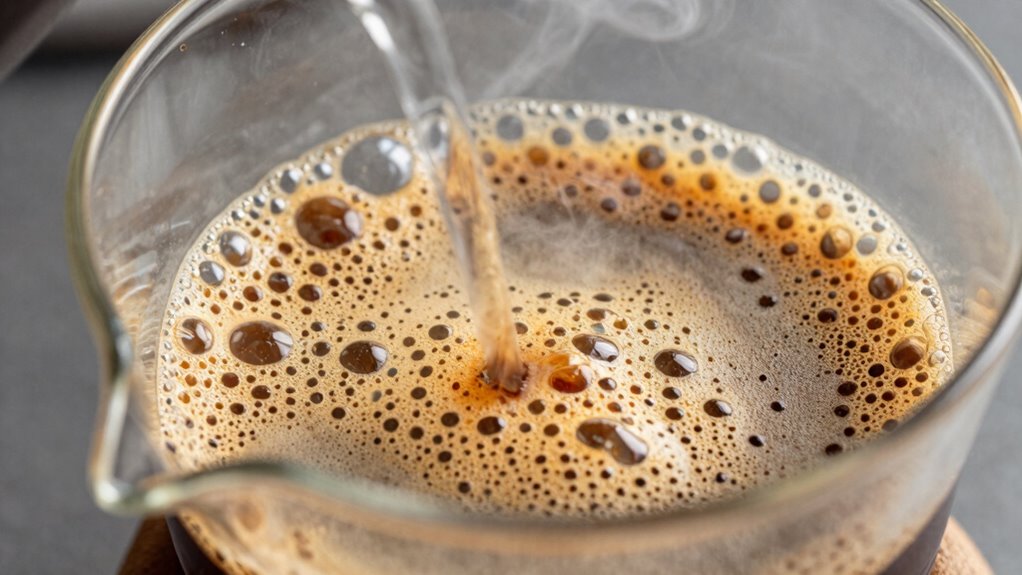
Even with the best preparation, it’s easy to stumble into common blooming mistakes that can affect your coffee’s flavor and aroma. Many believe blooming myths, like over or under-watering, which leads to uneven extraction. Using the wrong blooming equipment, such as a poor-quality kettle or inaccurate scale, can also cause issues. For example, pouring too quickly or too slowly can disrupt the bloom’s effectiveness. Prevent these pitfalls by controlling your pour rate and temperature carefully. Make sure your equipment is clean and precise, especially your kettle and grinder. Remember, blooming is delicate; rushing or neglecting proper technique diminishes its benefits. Additionally, understanding the coffee extraction process and how bloom impacts it allows you to fine-tune your brewing technique for better results. A key element in achieving consistent blooming is understanding how brewing parameters influence extraction and flavor. By being mindful of your tools and approach, you’ll improve your blooming process and enjoy richer, more balanced coffee. Paying attention to water quality can also significantly enhance the overall flavor profile, as impurities or minerals can interfere with extraction.
How Blooming Affects Different Brewing Methods

Different brewing methods respond to blooming in unique ways, influencing the final flavor and aroma of your coffee. For pour-over or drip brews, blooming helps release gases trapped during coffee bean aging, ensuring better extraction. It’s especially important when using fresh beans, which emit more carbon dioxide. With French presses, blooming helps prevent over-extraction by allowing water to penetrate evenly, especially when water temperature is carefully controlled. Espresso machines benefit from blooming by releasing gases quickly, resulting in a richer crema. In all methods, water temperature plays an essential role; too hot can intensify off-flavors, while too cool may hinder blooming’s effectiveness. Understanding these differences helps optimize each brewing process for a more balanced and aromatic cup. Freshness of coffee is a key factor that impacts how effectively blooming occurs and influences the overall flavor profile. Additionally, the carbon dioxide release during blooming varies depending on the coffee’s age and roast level, affecting how each method interacts with the beans. Properly managing brew time and temperature can enhance blooming’s benefits and improve your coffee’s flavor. Recognizing how bean freshness influences gas release can further refine your brewing technique. Moreover, paying attention to coffee grind size can also influence how gases escape during blooming, impacting extraction quality.
Adjusting Blooming Time for Better Aroma and Taste

Adjusting the length of your bloom can considerably influence the coffee’s aroma and taste. A longer blooming duration allows gases to escape fully, unlocking more vibrant aromas and complex flavors. If you find your coffee lacks aroma, try extending the bloom time slightly—about 30 to 45 seconds. Conversely, if the bloom is too long and results in a bitter taste, shorten it to around 15 to 20 seconds. Experimenting with bloom duration helps you find the perfect balance for your beans. Properly timed blooming enhances aroma enhancement, making your coffee more fragrant and lively. Remember, different beans and roasting levels may require adjustments, so stay attentive to how changes in bloom length affect the final cup. Incorporating smart home technology can also help you precisely time your bloom for optimal results.
FAQs About Coffee Blooming: What You Need to Know

Understanding why blooming matters helps you appreciate the brewing process and get better flavor. Learning the best techniques guarantees you don’t make common mistakes that can ruin your coffee. Keep these FAQs in mind to improve your brewing skills and enjoy a richer cup every time.
Why Blooming Matters
Have you ever wondered why baristas often let coffee bloom before pouring the rest of the water? The blooming process is essential because it allows gases, mainly carbon dioxide, to escape from the coffee grounds of the coffee plant. When hot water hits the grounds, it triggers the release of these gases. If you skip this step, brewing can be uneven, resulting in a dull or sour taste. By giving the coffee a moment to bloom, you guarantee that the flavors develop fully and extraction becomes more uniform. This step highlights the importance of fresh coffee and proper technique. Ultimately, blooming helps you achieve a richer, more balanced brew by allowing the coffee to release trapped gases and prepare for ideal extraction.
Best Blooming Techniques
To get the most out of your coffee bloom, using the right technique can make a significant difference. Start with quality coffee bean selection and ensure your grind consistency is perfect—coarser for pour-over brewing. Here are the best blooming techniques to elevate your experience:
- Use fresh coffee beans—freshness boosts the bloom’s vigor.
- Pre-wet the grounds evenly—pour a small amount of water, allowing the coffee to degas fully.
- Wait 30-45 seconds—this lets carbon escape and enhances flavor extraction.
- Pour slowly and steadily—maintaining consistent flow preserves grind consistency and maximizes bloom effectiveness.
Mastering these techniques ensures your coffee blooms fully, unlocking richer flavors and a more satisfying brew.
Common Blooming Mistakes
Many beginners make common mistakes during the bloom phase, which can hinder flavor extraction and affect the overall quality of your brew. One mistake is using too little or too much water during the blooming process, which prevents proper saturation of the coffee plant grounds. Another error is rushing through the bloom, skipping the necessary pause that allows gases to escape. Some also pour water unevenly, leading to uneven extraction. Additionally, neglecting to use fresh, properly heated water can impair the blooming process. These mistakes disrupt the natural release of CO2 and essential oils, reducing flavor complexity. Understanding the blooming process is vital for accessing the full potential of your coffee plant, so paying attention to these details helps guarantee a richer, more balanced cup.
Frequently Asked Questions
Does Water Temperature Affect the Blooming Process?
Yes, water temperature affects the blooming process. Higher temperatures increase water chemistry reactions, causing faster gas release from the coffee grounds. This results in a shorter bloom duration. Conversely, cooler water slows down this process, leading to a longer bloom. Maintaining the ideal water temperature guarantees proper gas release, enhancing flavor extraction. Adjusting temperature based on your coffee’s water chemistry can improve your brewing results and overall taste.
Can Blooming Improve Overall Coffee Extraction?
Absolutely, blooming can boost your coffee’s flavor enhancement and aroma development. Think of it as giving your beans a pre-party wake-up call, revealing hidden nuances. By releasing CO2, you’re fundamentally inviting more flavors to the party, making each sip richer and more aromatic. So, next time, don’t skip blooming—your taste buds will thank you for the extra effort, turning ordinary coffee into a delightful sensory adventure.
Is Blooming Necessary for All Coffee Brewing Methods?
Blooming isn’t necessary for all coffee brewing methods, but it can markedly enhance flavor and aroma development. When you bloom coffee, you release gases that improve extraction, leading to a richer taste and more vibrant aroma. If you’re using pour-over or French press, blooming is highly beneficial. However, for espresso, it’s less critical. Overall, blooming helps you achieve a more flavorful and aromatic cup, especially with freshly roasted beans.
How Does Grind Size Influence Blooming Effectiveness?
Think of grind size as the key to revealing your coffee’s true potential. When your grind consistency is precise, with uniform particle size, blooming becomes more effective, like opening a blooming flower to reveal its rich aroma. Coarse grinds create larger particles, allowing gases to escape easily, while fine grinds trap gases, dampening bloom. So, adjusting grind size directly influences how well your coffee blooms, ensuring a vibrant, flavorful brew.
Does the Type of Coffee Bean Change Blooming Behavior?
Yes, the type of coffee bean affects blooming behavior. Coffee bean origin influences how beans release gases during blooming; beans from different regions have varying gas compositions. Roast level also matters—light roasts tend to release more gases initially, creating a more vigorous bloom, while dark roasts release less, leading to a subtler bloom. Understanding these factors helps you optimize your brewing process for better flavor extraction.
Conclusion
Understanding coffee blooming isn’t just a ritual; it’s the gentle whisper of flavors awakening. When you embrace this delicate step, you’re inviting a symphony of aromas and nuances to dance on your palate. With a mindful touch, you turn each brew into a soulful experience, revealing hidden depths in your cup. So, let the bloom be your secret handshake with coffee’s true essence—an understated grace that transforms everyday sips into moments of pure delight.