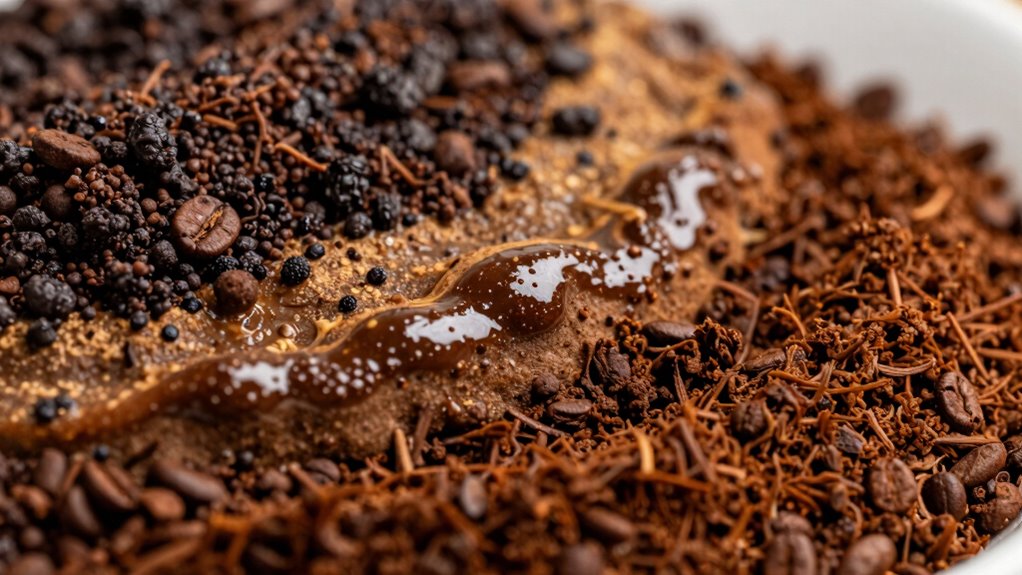

Coffee sludge forms when tiny coffee particles settle at the bottom of your cup after brewing, especially in immersion methods like French press. It passes through filters and can make your brew gritty if not managed well. Using a finer filter and pouring carefully help reduce sludge, improving clarity and texture. Variables like grind size and brewing time also influence sludge levels. To master smoother brews and enhance flavor, there’s more to discover on effective sludge control techniques.
Key Takeaways
- Coffee sludge consists of fine particles that settle at the bottom during immersion brewing methods like French press.
- Proper filtration and pour techniques help minimize unwanted sludge and improve brew clarity.
- Brewing variables such as water temperature and steeping time influence sludge amount and texture.
- Grind size and filter quality are crucial in controlling the level of sludge in the final cup.
- Managing sludge enhances flavor, texture, and overall coffee quality across different brewing methods.
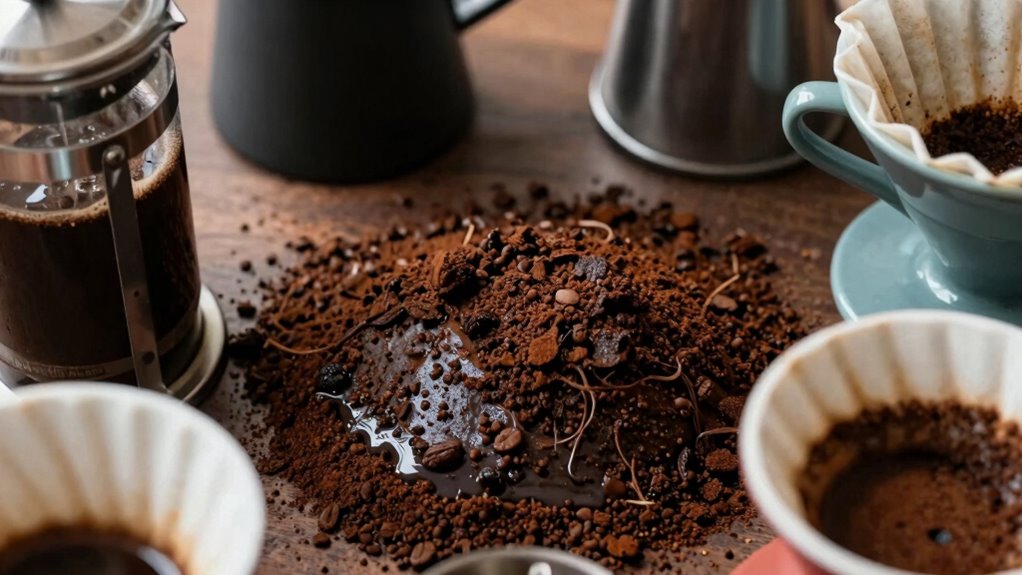
When it comes to French press or immersion methods, coffee sludge plays a bigger role. Since the grounds remain in contact with hot water during steeping, some fine particles inevitably pass through the mesh filter and settle at the bottom of your cup. This thick layer of coffee sludge can intensify the richness of your brew, but too much can make your coffee gritty and unappealing. To improve coffee sludge removal and enhance brewing efficiency, you can use a finer mesh or pour slowly to avoid disturbing the settled grounds. Pouring carefully helps you leave most of the sludge behind, resulting in a cleaner cup, while still capturing the full flavor profile. Proper coffee sludge management is essential for maintaining the quality and flavor of your brew. Additionally, understanding brewing methods can help you tailor your process to minimize unwanted sludge and achieve your preferred coffee experience. Being mindful of brewing variables such as water temperature and steeping time can also influence the amount of sludge produced and the overall clarity of your coffee. Adjusting grind size appropriately can further reduce excess sludge and improve the overall brew quality. Paying attention to filter quality can also make a significant difference in controlling the amount of sludge that ends up in your cup.

French Press Coffee Filter Replacement – 6 Pack Stainless Steel Fine Mesh Filters, Compatible with most 1-8 Cup Coffee Presses, Durable & Reusable
Long-Lasting Durability: Made of premium 304 stainless steel fine mesh, rust-resistant and corrosion-resistant for long-term reuse.
As an affiliate, we earn on qualifying purchases.
As an affiliate, we earn on qualifying purchases.
Frequently Asked Questions
Can Coffee Sludge Be Reused for Brewing Again?
Yes, you can reuse coffee sludge, but it’s not always ideal. Reusing might impact the flavor and strength, so consider the environmental impact and recycling techniques. To minimize waste, you can compost the sludge or repurpose it in gardening as a natural fertilizer. If you decide to brew again, use smaller quantities and fresh water to reduce waste and environmental impact, ensuring you’re making the most of your coffee leftovers sustainably.
How Long Does Coffee Sludge Take to Decompose Naturally?
Think of coffee sludge as a slow-burning ember; it takes time to decompose naturally. Typically, the decomposition rate for coffee sludge ranges from a few months to over a year, depending on factors like temperature, moisture, and aeration. During organic breakdown, microbes gradually consume the organic matter, transforming it into rich compost. Patience is key, but the resulting nutrient-rich soil makes the wait worthwhile.
Is Coffee Sludge Safe to Compost at Home?
Yes, coffee sludge is safe to compost at home, but you should consider environmental impact and toxicity concerns. Coffee grounds add nitrogen to your compost, aiding decomposition, but excess sludge might contain oils or residues that could harm plants. To stay safe, mix the sludge with other compost materials, avoid adding large quantities at once, and monitor your compost’s health. Proper composting minimizes potential toxicity concerns and benefits your garden naturally.
Does Coffee Sludge Contain Any Health Benefits?
A stitch in time saves nine. Coffee sludge offers some health benefits, thanks to its rich antioxidants and residual caffeine, which may boost your mood and alertness. It also contains trace minerals that can support your health. While it doesn’t replace a balanced diet, using coffee sludge in compost or as a natural scrub can enhance your environment and skin health. Just remember, moderation is key for overall health impact.
What Are Creative Ways to Repurpose Coffee Sludge?
You can repurpose coffee sludge for flavor enhancement by adding it to smoothies, baked goods, or marinades, boosting their richness and depth. For an aesthetic presentation, sprinkle it over desserts, yogurt, or ice cream for a rustic look. You might also use it as a natural exfoliant in DIY scrubs. These creative ideas help you minimize waste while elevating your culinary and beauty routines with a unique coffee touch.

Yuanchu 2pcs Portafilter Basket Removal Tool Stainless Steel Coffee Powder Cup Disassembly Tool Coffee Filter Remover Tools Espresso Machine Cleaner Accessories Silver
Secure Removal – Precision-engineered edges grip basket grooves securely, offering controlled leverage to safely dislodge stuck filter baskets…
As an affiliate, we earn on qualifying purchases.
As an affiliate, we earn on qualifying purchases.
Conclusion
So, next time you pour that final sip, imagine coffee sludge as a tiny, rebellious army of coffee particles, dancing wildly at the bottom of your cup. It’s not just leftover grounds, but a chaotic masterpiece of flavor and aroma clinging desperately to your brew. Embrace the sludge—it’s the ultimate coffee badge of honor. Without it, your morning wouldn’t have that bold, unbreakable spirit that keeps you going, no matter how tough the day gets.

Amazon Basics Basket Coffee Filters for 8-12 Cup Coffee Makers, White, 200 Count, Packaging May Vary
SHIPMENT CONTAINS: 200 white basket coffee filters that fit most 8-12 cup basket coffeemakers
As an affiliate, we earn on qualifying purchases.
As an affiliate, we earn on qualifying purchases.

Coffee Kettle Flowings Control Valve, 90-degree Right-angle Narrow Mouth Water Regulator for Gooseneck Drip Pour Over Brewers, Stepless Adjustable Silicone Spout Accessory (Black)
【90° Precise Water Flowings】Features a 90° right-angle structure with a 3mm precision nozzle for stable, vertical water flowings….
As an affiliate, we earn on qualifying purchases.
As an affiliate, we earn on qualifying purchases.