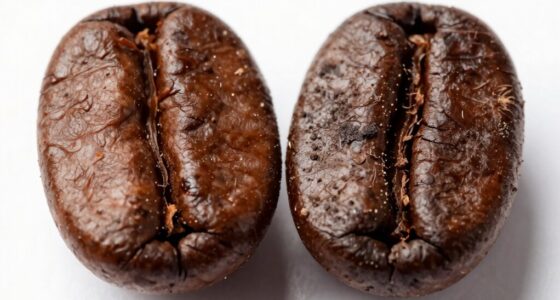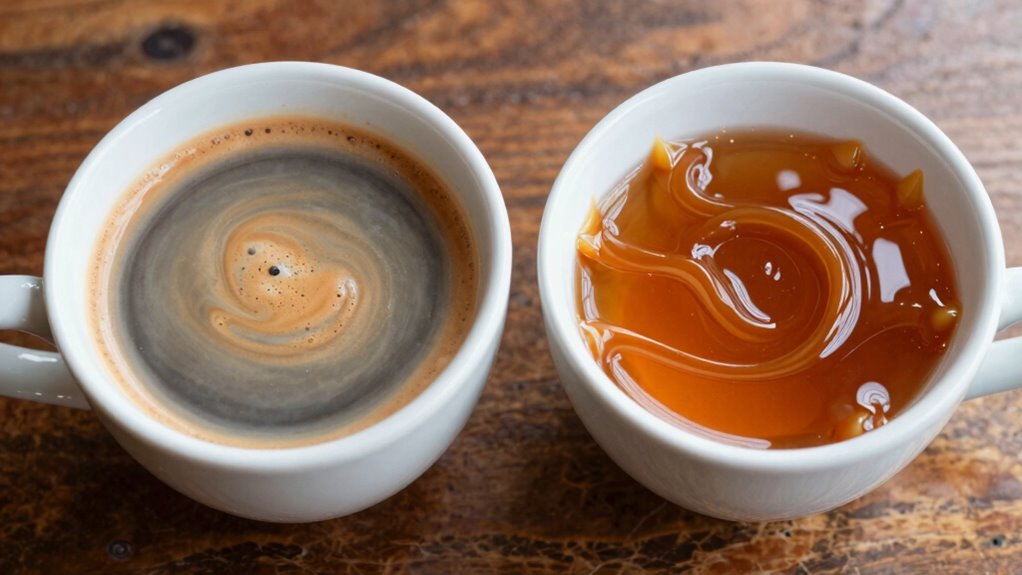

Sweet coffee enhances natural flavors through careful brewing techniques that balance with minimal sweeteners, highlighting the beans’ complexity. Sugary coffee, on the other hand, often relies on excessive sugar or syrups that mask the coffee’s subtle qualities and drown out its natural profile. Achieving true sweetness involves understanding how brewing methods and natural ingredients can enhance flavor without overpowering it. Keep exploring to discover how you can craft coffee that’s flavorful and perfectly balanced without hiding behind sugar.
Key Takeaways
- Sweet coffee balances natural flavors through brewing techniques, while sugary coffee masks the taste with added sugars or syrups.
- Proper brewing and flavor enhancement emphasize inherent bean qualities, avoiding the overpowering sweetness of sugary drinks.
- Sweet coffee achieves harmony without excessive sweetness, whereas sugary coffee is often overly sweet and cloying.
- Using natural ingredients like cinnamon or vanilla enhances sweetness naturally, unlike refined sugar or syrup additions.
- The method of achieving sweetness impacts the coffee’s complexity—refined sugar reduces nuances, while natural techniques preserve them.

Many people enjoy their coffee with a touch of sweetness, but not all sweetened coffees are the same. The difference often lies in how you add that sweetness and the techniques you use to enhance the flavor. When it comes to coffee brewing methods, how you prepare your coffee can markedly influence how sweetness and flavors come through. For example, a pour-over or French press technique can bring out nuanced flavors that naturally balance with minor sweeteners, creating a harmonious taste without overwhelming the palate. On the other hand, methods like drip brewing might produce a more neutral base, allowing you to explore various flavor enhancement techniques to achieve the desired sweetness.
Choosing the right brewing method enhances natural flavors and creates a balanced, refined sweetness in your coffee.
Flavor enhancement techniques involve more than just adding sugar. They include adjusting brewing parameters, selecting specific beans, or incorporating natural ingredients that complement the coffee’s inherent qualities. For instance, adding a dash of cinnamon or vanilla during brewing can amplify sweetness naturally, without the need for refined sugars. These techniques help you craft a well-rounded cup that emphasizes the coffee’s natural flavors, making the sweetness feel integrated rather than artificially imposed. This approach contrasts sharply with simply sprinkling sugar into a brew, which results in a sugary coffee that can mask the true character of the beans.
When you think about sweet coffee versus sugary coffee, the key difference is in how the sweetness is achieved and how it influences the overall flavor profile. Sweet coffee, achieved through careful brewing methods and flavor enhancement techniques, feels balanced and refined. It highlights the coffee’s complexity without overpowering it. Sugary coffee, however, often involves adding excessive amounts of sugar or flavored syrups that mask the natural taste, making the drink overly sweet and sometimes cloying. The latter may provide immediate satisfaction but can diminish the appreciation of the coffee’s true qualities.
Ultimately, your choice in brewing methods and flavor enhancement techniques determines the quality and character of your sweetened coffee. Experimenting with different approaches allows you to find a balance where the sweetness complements, rather than dominates, the coffee. By understanding these differences, you can craft a cup that’s both delicious and sophisticated—one that celebrates the natural beauty of the beans while satisfying your craving for a touch of sweetness. Additionally, understanding brewing methods can help you better harness the natural flavors and achieve the desired level of sweetness. It’s also important to recognize how flavor balancing techniques can elevate your coffee experience, ensuring the sweetness enhances rather than overpowers the natural profile. Developing a deeper knowledge of coffee flavor profiles can further refine your ability to craft the perfect cup tailored to your taste. Furthermore, exploring brewing techniques can reveal new ways to accentuate and control sweetness naturally.

Bodum 34oz Pour Over Coffee Maker, High-Heat Borosilicate Glass with Reusable Stainless Steel Filter and Cork Grip – Made in Portugal
- Capacity: 34oz pour over coffee maker
- Brewing Method: Manual pour over brewing
- Filter Material: Reusable stainless steel mesh filter
As an affiliate, we earn on qualifying purchases.
As an affiliate, we earn on qualifying purchases.
Frequently Asked Questions
Can Adding Milk or Cream Affect the Sweetness Level?
Adding milk or cream can influence the sweetness level by balancing flavors and enhancing texture. The creamy richness can mellow out overly sweet notes, creating a smoother, more harmonious taste. It also adds a velvety texture that complements the coffee’s natural flavors. So, if your coffee feels too sweet, a splash of milk or cream can help achieve a better flavor balance and elevate the overall drinking experience.
What Are Natural Alternatives to Sugar in Coffee?
You can use natural sweeteners like honey, maple syrup, or agave nectar to add sweetness without refined sugar. These options act as flavor enhancers, giving your coffee a richer taste. Alternatively, spices like cinnamon, nutmeg, or vanilla extract boost flavor without adding sugar. Keep in mind that natural sweeteners may still contain calories, so use them in moderation to enjoy a naturally sweetened coffee without overdoing it.
How Does Brewing Method Influence Coffee’s Sweetness?
Your brewing method directly influences coffee’s perceived sweetness. For example, a French press extracts more oils and flavors, enhancing natural sweetness, while a pour-over allows precise control over brew temperature, which affects flavor extraction. Higher brew temperatures tend to intensify sweetness by releasing more soluble compounds, whereas lower temperatures may produce a less sweet, more acidic cup. Experimenting with different methods and temperatures helps you tailor your coffee’s flavor profile to your taste.
Is Sweet Coffee Healthier Than Sugary Coffee?
Sweet coffee often features natural flavor profiles from high-quality beans and gentle brewing techniques, making it healthier than sugary coffee. Sugary coffee, loaded with added sugars, can spike your blood sugar and lead to health issues over time. By choosing brewing methods that enhance natural sweetness without extra sugar, you enjoy a flavorful, balanced cup that’s better for your health. You get rich taste without the unnecessary calories or health risks.
Can Coffee’s Flavor Change Over Time With Added Sugar?
Yes, coffee’s flavor can change over time with added sugar due to flavor stability issues and sugar interaction. As time passes, the sugar may dissolve further, altering sweetness levels, or cause chemical reactions that change the taste. Exposure to air or heat can also impact flavor stability, making the coffee taste different. To enjoy the best flavor, it’s ideal to consume sweetened coffee promptly or store it properly.

5-piece Stainless Steel French Press Brewing Set Replacement Kit,Stainless Steel 34 oz French Press Filter Replacement Parts (Silver, 800ml)
- Complete 5-piece French Press Kit: Includes filter, spiral plate, plunger rod, and knob
- Compatible with 34 oz French Press: Fits standard 3.75-inch wide bottle caps
- Easy to Install and Replace: Disassemble old plunger, insert new rod, secure knob
As an affiliate, we earn on qualifying purchases.
As an affiliate, we earn on qualifying purchases.
Conclusion
In the end, choosing between sweet coffee and sugary coffee is like selecting a path through a garden. Sweet coffee is a gentle breeze, subtle and inviting, enhancing the natural aroma. Sugary coffee, on the other hand, is a burst of fireworks—loud, bright, but fleeting. Your choice shapes your experience; whether you savor a delicate bloom or chase a fleeting sparkle, remember that each sip reflects the mood you wish to awaken in your day.

Happy Home Premium Natural Coffee Flavor – Certified Kosher, 4 oz.
- Product Name: Happy Home Premium Natural Coffee Flavor
- Size: 4 oz bottle
- Flavor Profile: Pure natural coffee flavor
As an affiliate, we earn on qualifying purchases.
As an affiliate, we earn on qualifying purchases.

Torani Sugar Free Coffee Syrup, Cinnamon Vanilla Flavoring for Drinks, Zero Calorie, Glass Bottle with Pump Included, 25.4 Fl Oz
- Flavor Profile: Cinnamon Vanilla Flavoring
- Calorie Content: Zero Calorie
- Bottle Type: Glass Bottle with Pump
As an affiliate, we earn on qualifying purchases.
As an affiliate, we earn on qualifying purchases.