
If you prefer more control, pulse pouring lets you pause and adjust flow to highlight subtle flavors and guarantee even saturation, while continuous pouring keeps a steady stream for simplicity and quicker brewing. Pulse pouring can improve flavor extraction by avoiding over- or under-extraction, but continuous pouring offers reliability and speed. Both methods can produce a great cup, so choosing depends on whether you want precision or convenience. Keep exploring to find out which technique suits your taste best.
Key Takeaways
- Pulse pouring allows for better control over saturation and flavor extraction compared to continuous pouring.
- Continuous pouring offers a faster, more straightforward brewing process suitable for beginners.
- Pulse pouring enhances flavor nuances by focusing on even saturation and detailed flow adjustments.
- Continuous pouring provides consistent extraction with less attention required during brewing.
- Choice depends on desired precision and control versus convenience and speed.
When it comes to brewing the perfect pour-over coffee, the way you pour water can make a significant difference in your final cup. The pouring technique impacts flavor extraction, which determines the richness and complexity of your coffee’s taste. It also influences brewing consistency, ensuring each cup remains as good as the last. Two popular methods—pulse pouring and continuous pouring—offer different ways to control these factors. Understanding their differences helps you choose the best approach for your preferred flavor profile.
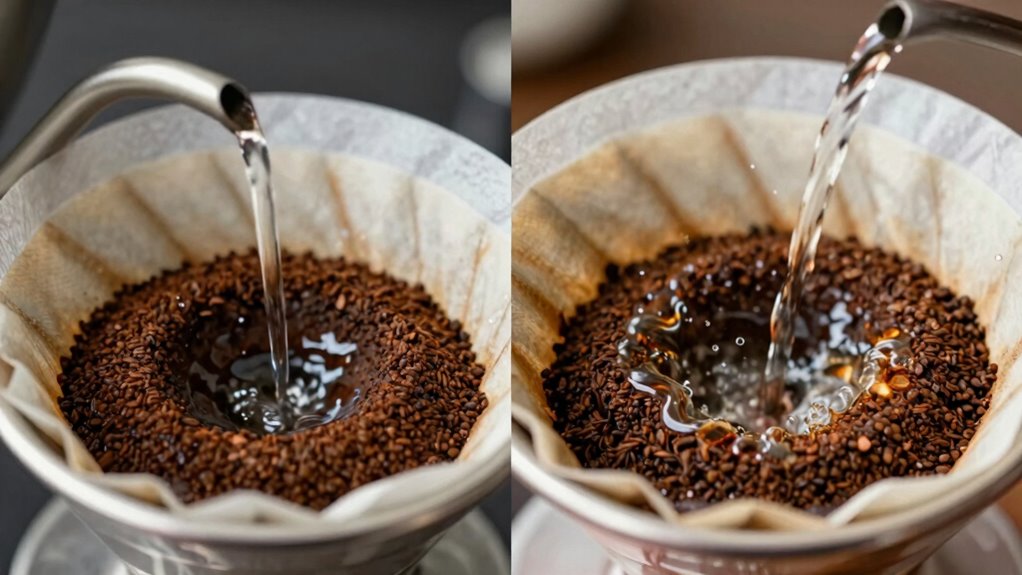
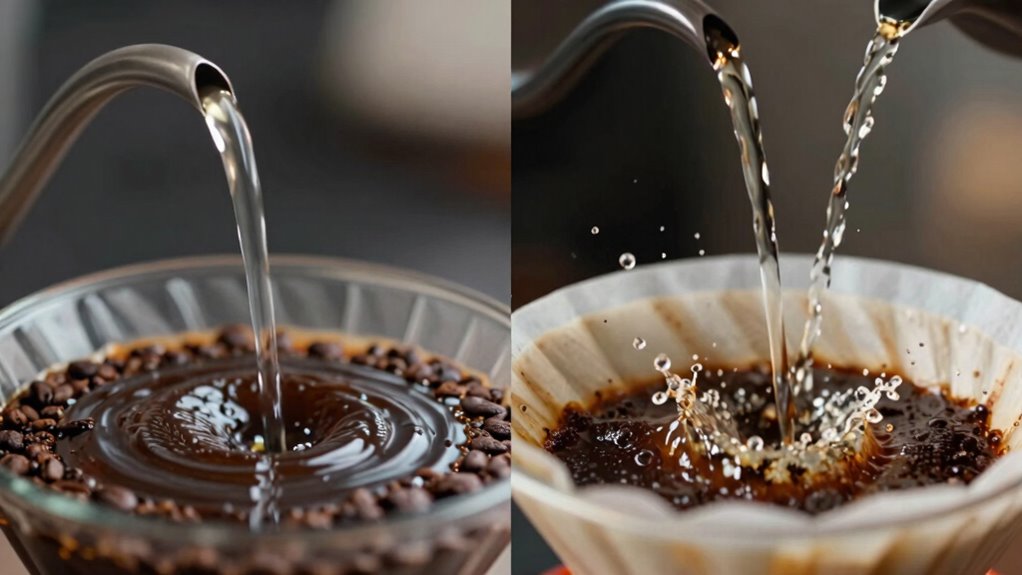
Pulse pouring involves pouring water in short, controlled bursts rather than a steady stream. This method allows you to focus on evenly saturating the coffee grounds, promoting uniform extraction. When you pulse, you give the water time to fully penetrate the coffee bed, which helps extract more nuanced flavors. Because you control each pour, you can adjust the flow to prevent over-extraction or under-extraction, resulting in a balanced cup with bright acidity and complex aromas. Additionally, precise pouring techniques can help optimize flavor extraction and improve your overall brewing results. Proper control over the pouring speed is essential for achieving the desired flavor profile. Adjusting your pouring technique can also help to maximize extraction and enhance flavor clarity. However, pulse pouring requires more attention and timing, making it a bit more labor-intensive but rewarding for those seeking precision. Consistent pouring speed can help streamline the process and improve overall results.
Pulse pouring evenly saturates grounds, enhancing flavor and requiring careful attention for precise, balanced results.
On the other hand, continuous pouring involves a steady, unbroken stream of water over the coffee grounds. This technique is often favored for its simplicity and speed. When you pour continuously, you maintain a consistent flow rate that can lead to stable brewing conditions. This consistency helps achieve uniform flavor extraction, especially if your pour is smooth and controlled. Continuous pouring minimizes the risk of uneven saturation, which can cause uneven extraction and inconsistent flavor profiles. It’s ideal if you prefer a more straightforward process or are new to pour-over brewing but still want a reliable, flavorful cup.
Both methods have their strengths, but they serve slightly different purposes. Pulse pouring offers more control over the brewing process, allowing you to fine-tune each pour to maximize flavor extraction. It’s especially useful when you want to highlight subtle flavor nuances. Continuous pouring, meanwhile, provides a predictable, even extraction process, making it easier to achieve a consistent cup every time. Ultimately, your choice depends on your preference for control versus convenience. Paying attention to your pouring technique—consistent water flow—will help you achieve better flavor extraction and more predictable results, elevating your pour-over experience.

Gooseneck Kettle for Manual Drip Coffee & Tea 40oz Stainless Steel Pour Over Coffee Kettle with Thermometer Tea Kettle for Stovetop,1200ml,6 Cup,Silver,1Pack
ENJOY BETTER COFFEE AT HOME: The coffee pot is designed with a gooseneck spout. This kind of gooseneck…
As an affiliate, we earn on qualifying purchases.
As an affiliate, we earn on qualifying purchases.
Frequently Asked Questions
Does Preferred Pouring Method Affect Coffee Aroma?
Yes, your preferred pouring method can affect coffee aroma. Pulse pouring often enhances aroma preservation by allowing the coffee to bloom and releasing volatile scents gradually, leading to a richer scent profile. Continuous pouring tends to maximize scent enhancement by maintaining a steady extraction, which can intensify the aroma. Experimenting with both methods helps you discover which preserves or enhances the coffee’s aroma best for your taste.
Which Pouring Technique Is Better for Specific Coffee Bean Types?
You should tailor your pouring technique to your bean’s flavor profile. For delicate, nuanced beans, continuous pouring often preserves subtle aromas and flavors. For bolder, more robust beans, pulse pouring can highlight their depth by controlling extraction. Keep your grind consistency in check; a uniform grind guarantees even extraction regardless of method. In the end, experimenting helps you find what best brings out your beans’ unique character.
How Does Pouring Style Impact Extraction Time?
Your pouring style directly impacts extraction time by influencing pouring consistency and extraction uniformity. Continuous pouring allows a steady flow, promoting even extraction and potentially shorter extraction times. In contrast, pulse pouring introduces pauses, which can extend extraction time and create unevenness if not done carefully. By maintaining consistent pouring, you guarantee uniform extraction, leading to a balanced flavor profile. Your technique shapes the coffee’s overall taste and quality.
Can Pouring Method Influence Caffeine Content?
Imagine your coffee as a treasure chest, with each pour releasing more flavor extraction. Your pouring method can influence caffeine content by affecting how thoroughly the coffee grounds are saturated. Continuous pouring often guarantees consistent brewing, leading to uniform caffeine extraction. Pulse pouring might create pockets of under-extraction, reducing caffeine levels. So, your technique directly shapes not just flavor, but also the strength of your brew’s caffeine punch.
Is There a Learning Curve for Mastering Pulse Pour?
Yes, there is a learning curve for mastering pulse pour, as you need to develop pouring consistency and control technique variability. It takes time to perfect your rhythm, pressure, and timing to guarantee even extraction. You might initially struggle with maintaining steady intervals and flow, but with practice, you’ll improve your precision. Focus on steady, deliberate pours to build confidence and achieve a balanced brew.
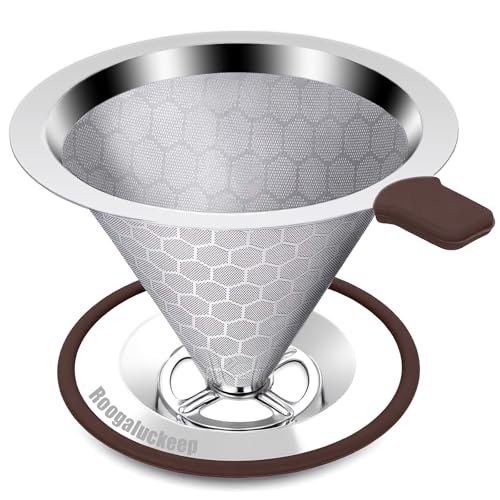
Roogaluckeep Pour Over Coffee Dripper, Stainless Steel Coffee Filter, Paperless Reusable Coffee Filter, Metal 600 Mesh Strainer Coffee Maker Single Cup Brewer 1-2 Cup
✔ Perfect Extraction Design – Precision-engineered spiral ribs and large drainage hole ensure ideal water flow and full…
As an affiliate, we earn on qualifying purchases.
As an affiliate, we earn on qualifying purchases.
Conclusion
So, whether you’re a pulse-pouring rebel or a steady stream enthusiast, remember: the real secret’s in your taste buds’ dance. Sure, the method might tweak the brew’s character, but at the end of the day, it’s just coffee—no need to overthink it. Whether you pour like a thunderstorm or a gentle rain, the only thing that truly matters is that you enjoy each sip. Cheers to finding your pouring soul!

MELODRIP Pour Over Coffee Tool for Cleaner and Sweeter Brewing (Polished Handle and Clear Dish)
‣POUR LIKE A PRO: Trusted by professinoal baristas and enthusiasts the world over, the Melodrip delivers pour over…
As an affiliate, we earn on qualifying purchases.
As an affiliate, we earn on qualifying purchases.

Primula Precision Pour Over Kettle – Stainless Steel 1.06 Qt.
The long, narrow gooseneck spout of this distinctive stainless steel kettle ensures precise pouring
As an affiliate, we earn on qualifying purchases.
As an affiliate, we earn on qualifying purchases.