
Immersion brewing changes coffee flavor by fully submerging grounds in water, which allows for a more uniform extraction of flavors. This method emphasizes richness, smoothness, and clarity, highlighting the unique characteristics of your beans. Adjusting variables like grind size, brew time, and temperature helps tailor the flavor to your preference. If you want to discover how to optimize your brew for the best results, there’s more to explore.
Key Takeaways
- Immersion brewing fully submerges coffee grounds, resulting in uniform extraction that enhances richness and full-bodied flavor.
- It emphasizes clarity and highlights unique origin flavors through consistent water-ground contact.
- Longer steeping times develop deeper, smoother, and more complex flavor profiles.
- Precise control of variables like water temperature and grind size improves extraction and flavor balance.
- The method allows for flavor experimentation by adjusting brew time, vessel shape, and bean origin.

Veken French Press Coffee Maker 34oz, No Plastic Touching Cafe,Thickened Glass Stainless Steel Brewer, Cold Brew Cafetera Tea pot for Kitchen Travel Camping, Gifts, Decor, Bar Accessories, Dark Pewter
No Plastic Touching Food: Made with 304 stainless steel and food-grade silicone, our French press keeps all brewing…
As an affiliate, we earn on qualifying purchases.
As an affiliate, we earn on qualifying purchases.
What Is Immersion Brewing and How Does It Work?
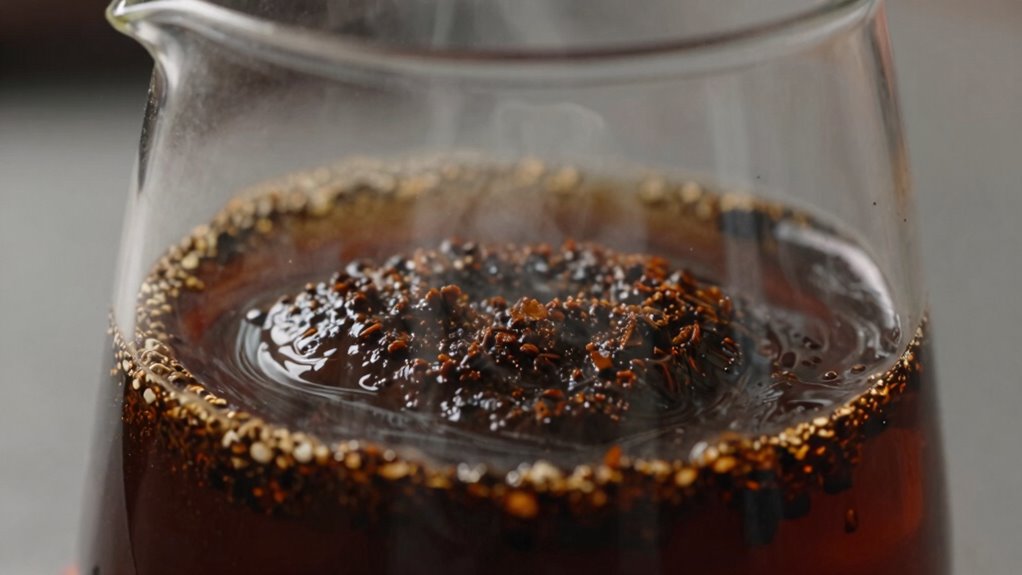
What exactly is immersion brewing, and how does it work? Immersion brewing involves submerging coffee grounds completely in water, allowing extraction to happen uniformly. This method is straightforward, often using simple equipment like a French press or a specialized immersion brewer. Your choice of brewing equipment impacts the flavor, so selecting the right tool is essential. The origin of your coffee beans also plays a significant role, as different regions produce beans with distinct characteristics. When you immerse the grounds, you extract flavors directly from the beans, enhancing their unique qualities. Unlike drip brewing, immersion creates a richer, fuller-bodied coffee. It’s a hands-on process, giving you control over steep time and extraction, which influences the final taste. Additionally, brewing techniques can significantly alter the overall flavor profile of your coffee. Understanding coffee origins can help you tailor your brewing process to highlight specific flavor notes, and exploring different brewing methods can open up new flavor possibilities. Being aware of extraction process nuances can help you fine-tune your results for the perfect cup. A deeper understanding of brewing variables allows for more precise adjustments to achieve your desired flavor profile.
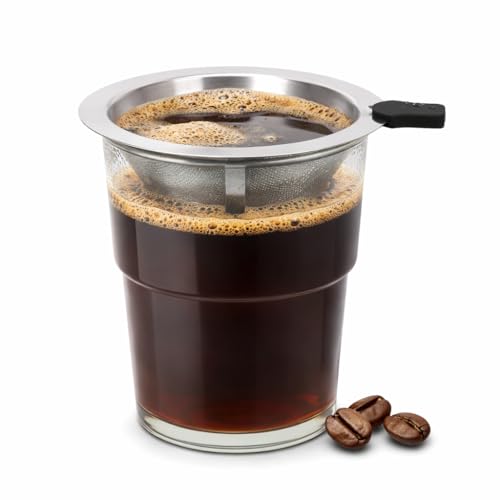
NANSPATH Single Serve Immersion Coffee Maker, Glass Pour Over Coffee Dripper with Reusable Stainless Steel Filter, Manual Coffee Brewer Cup for Home Office Travel-TMF
1️⃣ Full Immersion Brewing — Richer Flavor Than Drip Coffee Unlike traditional drip coffee makers, this immersion coffee…
As an affiliate, we earn on qualifying purchases.
As an affiliate, we earn on qualifying purchases.
How Does Immersion Brewing Enhance Coffee Flavor?
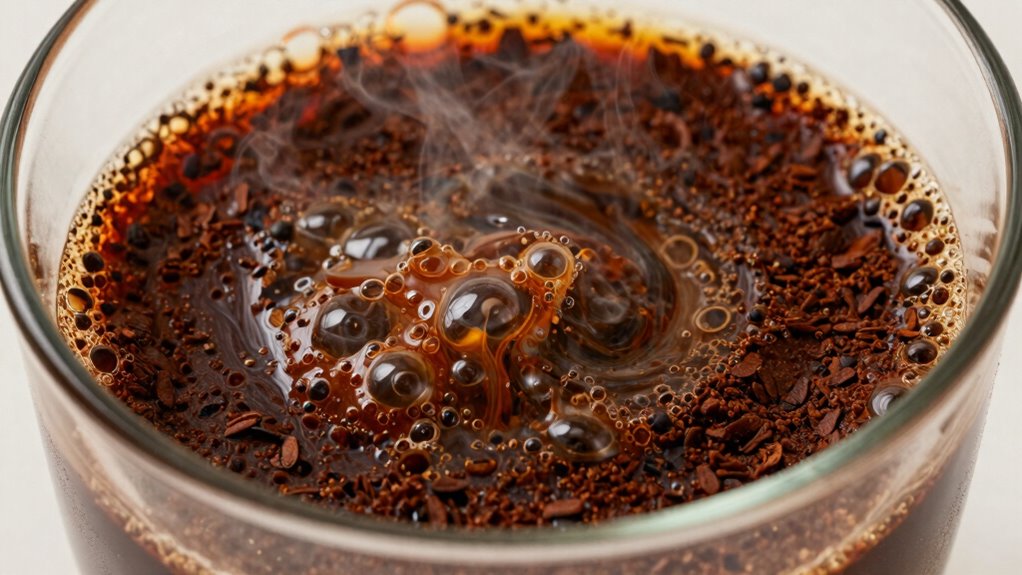
Immersion brewing improves extraction efficiency, allowing more of the coffee’s flavors to be fully developed. This method results in richer flavor profiles, highlighting nuances that might be lost with other brewing techniques. Additionally, it reduces bitter notes, creating a smoother, more balanced cup. The controlled contact time in immersion brewing also helps preserve the delicate flavor nuances, making each cup a more authentic reflection of the coffee’s regional characteristics. Proper brew ratio is essential in immersion methods to achieve optimal flavor extraction and consistency. By adjusting parameters like temperature and brewing time, you can further refine the flavor profile to suit your preferences. Understanding the extraction process can help you better control the final taste of your brew.
Increased Extraction Efficiency
Because immersion brewing fully submerges coffee grounds in water, it allows for more uniform extraction of solubles compared to other methods. This efficiency means you extract more flavors from your coffee in less time, resulting in a richer, more balanced cup. Proper coffee storage is essential to maintain freshness and maximize extraction potential, ensuring your brewing equipment produces consistent results. When your coffee is fresh, the soluble compounds dissolve more evenly, enhancing flavor complexity. Because immersion brewing maintains constant contact between water and grounds, it minimizes channeling and uneven extraction often seen in pour-over methods. This controlled environment leads to a more complete extraction of desirable compounds, revealing fuller flavor profiles and a smoother taste experience. Additionally, biodiversity in coffee cultivation can influence the flavor nuances, making sustainable practices beneficial for both the environment and coffee quality. Maintaining freshness throughout the process is crucial for unlocking the full potential of the beans’ flavor profile. Moreover, extraction efficiency is a key factor that distinguishes immersion brewing, contributing to its ability to produce consistently rich and nuanced flavors. A deeper understanding of brewing techniques can further optimize flavor extraction and enhance your coffee experience. Understanding how coffee cultivation practices impact flavor can also help you select beans that yield better results with immersion brewing.
Richer Flavor Profiles
Immersion brewing enhances coffee flavor by allowing water to interact with the grounds more thoroughly and evenly. This method extracts a broader range of compounds, resulting in richer, more complex flavors. Your choice of coffee roasting impacts the profile, as darker roasts release bolder notes, while lighter roasts preserve delicate aromas. The brewing equipment plays a vital role; immersion devices like French presses or specialty brewers guarantee full contact between water and grounds, maximizing flavor extraction. Unlike drip methods, immersion brewing maintains a stable environment, allowing nuanced flavors to develop fully. As a result, you experience a fuller cup with deeper character, highlighting the unique qualities of the coffee and emphasizing the significance of the right roasting level and brewing equipment for a richer flavor profile. Additionally, the full contact between water and coffee grounds in immersion brewing ensures a more consistent and thorough extraction process. Proper brew time is also essential to optimize flavor extraction and achieve the desired taste. Furthermore, controlling variables such as water temperature can significantly influence the extraction process, further enhancing the overall flavor. Paying attention to brewing variables can help unlock even more nuanced flavors in your coffee, especially when understanding the importance of coffee extraction chemistry.
Reduced Bitter Notes
By allowing the coffee grounds to steep fully in water, immersion brewing minimizes the extraction of overly bitter compounds that can dominate a cup. This process helps balance flavors, especially when considering the coffee bean origin and brewing vessel material. Different origins have varying bitterness levels, and immersion brewing reduces their harshness. Additionally, the material of your brewing vessel—glass, stainless steel, or ceramic—affects heat distribution, influencing bitterness extraction.
Here are four ways immersion brewing reduces bitter notes:
- Gentle extraction prevents over-releasing bitter compounds.
- Uniform steeping avoids hot spots that can intensify bitterness.
- Longer brew times allow flavor to develop without harshness.
- Control over variables helps tailor the balance based on bean origin.
- Material influence impacts heat distribution, further reducing unwanted bitterness heat transfer properties.
- Consistent temperature control in immersion brewing helps maintain optimal extraction levels and reduce bitterness brewing consistency. Additionally, temperature stability during the process is crucial for achieving the desired flavor profile without over-extraction.

Cowboy Joe Single Cup Direct Immersion Coffee Brewer
Total immersion coffee brewer, makes up to 10 oz coffee in your cup
As an affiliate, we earn on qualifying purchases.
As an affiliate, we earn on qualifying purchases.
What Factors Affect the Flavor in Immersion Brewing?
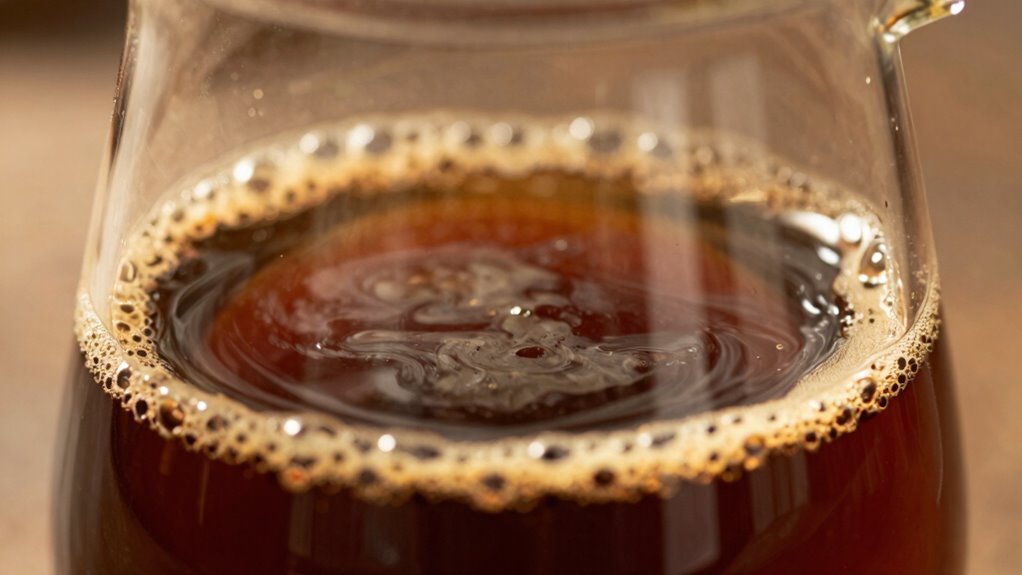
Your coffee’s flavor in immersion brewing depends heavily on the grind size, brew time, and water temperature. Adjusting these factors can greatly alter the taste and strength of your brew. Understanding how each element influences extraction helps you craft the perfect cup. Additionally, the robotic brewing devices available today can help maintain precise control over these variables for consistent results. Properly managing these elements is essential to overcoming common brew challenges and achieving a balanced flavor profile.
Coffee Grind Size
The size of your coffee grind plays a crucial role in determining the flavor profile of your brew. In immersion brewing, a finer grind exposes more surface area, resulting in a bolder, more intense flavor, while a coarser grind produces a smoother, lighter cup. Factors like coffee bean origin influence how you should grind; for example, lighter roasts may benefit from a slightly coarser grind to highlight their delicate notes. Additionally, your brewing equipment impacts the ideal grind size—French presses require coarse, while Aeropress demands a medium grind. Consider these points:
- Finer grind equals more extraction, highlighting brightness and acidity.
- Coarser grind reduces extraction, emphasizing body and smoothness.
- Origin and roast level influence suitable grind size.
- Adjust grind based on your brewing equipment for best flavor.
Brew Time Control
Brew time considerably influences the flavor outcome in immersion brewing, as it determines how long the coffee grounds interact with water. Longer brew times extract more compounds, often enhancing body and complexity, but can also lead to over-extraction and bitterness. The origin of your coffee beans plays a role here: beans from different regions have unique profiles that respond differently to brew time. For example, some beans may release delicate floral notes quickly, while others need longer extraction to develop full flavor. Your brewing vessel design also impacts *ideal* brew time—wider vessels allow faster extraction, requiring shorter times, whereas narrower or deeper vessels may need longer steeping. Adjusting brew time based on these factors lets you fine-tune the flavor to match your preferences.
Water Temperature Impact
Water temperature plays a crucial role in shaping the flavor profile of your immersion brew because it directly influences the extraction process. Maintaining temperature stability ensures consistent extraction, preventing under- or over-extraction that can dull or mask flavors. The mineral influence in your water also matters; minerals can enhance or mute certain taste notes, affecting overall brightness and body. To optimize flavor, consider these factors:
- Temperature control: Use a thermometer to keep water within the ideal range, usually between 195°F and 205°F.
- Stability: Avoid fluctuations during brewing, as inconsistent temperatures can produce uneven extraction.
- Mineral content: Use mineral-rich water for added flavor complexity, but too many minerals can lead to bitterness.
- Brewing time: Adjust timing based on temperature to balance extraction and flavor clarity.

Chefman Electric Kettle with Temperature Control, 5 Presets LED Indicator Lights, Removable Tea Infuser, Glass Tea Kettle & Hot Water Boiler, 360° Swivel Base, BPA Free, Stainless Steel, 1.8 Liters
FAST BOILING: Chefman kettles boil water fast. Boil your water for as little as 3 minutes for tea,…
As an affiliate, we earn on qualifying purchases.
As an affiliate, we earn on qualifying purchases.
How Does Immersion Compare to Other Brewing Methods?

Immersion brewing stands out because it fully submerges coffee grounds in water, allowing for a consistent and even extraction. Unlike pour-over or drip methods, immersion doesn’t rely on flow rate or gravity, which can introduce variability. This method emphasizes uniform extraction, highlighting the coffee bean origin’s unique flavors more distinctly. Your brewing equipment is straightforward—often just a jar or French press—making it accessible and easy to control. In contrast, methods like AeroPress or espresso use pressure or rapid flow, producing different flavor profiles and mouthfeel. While immersion emphasizes clarity and body, other methods may accentuate acidity or brightness. Ultimately, immersion offers a simple, hands-on way to explore how coffee’s origin influences flavor, making it a versatile choice for experimentation.
What Brewing Time and Grind Size Work Best for Immersion?
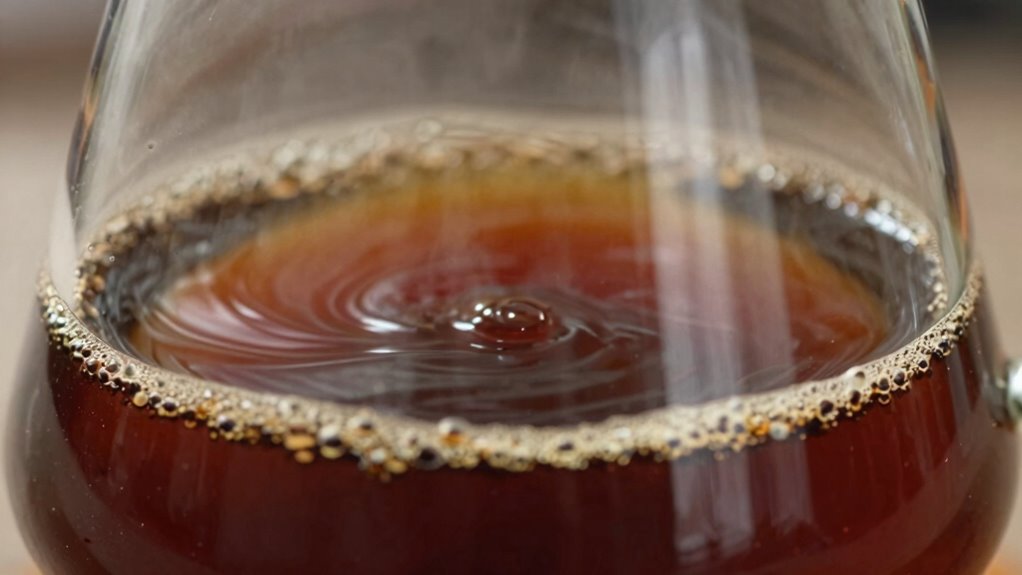
Choosing the right brewing time and grind size is essential to revealing the full potential of immersion brewing. You want to optimize flavor extraction without over-extracting or dulling the coffee. For best results, consider these tips:
- Use a medium grind—coarser than drip but finer than French press—to balance extraction.
- Brew for 4 to 8 minutes; shorter times highlight brightness, longer deepen the richness.
- Store your beans properly in an airtight container to maintain freshness, which impacts flavor during immersion.
- Always use fresh coffee; old beans can produce dull, flat flavors, regardless of brewing time and grind size.
Adjust based on your taste preferences, but remember, bean freshness and proper storage are key to a vibrant, flavorful brew.
How Can You Customize Your Immersion Brew for Better Flavor?
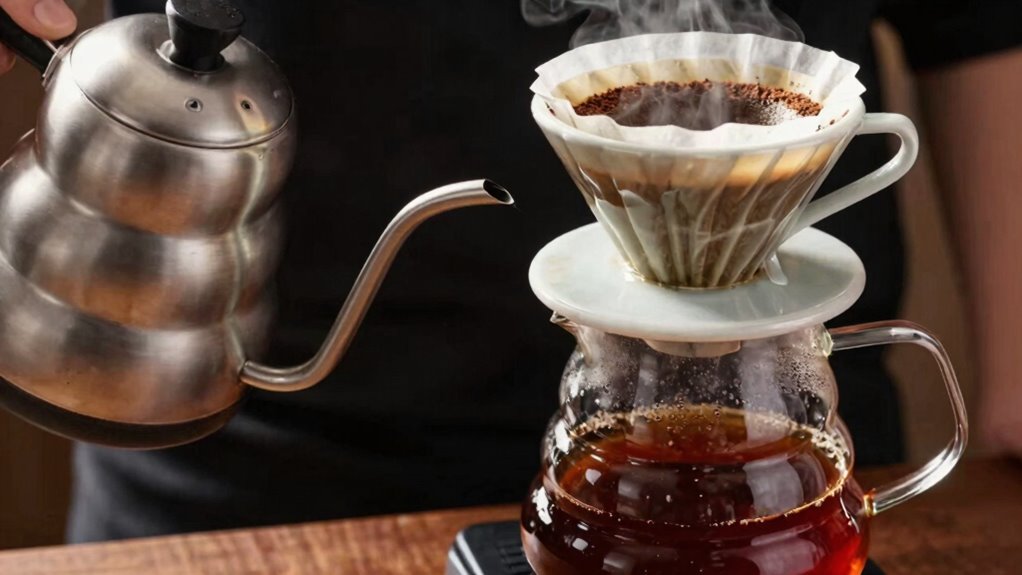
Ever wondered how to fine-tune your immersion brew to match your flavor preferences? Adjusting factors like coffee bean origin and brewing vessel design can make a big difference. Coffee from different regions offers unique flavor profiles—think bright and fruity versus earthy and bold. Additionally, the brewing vessel design influences extraction; a wider vessel increases surface area, enhancing clarity, while a narrower one emphasizes body. To help you customize, consider this table:
| Factor | Effect on Flavor | Tips |
|---|---|---|
| Coffee bean origin | Impacts acidity, aroma, and flavor notes | Experiment with beans from different regions |
| Brewing vessel design | Affects extraction rate and body | Try varying vessel shapes and sizes |
| Brew time | Controls strength and smoothness | Adjust to balance flavor and clarity |
Tweaking these elements helps craft your perfect cup.
Why Does Immersion Brewing Give a Richer, Smoother Cup?

When you adjust brewing variables to customize flavor, you may notice that immersion methods naturally produce a richer, smoother cup. This is because immersion brewing allows coffee grounds to steep evenly, enhancing brewing consistency. The extended contact time extracts more oils and soluble compounds, boosting the coffee aroma and creating a fuller flavor profile. Additionally, this method minimizes over-extraction, preventing bitterness.
Here’s why immersion brews excel:
- Steeping ensures even extraction, improving aroma and flavor.
- Longer contact time enhances richness without bitterness.
- Consistent immersion prevents uneven brewing.
- Oils remain suspended, resulting in a smoother texture and fuller mouthfeel.
All these factors combine to give you a richer, smoother cup every time.
Frequently Asked Questions
Can Immersion Brewing Be Used With All Coffee Bean Types?
Yes, immersion brewing works with all coffee bean varieties. Your choice of brewing vessel design influences extraction and flavor, so experimenting with different designs can enhance your experience. Whether you prefer light or dark roasts, immersion allows for consistent, full-bodied brews. Keep in mind that grind size and brew time matter too, but overall, immersion is versatile enough to suit any coffee bean type you enjoy.
What Are Common Mistakes to Avoid in Immersion Brewing?
Avoid common mistakes like inconsistent brewing times, which can ruin flavor. Imagine you’re brewing with immersion; if you forget to set a timer, your coffee might be over-extracted or under-extracted. To maintain brewing consistency, always track your brew times and temperatures. Also, neglecting equipment maintenance can lead to off-flavors. Regularly clean your vessel and filters, ensuring your immersion brewing yields flavorful, balanced coffee every time.
How Does Water Temperature Influence Immersion Coffee Flavor?
Water temperature directly impacts water extraction, which influences your immersion coffee’s flavor. If you use too hot water, you risk over-extracting, making the brew bitter and harsh. Conversely, too cool water under-extracts, resulting in a weak, sour taste. Temperature control is essential; ideally, keep water between 195-205°F to balance extraction and develop rich, nuanced flavors in your coffee.
Is Immersion Brewing Suitable for Large-Scale Coffee Production?
You can absolutely use immersion brewing for large-scale coffee production. Imagine vast tanks of water gently swirling around heaps of coffee grounds, all controlled by precise large-scale equipment. This method lends itself well to mass production, allowing consistent flavor extraction while maintaining efficiency. With the right equipment, immersion brewing can deliver rich, full-bodied coffee on a commercial level, making it an excellent choice for producing high-quality coffee in large quantities.
How Long Does Immersion Brewing Typically Take to Prepare?
Immersion brewing typically takes about 4 to 16 minutes, depending on your desired strength and grind size. During this brewing time, you guarantee consistent extraction by allowing water to evenly interact with the coffee grounds. You should monitor the process closely to avoid over-extraction or under-extraction, which can affect flavor. Proper timing is key to achieving ideal flavor and maximizing the benefits of immersion brewing.
Conclusion
Immersion brewing transforms your coffee into a silky, flavorful symphony, much like a master chef blending ingredients to perfection. By understanding how factors like grind size and brewing time influence taste, you can craft a cup that’s uniquely yours. It’s a simple yet powerful way to reveal richer, smoother flavors—turning every sip into a delightful journey. So, explore and let your coffee’s true character shine through, like a star in a clear night sky.