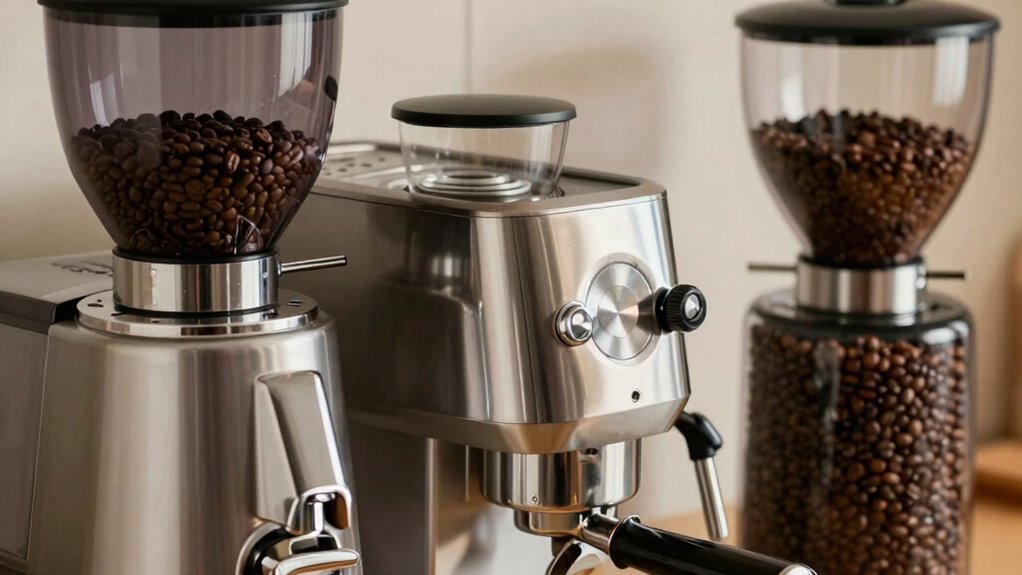

Built-in grinders seem like a great way to save time and keep your kitchen sleek, as they’re integrated and eliminate messy transfer steps. However, they often come with a higher price, and repairs can be complicated and costly. You might also face limited options for upgrades or fixing issues yourself. These factors can make your decision more complex. Want to discover how to balance convenience with long-term value? Keep exploring to find out more.

Get coffee and tea gear delivered free — and shop member deals
- Fast, free delivery on millions of items
- Access to Prime Big Deal Days deals on October 6–7
- Prime Video, Amazon Music and more included
Key Takeaways
- Built-in grinders offer seamless integration and save counter space, enhancing kitchen aesthetics but reducing accessibility for repairs.
- They provide convenience with immediate grinding, but higher costs and complex maintenance can deter long-term ownership.
- Variability in grind quality and potential malfunctions may impact brew consistency and reliability over time.
- The sleek design appeals visually, but limited upgrade options and difficulty in component replacement influence buying decisions.
- Cost savings in time and clutter may be offset by higher initial investment and potential repair expenses.
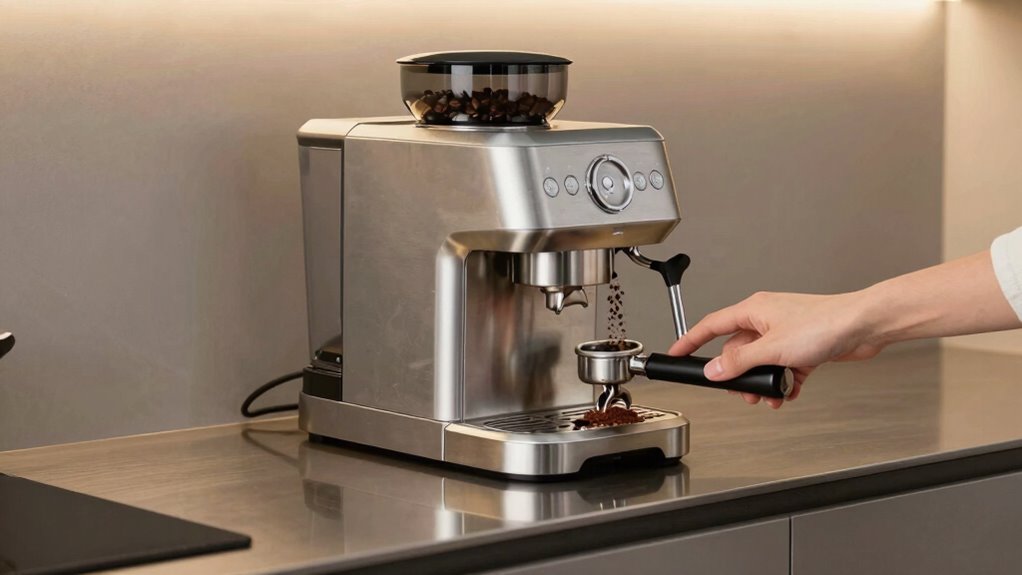
Many coffee enthusiasts are finding that built-in grinders offer a level of convenience that can transform their brewing experience. These integrated coffee accessories streamline the process, allowing you to grind fresh beans directly into the brew chamber without extra steps or mess. The appeal lies in simplicity—no need to transfer beans from a separate grinder, which saves time and reduces clutter on your kitchen counter. For those who value efficiency, built-in grinders seem like a perfect addition, fitting seamlessly into modern kitchen design with their sleek, integrated appearance. They often come with adjustable grind settings, giving you control over the coarseness or fineness of your coffee, which can considerably enhance your brewing results.
Built-in grinders simplify brewing with seamless design and adjustable settings for fresh, precise coffee every time.
However, the convenience of built-in grinders can influence your buying decision beyond just functionality. When you’re shopping for a new coffee machine, you might prioritize a clean, minimalist look that matches your kitchen design. Built-in options tend to be less obtrusive and more visually appealing, blending into cabinetry and creating a streamlined aesthetic. This aesthetic appeal often makes you lean toward integrated models, thinking they’ll elevate your kitchen’s style. Yet, this focus on design and convenience can sometimes overshadow other important factors, like maintenance, durability, or performance.
Built-in grinders do change your decision-making process because they are usually more expensive than standalone grinders, and their repair or replacement can be more complex. You might find yourself weighing the upfront cost against the long-term benefits of having an all-in-one machine. Sometimes, people overlook the fact that built-in units might limit your ability to upgrade or repair individual components easily. Additionally, since these machines are integrated into cabinetry, cleaning and maintenance can become more challenging, impacting their longevity and performance over time. Proper maintenance and repair of built-in units tend to be more involved, which can influence their overall value. Incorporating professional installation can further increase the initial investment but may be necessary for proper setup and ongoing upkeep. Moreover, the availability of replacement parts for built-in units can be limited, potentially leading to higher costs and longer downtimes if repairs are needed. It’s also worth noting that some users report that the consistency of grind quality in built-in models may vary depending on the machine’s design and brand, affecting the final brew. Additionally, the technological complexity of these integrated units can sometimes lead to more frequent malfunctions or difficulties when troubleshooting issues.
In the end, your decision hinges on how much value you place on convenience and kitchen aesthetics versus flexibility and maintenance. While built-in grinders do sound appealing because they reduce steps and enhance your kitchen design, they also invite you to think about whether their added cost and potential upkeep are worth it. If you’re someone who appreciates sleek, clutter-free spaces and quick, consistent results, these appliances seem like an obvious choice. But if you prefer flexibility, easier repairs, or a broader selection of coffee accessories, you might opt for a standalone grinder instead. Ultimately, the convenience they promise can be tempting, but it’s essential to weigh that against the realities of your brewing habits and kitchen setup.
As an affiliate, we earn on qualifying purchases.
Frequently Asked Questions
Are Built-In Grinders Compatible With All Espresso Machine Brands?
Built-in grinders aren’t compatible with all espresso machine brands. You’ll encounter compatibility issues because many grinders are designed for specific brands or models, so it’s crucial to check brand compatibility before purchasing. If you buy a built-in grinder that isn’t compatible with your espresso machine, it won’t fit or function properly. Always verify compatibility details to guarantee seamless integration and peak performance with your existing espresso setup.
How Long Do Built-In Grinders Typically Last?
Built-in grinders usually last between 5 to 10 years, depending on usage and maintenance. You might face maintenance challenges over time, like burr wear or motor issues, which can affect performance. Noise levels can increase as the grinder ages or if parts loosen. Regular cleaning and occasional part replacements help prolong lifespan, but be prepared for some noise and upkeep to keep your built-in grinder running smoothly.
Can Built-In Grinders Be Easily Repaired or Replaced?
While built-in grinders are designed for convenience, they can pose maintenance challenges. Repairing them isn’t always straightforward, and replacement costs can add up. You might find that fixing a malfunction requires specialized skills or parts, making repairs less accessible. Ultimately, if a built-in grinder needs replacement, it might be more cost-effective to think about a new unit altogether, especially if repairs become frequent or complicated.
Do Built-In Grinders Require Special Cleaning Routines?
Built-in grinders do require special cleaning routines to maintain best cleaning maintenance and grind performance. You should regularly remove and clean the burrs or blades and clear any trapped coffee grounds to prevent clogs. Using a cleaning brush and periodic deep cleaning with grinder cleaning tablets help keep the grinder in top shape. Proper maintenance guarantees consistent grind quality and prolongs your machine’s lifespan, making it a worthwhile investment.
Are Built-In Grinders More Energy-Efficient Than External Ones?
Built-in grinders are generally more energy-efficient than external ones because they use less power during operation, reducing your overall energy consumption. Their integrated design also means less energy is lost in transit or during startup. This can lead to better cost efficiency over time, especially if you brew coffee frequently. So, if you’re mindful of energy use and want long-term savings, a built-in grinder can be a smart choice for your kitchen.
integrated coffee maker with grinder
As an affiliate, we earn on qualifying purchases.
As an affiliate, we earn on qualifying purchases.
Conclusion
In the end, built-in grinders seem like a seamless addition, blending convenience with quality, much like a trusted friend offering steady support. However, their influence on your buying decision isn’t just about ease—it’s about weighing the long-term commitment and potential limitations. Before you make your choice, remember that what feels like a simple upgrade can subtly shift your entire coffee experience, much like a ripple spreading across still water, changing everything beneath the surface.
built-in espresso machine with grinder
As an affiliate, we earn on qualifying purchases.
As an affiliate, we earn on qualifying purchases.
kitchen integrated coffee grinder
As an affiliate, we earn on qualifying purchases.
As an affiliate, we earn on qualifying purchases.
Fall Picks
fall essentials
As an affiliate, we earn on qualifying purchases.