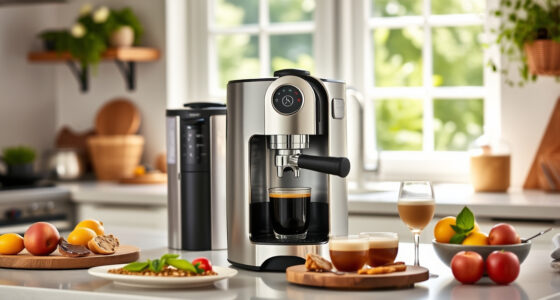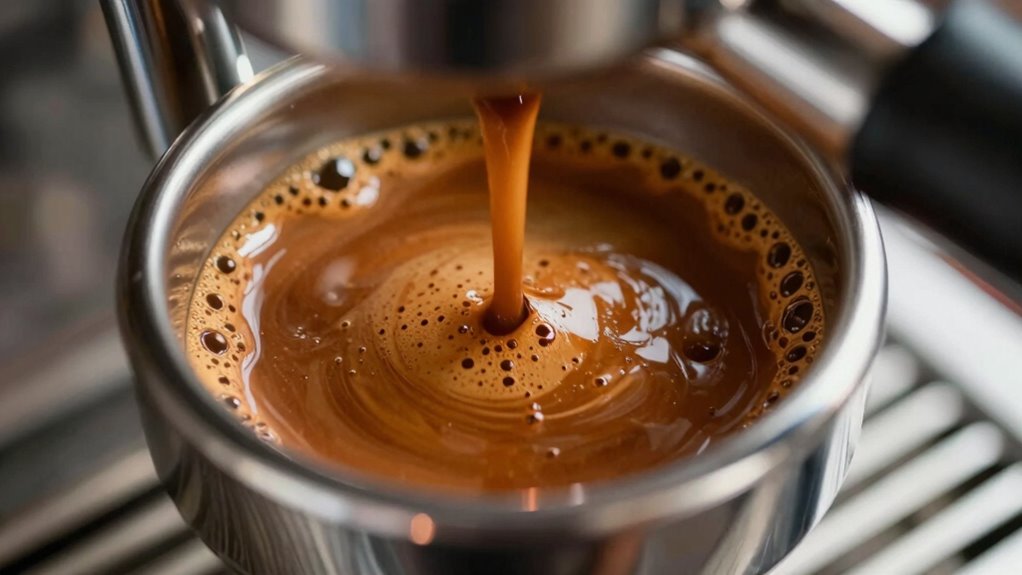

Espresso extraction is the process where hot water dissolves soluble compounds from coffee grounds to create a concentrated, flavorful shot. It depends on factors like grind size, water temperature, pressure, and brew time. When done right, it produces rich flavor, good crema, and balanced acidity. Poor extraction results in dull, bitter, or sour tastes. Understanding these variables helps you improve your espresso. Keep exploring to uncover how to perfect your brew every time.
Open a free Amazon Business account
Business pricing, bulk buying and tax-exempt orders.
As an affiliate, we earn on qualifying purchases.
Key Takeaways
- Espresso extraction is the process of dissolving soluble compounds from coffee grounds using hot water to create a concentrated shot.
- Proper extraction balances flavor, aroma, and body by controlling variables like grind size, temperature, pressure, and brew time.
- Over-extraction leads to bitter, hollow flavors, while under-extraction results in sour, weak, or incomplete taste.
- Water chemistry and precise machine calibration significantly influence extraction quality and flavor profile.
- Mastering extraction involves adjusting brewing parameters to achieve consistent, well-balanced espresso shots.
As an affiliate, we earn on qualifying purchases.
What Is Espresso Extraction and Why Does It Matter?
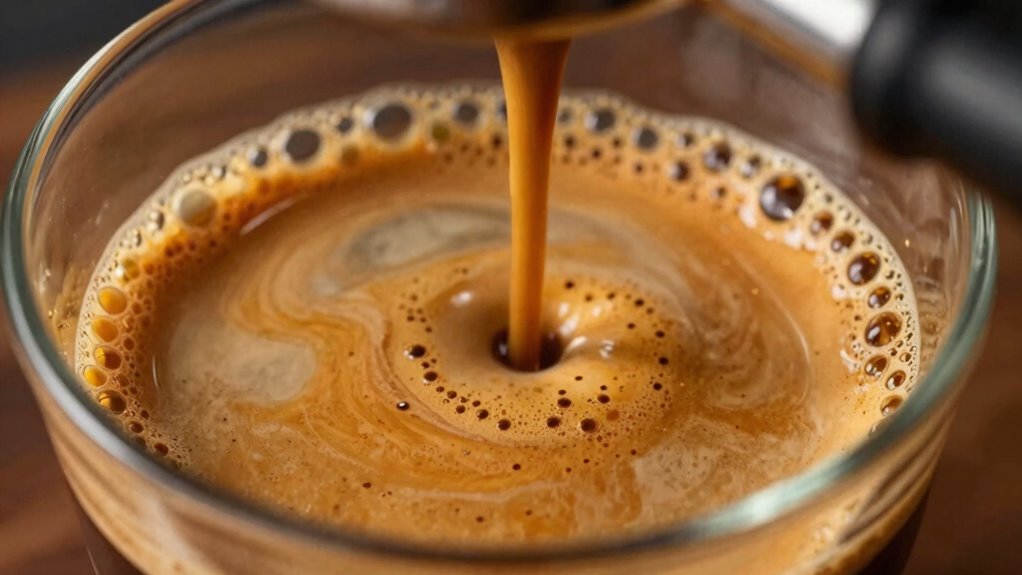
What exactly is espresso extraction, and why is it so important? It’s the process that transforms coffee grounds into a rich, concentrated shot of espresso. The key factors include coffee bean freshness and proper espresso machine calibration. Fresh beans provide the ideal flavor, aroma, and solubility needed for a balanced extraction. If your beans are stale, your espresso will taste flat and dull. Proper calibration ensures the machine delivers the right water temperature, pressure, and flow rate. When these elements are aligned, the hot water effectively dissolves the coffee’s soluble compounds, extracting the best flavors. Consistent brewing techniques play a vital role in achieving optimal extraction results. Poor calibration or old beans can lead to under- or over-extraction, ruining your espresso. Mastering extraction means consistently brewing a flavorful shot that highlights your coffee’s full potential. Additionally, understanding the extraction process can help you troubleshoot and improve your espresso quality over time. Recognizing the factors influencing extraction allows for better control and refinement of your brewing method. Developing an awareness of extraction efficiency can also help you fine-tune your technique for even better results. Gaining knowledge about the role of water quality can further enhance your overall espresso experience.
espresso machine calibration tools
As an affiliate, we earn on qualifying purchases.
As an affiliate, we earn on qualifying purchases.
How Water Interacts With Coffee Grounds During Extraction
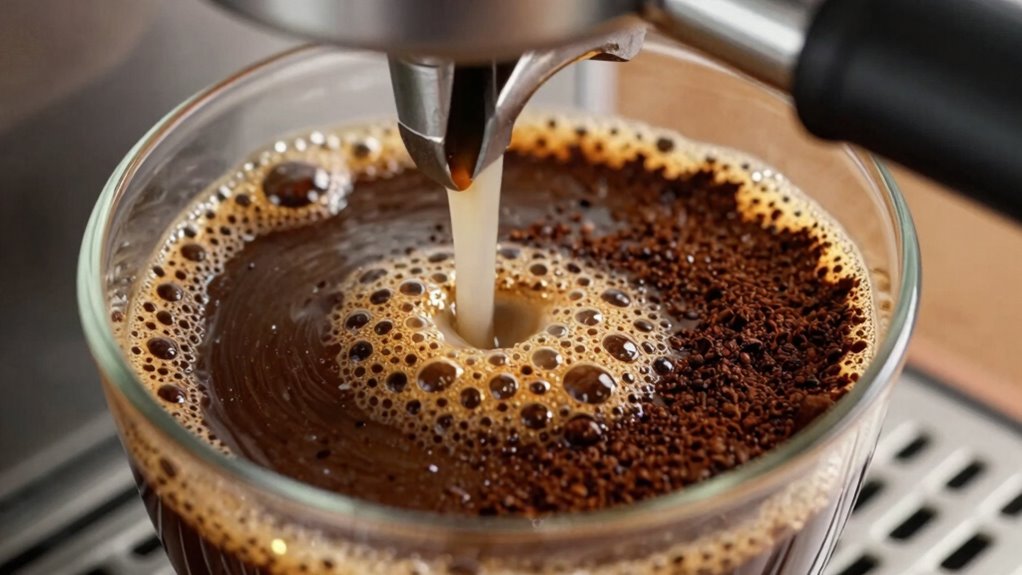
Water plays a crucial role in espresso extraction by interacting directly with the coffee grounds to dissolve their soluble compounds. Water chemistry influences this process; factors like pH, mineral content, and temperature determine how effectively water extracts flavors. Hot water helps break down coffee compounds quickly, but its interaction depends heavily on coffee particle size. Smaller particles increase surface area, allowing water to access more of the coffee’s soluble components efficiently. Larger particles slow extraction, resulting in a different flavor profile. As water passes through the grounds, it dissolves oils, acids, and sugars, extracting the coffee’s complex flavors. Understanding how water chemistry and coffee particle size work together helps you control extraction, ensuring a balanced, flavorful espresso shot. Proper grind size is essential for optimizing extraction and achieving the desired flavor profile. Additionally, being mindful of water mineral content can significantly influence the extraction process and final taste. Adjusting water temperature accordingly can help improve flavor extraction and consistency. Moreover, understanding extraction variables allows for better control over the brewing process, leading to more consistent results. Recognizing how water chemistry impacts extraction can help you fine-tune your espresso for optimal flavor.
water quality testing kit for coffee
As an affiliate, we earn on qualifying purchases.
As an affiliate, we earn on qualifying purchases.
The Main Factors That Affect Espresso Extraction
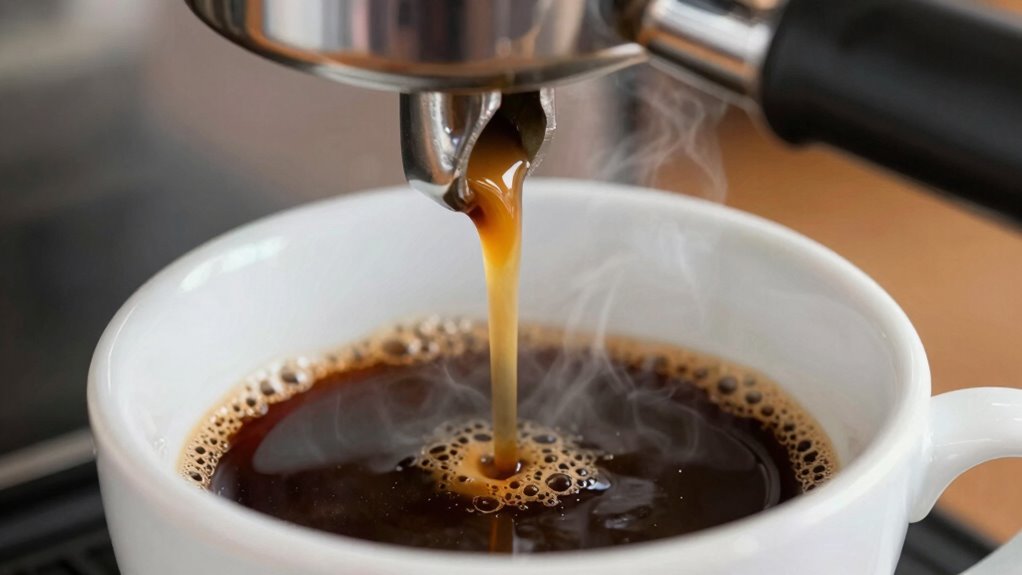
Several key factors influence how effectively espresso extracts from coffee grounds, shaping the final flavor and strength of your shot. The origin of the beans, often from a specific coffee farm, affects their flavor profile and complexity. Bean freshness is also vital; fresher beans generally yield a more vibrant and nuanced extraction because their oils and aromas are more intact. Additionally, the quality of the beans, including their roast level, impacts how well flavors develop during extraction. Proper storage preserves bean freshness, ensuring consistent results. Understanding coffee freshness can help you select beans that will produce the best results. Temperature and pressure during brewing further influence extraction efficiency. By paying attention to these factors, you can optimize your espresso’s flavor, body, and aroma, making each shot a true reflection of the coffee’s origin and freshness. Proper grind size and tamping technique also play crucial roles in achieving a balanced extraction, highlighting the importance of brewing consistency.
As an affiliate, we earn on qualifying purchases.
How Grind Size Changes Your Espresso’s Taste

Your grind size directly influences how efficiently your espresso extracts, which in turn alters the flavor. A finer grind typically produces a richer, more intense taste, while a coarser grind can lead to a lighter, more muted profile. Understanding these changes helps you fine-tune your shot for the perfect flavor balance, especially when considering how grind size impacts extraction to achieve your desired taste. Properly adjusting your grind size is essential for optimizing espresso quality, ensuring you get the best possible flavor from your brew. Additionally, being aware of how brewing techniques interact with grind size can further enhance your espresso’s overall profile.
Grind Size Affects Extraction
The size of your coffee grind plays a crucial role in determining the flavor and quality of your espresso. A finer grind increases resistance, extracting more flavors, but risks over-extraction if too fine, leading to bitterness. Conversely, a coarser grind results in under-extraction, producing a weak, sour shot. Your choice impacts espresso shot consistency and highlights differences among coffee bean varieties. Adjusting grind size allows you to fine-tune extraction for ideal flavor. Use this visual guide to understand the effects:
| Grind Size | Extraction Rate | Flavor Profile |
|---|---|---|
| Fine | Slow, thorough extraction | Rich, intense, sometimes bitter |
| Medium | Balanced extraction | Smooth, well-rounded taste |
| Coarse | Fast, under-extraction | Sour, weak, less flavorful |
Additionally, understanding how grind size influences extraction efficiency can help you better control your brewing process. Recognizing how grind size directly impacts flavor extraction enables more consistent and flavorful results. Knowing how different grind sizes affect tasting notes can also enhance your appreciation of coffee’s nuanced flavors.
Flavor Profiles Shift Significantly
Adjusting grind size doesn’t just influence extraction speed—it can cause dramatic shifts in your espresso’s flavor profile. When you change the grind, you’re affecting how the coffee’s flavor complexity unfolds during extraction. Finer grinds tend to produce a more intense, bold taste with heightened bitterness and richer body, fostering a profile evolution toward complexity. Conversely, coarser grinds often result in a lighter, more delicate flavor, emphasizing acidity and subtle nuances. This shift impacts the overall flavor balance, making your espresso either more robust or more refined. Understanding how grind size influences these profile changes helps you craft a more nuanced cup. Small adjustments can discover new dimensions of flavor, highlighting the delicate interplay between extraction and taste. Grind size is a crucial factor in shaping the final flavor profile of your espresso, especially since extraction is directly affected by grind size. Recognizing the importance of coffee grind can help you better control the brewing process and achieve your desired flavor outcome.
How Brew Time and Pressure Impact Extraction
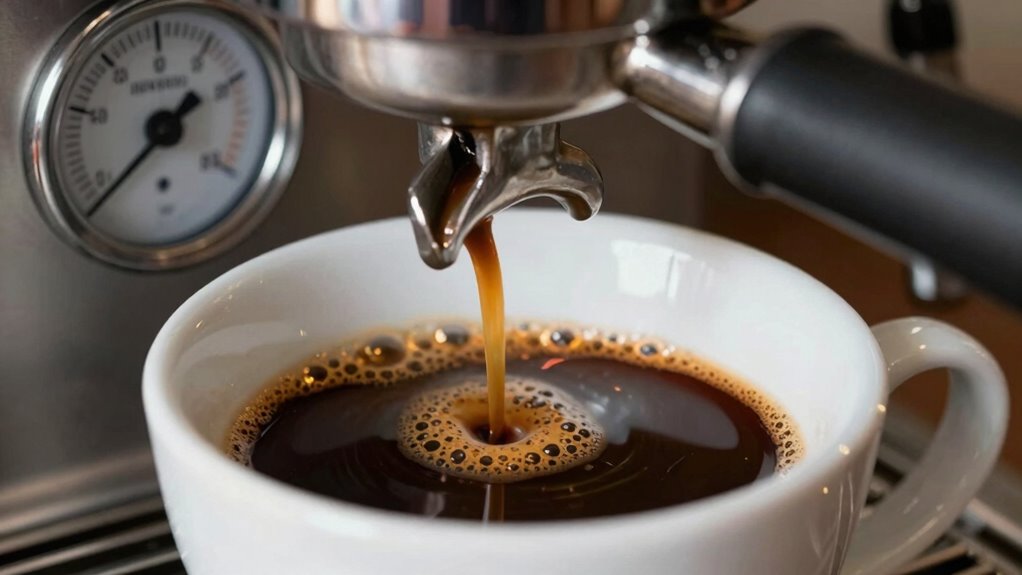
Brew time and pressure are vital factors that directly influence the quality of your espresso extraction. Adjusting pressure profiles affects how water interacts with coffee grounds, impacting flavor and body. Higher pressure can extract more solubles quickly, but too much may lead to over-extraction, resulting in bitterness. Conversely, lower pressure might under-extract, leaving the shot weak and sour. Brew temperature also plays a pivotal role; maintaining the right temperature guarantees maximum solubility and flavor balance. Longer brew times allow for fuller extraction, but if pressure and temperature aren’t calibrated correctly, it can cause uneven extraction. By fine-tuning pressure profiles and brew temperature, you control how quickly and thoroughly flavors are extracted, ultimately influencing the richness, clarity, and overall balance of your espresso. Understanding extraction techniques can help optimize these variables for the best possible shot. Additionally, monitoring pressure stability throughout the process ensures consistency and quality in every shot.
Signs Your Espresso Is Under- or Over-Extracted
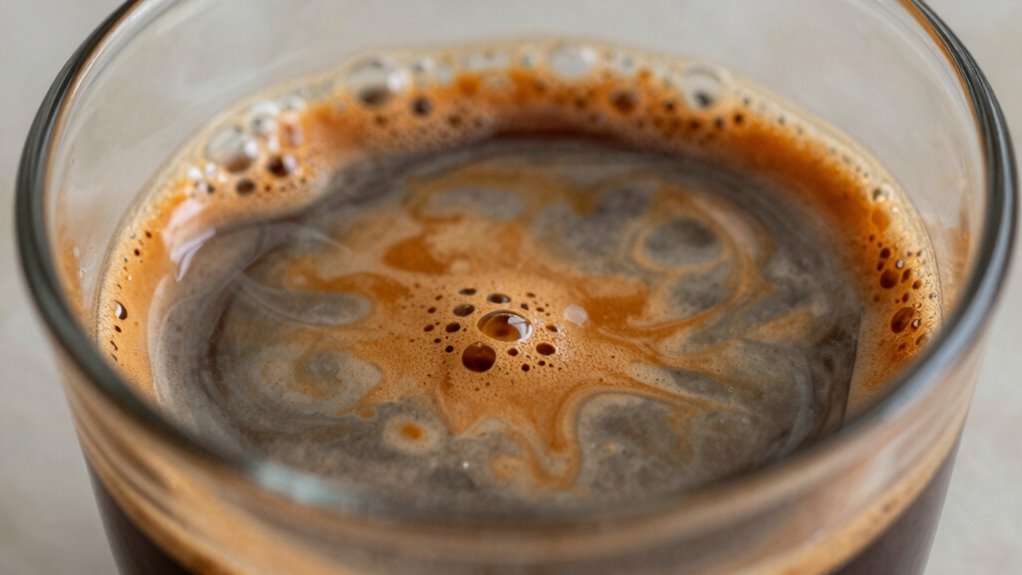
Knowing how your espresso should look and taste can help you identify whether it’s under- or over-extracted. If your espresso is thin, pale, or sour, it’s likely under-extracted, meaning the water didn’t extract enough flavors from the coffee bean origins. On the other hand, a bitter, overly strong, or hollow-tasting shot suggests over-extraction, where too many compounds have been pulled out. Pay attention to the crema: a thin or uneven crema signals improper extraction. Your espresso equipment, including grind size and tamping pressure, can influence these signs. Adjusting these factors can improve extraction, but recognizing these visual and taste cues is key to diagnosing issues. Proper understanding helps you fine-tune your process for a balanced, flavorful shot.
How to Improve and Optimize Your Espresso Extraction
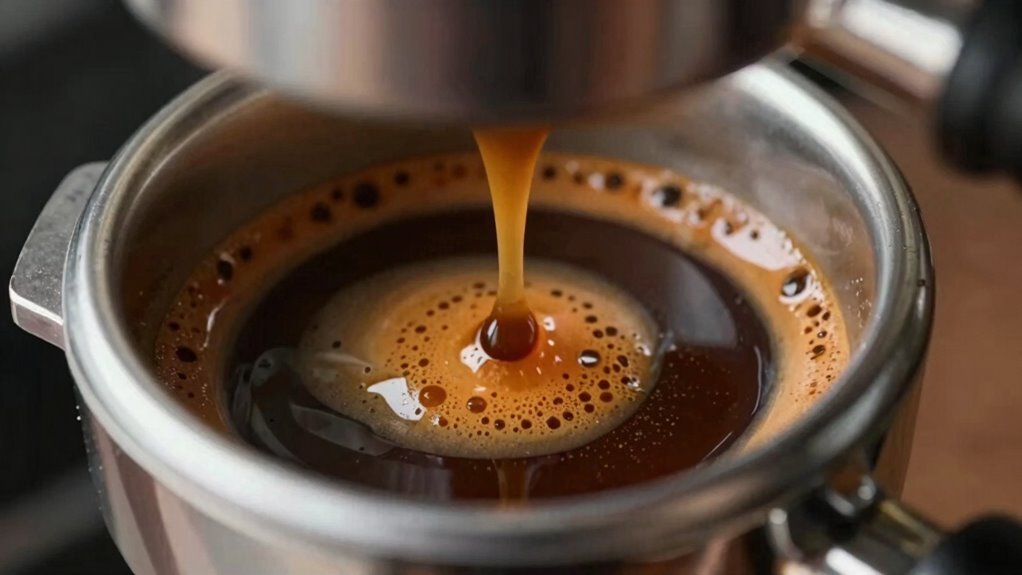
To improve and optimize your espresso extraction, start by fine-tuning your grind size. A too-fine grind can cause over-extraction, while a too-coarse grind results in under-extraction. Adjust incrementally until you find the right balance for a rich, flavorful shot. Consistent extraction improves not only taste but also your ability to create stunning coffee art and perfect milk frothing. Use the following table to guide adjustments:
| Issue | Solution |
|---|---|
| Coffee flows too slowly | Coarsen the grind |
| Coffee flows too quickly | Make the grind finer |
| Creamy, stable milk froth | Practice steaming techniques, control temperature |
Mastering these tweaks will elevate your espresso quality and make your milk presentations shine.
Common Mistakes to Avoid When Brewing Espresso
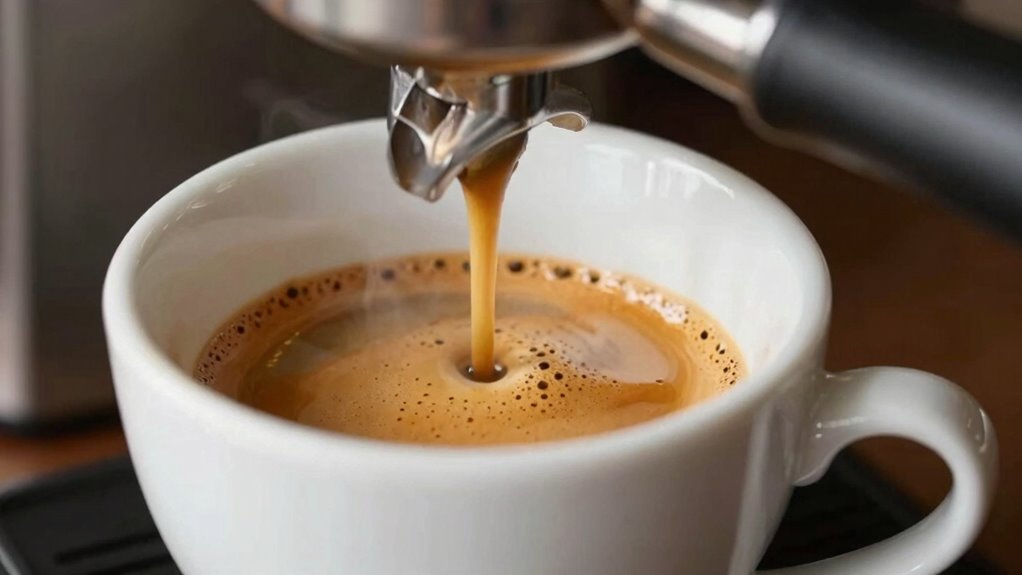
Even experienced baristas can make mistakes when brewing espresso, but recognizing common pitfalls can considerably improve your results. One major mistake is not paying attention to espresso temperature; brewing at the wrong temperature can lead to over-extraction or under-extraction, affecting flavor and crema. Always guarantee your machine heats properly and maintains consistent temperature throughout brewing. Another common error is using coffee that’s not fresh enough. Stale beans lose their aromatic oils, resulting in dull, flat espresso. Always use freshly roasted coffee and grind just before brewing. Additionally, uneven tamping or inconsistent grind size can cause channeling, leading to uneven extraction. By focusing on maintaining the right espresso temperature and coffee freshness, you’ll avoid these pitfalls and consistently produce better espresso.
Frequently Asked Questions
How Does Altitude Affect Espresso Extraction?
Altitude influence considerably impacts espresso extraction because higher elevations speed up bean maturation, leading to beans with different moisture and density levels. This can cause under-extraction if you don’t adjust your grind or brew time. You might find that at higher altitudes, espresso shots become more intense and faster, so experimenting with grind size and extraction time helps maintain balanced flavor. Always tailor your technique to your altitude for ideal results.
What Role Does Coffee Bean Origin Play in Extraction?
You’ll find that coffee bean origin dramatically shapes your espresso’s flavor profiles, turning each shot into a unique experience. Regional characteristics—think fruity notes from Ethiopia or earthy tones from Sumatra—dictate how your beans respond to extraction. So, if you crave diversity in your cup, choose beans from different origins; their distinct flavors will dance through your espresso, proving that where your beans come from truly matters in the extraction magic.
Can Different Brewing Methods Influence Extraction Quality?
Yes, different brewing methods influence extraction quality by affecting flavor balance and extraction speed. For instance, espresso machines extract quickly, emphasizing bold flavors, while pour-over methods slow down extraction, highlighting delicate notes. Your choice of method impacts how evenly flavors develop and how well the coffee’s complexity is preserved. Experimenting with various techniques helps you find the ideal balance, ensuring each cup delivers the desired taste and aroma.
How Does Aging Coffee Beans Impact Extraction?
Aging coffee beans affects extraction by reducing freshness, which diminishes flavor complexity and aroma. When beans sit too long, especially under poor storage conditions, they lose volatile compounds essential for a vibrant espresso. To optimize extraction, you should store beans in airtight containers in a cool, dark place, and use them within a few weeks of roasting. This guarantees that the roast freshness remains intact, resulting in a richer, more balanced shot.
What Are the Environmental Factors Affecting Extraction Consistency?
Environmental factors like water temperature and grind size greatly affect extraction consistency. You need to guarantee water stays within the ideal temperature range, usually between 195°F and 205°F, to extract flavors properly. Additionally, adjusting grind size helps control flow rate; a finer grind increases extraction, while a coarser one decreases it. Keeping these factors stable prevents over- or under-extraction, ensuring your espresso remains balanced and flavorful every time.
Conclusion
Understanding espresso extraction is like mastering a delicate dance—you need the right timing, pressure, and grind size. When perfectly executed, it’s a rich, balanced symphony of flavors; when off, it’s a bitter or sour disappointment. Think of it as science meets art—where precision sparks pleasure. So, embrace the process, avoid common pitfalls, and soon you’ll craft espresso that’s as nuanced and vibrant as the moments you savor it.
Evergreen bestsellers Picks
bestsellers
As an affiliate, we earn on qualifying purchases.