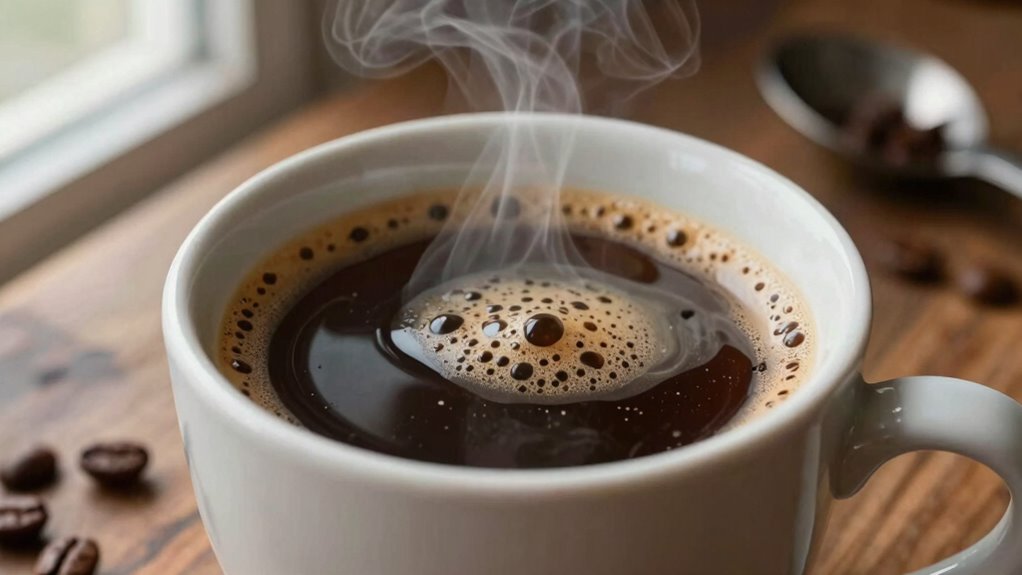

Decaf coffee still contains small amounts of caffeine because removing every trace during processing is nearly impossible. Techniques like solvent-based, water, or carbon dioxide methods can only extract most of the caffeine, but some molecules remain embedded in the beans. Caffeine binds tightly to the bean’s structure, making total removal difficult. If you’re curious about why complete caffeine elimination isn’t achievable and what this means for you, keep exploring the details behind decaf’s caffeine content.

Get coffee and tea gear delivered free — and shop member deals
- Fast, free delivery on millions of items
- Access to Prime Big Deal Days deals on October 6–7
- Prime Video, Amazon Music and more included
Key Takeaways
- Decaf coffee undergoes processes that remove most but not all caffeine due to natural binding within beans.
- Residual caffeine remains embedded in the coffee beans after decaffeination.
- Different extraction methods cannot guarantee 100% caffeine removal.
- Small amounts of caffeine are chemically bound and difficult to extract completely.
- Typical decaf contains about 2-5 mg of caffeine per 8-ounce cup, due to processing limitations.
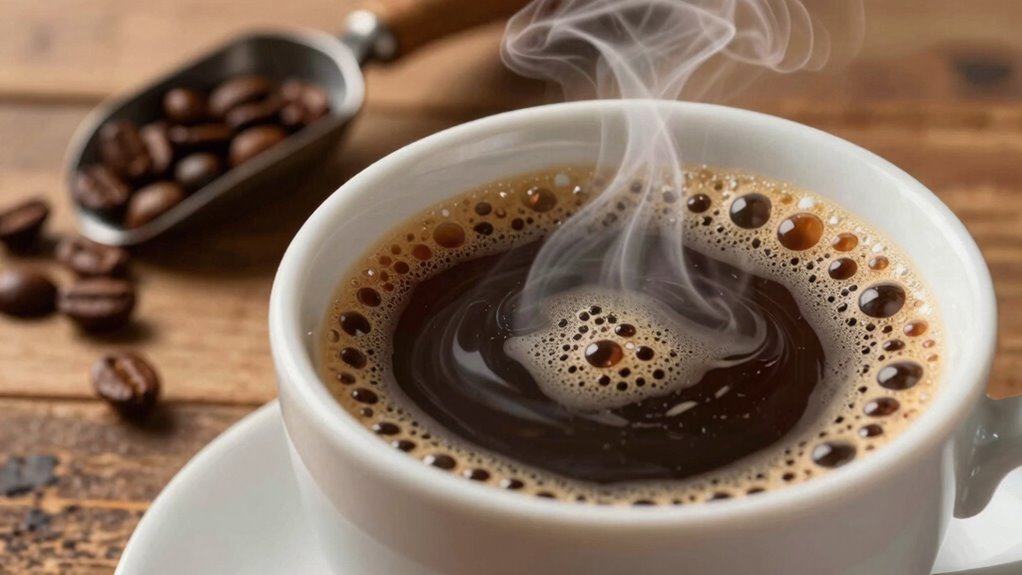
Many people assume that decaffeinated coffee is completely free of caffeine, but in reality, it still contains small amounts. This happens because, during coffee bean processing, removing every last bit of caffeine is incredibly challenging. The process begins with coffee bean processing, where the beans are harvested and prepared for decaffeination. The goal is to extract as much caffeine as possible without harming the beans’ flavor or quality. Different caffeine extraction methods are used to achieve this, each with its own advantages and limitations.
Decaf coffee still contains small amounts of caffeine due to processing challenges.
The most common caffeine extraction methods include solvent-based, water-based, and carbon dioxide processes. In solvent-based methods, chemicals like methylene chloride or ethyl acetate are used to dissolve and remove caffeine from the beans. While effective, these methods often leave behind trace amounts of solvents, which is why decaf coffee isn’t entirely caffeine-free. Water-based processes, such as the Swiss Water Method, rely on soaking beans in water to dissolve caffeine and other soluble compounds. This method is often preferred by those seeking chemical-free options, but it still doesn’t eliminate all caffeine, just reduces it considerably. Ultimately, the carbon dioxide method uses supercritical CO2 to selectively extract caffeine from the beans. This process is highly efficient and preserves the beans’ flavor profile, but it also can’t guarantee 100% caffeine removal.
No matter which caffeine extraction method is used, it’s practically impossible to remove every molecule of caffeine. The reason lies in the very nature of coffee beans. They contain caffeine throughout their cellular structure, and some caffeine binds tightly within the beans. During processing, only the caffeine that’s more easily accessible can be extracted. Small amounts remain embedded, which means the decaf beans still carry traces of caffeine. Typically, decaf coffee contains about 2 to 5 milligrams of caffeine per 8-ounce cup, compared to 70 to 140 milligrams in regular coffee. This residual caffeine is enough to produce effects on sensitive individuals or those who need to avoid caffeine entirely. Understanding the science behind decaffeination helps clarify why decaf isn’t caffeine-free. It’s a matter of balancing flavor, safety, and process limitations. While decaf coffee is an excellent choice for many, it’s important to remember that small amounts of caffeine may still be present, and those with strict caffeine restrictions should be cautious. The science behind decaffeination explains why complete removal is nearly impossible, but the reduction is enough for most people to enjoy their coffee with less worry about caffeine’s effects. Additionally, caffeine binding within the beans makes it difficult to remove every molecule completely.
As an affiliate, we earn on qualifying purchases.
Frequently Asked Questions
How Much Caffeine Is Typically Remaining in Decaf Coffee?
You’ll find that decaf coffee still contains about 1 to 15 milligrams of caffeine per cup, depending on the brand and brewing method. Your flavor profile and brewing techniques influence how much caffeine remains; for instance, a darker roast or a longer brew may extract more caffeine. While it’s considerably less than regular coffee, keep in mind that decaf isn’t entirely caffeine-free, so your choice of brewing impacts your intake.
Does the Caffeine Content Vary Between Decaf Brands?
Yes, the caffeine content varies between decaf brands. This variation can affect flavor consistency, so some brands might have slightly more caffeine than others. You should consider brand reputation, as reputable brands often follow stricter decaffeination processes, resulting in more consistent caffeine levels. Checking labels or contacting brands directly helps you choose a decaf that aligns with your caffeine preferences, ensuring you get a satisfying, balanced cup each time.
Are There Different Methods of Decaffeination Affecting Caffeine Levels?
Different decaffeination processes, like chemical extraction, Swiss water, or CO2 methods, affect caffeine levels differently. Chemical extraction often removes most caffeine but can leave small traces, meaning some caffeine remains. The Swiss water process uses water and osmosis, typically resulting in less caffeine than chemical methods. Your choice of decaf coffee depends on the method used, which influences how much caffeine is still in your cup.
Can Decaf Coffee Still Cause Caffeine-Related Health Issues?
Yes, decaf coffee can still cause caffeine-related health issues if you’re sensitive to caffeine. Even small amounts might trigger symptoms like increased heart rate or anxiety in caffeine-sensitive individuals. It’s important to take into account your caffeine sensitivity and consult with a healthcare professional if you’re concerned about health risks. While decaf has less caffeine, it’s not entirely caffeine-free, so moderation is key to avoiding potential health issues.
Is Decaf Coffee Completely Caffeine-Free for Sensitive Individuals?
Think of decaf coffee as a shadow of its former self—faint but not absent. For those with caffeine sensitivity, decaf isn’t entirely caffeine-free, despite common misconceptions. It contains trace amounts that might still trigger reactions. You can’t fully eliminate caffeine, but you can choose decaf to reduce intake. Always check labels and consult your health provider if you’re very sensitive, as decaf isn’t a completely caffeine-free escape.
As an affiliate, we earn on qualifying purchases.
Conclusion
Despite being labeled as decaf, your coffee still contains caffeine—about 2 to 5 milligrams per cup, enough to affect sensitive individuals. Curiously, decaffeinated coffee accounts for roughly 10% of all coffee consumption worldwide. So, if you’re trying to cut caffeine completely, be aware that even decaf isn’t caffeine-free. Always check labels or ask your barista. Remember, small amounts can add up, so stay mindful of your intake to enjoy your coffee without surprises.
As an affiliate, we earn on qualifying purchases.
As an affiliate, we earn on qualifying purchases.
Fall Picks
fall essentials
As an affiliate, we earn on qualifying purchases.