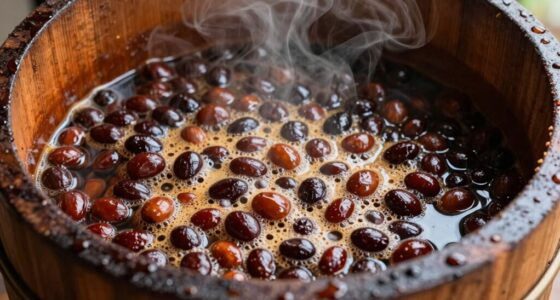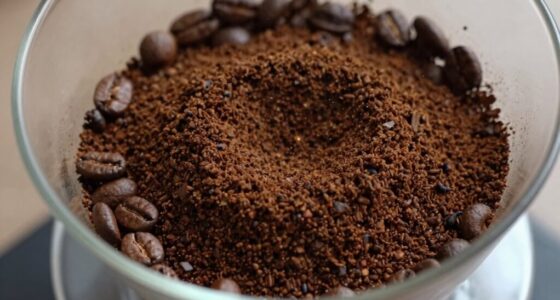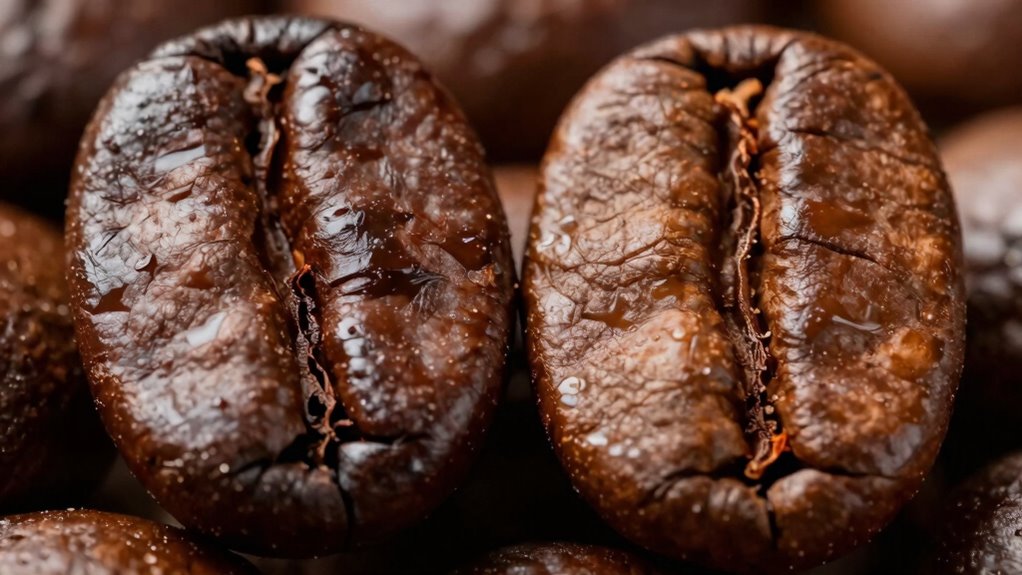

Espresso blends behave differently from filter roasts because their roast profiles are carefully shaped for specific extraction methods. Espresso roasts tend to be darker to bring out bold flavors and a syrupy mouthfeel, while filter roasts are lighter to preserve bright, nuanced notes. These differences influence how each responds during brewing, affecting acidity, flavor, and body. If you want to understand more about how these profiles impact your cup, keep exploring these key concepts.
Key Takeaways
- Espresso blends are darker roasted to enhance boldness and syrupy mouthfeel, influencing extraction and flavor concentration.
- Filter roasts are lighter to preserve bright, nuanced, and acidic characteristics suitable for clarity-focused brewing methods.
- Darker espresso roasts reduce acidity, resulting in smoother, fuller-bodied shots, while lighter filter roasts highlight natural acidity and complexity.
- Roast development affects how coffee responds during brewing, with espresso roasts optimized for pressure extraction and filter roasts for pour-over clarity.
- The interaction between roast level and brewing technique determines flavor balance, acidity, and overall coffee behavior in the cup.
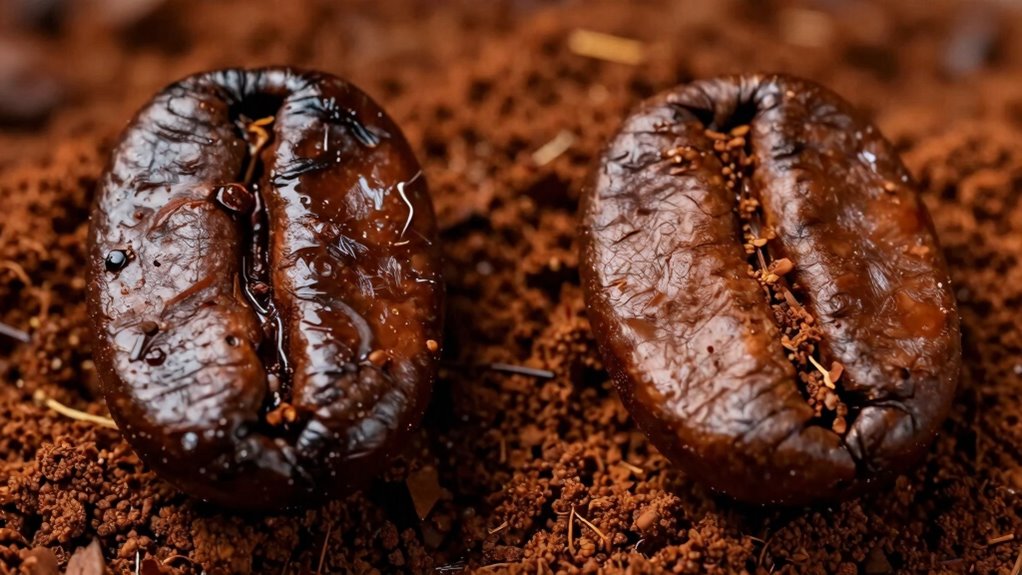
Have you ever wondered what sets espresso blends apart from filter roasts? The answer lies in the way each is crafted, roasted, and brewed. Espresso blends are typically designed to deliver a bold, concentrated flavor profile, which heavily depends on the roast development process. The roast development influences not only the aroma and taste but also the coffee’s acidity, which plays a crucial role in the overall experience. When you brew espresso, you want a roast that’s carefully developed to balance brightness with body, ensuring the acidity doesn’t overpower the rich, full-bodied flavors. In contrast, filter roasts often undergo a different roasting approach, emphasizing clarity and highlighting the coffee’s natural acidity and unique origin notes.
The roasting process, known as roast development, is what ultimately shapes the behavior of each coffee. For espresso blends, roasters tend to push the beans toward a darker roast, which enhances the boldness and creates a more syrupy mouthfeel. This deeper roast development reduces the coffee’s acidity, resulting in a smooth, robust shot that can stand up to milk or stand alone with intensity. Conversely, filter roasts usually undergo a lighter roast development, preserving more of the coffee’s original characteristics, including its lively acidity and nuanced flavors. This lighter roast allows the bright, tangy notes to shine through, making the coffee more transparent and complex when brewed through pour-over or drip methods. Additionally, the roast level significantly impacts the coffee’s behavior during extraction and influences the final flavor profile. Understanding the roast development process can help you better predict how your coffee will perform during brewing.
Coffee acidity is a key element that differentiates these two styles. For espresso, a slightly lower acidity is often preferred, allowing the richer, roasted flavors to dominate without too much sharpness. This doesn’t mean espresso lacks acidity; it just means it’s more balanced with the roast’s sweetness and bitterness. Filter roasts, on the other hand, tend to highlight the coffee’s natural acidity, giving each cup a crisp, vibrant edge that’s especially noticeable in lighter roasts. You’ll find that the interplay between roast development and acidity determines how the coffee behaves during brewing and how it ultimately tastes in your cup. Additionally, understanding brew method differences is essential to appreciating how each roast profile interacts with various extraction techniques. Knowing how acidic balance influences the final flavor can help you select the right roast for your preferred brewing style.

Lavazza Espresso Barista Gran Crema Whole Bean Coffee Blend, Medium Espresso Roast, Oz Bag (Packaging May Vary) – 2.2 LB, 35.2 Ounce
- Product Weight: 2.2 lb (35.2 oz)
- Coffee Type: Whole Bean Espresso Blend
- Roast Level: Medium Espresso Roast
As an affiliate, we earn on qualifying purchases.
As an affiliate, we earn on qualifying purchases.
Frequently Asked Questions
How Does Grind Size Differ Between Espresso and Filter Brewing?
You’ll use a finer grind size for espresso and a coarser grind for filter brewing to optimize extraction. With espresso, you need a consistent grind size and particle distribution to guarantee even water flow and proper pressure. For filter methods, a coarser grind with broader particle distribution allows water to pass more slowly, preventing over-extraction. This difference in grind size directly impacts flavor and extraction efficiency in each brewing method.
What Role Does Water Pressure Play in Extraction?
Imagine water pressure as the mighty force that unleashes every secret of your coffee. It pushes water through the grounds with relentless power, making water temperature and coffee freshness critical. If pressure’s too high or too low, extraction suffers, ruining flavors. Fresh coffee responds better, releasing vibrant oils under pressure, while stale beans resist, dulling your brew. Think of pressure as the conductor that guides your coffee’s flavor symphony.
Can the Same Beans Be Used for Both Methods?
Yes, you can use the same beans for both methods, but it might affect flavor consistency. Espresso and filter brews often require different roast profiles and grind sizes to optimize flavor extraction. While bean selection is flexible, choosing beans suited to each method guarantees you get the best taste. To maintain consistency, consider using specific beans or blends tailored for espresso or filter brewing, depending on your preference.
How Does Roasting Level Influence Flavor Profiles?
You’re really playing with fire when you alter the roasting level, as it considerably influences flavor nuances. Light roasts highlight bright acidity and complex aromatics, while darker roasts develop bold, smoky notes. Roast development is key—more time yields richer, deeper flavors, but can also mask subtleties. Understanding how roast level impacts flavor helps you craft beans that match your preferred profile, ensuring each cup hits just the right note.
What Equipment Adjustments Are Needed for Each Brewing Style?
For each brewing style, you need different equipment adjustments. When making espresso, calibrate your machine to optimize pressure and temperature, guaranteeing a rich shot. For milk frothing, adjust steam wand pressure and temperature to create smooth, velvety foam. When brewing filter coffee, use a coarser grind and make certain your machine’s flow rate is consistent. Regular calibration and proper technique help you achieve consistent flavor profiles regardless of your brewing method.

Lavazza Top Class Filtro Whole Bean Coffee Medium Roast 2.2LB Bag, 100% Natural Arabica, Milk chocolate and roasted hazelnut aromatic notes
- Weight: 2.2 LB Bag
- Roast Level: Medium Roast
- Coffee Type: 100% Arabica
As an affiliate, we earn on qualifying purchases.
As an affiliate, we earn on qualifying purchases.
Conclusion
Understanding why espresso blends behave differently from filter roasts helps you appreciate the nuances of coffee brewing. Did you know that espresso roast beans are typically roasted to an internal temperature of around 240°C, compared to 210°C for filter roasts? This difference impacts flavor, body, and acidity. So, next time you enjoy your brew, remember how roasting techniques shape your coffee experience—making each cup uniquely satisfying, whether it’s an intense espresso or a smooth filter pour.
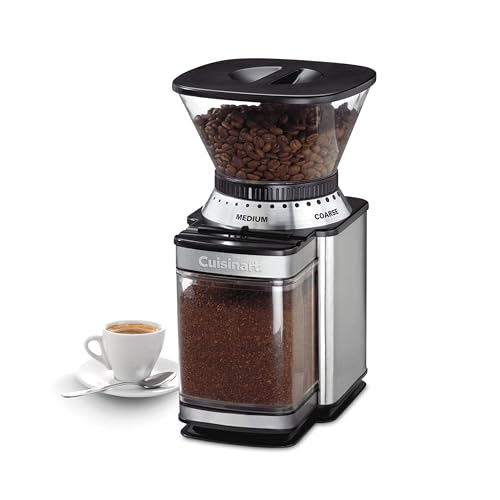
Cuisinart Electric Burr Coffee Grinder, 18-Position Selector, 4-18 Cups
- 18-Position Grind Selector: Adjusts from ultra-fine to extra-coarse
- Removable Bean Hopper: Easily removable for cleaning and refilling
- Removable Grind Chamber: Holds grounds for 4 to 18 cups
As an affiliate, we earn on qualifying purchases.
As an affiliate, we earn on qualifying purchases.

troletoi 7 PCS Espresso Accessories Kit: 53.3mm Espresso Tamper, Coffee Distributor, Puck Screen, Dosing Funnel and WDT Tool, Espresso Tools Set Fits Breville 54mm Espresso Machines and Portafilters
- Compatible with Breville 54mm: Fits Breville portafilters and machines
- Complete Espresso Barista Kit: Includes tamper, distributor, puck screen, funnel, WDT tool
- Leveling and Distribution Tool: Adjustable distributor for even grounds and smooth puck
As an affiliate, we earn on qualifying purchases.
As an affiliate, we earn on qualifying purchases.