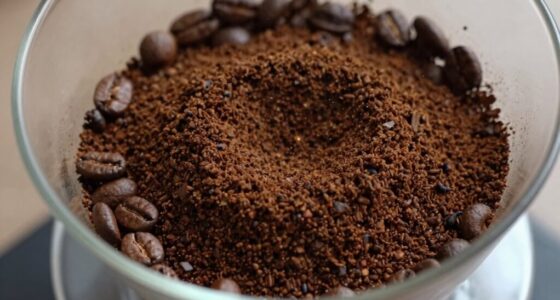

If roasting defects creep into your coffee, you’ll notice harsh, bitter, or smoky flavors that mask the beans’ natural sweetness and fruitiness. Over-roasting can give you ashy, burnt notes that dominate the cup, while underdevelopment results in sour, grassy, or vegetal tastes. These off-flavors can make your coffee flat or unbalanced, hiding the complex, nuanced profile you want. Keep exploring to discover how to recognize and prevent these defects for better brews.
Key Takeaways
- Burnt or smoky flavors result in harsh, bitter, or ashy notes that overpower natural bean characteristics.
- Over-roasted beans produce harsh, bitter, or charred tastes that mask subtle fruity or sweet notes.
- Underdeveloped beans can taste sour, grassy, or vegetal due to incomplete flavor development.
- Uneven roasting causes a mix of flavor defects, leading to a dull, flat, or inconsistent cup.
- Flavors from defects can create off-notes, reducing overall balance and complexity of the coffee.
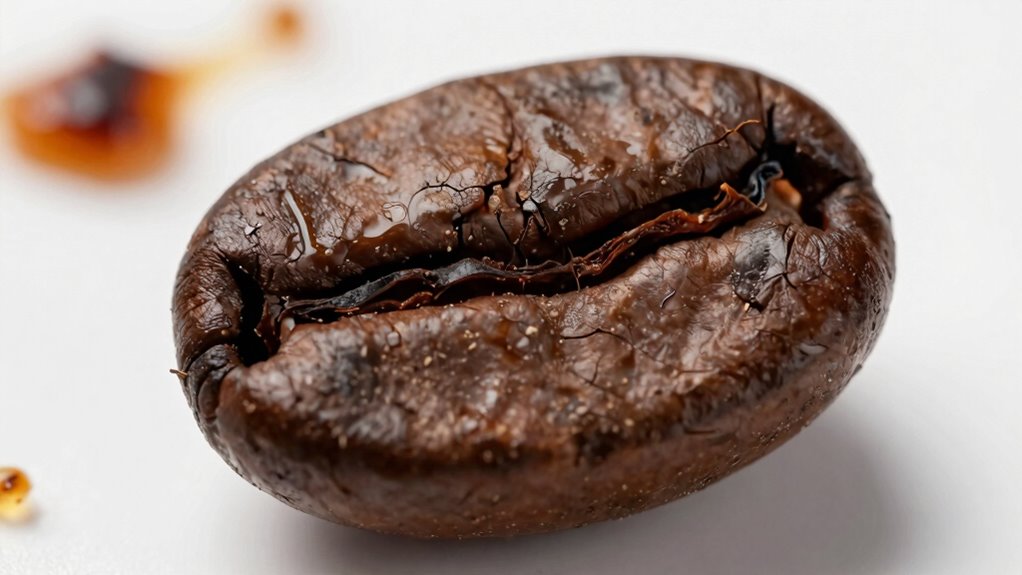
Roasting coffee can be a delicate process, but sometimes defects occur that negatively impact the flavor and aroma. When this happens, you might notice subtle or not-so-subtle changes in how your coffee tastes. These defects often originate from inconsistencies during the roast, which can affect the overall flavor profile you experience in your cup. One of the key aspects to watch for is how these defects influence flavor impact; they can introduce off-notes or mask the true character of the beans. If your roast isn’t consistent, these flaws tend to become more prominent and make it harder to enjoy a balanced, pleasant cup.
When a roast is uneven or poorly controlled, it can lead to flavors that taste burnt, bitter, or overly smoky. You might notice a harsh, ashy quality that dominates over the beans’ natural sweetness or fruitiness. This is a common sign of over-roasting or inconsistency, and it can completely drown out the more delicate flavors you’re aiming for. Conversely, underdevelopment—where the beans aren’t roasted long enough—can result in a sour, grassy, or vegetal taste. These flavors can be sharp and unappealing, making the coffee seem underwhelming and imbalanced. The impact on flavor is significant because it prevents you from experiencing the beans’ true potential, leaving a feeling that something’s just not right in your cup.
Roast consistency plays an essential role in avoiding these defects. When your roasting process lacks control or precision, it’s nearly impossible to produce a uniform bean profile. This lack of uniformity translates directly into flavor defects, as some beans may be overdone while others are undercooked. The result is a cup with uneven flavors—some parts bitter, others sour or grassy. You may also notice a flat or dull taste if the roast isn’t consistent, because the complex layers of flavor haven’t been properly developed. Proper roast control is vital to ensure a balanced and flavorful cup. Developing a keen sense of flavor development can help roasters identify and correct defects early in the process. Additionally, understanding the chemical changes that occur during roasting can improve your ability to control the process and avoid undesirable outcomes. Paying attention to these factors can also help prevent scorching and other avoidable defects that compromise quality.
Furthermore, using precise temperature monitoring and timers can significantly reduce the occurrence of these defects, highlighting the importance of accurate roast profiling in quality control. In the end, understanding how roasting defects taste in the cup underscores the importance of roast consistency and attention to detail during the process. When you control the roast carefully, you preserve the integrity of the beans’ flavor, avoiding those harsh, off-putting notes that can ruin your coffee experience. Recognizing these defects in advance helps you fine-tune your roasting techniques, allowing you to craft a cup that’s balanced, flavorful, and true to the beans’ potential.
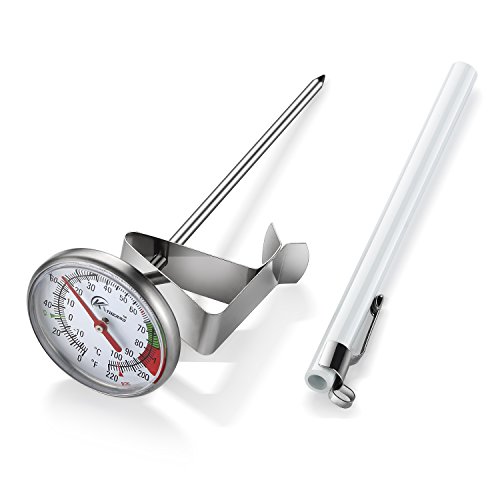
KT THERMO Instand Read 2-Inch Dial Thermometer,Best for The Coffee Drinks,Chocolate Milk Foam
- Design: Multi-stage fixed clip for easy reading
- Measurement Safety: Direct, accurate temperature measurement
- Temperature Range: 0°F to 220°F for various liquids
As an affiliate, we earn on qualifying purchases.
As an affiliate, we earn on qualifying purchases.
Frequently Asked Questions
Can Roasting Defects Be Completely Eliminated With Proper Technique?
Yes, roasting defects can be nearly eliminated with proper technique. By controlling variables like temperature and time, you reduce flavor contamination and improve quality consistency. Consistent roasting practices help prevent undesirable flavors caused by defects such as scorched or underdeveloped beans. While perfect elimination is tough, diligent attention to detail guarantees your coffee’s flavor profile remains clean and balanced, delivering a better cup every time.
Do Different Coffee Beans Show Roasting Defects Differently?
Think of coffee beans as musical instruments, each with its unique voice. Different beans reveal roasting defects in distinct ways, shaped by their flavor nuances and inherent characteristics. You’ll notice that lighter beans might hide certain flaws, while darker ones amplify them. So, yes, bean characteristics influence how roasting defects show up, making every roast a new symphony to explore—each with its own subtle dissonance or harmony.
How Quickly Do Roasting Defects Impact Flavor After Roasting?
Roasting defects can impact flavor almost immediately, especially if the coffee isn’t fresh. As time passes, freshness impact diminishes, but flavor degradation can occur quickly, making the coffee taste stale or off. You’ll notice these effects within days of roasting if the beans aren’t stored properly. To enjoy the best flavor, it’s best to consume your coffee within a week or two, when freshness impact is at its peak and defects are less noticeable.
Are There Specific Regions More Prone to Roasting Defects?
Certain regions, like Ethiopia and Colombia, are more prone to roasting defects due to regional flavor variations and climate influence. The climate affects cherry ripeness and bean development, increasing the risk of defects such as underdevelopment or uneven roasting. You’ll notice that these regional factors can lead to inconsistencies in flavor, making it essential to adjust roasting profiles accordingly. Being aware of regional quirks helps you prevent defects and enhance the cup’s quality.
Can Home Roasters Easily Identify Subtle Roasting Defects?
Yes, you can identify subtle roasting defects, but it takes practice. You might worry about missing flavor nuances or aroma variations. By carefully tasting and smelling your coffee, you’ll start to notice the differences caused by defects like sourness or uneven roast. Over time, your palate sharpens, and you’ll become more confident in detecting these flaws, ultimately improving your roasting skills and the quality of your brew.

1Pound Electric Coffee Roaster for Home Use, Automatic Roasting And Easy Operation, With A Smoke Filter(Suitable for light roasting), 2 Chimney Tube, And Chaff Collector.
- Versatile Roasting Modes: Automatic, assisted, and manual options
- Easy to Use: Designed for home use with simple operation
- Smoke and Dust Ventilation: Includes smoke filter and vent pipe
As an affiliate, we earn on qualifying purchases.
As an affiliate, we earn on qualifying purchases.
Conclusion
When you taste those roasting defects, it’s like biting into a burnt toast tornado or a sour lemon storm in your mouth. Every sip becomes a rollercoaster of disappointment, turning your coffee moment into a tragic drama. Don’t settle for that flavor chaos—your perfect brew deserves better. Protect your palate from these disastrous defects, and elevate your coffee experience from a flavor nightmare to a heavenly symphony. Cheers to flawless roasting!

Sarasota Coffee 1905 Cold Brew Coffee Bags | Breakfast Blend Blonde-Medium Roast | 100% Arabica | Smooth & Low Acid | Ground Pouches | Cold Brew Kit Makes 14 Cups | Rich & Smooth Flavor
- Blonde Medium Roast Profile: Expertly roasted 100% Arabica beans
- Rich Natural Flavor Notes: Hints of chocolate and brown sugar
- Pre-Portioned Cold Brew Bags: Optimized for easy steeping
As an affiliate, we earn on qualifying purchases.
As an affiliate, we earn on qualifying purchases.

Home Coffee Roasting, Revised, Updated Edition: Romance and Revival
As an affiliate, we earn on qualifying purchases.
As an affiliate, we earn on qualifying purchases.