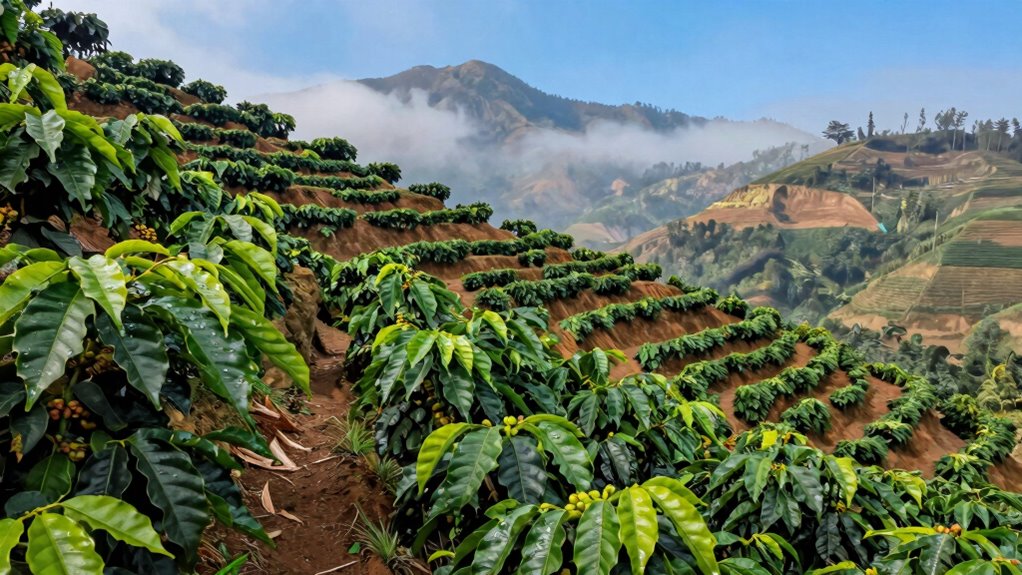

Altitude is a key factor in coffee growing because higher elevations create cooler temperatures and thinner air, which slow down ripening and promote complex flavors and brighter acidity. It also influences soil quality and microclimates, giving beans unique characteristics. While growing at high altitudes presents challenges like frost and rocky soils, these conditions lead to distinctive, high-quality coffee. To discover how these factors shape the coffee you enjoy, keep exploring beyond the surface.
Key Takeaways
- Higher altitudes create cooler temperatures that slow bean ripening, promoting complex flavors and higher acidity.
- Mountain terroir, including soil and microclimate, uniquely influences coffee’s taste and aromatic profile.
- Altitude causes beans to develop thicker skins and denser structures, enhancing flavor and quality.
- Cooler temperatures at high elevations extend growth periods, allowing for more nuanced flavor development.
- Mountain-grown coffee benefits from environmental stresses that contribute to distinct, high-quality characteristics.

Peak Performance High Altitude Organic Coffee – Fair Trade, Low Acid, Non GMO, and Beans Full of Antioxidants – Medium Roast Smooth Tasting USDA Certified Organic Whole Bean Coffee Bag 12 oz
Fair Trade – Low Acid – USDA Certified Organic – Single Origin – High Altitude. If We Could…
As an affiliate, we earn on qualifying purchases.
As an affiliate, we earn on qualifying purchases.
Why Altitude Is a Key Factor in Coffee Quality
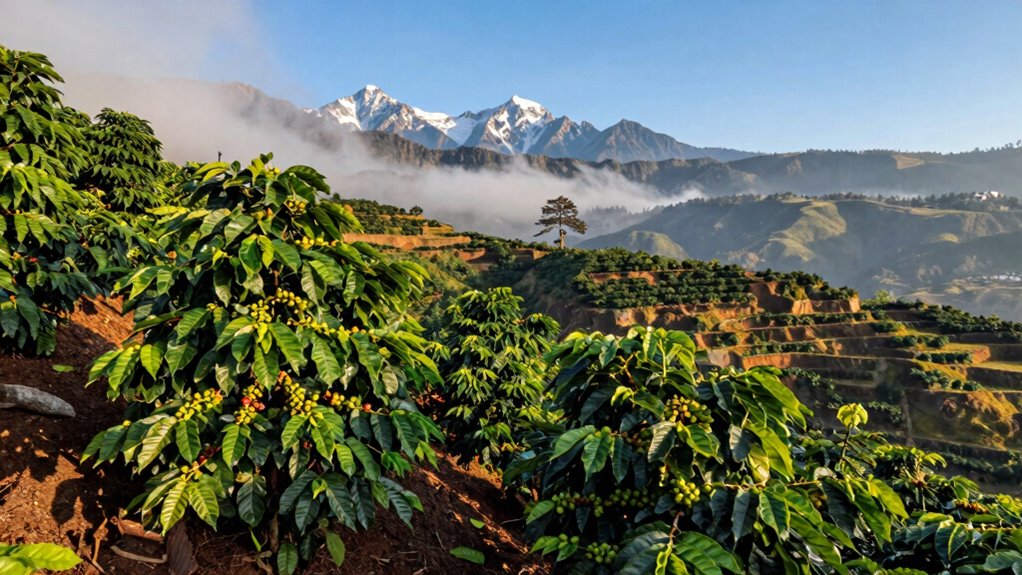
Altitude plays a essential role in determining coffee quality because it directly influences the growing environment. When you grow coffee at higher elevations, the plants adapt to cooler temperatures and thinner air, enhancing their development through altitude adaptation. This process results in beans with more complex flavors and better acidity. The mountain terroir, including soil composition and microclimate, also shapes the coffee’s unique characteristics. As you move up the mountains, the distinct combination of altitude and terroir creates ideal conditions for slow, even ripening. This slow maturation allows the beans to develop richer, more nuanced flavors. Additionally, higher altitude environments often promote microclimate conditions that are beneficial for coffee cultivation. These specific conditions also encourage slow ripening, which is crucial for flavor development. The effects of altitude on coffee physiology further enhance the beans’ overall quality and profile. Higher elevations can also influence disease resistance, making the plants healthier and more resilient. Ultimately, the higher the altitude, the more pronounced the coffee’s brightness, clarity, and depth become, making altitude a essential factor in quality coffee production. Altitude influences various aspects of the coffee’s growth environment, further contributing to its overall quality and distinctive profile.

Low Acid Organic Coffee – Whole Bean, Mold-Free & Stomach Friendly by Java Planet, Guatemalan Single Origin Coffee, Medium Roast, Smooth Full Flavored, Smithsonian Bird Friendly, 1LB Bag
Our Second Most Popular Low Acid Coffee! This single-origin Guatemala coffee is grown in the Huehuetenango region. It…
As an affiliate, we earn on qualifying purchases.
As an affiliate, we earn on qualifying purchases.
How High Elevations Influence Coffee Plant Growth
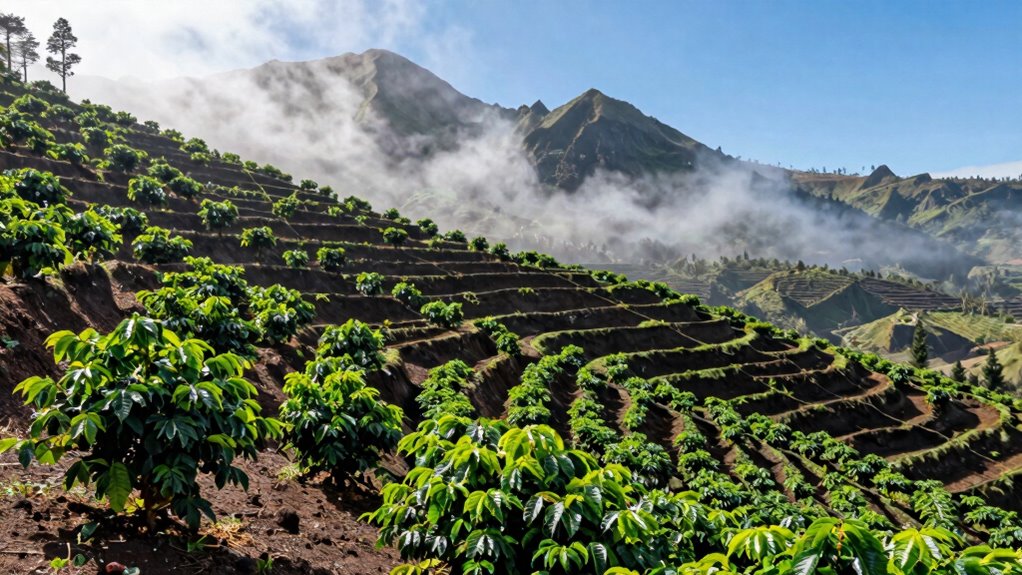
As you move to higher elevations, coffee plants experience significant changes in their growth environment that directly impact their development. At higher altitudes, plants undergo altitude adaptation, which helps them thrive despite cooler temperatures and increased sunlight. Mountain microclimates create unique growing conditions, influencing soil drainage, humidity, and temperature fluctuations. These microclimates often result in slower growth rates, but they also produce denser, more complex beans. Cooler temperatures at high elevations slow down the plant’s metabolism, leading to a longer maturation period. This extended time allows the beans to develop richer flavors. Additionally, the microclimate variations at different altitudes contribute to the unique characteristics found in high-elevation coffee. Recognizing how altitude influences environmental factors can deepen appreciation for coffee quality, as well as the environmental adaptations that enable these plants to thrive in challenging conditions. Understanding how these environmental factors influence plant adaptation can deepen appreciation for coffee quality and the complexity of high-altitude coffee.

Peak Performance High Altitude Organic Coffee – Fair Trade, Low Acid, Non GMO, and Beans Full of Antioxidants – Medium Roast Smooth Tasting USDA Certified Organic Ground Coffee Bag 12 oz
Fair Trade – Low Acid – USDA Certified Organic – Single Origin – High Altitude. If We Could…
As an affiliate, we earn on qualifying purchases.
As an affiliate, we earn on qualifying purchases.
The Effect of Altitude on Coffee Bean Development and Ripening
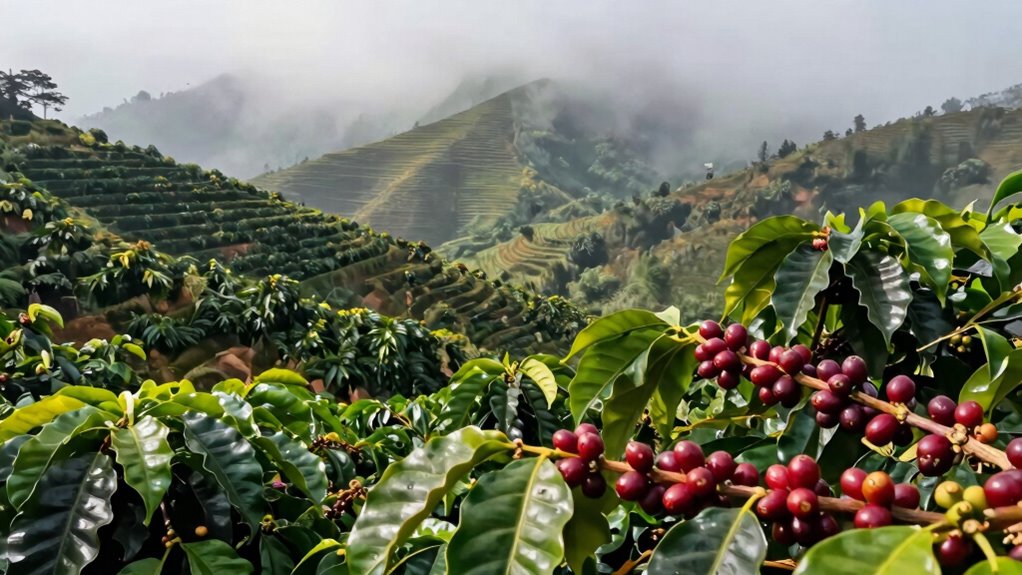
Higher elevations profoundly influence how coffee beans develop and ripen. The altitude effects cause beans to mature more slowly, allowing complex flavors to develop. You’ll notice that beans grown at higher altitudes tend to have:
- Slower ripening – giving beans more time to develop nuanced flavors.
- Enhanced acidity – resulting from cooler temperatures at higher elevations.
- Thicker bean skins – protecting beans during slower growth.
- More vibrant aroma profiles – as prolonged development intensifies aromatic compounds.
These factors combine to shape the quality and character of the final coffee. Understanding how altitude affects bean ripening helps you appreciate why beans from high elevations often have a brighter, more complex flavor profile. Altitude effects are key to producing distinctive, high-quality coffees, and they also influence bean maturation processes that contribute to flavor development. Additionally, climate variations at different elevations further impact the overall quality and characteristics of the coffee beans, with temperature fluctuations playing a significant role in coffee flavor profiles.

Mont Coffee Ecuador Single Origin Manabí — 100% Arabica Specialty Ground Coffee, Bolivar-Ilusion Farm, Pacific Coast Micro-Climate, Medium-Dark Roast, Citrus Walnut Clove Notes, 12 oz Bag
SINGLE ORIGIN MANABÍ, ECUADOR — Sourced exclusively from the Bolivar–Ilusion farm on Ecuador's sunlit Pacific Coast, where hand-picked…
As an affiliate, we earn on qualifying purchases.
As an affiliate, we earn on qualifying purchases.
How Temperature and Climate at Altitude Impact Coffee Flavor
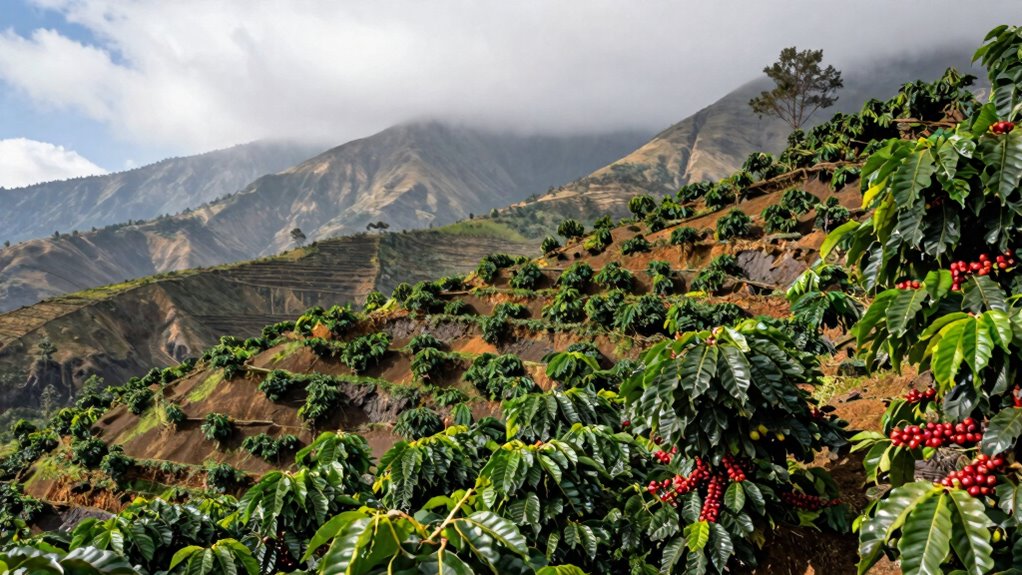
The temperature and climate conditions at elevated altitudes play a crucial role in shaping coffee flavor. Cooler temperatures slow bean maturation, allowing complex sugars and acids to develop fully. Microclimate variations, such as shade or wind exposure, further influence flavor profiles, adding brightness or body. Soil mineral content also impacts taste, as mineral-rich soils enhance acidity and nuance. Understanding these factors helps you appreciate the unique qualities of mountain-grown coffee. Additionally, nanotechnology is being explored to improve soil health and crop resilience in coffee plantations. These technological advancements can modify soil mineral content, potentially leading to more consistent and desirable flavor profiles. Moreover, microclimate variations create micro-environmental conditions that impact taste and aroma. These subtle differences can lead to distinctive coffee characteristics, making each high-altitude batch unique. Recognizing how climate and altitude influence coffee growth allows growers to optimize their cultivation practices for flavor development. The influence of altitude on microclimates can vary significantly between regions, further diversifying flavor profiles. Below is a quick comparison:
| Microclimate Variations | Soil Mineral Content |
|---|---|
| Affect shade and airflow | Influence acidity and flavor |
| Impact temperature stability | Influence mineral uptake by roots |
| Can enhance brightness | Alter mineral uptake by roots |
| Create unique micro-environments | Shape overall coffee character |
What Makes Mountain-Grown Coffee Unique?
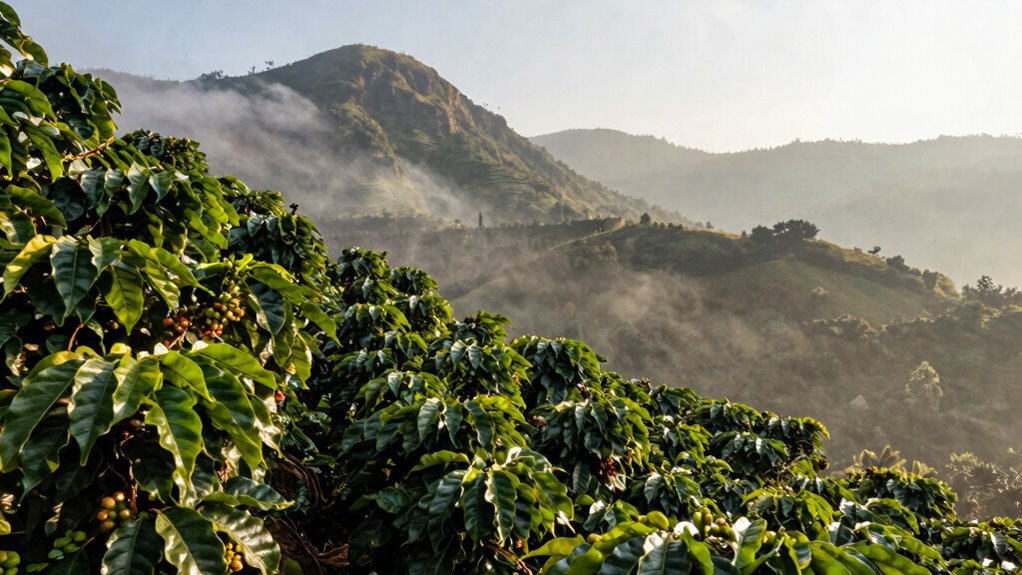
Mountain-grown coffee stands out because its unique environment influences every stage of the growing process. The altitude adaptation of coffee plants creates distinct flavors and qualities. Mountain microclimates provide specific conditions that shape each batch. Here are four factors that make mountain-grown coffee special:
- Elevated altitude fosters slower ripening, intensifying flavor development.
- Microclimates vary, offering diverse growing conditions even within the same region.
- Cooler temperatures at high elevations preserve acidity and brightness.
- Soil composition in mountain areas enhances nutrient availability, enriching the beans. This soil diversity plays a crucial role in developing the complex flavor profiles of mountain-grown coffee.
- Additionally, the altitude adaptation of coffee plants contributes to their resilience and flavor profiles. These environmental factors also support the development of unique aroma characteristics in the beans.
- Recognizing these environmental influences helps coffee enthusiasts appreciate the distinct qualities of mountain-grown beans.
Challenges of Growing Coffee at High Altitudes

Have you ever wondered why growing coffee at high altitudes presents unique challenges for farmers? One key issue is altitude adaptation. Cooler temperatures slow the coffee’s growth, requiring patience and careful timing. You also need to take into account soil composition; high-altitude soils tend to be rocky and less fertile, demanding farmers to improve soil health through composting or fertilization. Additionally, the thinner air can affect plant respiration, making it harder for coffee plants to thrive. Frost risks increase, so you must implement protective measures like shading or canopy management. These factors mean high-altitude coffee farming demands more effort, precision, and understanding of environmental conditions. Successfully overcoming these challenges leads to the distinct, high-quality beans that mountain-grown coffee is known for.
The Future of Specialty Coffee and Mountain Farming
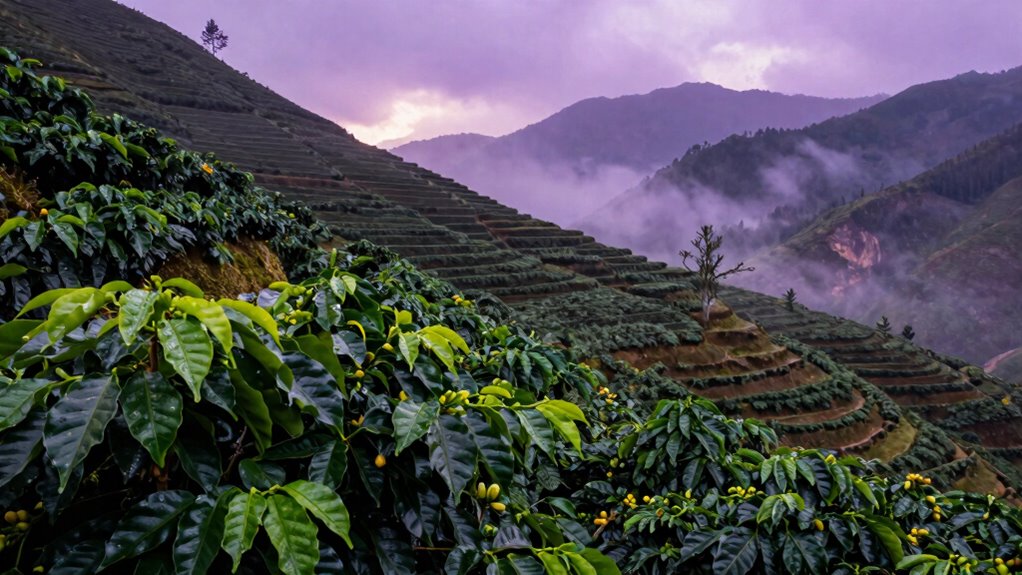
Advancements in farming techniques and a growing appreciation for unique flavor profiles are shaping the future of specialty coffee, especially in high-altitude regions. You’ll see more emphasis on altitude adaptation strategies that enhance bean quality while preserving mountain biodiversity. This approach guarantees sustainable practices that protect ecosystems and support local communities.
Here are four ways the future of mountain farming is evolving:
- Implementing innovative shade-growing methods to boost altitude adaptation.
- Promoting biodiversity to improve resilience and flavor complexity.
- Using precision agriculture to optimize resource use at higher elevations.
- Encouraging eco-friendly practices that maintain mountain ecosystems.
These trends aim to elevate specialty coffee’s uniqueness while safeguarding mountain environments for generations to come.
Frequently Asked Questions
How Does Altitude Affect Coffee Plant Resistance to Pests and Diseases?
Altitude influences your coffee plant’s resistance to pests and diseases by creating cooler, more stable temperatures that hinder pest adaptation and disease spread. Higher elevations often mean fewer pests and diseases, giving your plants a natural advantage. As pests struggle to adapt to the cooler climate, your coffee plants develop stronger disease resistance, resulting in healthier crops and better quality beans. This eco-friendly environment reduces the need for chemical interventions.
Are There Specific Coffee Varieties Better Suited for High-Altitude Growth?
Yes, certain coffee varieties adapt better to high-altitude growth. Arabica, for example, thrives in elevated regions due to its sensitivity to temperature and climate, making altitude impact essential for its development. You should select varieties specifically bred for altitude, as they offer better resilience, flavor profile, and yield in such environments. Understanding how altitude impacts coffee variety adaptation helps you optimize quality and sustainability in your coffee farming.
What Role Does Soil Composition at High Elevations Play in Coffee Quality?
You might think soil composition at high elevations impacts coffee quality, and you’re right. Fertile soils rich in minerals foster complex flavor profiles, elevating your coffee experience. High-altitude soils often contain unique mineral content, which influences bean development and acidity. These soils drain well, preventing overwatering, and allow roots to access essential nutrients, resulting in vibrant, aromatic coffees that stand out. So, soil plays a vital role in crafting exceptional high-altitude coffee.
How Does Altitude Influence the Harvesting and Processing Methods?
Altitude impacts your coffee harvest timing by causing it to occur later, as beans ripen more slowly at higher elevations. You’ll need to adapt processing methods accordingly; for example, you’ll often favor wet processing to highlight the beans’ bright, complex flavors. This delayed harvest allows you to pick beans at peak ripeness, but requires careful planning and flexibility in your processing techniques to guarantee the best quality.
Can Altitude-Related Flavor Profiles Be Replicated in Lower-Altitude Coffees?
You can’t perfectly replicate altitude flavor profiles in lower-altitude coffees because climate adaptation influences the unique characteristics found at higher elevations. Altitude adds distinct acidity and complex flavor notes that are hard to mimic elsewhere. While adjusting processing methods and blending can offer some similarities, the true depth of altitude flavor remains tied to the specific climate and environment of high-altitude regions.
Conclusion
So, savor the significance of soaring heights and steep slopes in shaping superb, specialty coffee. By embracing the benefits of bold mountains and balancing the challenges of high altitudes, you can experience extraordinary flavors and unique qualities. Remember, the magic of mountain-grown coffee lies in its meticulous mountain mastery—making each cup a mesmerizing, complex creation. Elevate your coffee journey by appreciating altitude’s amazing impact, and let every sip serve as a spectacular showcase of nature’s nuanced nuances.