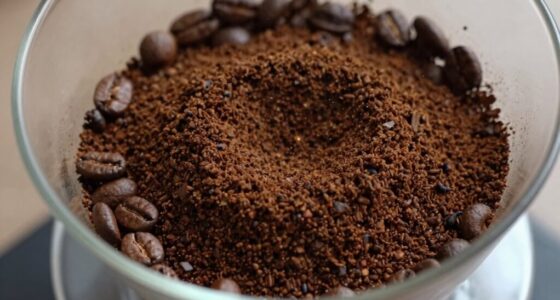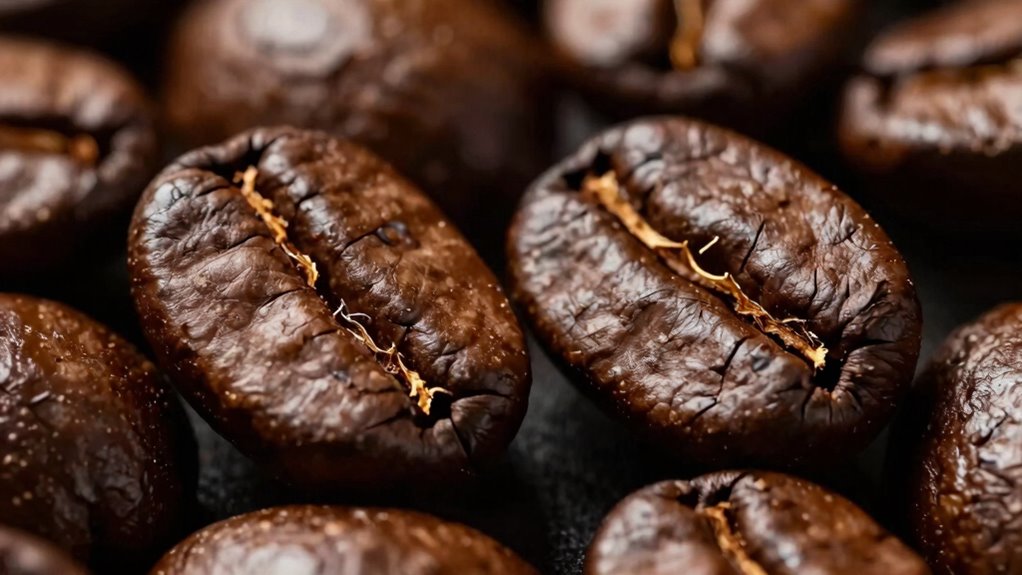

First crack happens around 196°C (385°F) and signals the beans’ expansion and steam release, marking the start of light roasts. Second crack occurs near 224°C (435°F), indicating deeper roasting and internal breakdown, creating darker, more complex flavors. You’ll hear it as a softer crack and see surface oils. Monitoring these cracks helps you control roast level and flavor development. Keep exploring to learn how to spot and manage these essential cues perfectly.
Key Takeaways
- First crack occurs around 196°C (385°F), signaling the start of light roasting with bean expansion and steam release.
- Second crack happens around 224°C (435°F), indicating deeper roasting with internal breakdown and surface oil emergence.
- Cracks are audible popping sounds caused by internal gas pressure and structural changes in the beans.
- Visual cues include bean expansion, surface splitting, and oil appearance, helping identify roast stages.
- Monitoring cracks helps control flavor development, prevent over- or under-roasting, and achieve desired roast profiles.
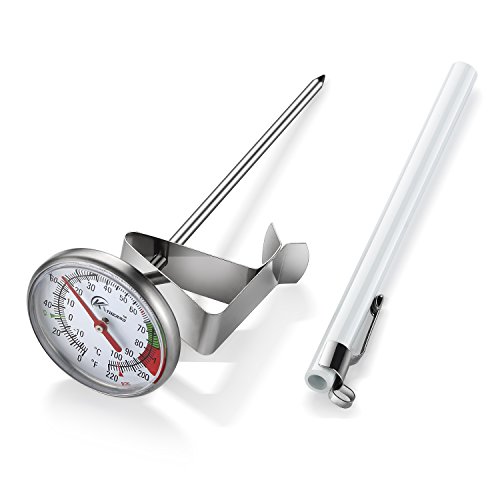
KT THERMO Instand Read 2-Inch Dial Thermometer,Best for The Coffee Drinks,Chocolate Milk Foam
DESIGN:Multi-stage design of the fixed clip, adjust the thermometer read the location of the disk surface to facilitate…
As an affiliate, we earn on qualifying purchases.
As an affiliate, we earn on qualifying purchases.
What Are First and Second Crack in Coffee Roasting?
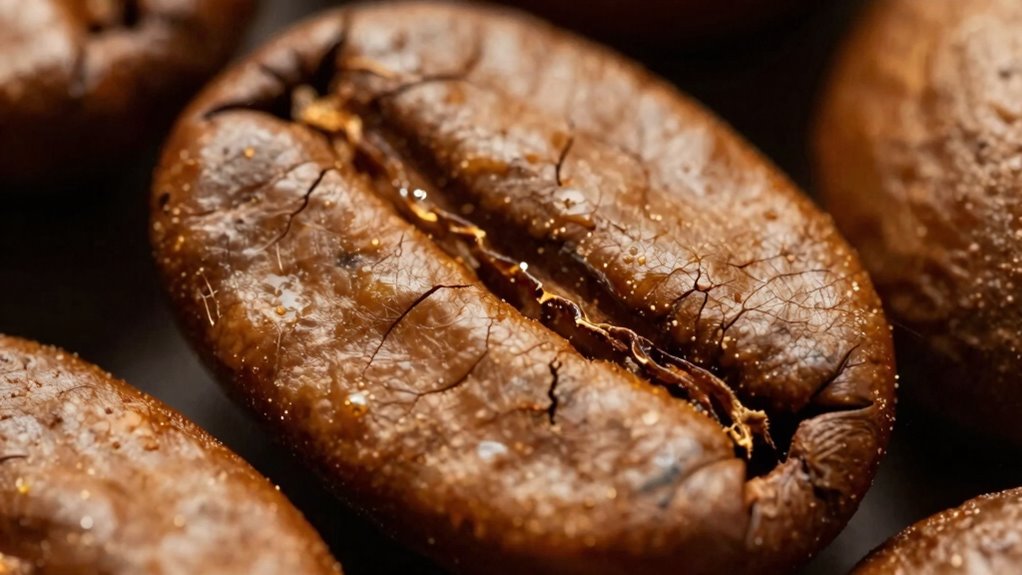
Have you ever wondered what those popping sounds are during coffee roasting? Those are the first and second cracks, key stages influenced by coffee bean genetics and roasting equipment types. The first crack happens when the beans reach about 196°C (385°F), causing their internal pressure to release, creating audible cracks. This stage marks the beginning of light roast levels. The second crack occurs around 224°C (435°F), signaling higher heat exposure and deeper roasting. Coffee bean genetics affect how beans react during these cracks, influencing flavor development. Different roasting equipment types, like drum roasters or fluid bed roasters, impact how evenly heat is applied, affecting crack timing. Roasting stages are crucial for understanding how to control the flavor profile, and understanding these cracks helps you control roast levels and activate the beans’ full flavor potential. Additionally, the chemical changes that happen during these cracks are vital for developing the desired aroma and taste. Recognizing the crack sounds can also help roasters fine-tune their process for consistent results.

JIAWANSHUN Electric Coffee Bean Roaster for Home Use 1.1lb Capacity Temperature Control (0-240℃), Non-Stick, Perfect for Beginner Roasting, 1200W, 110V
Premium Quality & Easy Cleaning: This 110V/1200W electric coffee roaster features a non-stick chassis for effortless cleaning. The…
As an affiliate, we earn on qualifying purchases.
As an affiliate, we earn on qualifying purchases.
How Do First and Second Cracks Develop During Roasting?
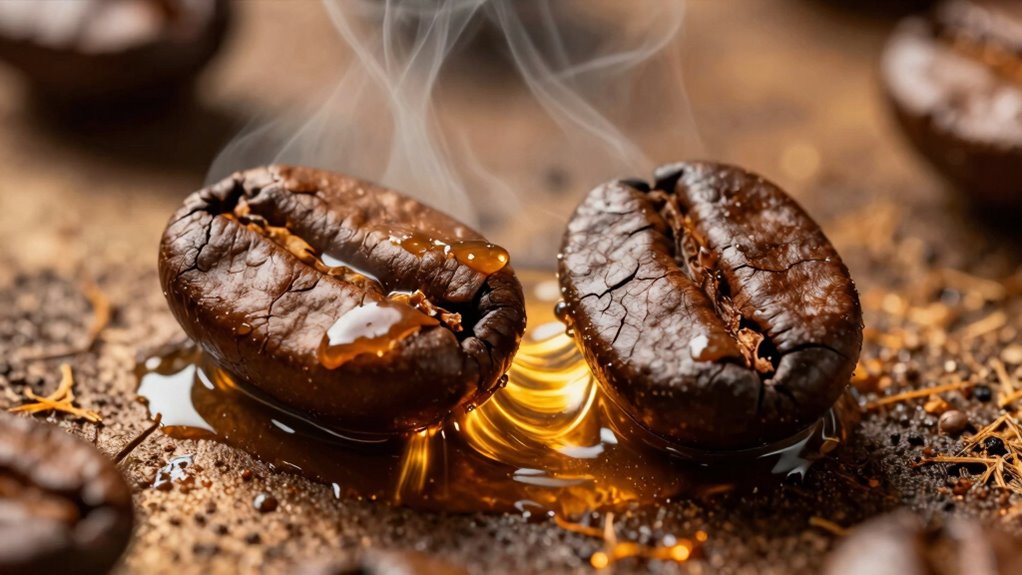
As your beans heat up, heat transfer causes internal gases to expand, creating pressure that eventually leads to cracking. These cracks mark key flavor development points and indicate changes in the bean’s structure. Understanding how heat and gases influence these cracks helps you control the roast for desired flavors. The development of these cracks is also influenced by the biodiversity of the coffee beans, as different varieties may react differently to heat.
Heat Transfer in Beans
Ever wondered how heat transfer causes the first and second cracks during coffee roasting? It all depends on how heat moves through the coffee bean structure via different heat transfer mechanisms. This process heats the beans unevenly, creating temperature gradients that lead to cracking.
Here’s how it works:
- Conduction transfers heat directly from the hot surface to the interior, warming the bean core.
- Convection circulates hot air around the beans, promoting even heat distribution.
- Radiation heats the surface, causing rapid temperature rise at the outer layers.
- As internal temperatures increase, the beans expand and internal pressure builds, leading to the first crack. Continued heat causes further changes, resulting in the second crack.
Expansion of Internal Gases
During roasting, internal gases within the coffee bean expand rapidly as heat causes the moisture and volatile compounds to vaporize. This expansion occurs within the coffee bean cellular structure, creating pressure that influences crack development. As gases build, the cellular walls weaken, leading to the first crack. The table below illustrates how the roasting process dynamics drive this expansion:
| Stage | Gas Behavior |
|---|---|
| Initial heating | Gases form slowly, cellular structure remains intact |
| Expansion phase | Gases increase rapidly, pressure rises |
| Approaching first crack | Cellular walls weaken, gases exert more force |
| Post-first crack | Gases escape, cellular structure breaks |
Understanding this process highlights how internal gases push the bean toward cracks, shaping flavor and texture.
Cracks as Flavor Indicators
The first and second cracks serve as crucial indicators of a coffee roast’s development, directly signaling changes in flavor and texture. As the coffee heats, the bean structure changes, causing internal pressure that leads to cracking. The first crack marks the expansion of cell walls, releasing steam and signaling a light roast. The second crack occurs when the internal heat causes the bean’s structure to break down further, producing a darker roast with richer flavors.
To monitor these cracks effectively, consider your roasting equipment considerations, such as temperature control and airflow. Recognizing these cracks helps you determine the roast level and flavor profile.
- First crack signals the start of development.
- Second crack indicates a darker roast.
- Cracks reflect internal pressure changes.
- Proper equipment enhances crack detection.
coffee roasting sound indicator
As an affiliate, we earn on qualifying purchases.
As an affiliate, we earn on qualifying purchases.
How Can You Recognize First and Second Cracks While Roasting?

As you roast, you’ll notice the first crack by the visual expansion of the beans and a distinct popping sound. Paying attention to the temperature and timing helps confirm when these cracks occur. Once you hear the second crack or see signs of increased heat, you can better control your roast to achieve your desired profile.
Visual Crack Indicators
When roasting coffee beans, visual cues are one of the most reliable ways to identify the first and second cracks. Pay attention to changes in coffee bean morphology; during the first crack, beans expand and produce a crack sound, often accompanied by a visible surface tension. The second crack appears as smaller, more rapid cracks, indicating deeper internal development. To recognize these signs:
- Look for audible popping sounds combined with visible surface splitting.
- Observe the beans for surface oil appearance, especially after the second crack.
- Check for expansion or cracks in the beans’ shells, a sign of internal pressure.
- Maintain roasting equipment regularly to ensure consistent heat and prevent uneven cracking.
These visual indicators help you better control the roast and preserve bean quality.
Audible Cracking Sounds
Paying attention to the sounds during roasting provides immediate and accurate cues about the beans’ internal development. The first crack produces a sharp, popping sound as the bean’s moisture turns to steam and the shell cracks open. This sound signals that the beans have reached a critical point in roasting duration, with moisture content decreasing rapidly. The second crack follows, characterized by a softer, crackling noise, indicating further internal changes and the start of bean oil release. Recognizing these sounds helps you gauge roasting progress without relying solely on visual cues. As the bean moisture diminishes, the audible cracks become more distinct, allowing you to time your roast precisely. Listening carefully guarantees you can differentiate between the first and second cracks, optimizing flavor development and roast level.
Temperature and Timing
Recognizing the first and second cracks during roasting hinges on understanding the relationship between temperature, timing, and auditory cues. As the coffee bean structure changes, cracks produce distinct sounds that signal roast levels.
- The first crack occurs around 370°F–410°F, where beans expand and release steam, indicating light to medium roasts.
- The second crack happens between 440°F–460°F, showing a more brittle structure, signaling darker roasts.
- Pay attention to the crack sounds—first crack is a sharp popping, while second crack is more subdued and rapid.
- Timing is key; the first crack typically occurs after 4–6 minutes, and the second crack follows soon after, guiding your roast level decisions.
These cues help you perfect roast profiles and achieve desired flavor profiles.
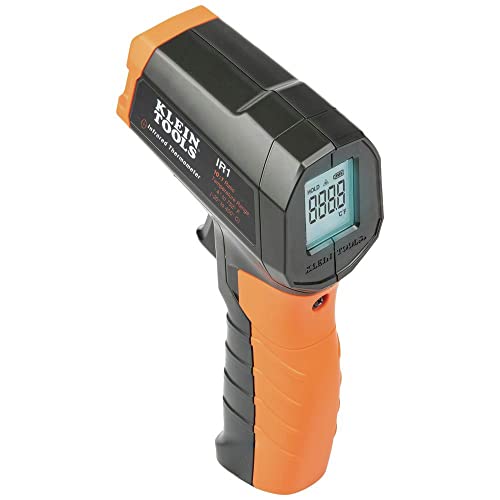
Klein Tools IR1 Infrared Thermometer, Digital Laser Gun is Non-Contact Thermometer with a Temperature Range -4 to 752-Degree Fahrenheit
PRECISE TEMPERATURE MEASUREMENT: Optical resolution (distance-to-spot) of 10:1 ensures accurate temperature readings from a distance
As an affiliate, we earn on qualifying purchases.
As an affiliate, we earn on qualifying purchases.
What Are the Main Differences Between First and Second Crack?
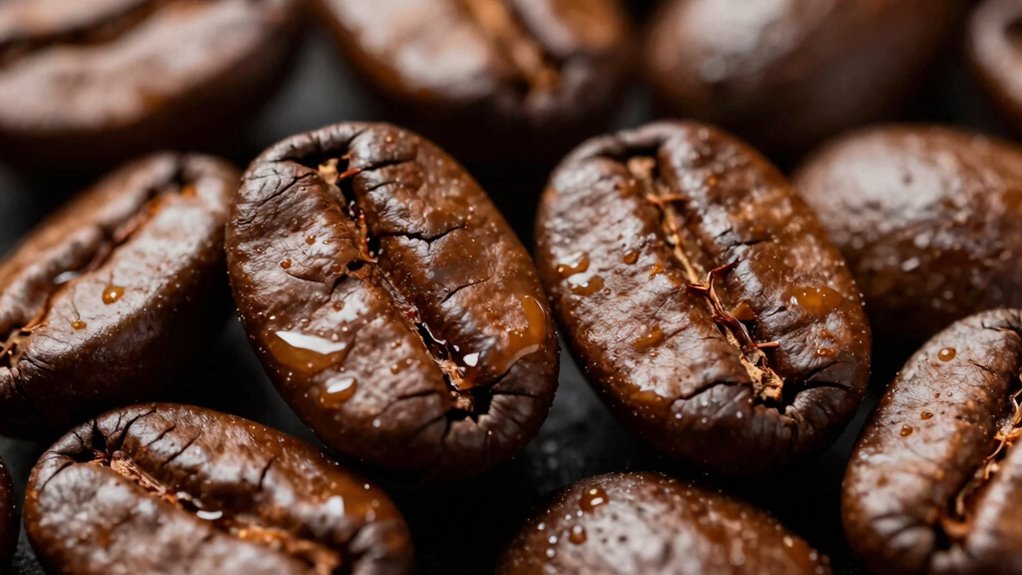
What sets the first crack apart from the second crack in coffee roasting? The first crack signals the beans reaching a light roast, where they crack open as internal pressure escapes. The second crack happens at a darker roast stage, producing a series of smaller, more rapid cracks. The main difference lies in their intensity and what they mean for bean development. During the first crack, beans are still relatively fresh, so proper coffee storage is key to preserving bean freshness and flavor. In contrast, the second crack indicates a more roasted, oilier state, affecting flavor complexity. Recognizing these cracks helps you control roast level, ensuring your beans develop the desired aroma and taste while maintaining their freshness.
Why Do Roasters Monitor These Cracks During the Roast?
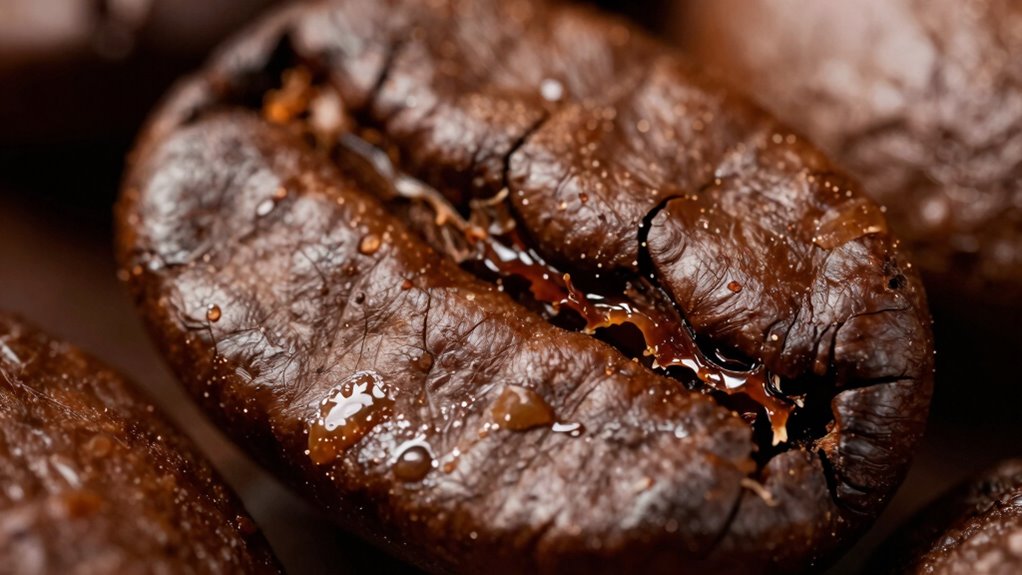
Monitoring the cracks during roasting helps you gauge the beans’ development and prevents over- or under-roasting. By observing these cracks, you get insight into changes in coffee bean morphology and how they respond to heat. This is especially important with different roasting equipment, as each machine affects the roast differently. Here are four reasons why you should watch these cracks:
- Detect the right stage of roast for desired flavor.
- Prevent over-roasting by stopping before undesirable char.
- Adjust heat to optimize bean expansion and aroma.
- Guarantee consistency in future roasts by tracking crack timing.
- Recognizing these cracks aligns with understanding heat application and how it influences the roasting process.
Keeping an eye on cracks helps you control the process precisely, resulting in better-tasting coffee with consistent quality.
How Do Cracks Affect the Flavor of Your Coffee?
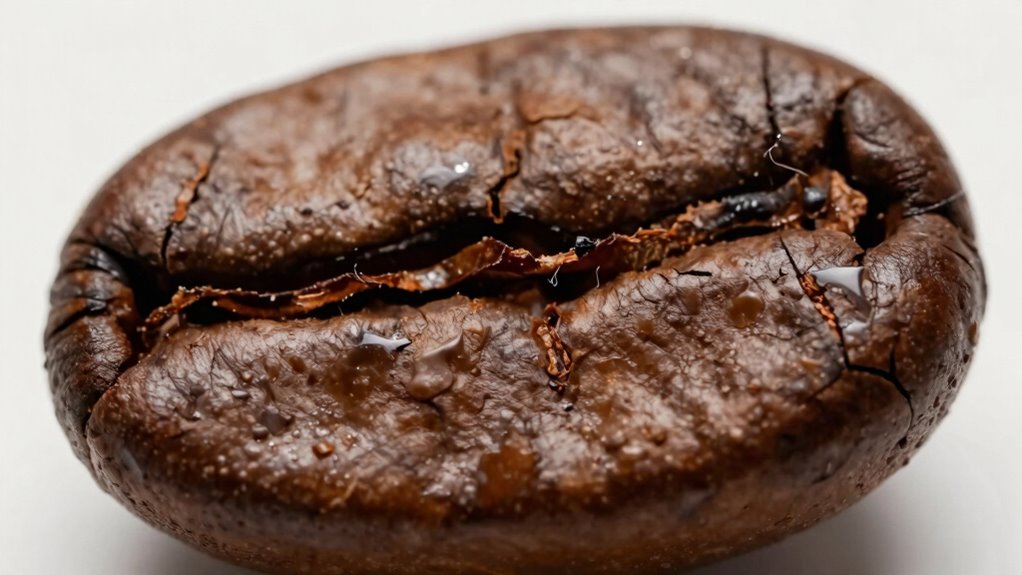
The cracks that occur during roasting signal important chemical and physical changes in the beans, directly influencing their flavor profile. These cracks reveal how heat transforms coffee bean genetics, revealing unique flavors associated with specific varieties. When you understand these cracks, you can better control the roasting process to enhance desired flavors. The second crack, in particular, indicates a more developed roast that can introduce smoky or caramel notes, altering the coffee’s taste. Your choice of roasting equipment selection also plays a role, as different machines respond uniquely to cracking signals, affecting consistency and flavor development. By paying attention to these cracks, you guarantee that your roast maximizes the beans’ inherent qualities, resulting in a more balanced, flavorful cup. Recognizing the cracking signals allows for more precise control over the roast level, ensuring optimal flavor extraction. Additionally, understanding the chemical changes during cracking can help roasters fine-tune their techniques to achieve specific flavor profiles, especially as these changes are closely linked to chemical reactions occurring within the beans during roasting. Knowing how heat transfer impacts cracking can further improve your ability to predict and control the roast progression. Moreover, awareness of chemical and physical transformations can lead to a more consistent roasting process and better flavor development.
Tips for Spotting and Managing Cracks During Roasting

Spotting and managing cracks during roasting requires your full attention and quick reactions. Pay close attention to coffee bean morphology, as cracks signal key stages in roasting. To stay ahead:
- Watch for visual cues—cracks often appear as sudden surface splits—and listen for the popping sounds indicating first and second cracks.
- Adjust your roasting profile promptly to prevent overdevelopment or underdevelopment, based on the cracks’ timing.
- Maintain your roasting equipment regularly; clean and calibrate to ensure consistent heat transfer, which affects crack development.
- Use a thermometer to monitor bean temperature, helping you predict cracks before they happen and manage the roast precisely. Understanding crack development is essential for achieving the desired roast level and flavor profile.
- Recognizing the pattern of cracks can also provide insights into the chemical changes occurring within the beans, guiding you to refine your roasting technique. Additionally, developing an awareness of thermal expansion can help you anticipate and control crack formation more effectively.
- Developing a deeper understanding of heat transfer can improve your ability to manage cracks and achieve consistent roasts. Being aware of energy transfer dynamics can further enhance your control over the roasting process.
Common Mistakes When Interpreting Roasting Cracks and How to Avoid Them
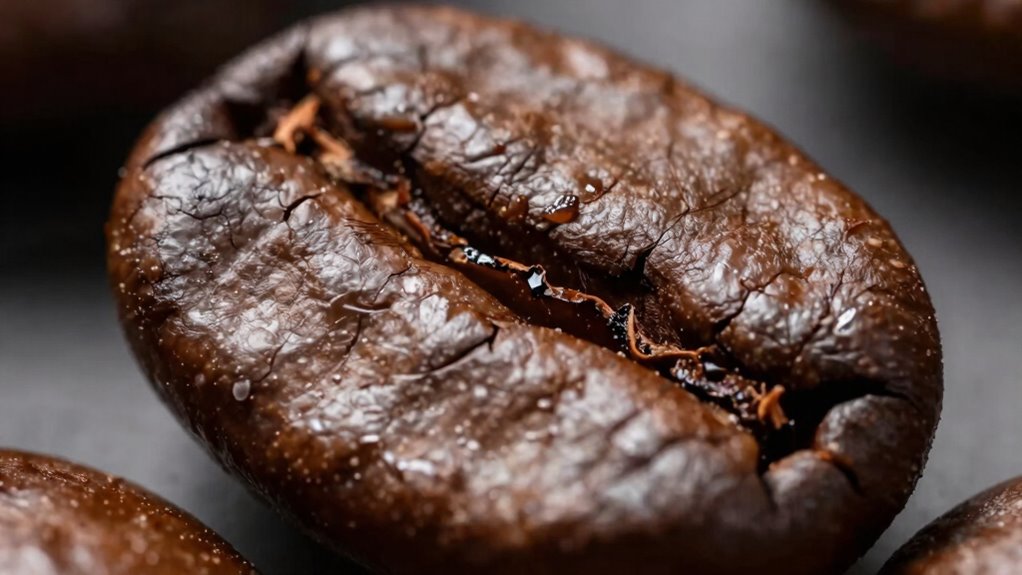
Misinterpreting roasting cracks is a common pitfall that can throw off your entire roast. Many roasters mistake the first crack for the end of the roast when, in reality, it indicates a light roast level with significant bean expansion. Similarly, confusing the second crack with the end of roasting can lead to over-roasting or under-roasting. To prevent these mistakes, pay close attention to the sound and visual cues, not just the timing. Remember that bean expansion happens gradually, and cracks may vary depending on bean type and roast profile. Monitoring both the crack sounds and the visual cues, like color and bean size, helps ensure you hit your desired roast level without misjudging the cracks.
Frequently Asked Questions
Can Different Coffee Bean Types Have Varying Crack Characteristics?
Yes, different coffee bean types can have varying crack characteristics due to differences in coffee bean integrity and bean shell properties. You’ll notice some beans crack more loudly or sooner during roasting, influenced by their unique structure and moisture content. These variations affect how beans expand and release gases, ultimately impacting flavor development. Understanding these differences helps you tailor your roasting process for ideal flavor and consistency.
How Does Ambient Temperature Influence Crack Development?
Ever wondered how ambient temperature influences crack development? When temperature stability drops, fluctuations can cause uneven heat transfer, making cracks develop unpredictably. Higher humidity affects the beans’ moisture content, impacting how they expand and crack. You’ll find that stable temperatures and controlled humidity minimize surprises during roasting, leading to more consistent crack development. Isn’t it fascinating how such environmental factors shape your coffee’s final flavor and texture?
Are Cracks Visible in All Roasting Equipment Types?
Cracks are visible in most roasting equipment types because they relate to the bean’s roast color and expansion during roasting. As beans heat, they expand, causing cracks that signal different roast stages. While equipment like drum roasters or air roasters reveal these cracks clearly, some smaller or enclosed devices might hide them. Still, visible cracks are generally a reliable indicator of the roast’s progress, especially for monitoring bean expansion and color development.
How Do Crack Timings Affect Roast Level Classification?
Timing transforms taste, so you should track crack timings to tailor roast levels. As you roast, earlier cracks produce lighter roasts, emphasizing delicate flavor development and maintaining roast consistency. Later cracks result in darker roasts, deepening flavor profiles but risking uneven results. By monitoring crack timings, you control flavor development and guarantee consistent roasts, making your coffee both flavorful and uniform, whether you aim for light, medium, or dark profiles.
Can You Resume Roasting After Hearing the Cracks?
Yes, you can resume roasting after hearing the cracks, but it’s important to take into account cooling interruption. Pausing can help control roast development and maintain roast consistency. If you decide to continue, monitor closely to avoid over-roasting. Resuming can be useful for achieving specific roast levels, but keep in mind that interruptions may impact flavor development. Always note crack timings for consistent results in future roasts.
Conclusion
Understanding first and second cracks is like revealing the secret language of coffee roasting. When you listen closely and watch carefully, you’ll master these signals, guiding your beans to perfection. Remember, each crack is a heartbeat of your roast—an opportunity to shape flavor and aroma. Embrace the journey, for in those fleeting moments, you hold the power to craft a cup that stirs the soul and awakens the senses.