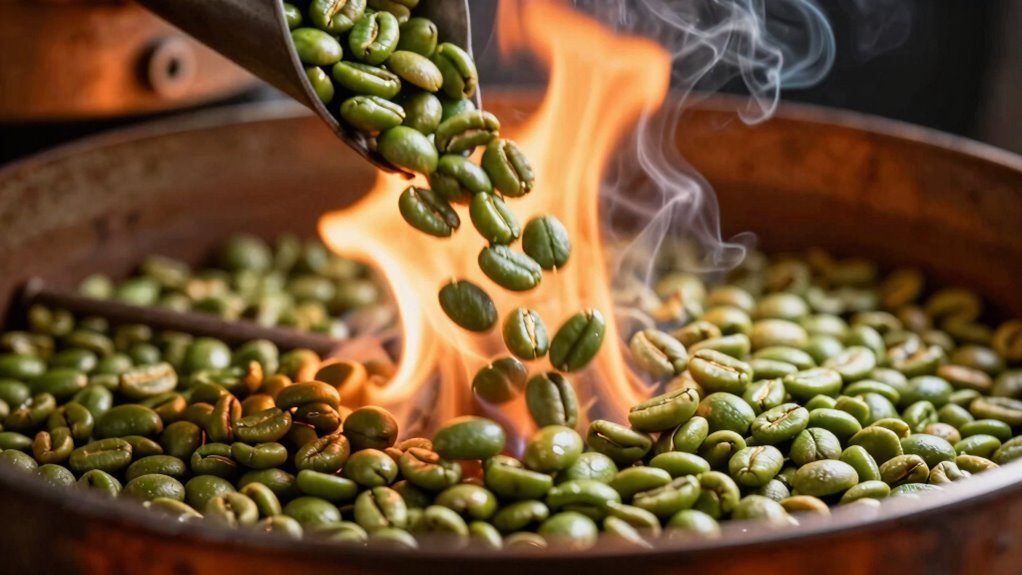

During coffee roasting, you apply heat to green beans, causing physical and chemical changes that develop flavor and aroma. As the beans heat up, moisture evaporates, and they undergo reactions like Maillard and caramelization, creating new compounds and color. Different roasting stages, from first to second crack, influence taste, from bright brightness to bold richness. Controlling temperature and time is key to achieving your desired profile, and exploring further can help you optimize your roast for perfect flavor.
Key Takeaways
- Green coffee beans undergo chemical reactions like Maillard reactions and caramelization, developing aroma, flavor, and color.
- The roasting process includes drying, first crack, and second crack stages, indicating increasing roast levels.
- Heat causes moisture evaporation, internal pressure release, and the development of volatile compounds that influence aroma.
- Different roast levels (light to dark) alter acidity, body, and flavor profiles, from fruity and bright to smoky and bold.
- Proper control of temperature and time ensures consistent flavor development and prevents over- or under-roasting.
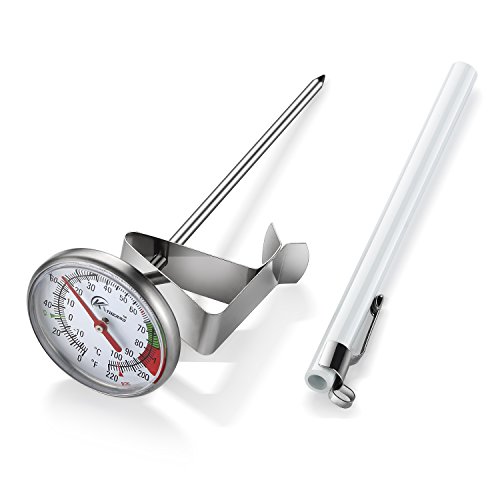
KT THERMO Instand Read 2-Inch Dial Thermometer,Best for The Coffee Drinks,Chocolate Milk Foam
DESIGN:Multi-stage design of the fixed clip, adjust the thermometer read the location of the disk surface to facilitate…
As an affiliate, we earn on qualifying purchases.
As an affiliate, we earn on qualifying purchases.
What Is Coffee Roasting and Why Does It Matter?
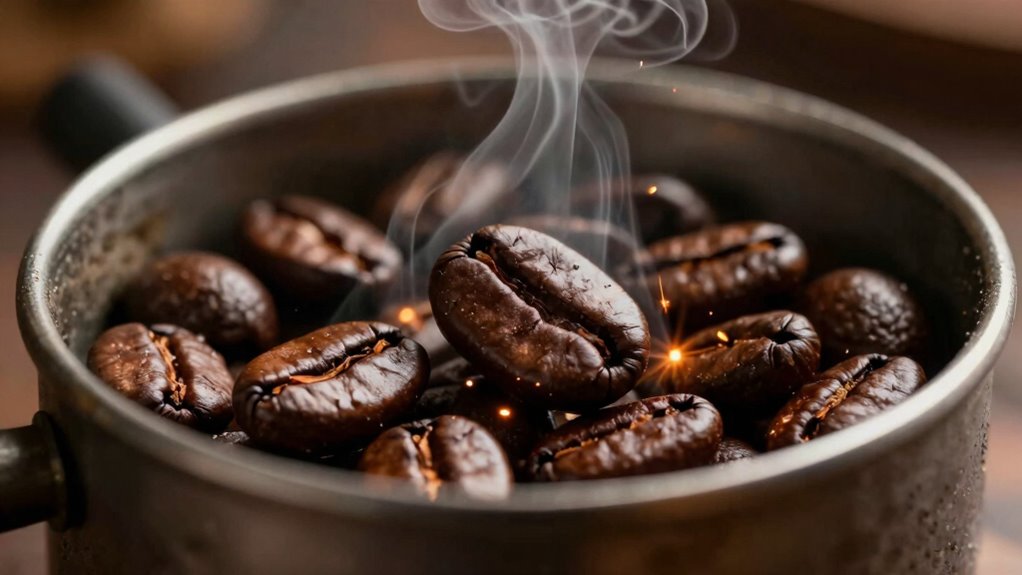
Have you ever wondered what transforms green coffee beans into the aromatic, flavorful beans you brew? It all starts with understanding what coffee roasting is and why it matters. Coffee roasting involves applying heat to green beans, revealing complex flavors and aromas. The coffee bean origin, whether from Ethiopia, Colombia, or Sumatra, influences the beans’ natural characteristics, which roasting highlights and enhances. Roasting terminology like “light roast,” “medium roast,” and “dark roast” describes how long and at what temperature the beans are roasted, affecting taste and body. This process is vital because it develops the beans’ unique flavor profiles, making each cup of coffee distinctive. Roasting is both an art and a science, shaping the coffee’s final flavor experience. Roasting techniques play a crucial role in how these flavors are brought out and balanced. Understanding the science behind roasting helps roasters optimize heat application to achieve desired flavor characteristics. Additionally, mastering the art of roasting allows for greater control over flavor development and consistency. Recognizing the role of temperature in roasting is essential for achieving specific flavor outcomes and avoiding undesirable results.
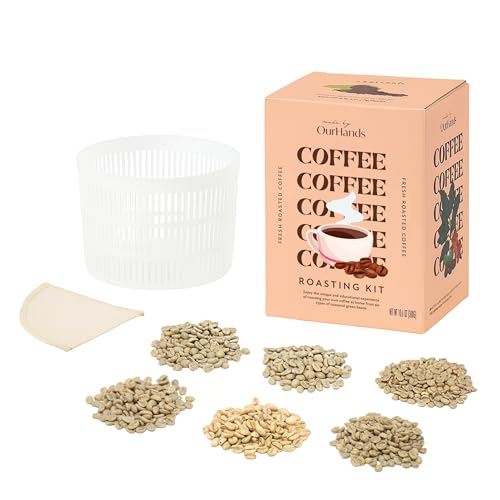
Coffee Roasting Kit by OurHands – Learn to Roast Green Coffee at Home with Your Oven – Includes 6 Varieties of Unroasted Coffee, Detailed Instructions and Coffee Roasting Tools
DIY COFFEE ROASTING KIT: Roast green coffee beans at home with our Coffee Roasting Kit. Ideal for coffee…
As an affiliate, we earn on qualifying purchases.
As an affiliate, we earn on qualifying purchases.
How Do Coffee Beans Go Through Different Roasting Stages?

As you watch the roasting process, you’ll notice the beans go through a drying phase where moisture evaporates. Next, the development of flavor profiles begins, shaped by temperature and time, culminating in the first and second cracks that signal key stages. Understanding these steps helps you grasp how roast levels influence taste and aroma. Additionally, just as air quality can be improved with specific products, the aroma released during roasting can be enhanced through proper techniques to enrich your sensory experience.
Drying Phase Overview
During the drying phase of coffee roasting, the beans undergo a critical transformation as they lose moisture and develop their initial flavor profile. As heat transfer begins, your beans’ moisture content drops, preventing uneven roasting. This stage is essential because it sets the foundation for the subsequent stages. You’ll notice the beans turn a light yellow and smell grassy. Here’s a quick overview:
| Stage | Key Process | Result |
|---|---|---|
| Moisture loss | Evaporation of water | Beans dry out, moisture drops |
| Heat transfer | Conducted from hot environment | Beans warm evenly, flavor begins to form |
| Color change | Slight yellowing | Initial flavor and aroma develop |
This phase guarantees consistent heat transfer, enabling the beans to move smoothly into the next roasting stages. Proper heat transfer during this phase ensures the beans develop a balanced flavor profile from the very beginning.
Development of Flavor Profiles
Once the beans pass the drying phase, their internal chemistry begins to change rapidly, shaping the complex flavors you experience in the final cup. During this stage, flavor extraction intensifies as heat causes chemical reactions that develop unique characteristics. As the roast progresses, aroma development becomes more pronounced, releasing enticing scents that signal the evolving flavor profile. The temperature rise triggers caramelization and Maillard reactions, which add sweetness and depth to the beans. You’ll notice subtle shifts in aroma and flavor, reflecting the beans’ transformation. This is the critical period where the beans acquire their distinctive qualities, balancing acidity, body, and aroma. By understanding these changes, you gain insight into how different roasting durations influence the final taste of your coffee.
First and Second Crack
After the beans undergo the development of flavor profiles, they reach key auditory cues that mark specific stages of roasting: the first and second cracks. The first crack signals the beans’ internal pressure release, producing a cracking sound as moisture escapes. This stage varies based on coffee bean genetics, which influence how quickly beans reach this point. As you monitor the cracks, it’s essential to maintain your roasting machine properly; clean equipment ensures consistent heat transfer and accurate timing. The second crack occurs at a higher temperature, indicating the beans are entering a darker roast stage. Recognizing these cracks helps you control the roast’s progression and achieve desired flavors. Staying attentive to these cues and maintaining your equipment guarantees a precise, high-quality roast every time. Proper roasting techniques also play a crucial role in developing the beans’ optimal flavor profile. Additionally, understanding the thermal changes during roasting can help you better anticipate each crack’s occurrence and refine your roasting process.

Electric Coffee Bean Roaster Machine for Home Use – 1500W Air Coffee Roaster with Adjustable Temperature & Timer, Built-In Chaff Collector & Air Circulation 100g Capacity Electric Coffee Roaster
Professional Home Coffee Roaster: Create café-quality coffee at home with this electric air coffee roaster. The 1500W heating…
As an affiliate, we earn on qualifying purchases.
As an affiliate, we earn on qualifying purchases.
What Chemical Reactions Create Flavor and Aroma?

As coffee beans heat up during roasting, a series of complex chemical reactions unfold that transform raw, green beans into the aromatic, flavorful brew we enjoy. These chemical transformations are central to flavor formation, shaping the unique profiles of each roast. During heating, sugars break down and undergo Maillard reactions with amino acids, creating new compounds responsible for aroma and color. Caramelization also occurs, adding sweetness and depth. Additionally, volatile compounds develop, releasing the familiar coffee aroma. These reactions produce a complex mix of chemicals that define the flavor and aroma of your coffee. The precise interplay of these reactions determines whether your brew is bright, bold, or balanced, making the roasting process a delicate art of chemical transformation essential for creating the perfect cup. Understanding chemical reactions helps roasters optimize the process for desired flavor profiles, including controlling temperature and timing to influence specific flavor development processes. Recognizing the roles of different chemical transformations enables more precise adjustments during roasting for tailored results. Moreover, awareness of these processes allows roasters to fine-tune the roasting curve for optimal flavor extraction. This understanding also guides roasters in managing heat transfer effectively to achieve consistent results across batches.

3 Lb, Single Origin Unroasted Green Coffee Beans, Specialty Grade From Single Nicaraguan Estate, Direct Trade (Caturra Varietal)
Specialty Unroasted Beans: Premium Arabica green beans from the most recent harvest of our finest micro-lots at our…
As an affiliate, we earn on qualifying purchases.
As an affiliate, we earn on qualifying purchases.
How Do Roast Levels Change the Taste of Your Coffee?
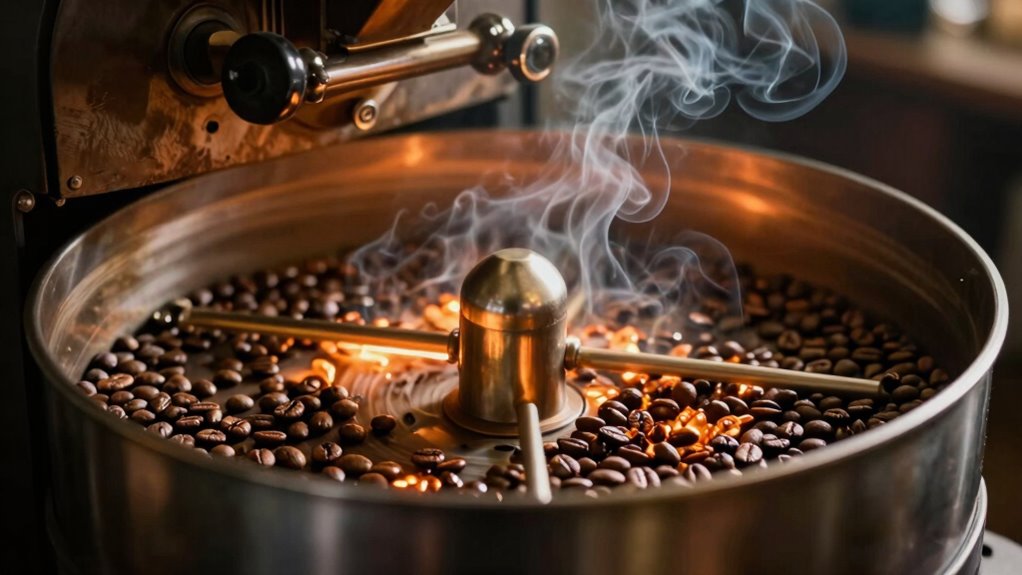
As you choose different roast levels, you’ll notice your coffee’s flavor profiles shift, offering new tasting experiences. Lighter roasts tend to have brighter acidity and more nuanced flavors, while darker roasts often have a richer, bolder body. Understanding these changes helps you find the perfect balance for your palate. Additionally, the roasting process significantly influences the development of these flavor characteristics. The temperature control during roasting plays a crucial role in shaping the final taste and aroma of the coffee. Proper monitoring techniques are essential to ensure consistent results and avoid over- or under-roasting. Moreover, the flavor development during roasting is closely linked to how evenly heat is applied throughout the process. Consistent heat application is vital for achieving desirable flavor profiles and avoiding burnt or uneven tastes.
Flavor Profiles Shift
Roast levels considerably influence the flavor profiles of your coffee, transforming its taste from bright and acidic to rich and smoky. As roasting progresses, you’ll notice a clear flavor evolution. Light roasts highlight the coffee’s original brightness, with fruity and floral notes shining through. As you move toward medium roasts, the flavors deepen, with caramel and nutty undertones emerging. Darker roasts emphasize a smoky, bold profile, often with chocolate and roasted notes. Throughout this process, aroma development plays a crucial role; it intensifies and shifts, revealing new scent layers as the beans roast. This aroma development signals the changing flavor landscape, guiding you to the desired roast level. Ultimately, each stage offers a unique tasting experience shaped by the roast’s impact on flavor evolution.
Acidity and Body Variations
The level of roast considerably influences a coffee’s acidity and body, shaping how it feels and tastes on your palate. Lighter roasts typically offer brighter acidity, providing a lively, tangy flavor that awakens your senses. Medium roasts balance acidity and body, delivering a harmonious profile with subtle sweetness. Darker roasts tend to reduce acidity through acidity modulation, resulting in a smoother, fuller body that emphasizes bold, roasted notes. To deepen your understanding:
- Light roasts maximize acidity and highlight unique origin flavors.
- Medium roasts enhance body while maintaining some brightness.
- Dark roasts focus on body enhancement, often at the expense of acidity.
- The roast level directly impacts acidity and body, shaping how the coffee feels and tastes on your palate.
Your preferred roast level determines whether your coffee feels crisp and vibrant or rich and full-bodied, shaping your overall experience.
Controlling Temperature and Time to Achieve the Perfect Roast
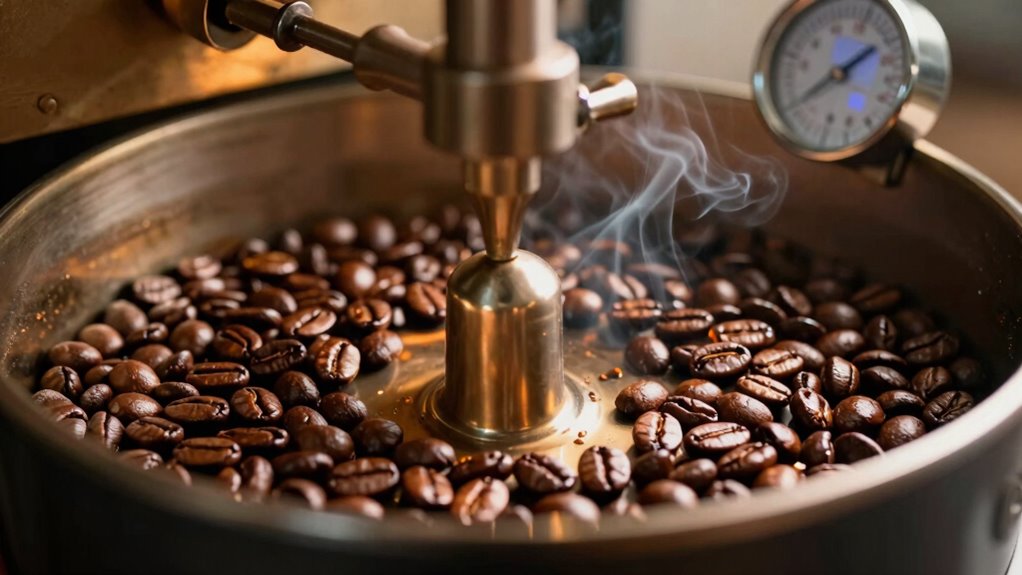
Controlling temperature and time is vital for producing a consistent, high-quality roast. You need to monitor bean moisture carefully because it influences how beans respond to heat—too much moisture can hinder even roasting, while too little can cause uneven color development. As you adjust the heat, keep an eye on the roast color; a darker hue indicates a deeper roast, but overdoing it can lead to burnt flavors. Time plays an essential role; rushing the process can result in underdeveloped flavors, while overextending can cause bitterness. By balancing temperature and duration, you guide the beans through stages of Maillard reactions and caramelization, ensuring peak flavor and aroma. Precise control helps you achieve that perfect roast profile every time. Monitoring bean moisture is also crucial, as it affects heat transfer and roasting consistency throughout the process. Additionally, understanding how moisture content impacts heat absorption can help you fine-tune your roasting technique for optimal results.
Popular Roasting Methods and Equipment for Home and Professional Use
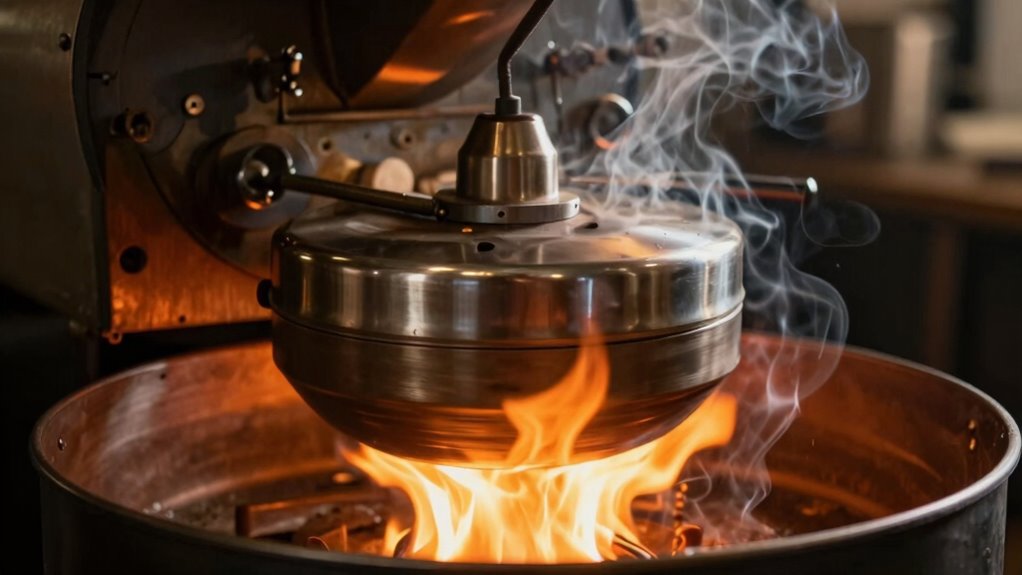
Choosing the right equipment and methods is key to achieving consistent, flavorful roasts at home or in a professional setting. Popular roasting methods include drum roasters, fluid bed (hot air) roasters, and stovetop poppers. Each offers different control levels, affecting flavor development. For ideal results, proper coffee bean storage is essential to maintain freshness and flavor. Regular roasting equipment maintenance, such as cleaning and calibration, ensures efficiency and longevity. Additionally, understanding various roasting techniques can help you tailor the process to your desired flavor profile. Here are some options to contemplate:
- Drum roasters – ideal for large batches and professional use.
- Fluid bed roasters – quick, with even heat distribution, suitable for home use.
- Stovetop poppers – budget-friendly, perfect for beginners.
Choosing the appropriate roasting method can significantly influence the development of different flavor profiles. Maintaining your equipment, such as cleaning and calibration, is vital for consistent results and extending the lifespan of your roasters.
Tips to Evaluate and Improve Your Coffee Roasting at Home

To improve your home coffee roasting, start by developing a keen eye for color and aroma changes throughout the process. Consistently monitor the beans to identify the perfect roast level for your taste. Keep a detailed log of each roast, noting variables like bean sourcing and roasting times, to refine your technique. Regular roasting equipment maintenance ensures consistent results and prevents off-flavors caused by residue or wear. When evaluating your roasts, consider the aroma, color, and crack sounds, adjusting your approach as needed. Experiment with different coffee bean sourcing to explore flavor profiles, but always track which beans yield the best results. Over time, these practices will help you produce more balanced, flavorful roasts and deepen your understanding of your equipment and beans.
Frequently Asked Questions
How Does Altitude Affect the Coffee Roasting Process?
Altitude effects profoundly influence your coffee roasting process by altering roasting dynamics. Higher altitudes tend to have lower atmospheric pressure, which extends roasting times and requires adjustments in temperature. You might notice that beans roast more slowly and develop different flavors compared to lower altitudes. To achieve consistent results, you should tweak your roasting profile, considering altitude effects to control heat transfer and prevent under- or over-roasting.
What Are Common Signs of a Roast Gone Wrong?
If your roast has defects like uneven color, a burnt smell, or a sour taste, it’s likely gone wrong. These signs point to roast defects that can cause flavor degradation, ruining the coffee’s original profile. You might notice a lack of complexity, dullness, or excessive bitterness. Monitoring these signs helps you identify issues early, ensuring you can adjust your process for better, more consistent roasts in the future.
How Does Cooling Impact the Final Flavor Profile?
Cooling halts flavor development instantly, much like hitting pause during a movie to savor the moment. You realize that proper cooling techniques prevent over-roasting, which can dull or burn flavors. Rapid cooling locks in the desired aroma, acidity, and sweetness, ensuring a vibrant final profile. If you delay cooling, residual heat continues to influence flavor, risking a bitter or muted taste. So, quick, even cooling is key to perfecting your brew.
Can Roasting Be Automated for Consistency?
Yes, roasting can be automated for consistency. Automated roasting systems use advanced technology to control temperature, time, and airflow precisely, ensuring each batch is uniform. You can program these systems for consistency control, which minimizes human error and variability. This automation helps you achieve a consistent flavor profile, whether you’re producing small batches or large-scale production, making your coffee roasting process more reliable and efficient.
What Are the Environmental Impacts of Coffee Roasting?
Did you know coffee roasting produces about 3% of global greenhouse gas emissions? You can cut your environmental impact by supporting sustainable practices and emissions reduction efforts. Roasters who adopt eco-friendly methods reduce energy consumption and waste, helping to lower carbon footprints. By choosing responsibly roasted coffee, you contribute to a healthier planet and promote industry-wide sustainability, making your daily cup both enjoyable and environmentally conscious.
Conclusion
By mastering the art of coffee roasting, you can unlock richer flavors and aromas tailored to your taste. Did you know that light roasts retain more antioxidants than darker ones? With the right control of temperature and timing, you’re in charge of your coffee’s destiny. So, experiment, evaluate, and enjoy the journey—your perfect cup is within reach. Happy roasting!