Poor water quality can ruin great coffee beans because impurities, imbalanced minerals, or incorrect pH levels interfere with proper extraction, masking flavor nuances and adding unwanted tastes like bitterness or metal. Contaminants such as chlorine or minerals can cause off-flavors and equipment buildup, affecting freshness. Using unfiltered or untreated water compromises aroma, clarity, and consistency. To guarantee your coffee truly shines, understanding how to test, filter, and adjust your water is key—more details follow.
Key Takeaways
- Contaminants in water can introduce off-flavors and odors, masking the coffee’s natural taste.
- Mineral imbalances affect extraction, leading to bitterness or dull flavors.
- Improper pH levels distort the coffee’s true notes and overall flavor profile.
- Impurities like chlorine can leave chemical aftertastes, compromising coffee quality.
- Mineral buildup from poor water quality can damage equipment and impair extraction efficiency.
Top picks for "water quality ruin"
Open Amazon search results for this keyword.
As an affiliate, we earn on qualifying purchases.
Why Water Quality Matters for Great Coffee
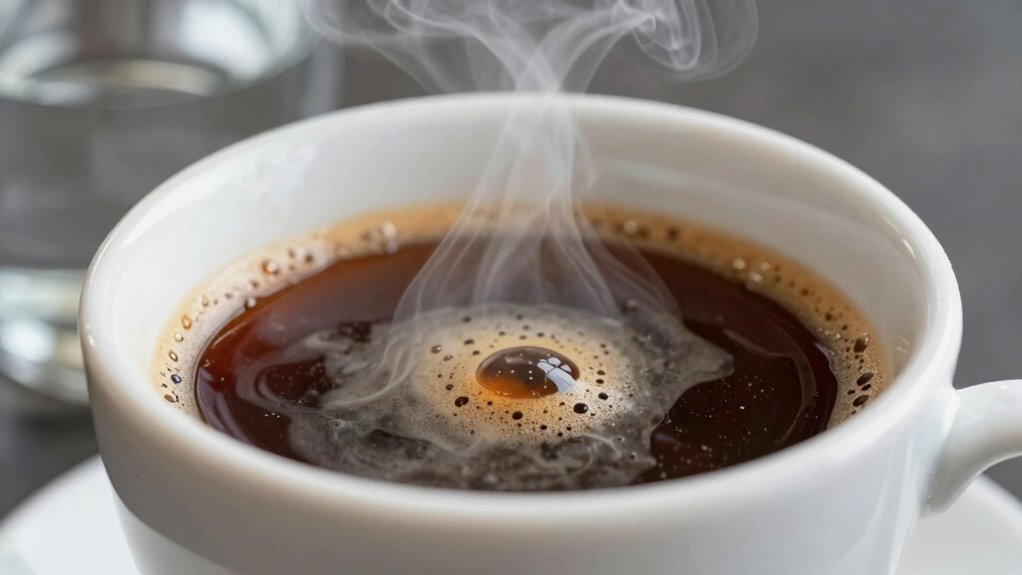
Water quality plays a crucial role in brewing great coffee because it directly influences the flavor and overall experience. When water contains contaminants, it can introduce unwanted tastes or odors, masking the true flavor of your beans. A mineral imbalance in your water can also affect extraction, leading to over- or under-extraction and dulling the coffee’s complexity. Too much calcium or magnesium can make your brew bitter or harsh, while too little can result in weak, flat flavors. Using water with the right balance of minerals guarantees ideal extraction and highlights the coffee’s nuanced notes. Proper mineral levels help optimize flavor extraction and enhance the coffee’s overall profile. Maintaining water quality standards ensures you consistently craft a clean, vibrant cup that truly showcases your beans’ potential. Regular testing and adjustments are essential to avoid contaminated water and maintain the ideal mineral balance, ensuring your coffee remains consistently delicious. Additionally, understanding the source of your water can help you make better adjustments for optimal water quality, which is essential for achieving the best flavor possible.
Signs Your Water Might Be Ruining Your Brew

If your coffee consistently tastes off or lacks clarity, it could be a sign that your water is sabotaging your brew. Poor water quality can mask the bean’s freshness, making even the best coffee taste flat or dull. If you notice a strange or metallic taste, it might be due to impurities affecting your water. Additionally, if your coffee’s flavor diminishes quickly, it’s a sign that water isn’t supporting the true profile of your beans. Pay attention to how your coffee tastes after storage—if it’s dull or stale, water quality could be the culprit. Using bad water can also cause mineral buildup, impairing your brewing equipment and further degrading bean freshness over time. Recognizing these signs helps you troubleshoot and improve your coffee. Monitoring your indoor air quality can also help prevent water impurities from affecting your brewing environment. Regularly testing your water source can help identify contaminants that might be impacting your brew’s flavor. Keeping an eye on the water quality standards ensures your water remains suitable for brewing.
Common Water Impurities That Affect Coffee Flavor

Impurities in your water can considerably alter the flavor of your coffee, masking or overwhelming the subtle notes you’re aiming to taste. These common water impurities stem from impurity contamination and water mineralization, which can introduce unwanted flavors. Mineral deposits like calcium and magnesium can cause a metallic or bitter taste, while high levels of sulfate or chloride may add sourness or a salty note. Additionally, chlorine or chloramine from water treatment can leave an unpleasant chemical aftertaste. These impurities can also affect brewing equipment, leading to buildup and affecting extraction. Understanding and controlling these contaminants is key to brewing a clean, flavorful cup. Proper water filtration can help remove water impurities, ensuring a pure taste in every brew. Regular testing of water quality can help identify specific contaminants, allowing for more targeted filtration solutions. Using water mineral content analysis can guide you in selecting the right filtration method to optimize flavor. Being aware of the water treatment methods used in your area can also help you make better decisions about water quality management. Additionally, knowing the source of your water can assist in anticipating common impurities present.
How Water pH and Minerals Change Your Coffee’s Taste
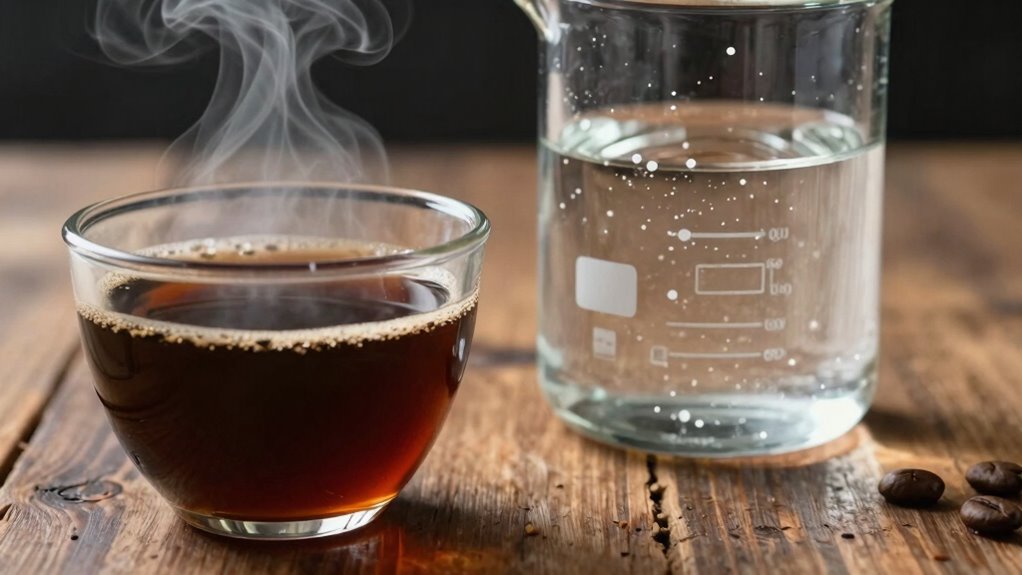
The pH level and mineral content of your water directly influence how flavors develop in your coffee. Water mineralization affects extraction, with minerals like calcium and magnesium enhancing sweetness and body, while too many can cause bitterness. Home robotics and automated cleaning solutions can help maintain water purity, ensuring consistent quality. The ideal pH level for brewing coffee is slightly acidic, around 6.5 to 7, which promotes proper extraction of flavors. If your water is too alkaline or too acidic, it can mute or distort the coffee’s natural notes. Adjusting water mineralization and pH levels guarantees you extract balanced flavor. Proper water treatment is essential to maintaining ideal brewing conditions and preventing mineral buildup that can impair taste. Regular testing of water parameters helps identify undesirable mineral levels, ensuring optimal brewing conditions. Additionally, understanding how water chemistry influences extraction can help you fine-tune your brewing process for the best results. Water quality with the right mineral content and pH helps highlight the beans’ unique characteristics, delivering a richer, more vibrant cup. Poor water quality with improper mineralization or pH levels can ruin even the finest coffee beans.
Test Your Water Quality Before Brewing

Testing your water quality before brewing guarantees that your coffee’s flavor isn’t compromised by unwanted minerals or pH imbalances. Poor water can dull the coffee aroma and interfere with achieving the ideal brewing temperature, affecting extraction and taste. To guarantee top quality, consider these tips:
- Use a water test kit to check mineral content and pH levels.
- Adjust your water source if it’s too hard or acidic.
- Be aware that high mineral levels can mute aroma and cause scaling.
- Maintain consistent water quality to preserve the delicate balance needed for great coffee.
- Incorporating air quality improvements like using aromatherapy diffusers can help create an environment that enhances your overall coffee experience.
- Regularly monitor water quality to ensure ongoing optimal brewing conditions.
- Remember that water composition directly impacts the extraction process, so understanding your water’s characteristics is essential for brewing excellence.
- Understanding water chemistry helps in making informed adjustments for the best possible coffee flavor.
- Additionally, understanding the impact of minerals on water chemistry can assist in choosing appropriate filtration methods for your brewing setup.
Best Methods to Filter and Purify Coffee Water

To improve your coffee water, consider using activated carbon filters, which remove chlorine and odors that can affect flavor. Reverse osmosis systems go further by eliminating minerals and impurities, resulting in pure water. Choosing the right method depends on your water quality and taste preferences. Incorporating wellness items designed for water purification can also enhance the overall drinking experience. Additionally, understanding your water quality can help you select the most effective filtration system for your needs.
Activated Carbon Filtration
- Use high-quality activated carbon filters designed for coffee brewing
- Replace filters regularly to prevent bacterial growth and clogging
- Combine with other filtration methods for best results
- Guarantee the filter’s pore size effectively targets impurities affecting aroma and taste
This process guarantees your water supports the best possible coffee extraction.
Reverse Osmosis Systems
Have you considered how reverse osmosis systems can elevate your coffee water quality? These systems effectively remove impurities, minerals, and contaminants, guaranteeing pure water for brewing. When water is free from unwanted substances, your coffee aroma becomes more pronounced, allowing the rich scents to shine through. Using reverse osmosis enhances brewing precision because you control the mineral content, leading to more consistent extraction and flavor development. This method ensures that any off-flavors caused by tap water impurities are eliminated, resulting in a cleaner taste. While it may strip away some minerals, you can easily remineralize the water for ideal extraction. Overall, reverse osmosis provides the pure, balanced water needed for extracting the full potential of your coffee beans.
How to Adjust Water for Perfect Coffee Extraction
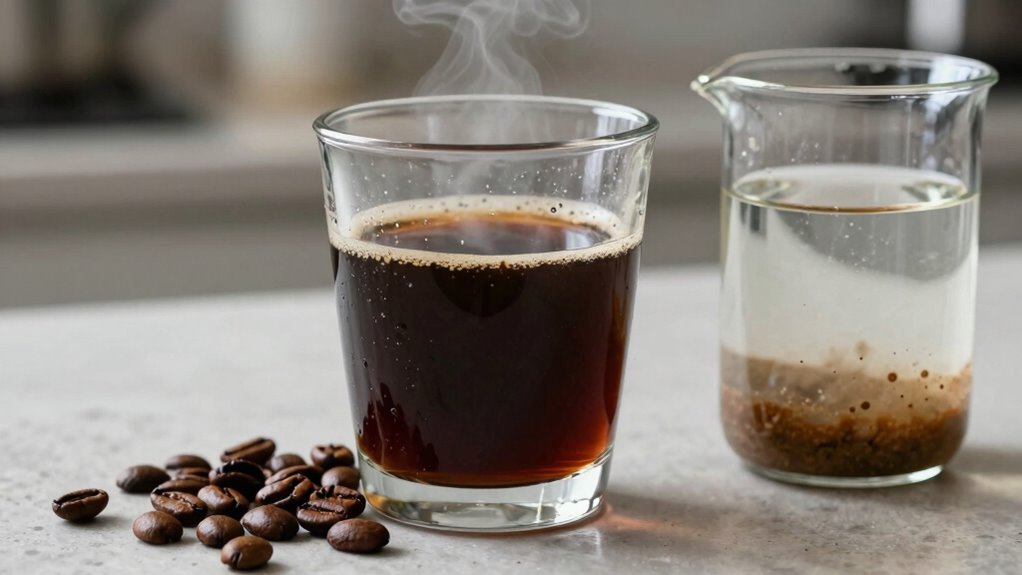
To achieve the perfect coffee extraction, you need to balance your water’s mineral content and keep the temperature just right. Too much or too little minerals can alter flavor, while improper temperature can lead to under- or over-extraction. By adjusting these factors, you guarantee your coffee tastes its best every time.
Water Mineral Content Balance
Achieving the perfect coffee extraction depends heavily on the mineral content of your water, which influences how flavors are dissolved and how the coffee grounds interact with the water. To optimize this, focus on the water pH and mineral balance. Ideal water should have a pH around 6.5 to 7.5, ensuring proper extraction without acidity issues. Too many minerals like calcium and magnesium can lead to over-extraction, making your coffee bitter, while too few can cause under-extraction, resulting in weak flavor. Adjust your water by testing its mineral content and balancing it with additives or filters. Keep these key points in mind:
- Monitor water pH regularly
- Balance calcium and magnesium levels
- Avoid excess sodium or sulfate
- Use mineral adjustments for consistency
Proper Water Temperature
Once you’ve fine-tuned your water’s mineral content, the next step is guaranteeing the water temperature is just right for extraction. Water temperature directly impacts brewing precision, influencing how well flavors dissolve from your coffee grounds. Aim for a temperature between 195°F and 205°F (90°C to 96°C). Too hot, and you risk over-extraction, leading to bitterness; too cold, and under-extraction results in sour, weak flavors. Use a thermometer to monitor your water and adjust your brewing method accordingly. If you’re using a kettle with a variable spout, pour slowly to maintain consistent heat. Proper water temperature ensures ideal extraction, revealing your coffee’s full flavor potential and delivering that perfect, balanced cup every time.
Tips to Keep Your Coffee Water Consistently High-Quality
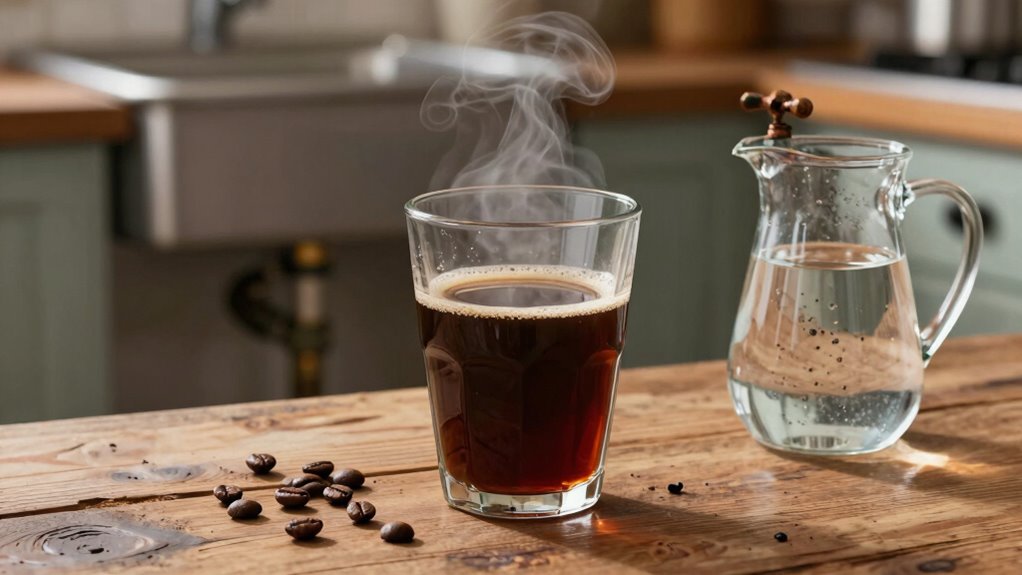
Maintaining consistently high-quality water for your coffee is essential for extracting the best flavors. To achieve this, start with proper coffee storage—keep beans in an airtight container away from light and moisture to preserve freshness. Regularly clean your brewing equipment to prevent mineral buildup and off-flavors that can affect water quality. Use filtered or spring water instead of tap water to reduce impurities and minerals that can interfere with extraction. Monitor water temperature and avoid overheating, which can alter water composition. Ultimately, consider testing your water periodically to ensure it remains free of contaminants and has the right mineral balance, supporting ideal flavor extraction.
- Use filtered water for brewing
- Clean your equipment regularly
- Store coffee beans properly
- Test water quality periodically
Troubleshooting Water Issues That Still Affect Your Coffee
Even when you’ve taken steps to guarantee high-quality water, issues can still arise that negatively impact your coffee’s flavor. Poor water storage can lead to contamination or mineral buildup, affecting the water’s purity during coffee brewing. To troubleshoot, check for stale or contaminated water stored improperly—use sealed containers away from heat and sunlight. Mineral buildup in your water source can also alter taste; consider filtering or using bottled water. Ensure your water temperature is ideal—too hot or cold can disrupt extraction. Regularly clean your coffee equipment to prevent residue buildup. Use this table as a quick guide:
| Issue | Cause | Solution |
|---|---|---|
| Stale water | Improper water storage | Use fresh, sealed containers |
| Mineral buildup | Hard water in source | Install a water filter |
| Off-flavor | Contaminated water | Replace with purified water |
| Inconsistent brewing | Fluctuating water temperature | Use a temperature-controlled kettle |
| Equipment residue | Poor cleaning | Regularly clean coffee maker |
Frequently Asked Questions
Can Bottled Water Improve My Coffee’s Flavor?
Yes, bottled water can improve your coffee’s flavor if it has the right mineral content and pH balance. Water with balanced minerals enhances extraction, bringing out richer flavors, while a neutral pH prevents sour or flat tastes. Look for bottled water specifically designed for brewing coffee, as it’ll have the ideal mineral levels and pH balance to elevate your coffee experience.
How Often Should I Test My Water Quality?
You should test your water quality at least once a month to maintain ideal coffee flavor. Regular testing helps you monitor water mineralization levels and pH balance, which are essential for brewing great coffee. If your water’s mineral content or pH fluctuates considerably, it can affect taste and extraction. By staying proactive, you guarantee your water consistently supports the best possible coffee, avoiding any undesirable flavors caused by poor water quality.
Do Different Coffee Brewing Methods Require Different Water Qualities?
Yes, different brewing methods often require different water qualities. For example, espresso demands highly mineralized water within strict brewing water standards to enhance flavor extraction. Pour-over and French press may tolerate softer water but still benefit from proper mineralization to avoid flat or bitter tastes. Adjusting water mineralization guarantees ideal extraction and flavor, so you should tailor your water quality based on your brewing method to achieve the best coffee experience.
Is Softened Water Better or Worse for Brewing Coffee?
Imagine pouring a crystal-clear stream over your coffee grounds—softened water can be just as ideal. It’s better for brewing because it maintains proper water mineralization and pH balance, preventing over-extraction or flat flavors. Softened water reduces mineral buildup, ensuring your coffee’s flavor shines through. So, yes, softened water is generally better, helping you achieve a balanced, vibrant brew without the interference of harsh minerals or acidity.
How Does Water Temperature Impact Coffee Extraction?
You need to control the water temperature carefully because it directly impacts extraction consistency. Too hot, and you risk over-extraction, making your coffee bitter; too cold, and under-extraction leaves it weak and sour. Maintaining a steady temperature guarantees you get the full flavor profile from your beans. Temperature control helps you brew a balanced, flavorful cup every time, highlighting the importance of precise heat management in coffee-making.
Conclusion
Think of your water as the canvas for your coffee masterpiece. When it’s clear, pure, and balanced, your beans can shine in all their glory. But if impurities creep in, they muddy the flavor and dull the experience. Keep your water pristine, like a fresh sheet of white paper, so your coffee can truly express its full potential. With the right care, every cup becomes a work of art—not just a drink.