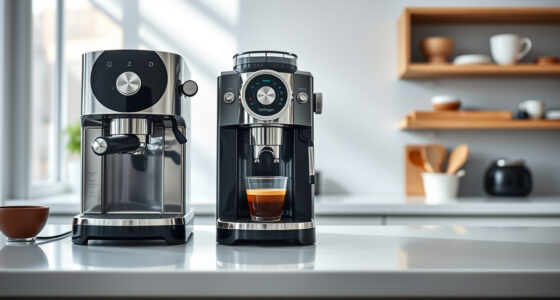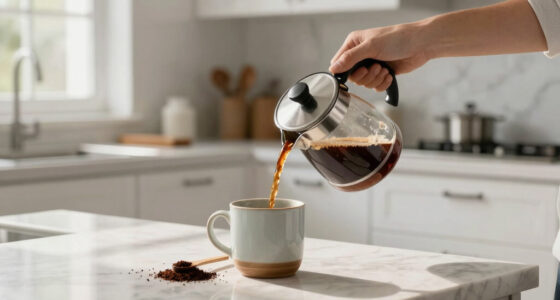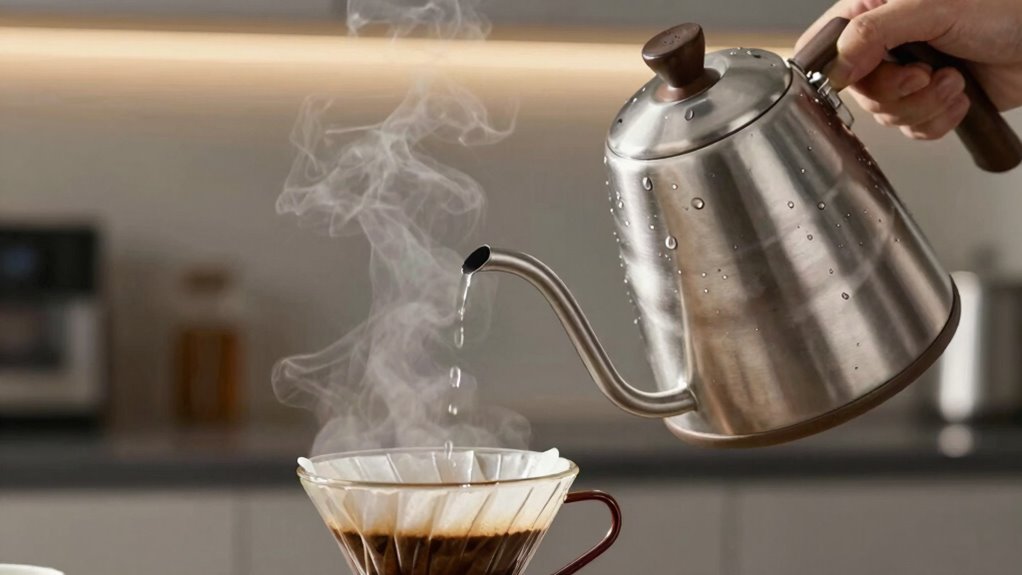

Your kettle’s material and spout design can indirectly affect your pour-over results by influencing water temperature and flow control. If the kettle heats unevenly or cools quickly, it causes temperature fluctuations that impact extraction and flavor. Additionally, a poorly designed spout can lead to uneven pouring or splashing, affecting saturation. Understanding how these factors work together helps you control your brew better. Keep exploring to discover how optimizing both elements can improve your coffee.
Key Takeaways
- Material thermal properties affect water temperature stability, influencing extraction consistency during pour-over brewing.
- Uneven heating or rapid cooling in certain kettles can cause temperature fluctuations, impacting flavor extraction.
- Spout design controls flow rate and direction, affecting saturation and preventing channeling or uneven extraction.
- Inconsistent pouring techniques due to kettle design or material can lead to variable brew quality.
- Combining material and spout design factors results in more controlled, stable pouring, indirectly improving pour-over results.
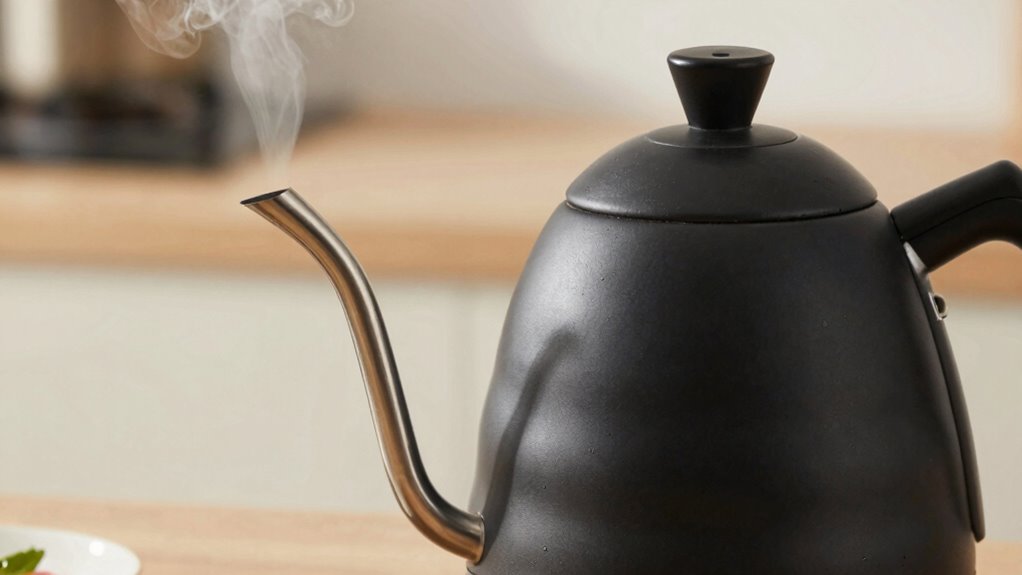
Have you ever wondered why your pour-over coffee turns out differently depending on the kettle you use? The answer lies in subtle factors like material consistency and spout design, which influence how water interacts with your coffee grounds. These elements don’t just affect the immediate pouring experience—they influence extraction and, ultimately, the flavor profile of your brew.
Material consistency is essential because different kettles are made from various materials, each responding uniquely to heat. For example, stainless steel kettles tend to heat evenly and retain heat longer, providing a stable pour that maintains water temperature throughout the process. In contrast, electric kettles with plastic bodies may heat unevenly or cool down quickly, causing fluctuations that can lead to over- or under-extraction. Even ceramic or glass kettles, though visually appealing, can have different thermal properties that influence how quickly the water reaches the ideal brewing temperature. These differences in material consistency subtly change the water temperature during pouring, which impacts how the coffee grounds extract, resulting in variations in flavor, body, and acidity. Understanding the thermal properties of your kettle material can help you better predict water temperature fluctuations and improve your pouring technique. Additionally, the thermal conductivity of the kettle material plays a key role in how quickly the water heats and cools, further affecting brewing consistency. Paying attention to heat retention can help ensure more stable brewing conditions.
Material differences in kettles subtly impact water temperature and extraction, shaping your coffee’s flavor, body, and acidity.
Spout design plays an equally important role in your pour-over results. A well-designed spout allows for precise, controlled pouring, which is essential for proper extraction. Narrow, elongated spouts give you better control over water flow, enabling you to pour in a consistent, thin stream that evenly saturates the coffee grounds. This control prevents uneven extraction, which can cause bitterness or weak flavors. Conversely, a wide or poorly designed spout can lead to splashing or uneven pouring, making it harder to maintain a steady flow. The shape and angle of the spout influence the speed and direction of the pour, which in turn affects how water interacts with the coffee bed—either promoting uniform saturation or causing channeling, where water finds the path of least resistance and leads to uneven extraction. Additionally, understanding the thermal properties of your kettle material can help you better predict how quickly your water will reach the optimal temperature, further improving your pour-over technique. Proper spout design, combined with awareness of thermal behavior, ensures a more controlled and consistent brew.

Tea Kettle For Stovetop,Silver,Gooseneck Coffee Pot with Thermometer,40oz
- Precise gooseneck spout for control: Ensures steady water flow for brewing
- Built-in easy-to-read thermometer: Monitors water temperature for perfect brewing
- 40oz capacity for multiple cups: Ideal size for home use
As an affiliate, we earn on qualifying purchases.
As an affiliate, we earn on qualifying purchases.
Frequently Asked Questions
How Does Kettle Material Affect Pour Over Quality?
Your kettle’s material affects pour over quality through its conductivity and aesthetic appeal. Materials like copper or stainless steel have high conductivity, ensuring even heat distribution, which helps you control water temperature accurately. Aesthetic appeal also matters—it influences your overall experience and satisfaction. A well-designed, visually appealing kettle can motivate you to brew more intentionally, ultimately improving your pour over process and the flavor of your coffee.
Can Kettle Design Influence Water Flow Consistency?
Yes, kettle design can influence water flow consistency. A well-designed spout ensures smooth, controlled pouring, preventing splashes or uneven flow. Additionally, features like temperature stability help maintain consistent water temperature, which affects flow rate and pour accuracy. When your kettle has a precise spout and stable temperature control, you’re more likely to achieve uniform water flow, leading to better extraction and a more balanced pour-over coffee experience.
Do Kettle Handle Ergonomics Impact Pouring Accuracy?
Yes, kettle handle ergonomics impact your pouring accuracy. A handle grip that fits comfortably allows you to maintain better balance and control during pouring. When your grip feels secure, you can steady the kettle, pour more precisely, and avoid spills or uneven flow. Good handle ergonomics reduce fatigue and help you develop a consistent pouring technique, ultimately improving your pour-over coffee results.
How Does Kettle Age Alter Heating Performance?
Like a worn-out runner, your kettle’s aging can slow down its performance. Age-related corrosion and heating element degradation make the kettle less efficient, causing uneven heating or longer boil times. Over time, mineral buildup and rust can block heat transfer, resulting in inconsistent water temperatures. To maintain ideal pouring results, keep your kettle clean, and consider replacing it once you notice significant performance drops.
Are There Specific Kettles Recommended for Different Coffee Styles?
Yes, different kettles suit various coffee styles because they influence flavor extraction and temperature stability. For pour-over, opt for a gooseneck kettle to control pour rate and maintain consistent water flow. For espresso, a kettle with rapid heating and precise temperature control enhances flavor extraction. Recognizing your preferred coffee style helps you choose a kettle that offers ideal temperature stability, ensuring your brew consistently delivers the best flavor.

Coffee Gator Gooseneck Kettle with Thermometer – 40oz
- Material: Premium-grade stainless steel construction
- Spout Design: Gooseneck spout for steady pouring
- Base Compatibility: Triple-layer base for all stovetops
As an affiliate, we earn on qualifying purchases.
As an affiliate, we earn on qualifying purchases.
Conclusion
Understanding how your kettle influences pour-over coffee can truly elevate your brewing game. Did you know that even slight variations in pour speed or temperature can change your brew’s flavor by up to 20%? So, next time you notice inconsistencies, consider your kettle’s design and heating method. Small adjustments make a big difference, helping you craft that perfect cup every time. Keep experimenting, and enjoy the nuanced art of pour-over coffee!

68oz Coffee Carafe Insulated, Airpot Thermal Coffee Carafes for Keeping Hot
- Keeps Beverages Hot or Cold: 12 hours hot, 24 hours cold insulation
- Durable Stainless Steel Construction: Rust-proof, bend-proof, long-lasting
- Easy One-Hand Pouring: Push-button spout for simple use
As an affiliate, we earn on qualifying purchases.
As an affiliate, we earn on qualifying purchases.

Bodum 27oz Bistro Gooseneck Electric Water Kettle, Pour Over Coffee & Tea, Stainless Steel, Matte Black
- Capacity: 0.8 liter / 27oz
- Design: Elegant, ergonomic design
- Material: Durable stainless steel
As an affiliate, we earn on qualifying purchases.
As an affiliate, we earn on qualifying purchases.