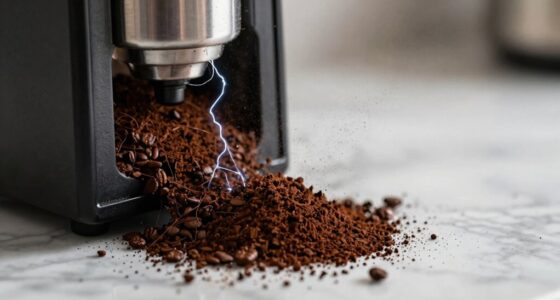
Fines and boulders in your coffee grind cause uneven extraction, leading to bitter, dull, or sour flavors. Fines over-extract, muddling aroma and taste, while boulders under-extract, resulting in weak, underdeveloped brews. These inconsistencies also clog filters and reduce clarity. Managing particle size with a proper grinder guarantees a balanced, flavorful cup. Keep learning to discover how to identify, correct, and prevent these common coffee pitfalls for better results.
Key Takeaways
- Fines cause over-extraction, leading to bitterness and dull flavors in coffee.
- Boulders cause under-extraction, resulting in weak or sour taste.
- Uneven particle sizes disrupt water flow, reducing clarity and causing murky brews.
- Proper grind size minimizes fines and boulders, ensuring balanced flavor and better extraction.
- Regular grinder maintenance and calibration improve particle consistency and coffee quality.

Hamilton Beach Custom Grind Electric Coffee Grinder For Up To 14 Cups
- Adjustable Grind Size and Cup Selection: Customize grind for 4-14 cups
- Hands-Free or Manual Grinding: One-touch operation with automatic shut-off
- Removable, Dishwasher-Safe Bowl: Easy to fill, pour, and clean
As an affiliate, we earn on qualifying purchases.
As an affiliate, we earn on qualifying purchases.
Why Particle Size Matters for Coffee Flavor and Texture

The size of coffee particles plays a crucial role in how your brew turns out, directly affecting both flavor and texture. When particles are uniform, you get better flavor consistency because extraction happens evenly. If the grind is too fine or uneven, some particles extract too quickly, leading to bitterness, while others under-extract, resulting in sour notes. Roast level also influences how particle size impacts flavor; darker roasts may require different grind sizes for ideal extraction compared to lighter roasts. Proper particle size helps you control the brew’s strength and clarity. You’ll notice a smoother, more balanced taste when the grind aligns with your brewing method and roast level. Additionally, understanding grind size can help you experiment with different brewing techniques to enhance your overall coffee experience. Paying attention to particle size ensures your coffee’s flavor remains consistent and enjoyable, especially when considering extraction efficiency, which is vital for optimizing flavor. Recognizing the particle problem can lead to better brewing outcomes and a more satisfying cup.
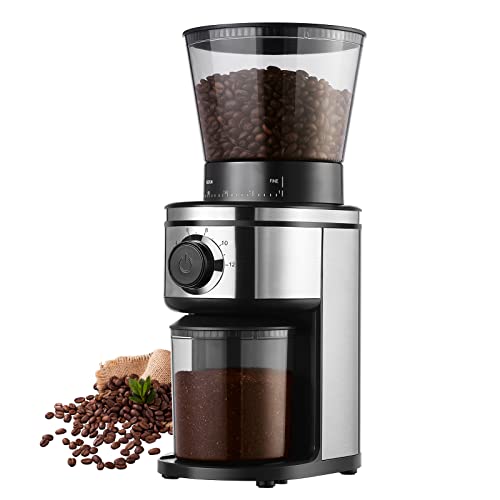
Ollygrin Burr Coffee Grinder, Electric Conical Coffee Bean Grinder With 30 Adjustable Grind Settings For 2-12 Cups, Sliver & Black
- Durable Conical Burrs: 40mm stainless steel conical burrs
- Adjustable Grind Settings: 30 precise grind levels for customization
- Preserves Coffee Flavor: Slow grinding reduces heat and preserves aroma
As an affiliate, we earn on qualifying purchases.
As an affiliate, we earn on qualifying purchases.
What Are Coffee Fines and Boulders, and Why Do They Affect Your Brew

Ever wonder why your coffee sometimes tastes off even when you use what seems like the right grind? It’s often due to uneven particle sizes—specifically, fines and boulders. Fines are tiny coffee particles that can over-extract, leading to bitter flavors, while boulders are large chunks that under-extract, resulting in weak or sour brews. Both disrupt the uniformity of particle size, which is essential for ideal flavor extraction and aroma preservation. When particles are inconsistent, your brew doesn’t develop balanced flavors or rich aromas. Particle size plays a crucial role in ensuring that your coffee grounds are optimal for extraction. Inconsistent particle size can also affect the flow rate of water through the grounds, impacting brewing time and flavor clarity. Additionally, maintaining a consistent grind helps prevent clogging in automatic brewers, ensuring smoother operation. Properly managing particle distribution can also improve the overall consistency and quality of your brew.
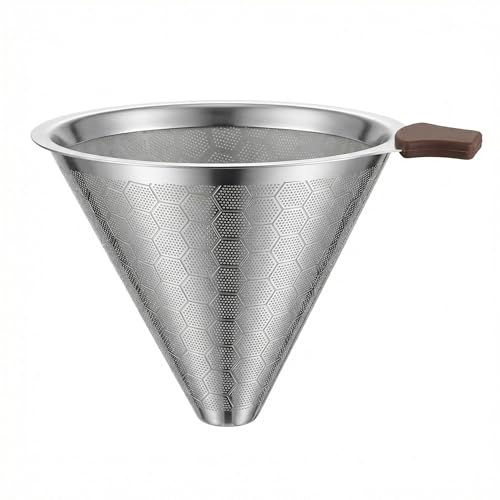
Upgrade Reusable Pour Over Coffee Filter for Chemex & Hario V60, Double Layer Fine Mesh Stainless Steel, Cone Coffee Filter 3.46inch height, 4-10 Cup Coffee Makers, Eco-Friendly Coffee Strainer
- Universal Compatibility: Fits most pour-over coffee makers
- Eco-Friendly & Reusable: Reduces waste, saves money
- Enhanced Coffee Flavor: Brews full-bodied, aromatic coffee
As an affiliate, we earn on qualifying purchases.
As an affiliate, we earn on qualifying purchases.
How Your Grinder Creates Particle Size Problems

Your grinder can produce inconsistent particle sizes, leading to uneven extraction. This variability increases the risk of over-extraction or under-extraction, affecting flavor. Additionally, uneven particles disrupt the distribution of coffee grounds, making it harder to achieve a balanced brew. Proper calibration and maintenance of your grinder can help minimize particle variability and improve overall brew quality. Regular cleaning and adjustments ensure your grinder operates at optimal performance, reducing the chances of creating particle size problems. Ensuring consistent particle size is essential for achieving climate resilience in your brewing process by reducing waste and optimizing energy use. Maintaining consistent particle size also supports a more stable brewing process, resulting in better flavor consistency.
Inconsistent Grind Size
When your grinder produces uneven particles, it can throw off the entire brewing process. Inconsistent grind size affects the coffee aroma, making it unpredictable and less vibrant. It also hampers your ability to control brewing temperature, since different particle sizes extract at different rates. Larger particles may under-extract, dulling flavor, while smaller ones can lead to over-extraction and bitterness. To improve, consider:
- Using a high-quality grinder with precise settings
- Regularly cleaning your grinder to prevent clumping
- Adjusting grind size based on brewing method and desired flavor profile
Consistent particle size guarantees better extraction, preserving the coffee’s aromatic qualities and maintaining stable brewing temperature. This results in a more balanced, flavorful cup every time.
Over-Extraction Risks
Uneven particle sizes from your grinder can lead to over-extraction, where too much solubilization occurs, resulting in bitter, harsh flavors. When grind uniformity is off, smaller particles extract faster, releasing more bitter compounds and overpowering the coffee aroma. This imbalance causes your brew to taste overly strong or astringent. Over-extraction happens because inconsistent particle sizes increase the contact time for some grounds, pulling out undesirable flavors. To avoid this, aim for a consistent grind size that promotes even extraction. Proper grind uniformity helps control solubilization, preserving the coffee’s nuanced aroma notes while preventing bitterness. Ultimately, a well-calibrated grinder reduces over-extraction risks, ensuring each cup balances flavor, aroma, and smoothness.
Particle Distribution Effects
Grinders influence particle distribution by shaping the size range of coffee grounds they produce. If your grinder creates uneven particles, it can lead to issues like particle aggregation, where fine particles stick together, causing inconsistent extraction. These tiny fines can settle quickly, forming sediment during brewing, which affects flavor clarity. Conversely, boulders or large particles hinder proper water flow, leading to under-extraction. To avoid these problems, consider:
- Ensuring consistent grind size to prevent a wide particle size distribution
- Using grinders with precise burrs for uniform particle output
- Avoiding over-grinding, which increases fines and promotes sediment formation
- Recognizing that particle size control is crucial for achieving optimal extraction and avoiding undesirable sediment
A well-controlled particle distribution results in balanced extraction and cleaner coffee, reducing the risk of sediment and overly gritty textures.

CREMA Coffee Products Weiss Distribution Technique (WDT) Tool | Even Coffee Ground Distribution for Better Extraction | Stainless Steel with Silicone Grip | Includes 6 Pins & Storage Vault | Silver
- Even Ground Distribution: Ensures consistent coffee grounds spread
- Improves Coffee Flavor: Promotes even water flow for richer taste
- Durable Stainless Steel: Built for longevity and stability
As an affiliate, we earn on qualifying purchases.
As an affiliate, we earn on qualifying purchases.
Common Coffee Brewing Issues Caused by Fines and Large Particles
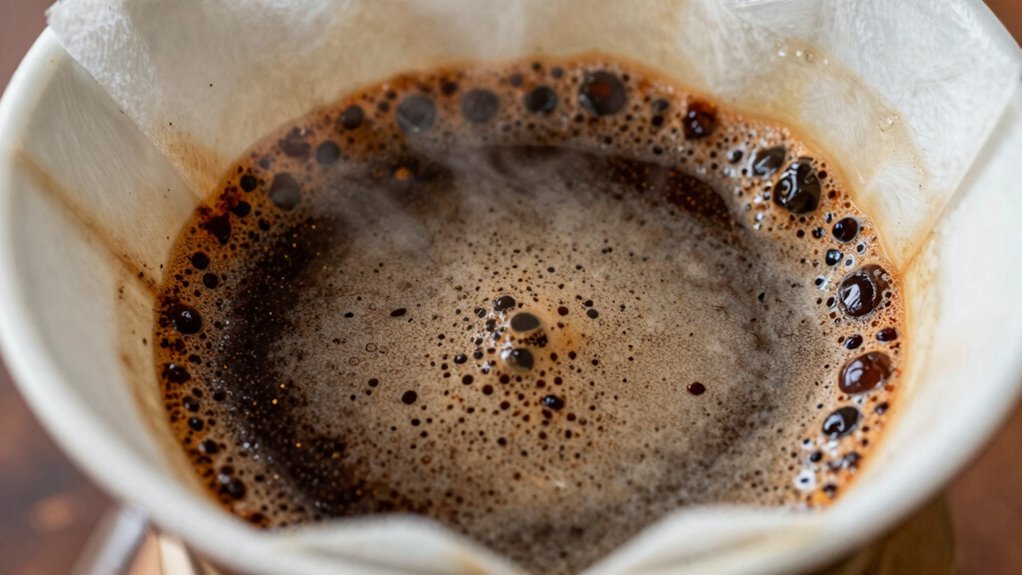
Fines and large particles can cause clogged filters and pouring difficulties, making your brewing process frustrating. They also lead to over-extraction, resulting in bitter flavors that ruin your cup. Additionally, these particles reduce brew clarity, leaving your coffee looking murky and unappealing. Proper filtration and grind size can help minimize these issues and improve overall brew quality. Using the appropriate particle size during grinding can significantly enhance your brewing experience by ensuring a smoother flow and better extraction.
Clogged Filters and Pouring
- Proper grind size selection
- Regular filter cleaning
- Adjusting brewing temperature
Over-Extraction and Bitterness
When particles that are too fine or too large aren’t properly managed during brewing, they can lead to over-extraction and bitterness in your coffee. Fine particles dissolve too quickly, releasing harsh compounds that overpower the desired flavor balance and mask the coffee’s natural aroma preservation. Conversely, large particles slow extraction, causing uneven brewing and a weak, underdeveloped taste. Both issues result in an unbalanced cup, with bitterness dominating or subtle flavors lost. To prevent this, adjust grind size and ensure consistent particle distribution during brewing. Proper management of particle size helps maintain a harmonious flavor profile, preserving the coffee’s aromatic qualities while preventing over-extraction. This control ultimately delivers a smoother, more enjoyable cup with better aroma and taste.
Reduced Brew Clarity
Large particles and fines can considerably reduce the clarity of your brewed coffee, making it appear murky or cloudy. This cloudiness isn’t just aesthetic; it impacts your overall experience. Fines can cause over-extraction in parts of the brew, muddying flavor balance and dulling aroma preservation. As a result, you might notice a less vibrant taste and weaker scent. To improve clarity, consider using a coarser grind or a more precise filtration process. Better particle control helps maintain a clean cup, highlighting the intended flavor profile. Additionally, it prevents the brew from becoming overly bitter or sour due to uneven extraction. Addressing these particle issues guarantees your coffee looks appealing and delivers a well-rounded, aromatic experience.
- Use a consistent grind size
- Opt for proper filtration methods
- Adjust brewing time for clarity
Simple Ways to Reduce Fines and Achieve Consistent Grind Size
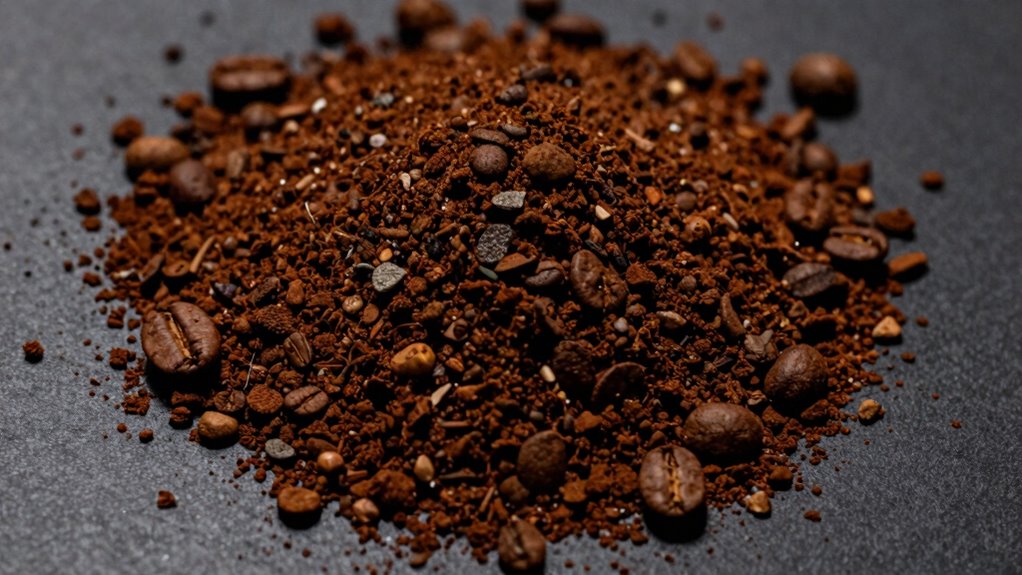
Achieving a consistent grind size and reducing fines starts with selecting the right equipment and settings. Focus on grind consistency by choosing a quality grinder with adjustable settings. Regular burr calibration is essential; uneven burrs cause inconsistent particles that contribute to fines. Before each brew, calibrate your grinder to guarantee uniform particle size. Use a consistent grind setting tailored to your brewing method, and avoid making last-minute adjustments. Clean your grinder regularly to prevent buildup that can disrupt grind uniformity. When possible, grind in small batches to minimize variability. These simple steps help produce a more uniform grind, reducing fines and boulders, which leads to better extraction and a more balanced cup. Consistency begins with precision and regular maintenance, ensuring each grind is as uniform as possible.
How to Spot and Remove Unwanted Particles From Your Coffee
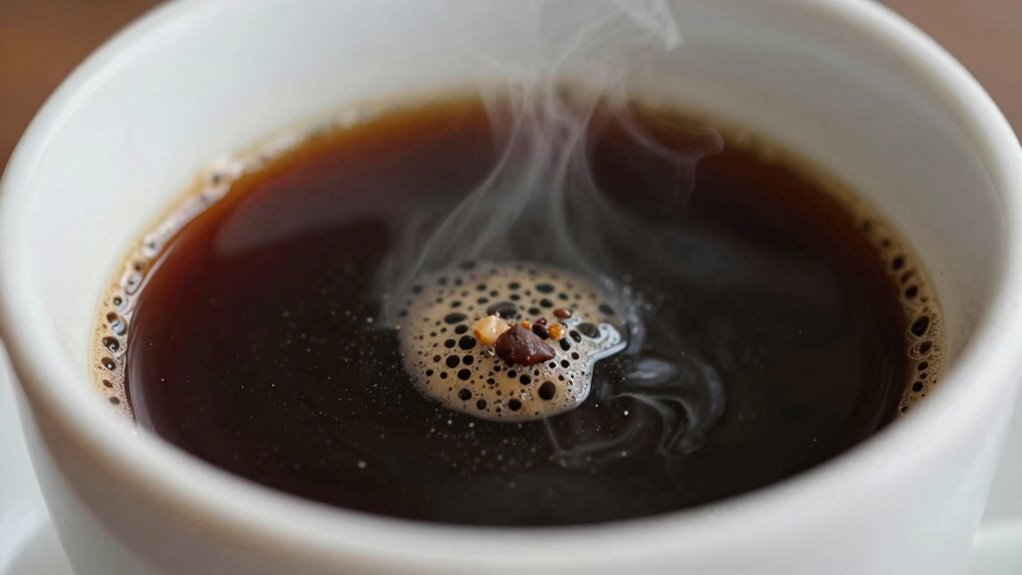
Ever wonder how to identify and remove unwanted particles from your coffee? First, inspect your coffee visually for any large or irregular particles that don’t belong. Smell your coffee; off-notes can indicate contamination from storage mishaps. When brewing, watch for sediment or fines that slip through filters, affecting flavor preservation. To prevent unwanted particles:
Inspect visually and smell your coffee to detect unwanted particles and contamination early.
- Store coffee in airtight, moisture-proof containers to avoid contamination
- Use a proper grinder to minimize fines and particle irregularities
- Filter your coffee before brewing to catch any remaining unwanted debris
- Regularly clean your coffee equipment to prevent buildup and ensure particle control.
Keeping your coffee free of unwanted particles ensures a cleaner cup and better flavor. Proper storage not only helps in detecting these particles early but also preserves the intended flavor profile, avoiding the bitterness or muddiness caused by impurities.
Best Practices for Choosing and Maintaining Your Coffee Grinder
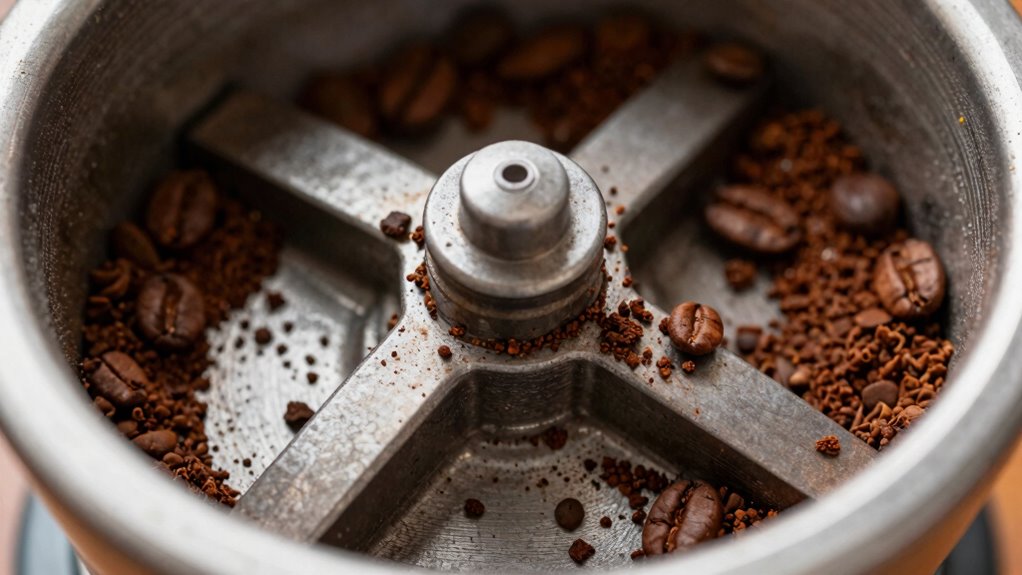
Choosing the right coffee grinder is essential for brewing a consistent, flavorful cup. Start by considering the grinder’s ability to preserve coffee bean freshness—grinders with uniform burrs help maintain the beans’ aroma and flavor. Regular grinder calibration ensures your grind size stays consistent, preventing unwanted fines or boulders that can ruin your brew. Clean your grinder frequently to remove oil buildup and residual particles that can affect flavor and performance. Use fresh coffee beans and adjust the grind setting as needed, especially if you notice changes in taste or extraction time. Proper maintenance and calibration are key to achieving a balanced grind, which directly impacts your coffee’s clarity and richness. Staying attentive to your grinder’s condition and understanding the particle problem can help you achieve optimal results. Additionally, being aware of safety tips for grinder use can prevent accidents and ensure a safer brewing environment.
Frequently Asked Questions
Can Different Coffee Beans Produce Varying Amounts of Fines and Boulders?
Yes, different coffee beans can produce varying amounts of fines and boulders. Your grind uniformity depends heavily on bean selection, as some beans are easier to grind consistently. Factors like bean size, density, and moisture influence how they break down during grinding. By choosing beans with similar characteristics and maintaining a consistent grind, you can minimize fines and boulders, ensuring a better extraction and richer flavor in your coffee.
How Does Ambient Humidity Influence Particle Size in Coffee Grinding?
Ambient humidity effects markedly influence particle size in coffee grinding. Higher humidity increases particle cohesion, causing fines to clump together and leading to larger, uneven particles. Conversely, lower humidity reduces cohesion, resulting in a more consistent grind with fewer fines. You’ll notice that in humid environments, your coffee may brew differently due to these particle size variations, impacting extraction and flavor. Keeping humidity levels stable helps maintain a more uniform grind.
Are There Specific Brewing Methods More Sensitive to Fines and Boulders?
Certain brewing methods, like espresso and AeroPress, are more sensitive to fines and boulders because grind size impacts extraction efficiency more considerably. You’ll notice that inconsistent grind size causes over-extraction or under-extraction, affecting flavor. To guarantee ideal extraction efficiency, you should use a consistent grind size suited for each method, avoiding too many fines or boulders that can clog filters or cause uneven extraction.
What Role Does Water Temperature Play in Extracting Particles Differently?
Water temperature effects profoundly influence how particles are extracted during brewing. Higher temperatures increase the extraction rate influence, allowing more fines and boulders to dissolve quickly, which can lead to over-extraction and bitterness. Conversely, lower temperatures slow down extraction, helping to prevent unwanted particles from over-dominating the brew. Adjusting water temperature helps you control particle extraction, ensuring a balanced flavor profile without overly muddy or bitter notes.
Can Aging or Storage Conditions Impact the Particle Consistency of Your Coffee?
Imagine your coffee as a vibrant mosaic, each particle a tiny tile. Aging or poor storage can cause the mosaic to fade or shift, impacting particle consistency. If your beans aren’t stored properly, oils weaken, and the roast level may change, leading to uneven grind uniformity. This results in inconsistent extraction, making your brew less flavorful. Proper storage preserves the mosaic’s clarity, ensuring each particle contributes to a perfect cup.
Conclusion
Understanding how particle size impacts your coffee can transform your brewing experience. Did you know that inconsistent grind sizes can increase brew time by up to 30%? By mastering your grinder and managing fines and boulders, you’ll enjoy richer flavors and a smoother texture in every cup. Keep your equipment well-maintained and pay attention to grind consistency—these simple steps can make a huge difference. Cheers to better coffee, brewed just the way you like it!