Espresso grinding is harder than filter brewing because it demands very precise, uniform particle sizes to guarantee even water flow and proper extraction. Small changes in grind size can drastically alter flavor, shot clarity, and strength, making consistent results challenging. Factors like bean variability, humidity, and machine calibration add to the complexity. mastering this requires careful control, technique, and routine adjustments—if you want to understand how to do it right, keep exploring the details.

Get coffee and tea gear delivered free with Prime
- Fast, free delivery on millions of items
- Prime Video, Amazon Music and more included
- Member-only deals all year
Key Takeaways
- Espresso requires extremely fine, uniform grounds to ensure proper water flow and extraction, which is harder to achieve consistently.
- Slight variations in grind size significantly impact extraction time and flavor, demanding higher precision than filter coffee.
- External factors like humidity, bean variability, and machine calibration greatly influence espresso grind consistency.
- Managing multiple variables such as dose, tamping, and grind size makes espresso more complex than filter brewing.
- Maintaining uniform particle size and precise control over grind parameters is essential for espresso’s high-quality, repeatable results.
As an affiliate, we earn on qualifying purchases.
Why Precise Grind Size Matters More for Espresso Than Filter Coffee
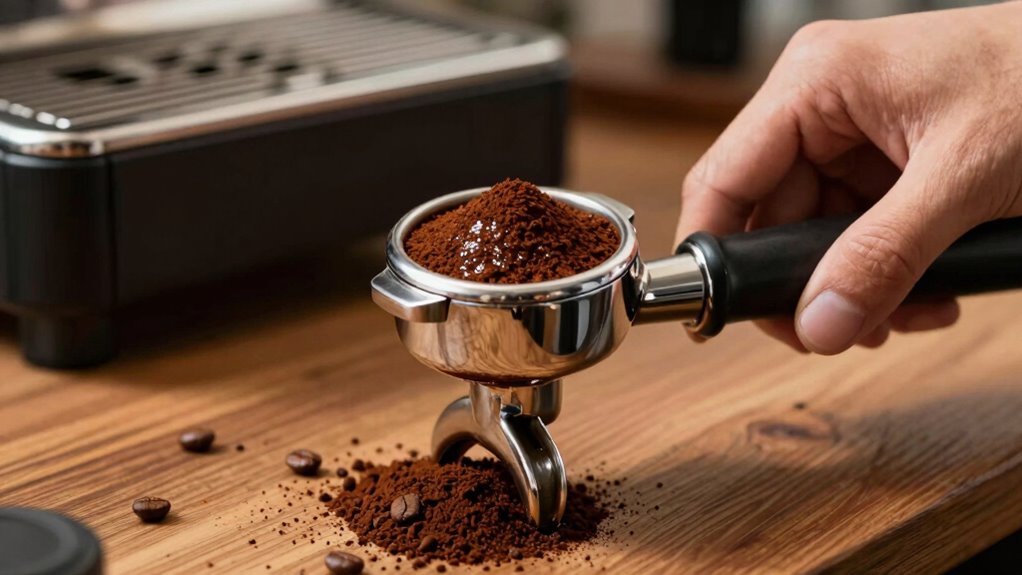
Because espresso relies on a much shorter extraction time than filter coffee, having the right grind size is vital. A precise grind size ensures water flows through the coffee evenly, preventing over- or under-extraction. For espresso, the grind needs to be very fine, as coffee density plays a significant role in how quickly water passes through. If the grind is too coarse, water flows too fast, resulting in a weak, under-extracted shot. Too fine, and water struggles to pass through, causing over-extraction and bitterness. Achieving the perfect balance requires attention to grind size, as even slight adjustments can dramatically affect flavor. The right grind promotes consistent extraction, highlighting the nuanced flavors and rich body that define a good espresso. Grind size is critical because it directly impacts water flow and extraction efficiency. Additionally, unlike filter brewing, espresso demands a much higher level of consistency in grind size to ensure optimal extraction every time. Ensuring consistent grind size can be challenging but is essential for producing high-quality espresso shots. Maintaining precise grind size involves careful calibration of your grinder and ongoing adjustments based on taste and machine performance.
precise burr grinder for espresso
As an affiliate, we earn on qualifying purchases.
As an affiliate, we earn on qualifying purchases.
Common Challenges in Achieving Consistent Espresso Grind
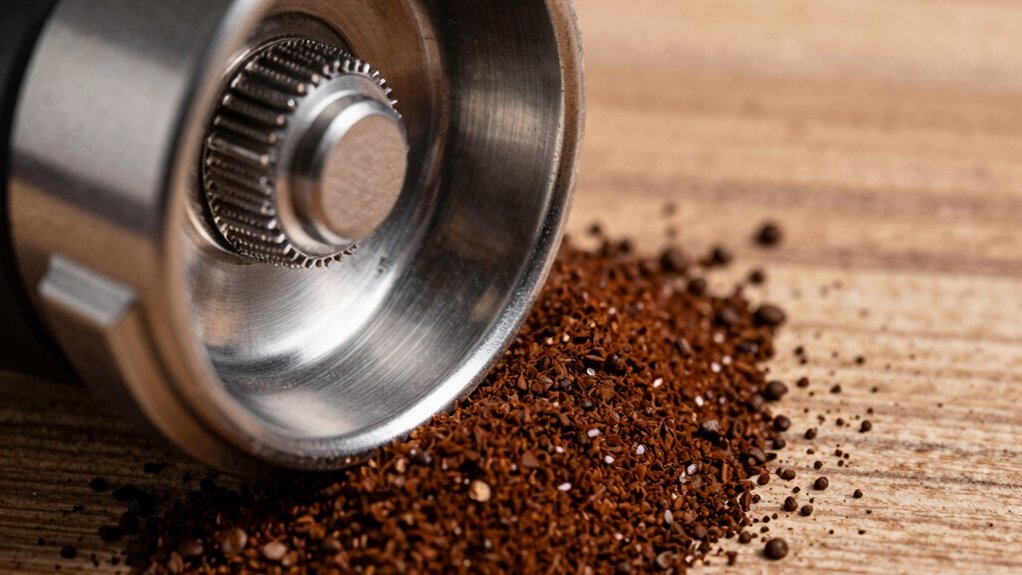
Achieving a consistent espresso grind is often more challenging than it seems, primarily because even small variations in grind size can considerably impact shot quality. One major challenge is controlling the grind particle size, which affects extraction and flavor. Slight inconsistencies can cause over- or under-extraction, leading to bitter or weak espresso. Additionally, machine calibration plays a vital role; if your grinder or espresso machine isn’t properly calibrated, your grind particle size can fluctuate, making consistency difficult. External factors like humidity and temperature also influence grind behavior. To maintain uniformity, you need to regularly calibrate your grinder and monitor environmental conditions. Environmental factors can significantly alter grind behavior, adding another layer of complexity to achieving perfect consistency. Understanding how these factors interact with grind size adjustments can help you develop more effective techniques for consistency. Recognizing these challenges helps you develop techniques to produce a stable, high-quality espresso shot every time. Proper grind adjustment techniques are essential to adapt to these variables and maintain optimal extraction. Being aware of how machine calibration impacts your results can help you implement more precise adjustments for consistent outcomes. Furthermore, understanding the impact of environmental conditions on your equipment can help you implement effective adjustments for consistent results.
As an affiliate, we earn on qualifying purchases.
How Espresso Machines Make Finer, Uniform Grounds Necessary

Espresso machines require you to have precise grind size control to guarantee the water flows correctly through the coffee. You also need a consistent particle distribution so each shot extracts evenly. Without these, your espresso can taste weak or overly bitter. Achieving this level of precision often involves understanding the importance of biodiversity, as different coffee bean varieties respond uniquely to grinding and brewing techniques. Recognizing the varietal differences in coffee beans helps optimize the grind for specific flavors and extraction qualities. Additionally, understanding grind consistency is crucial because it directly impacts extraction quality and flavor profile. Developing skills in grind adjustment allows baristas to fine-tune their process for optimal results.
Precise Grind Size Control
To brew a perfect espresso, your machine must produce grounds that are both finer and more uniform than those used for filter coffee. Precise grind size control is essential because even slight variations can lead to over-extraction or under-extraction, affecting flavor. Espresso machines rely on grinder adjustments to fine-tune the grind size, ensuring the particles are just right for ideal extraction. Consistency control becomes critical here; inconsistent grounds result in uneven extraction, which can ruin the shot. Achieving this precision requires high-quality grinders with sharp burrs and adjustable settings that allow you to dial in the exact grind size needed. Without meticulous control over grind size, brewing espresso becomes a game of guesswork, making the process much more challenging compared to filter coffee. Additionally, the importance of Precise grind size control cannot be overstated, as it directly influences the extraction process and the overall quality of the espresso.
Consistent Particle Distribution
Since the extraction process depends heavily on how uniformly the coffee grounds are distributed, espresso machines must produce grounds that are both finer and more consistent than those used for filter brewing. Achieving the right grind size is only part of the challenge; particle uniformity is equally vital. If your grounds vary in size, water flows unevenly, leading to over-extraction or under-extraction, which ruins the flavor. Consistent particle distribution ensures water passes through the coffee evenly, extracting the ideal flavors efficiently. To maintain this, you need precise grinding and proper dosing techniques. Fine, uniform grounds allow the espresso machine’s pressure and extraction process to work smoothly, delivering a balanced, full-bodied shot every time. Without consistent particle distribution, even perfect grind size can’t save your espresso.
As an affiliate, we earn on qualifying purchases.
How Tamping Technique Affects Espresso Extraction
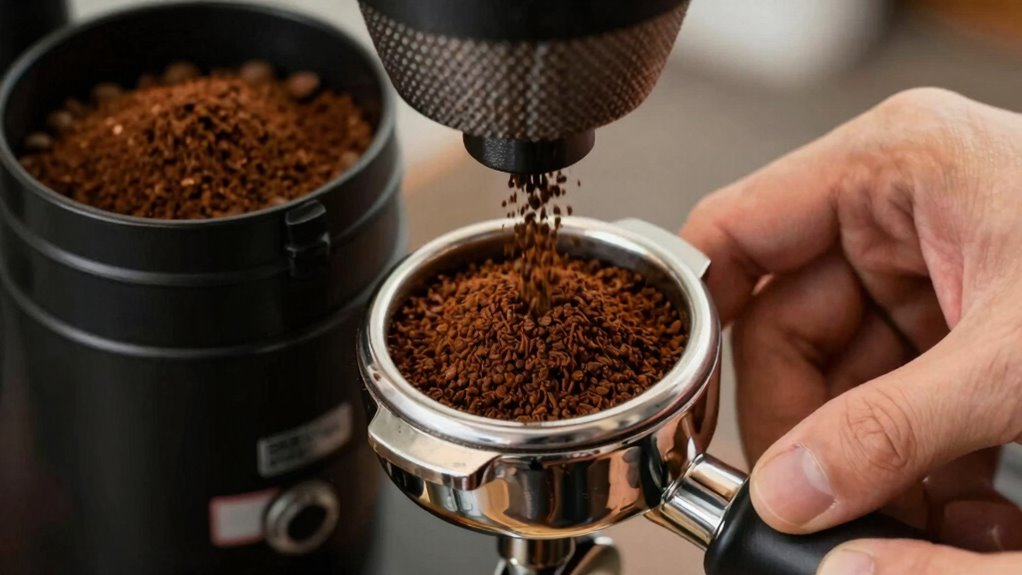
- Use a level, firm pressure for consistency
- Distribute grounds evenly before tamping
- Maintain a steady, controlled tamping motion
- Remember to practice patience during the process to achieve the best extraction results.
- Developing a consistent technique can help improve your espresso quality over time.
- Understanding the precision involved in tamping can significantly influence the final flavor profile of your espresso.
- Incorporating proper cleaning and sterilization of your equipment ensures optimal performance and flavor integrity.
- Being aware of breast cancer symptoms can lead to earlier detection and better outcomes.
Why Small Changes in Grind Size Impact Flavor Significantly
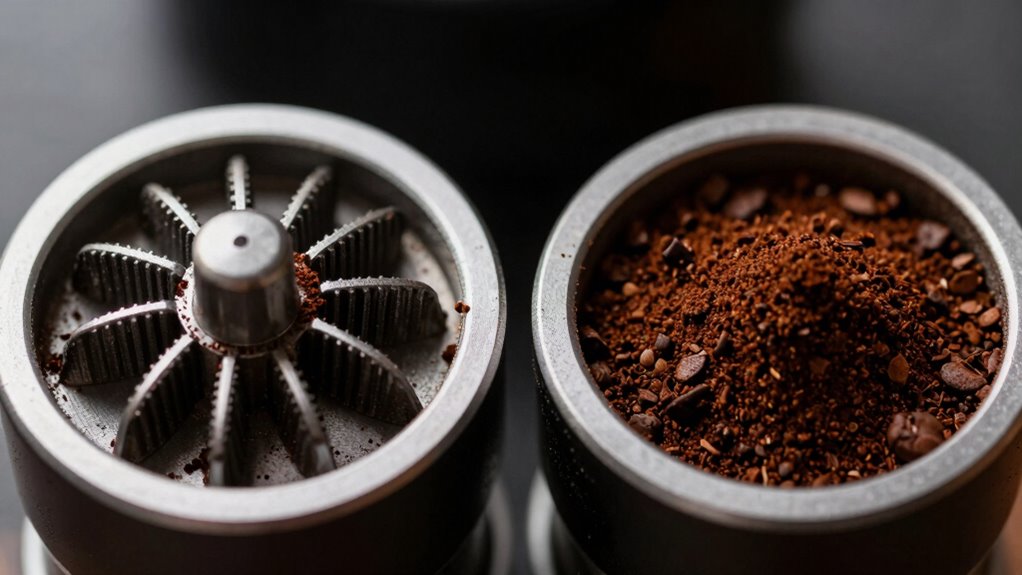
Even tiny adjustments to your grind size can dramatically change the flavor of your espresso. Because espresso brewing relies on high pressure and rapid extraction, the grind size directly influences water flow through the coffee grounds. A slightly finer grind increases resistance, slowing water flow and extracting more solubles, which can lead to a richer, more intense flavor. Conversely, a coarser grind allows water to pass quickly, resulting in under-extraction and a weak, sour taste. The flavor impact of these small changes is significant; it can turn a balanced shot into one that’s over- or under-extracted. That’s why precise control over your grind size is essential. Even minor tweaks can make the difference between a delicious espresso and an unbalanced cup.
Troubleshooting Espresso Grind Issues: Over-Extraction, Channeling, and More

Troubleshooting espresso grind issues involves identifying common problems like over-extraction and channeling, which can ruin your shot. These issues often stem from incorrect grind size or uneven tamping, disrupting the flavor balance. To fix them, focus on:
- Adjusting grind size to prevent water from flowing too quickly or slowly
- Ensuring consistent tamping pressure for uniform extraction
- Watching for uneven coffee bed, which causes channeling and bitterness
Over-extraction results in bitter, harsh flavors, while under-extraction leaves shots sour and weak. Proper grind size helps control extraction speed, maintaining a balanced flavor profile. Regularly assess your grind and tamp technique to troubleshoot effectively, and remember that small adjustments can make a big difference in your espresso’s overall quality. Additionally, understanding the importance of grind consistency can significantly improve your results. Paying attention to consistent tamping pressure is equally crucial for achieving a smooth and even extraction.
How Your Equipment and Maintenance Influence Espresso Grind Quality
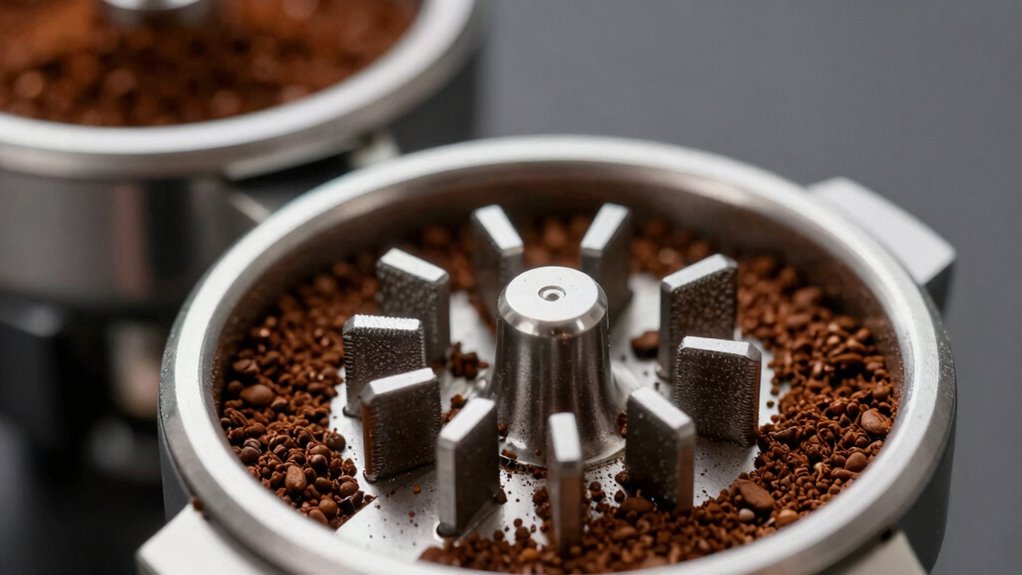
Your espresso grind quality heavily depends on the condition and calibration of your equipment. Proper equipment calibration guarantees your grinder produces consistent particle sizes, which is vital for espresso extraction. If your grinder isn’t calibrated correctly, you might end up with uneven grinds that lead to over- or under-extraction. Regular maintenance routines keep your machine running smoothly, preventing clogs, worn burrs, or temperature inconsistencies that can affect grind quality. Clean your grinder thoroughly and check calibration settings frequently, especially after adjustments or if you notice changes in shot quality. Consistent calibration ensures your espresso grind remains stable over time. Well-maintained equipment minimizes variability, making it easier to dial in your grind. Additionally, understanding the importance of indoor air quality can help maintain a cleaner, more efficient workspace, reducing dust and debris that could impact your equipment’s longevity. Proper equipment calibration and routine maintenance are essential for consistent results, as they directly influence the precision of your grind size. Ultimately, Consistent calibration and diligent maintenance are key to achieving a stable, high-quality espresso grind every time.
Why Espresso Grinding Is More Complex Than Filter Coffee

Espresso grinding demands a high level of precision to guarantee consistency shot after shot. You also have to account for the variability in bean profiles, which can affect how the coffee should be ground. These factors make espresso grinding more complex compared to the more forgiving process of filter coffee.
Precision Required for Consistency
Remember:
- Slight changes in grind size drastically affect extraction time
- Particle size uniformity influences shot clarity and body
- Consistent grind guarantees repeatable results shot after shot
Mastering this precision ultimately elevates your espresso quality, making your brew more balanced and flavorful.
Variability in Bean Profiles
Have you ever noticed how different beans can require vastly different grind settings, even when aiming for the same brewing style? Variability in bean profiles makes espresso harder to perfect than filter coffee. Bean origin influences flavor, density, and moisture content, affecting grind size needs. Roast level also plays a role; darker roasts are more brittle and grind differently than light roasts. To illustrate, consider this table:
| Bean Origin | Roast Level | Grind Impact |
|---|---|---|
| Africa | Light | Coarser grind needed |
| South America | Dark | Finer grind required |
| Asia | Medium | Moderate adjustments |
| Central America | Light | Slightly coarser |
Understanding these variables helps you tune your grinder precisely for each batch, making espresso more challenging.
Tips for Mastering Espresso Grinding at Home
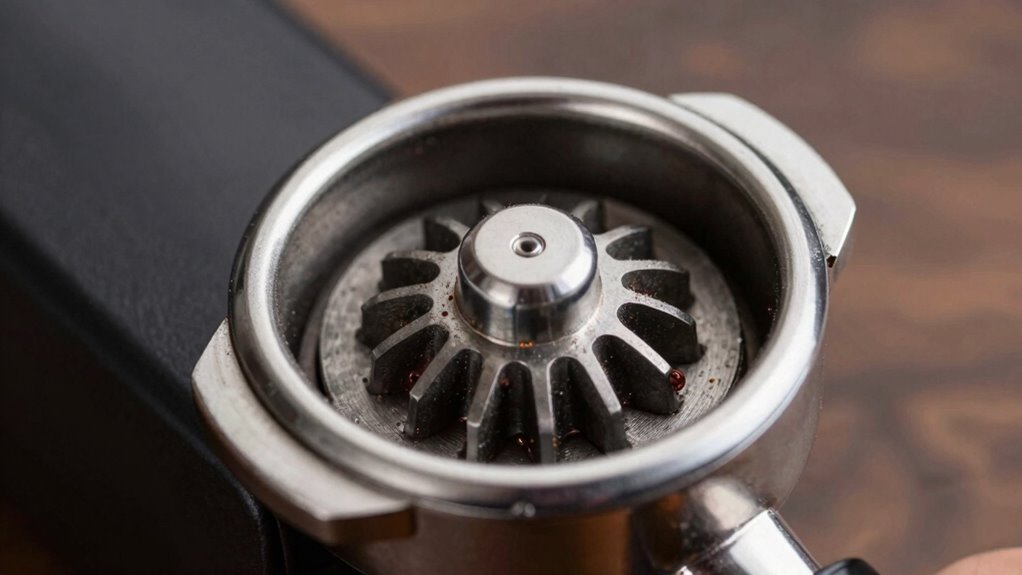
Mastering espresso grinding at home can be challenging, but with the right approach, you can achieve consistent, high-quality shots. Focus on the grind size—it’s essential for proper extraction. Start with a medium-fine grind and tweak based on taste and shot timing. Bean freshness also plays a critical role; fresher beans usually require a slightly coarser grind to prevent over-extraction. Here are some tips to help you improve:
Achieve perfect espresso with consistent grind size, fresh beans, and precise measurements.
- Regularly calibrate your grinder to maintain consistent grind size
- Use a scale to measure coffee doses precisely
- Keep beans stored in an airtight container away from light and heat
How to Adjust Your Grind When Switching Beans or Roasts?

When switching between different beans or roasts, adjusting your grind is essential to maintaining ideal extraction. Freshness plays a big role—fresher beans often require a slightly coarser grind because they’re more soluble, while older beans may need a finer grind. Always assess bean freshness before adjusting. To make precise changes, calibrate your grinder regularly, ensuring consistent grind size. Start with small adjustments—if your shot pulls too quickly, grind finer; if it’s slow or under-extracted, go coarser. Keep notes on your adjustments to streamline future changes. Remember, different beans and roasts behave uniquely, so your grind must adapt accordingly. Regular grinder calibration and awareness of bean freshness help you dial in the perfect shot each time.
Frequently Asked Questions
How Does Ambient Humidity Affect Espresso Grind Consistency?
Ambient humidity affects your espresso grind consistency by causing humidity fluctuations, which can lead to grind clumping. When humidity rises, your coffee grounds tend to stick together, making it harder to achieve a uniform grind. Conversely, low humidity can cause the grounds to become too dry and dusty. To maintain consistency, you should store your beans in a sealed container and adjust your grinder settings as humidity levels change.
What Role Does Grinder Burr Type Play in Espresso Grinding?
The burr type directly impacts grind uniformity in espresso grinding. You’ll find that burr material, like stainless steel or ceramic, influences durability and consistency, making your grind more precise. Conical burrs often produce more uniform grounds, which are essential for espresso extraction. You should choose burrs based on the material and design, as these factors determine how evenly your beans are ground, ultimately affecting flavor and shot quality.
Can Different Roast Levels Require Different Grind Settings?
Yes, different roast levels often require different grind settings because roast variability affects bean density and structure. Darker roasts tend to be less dense, needing a slightly coarser grind, while lighter roasts are denser, requiring a finer grind for ideal extraction. Precision in grind setting is essential to accommodate these differences, ensuring consistent espresso shots and preventing over or under-extraction. Adjusting for roast variability helps you achieve better flavor and consistency.
How Does Grind Retention Impact Shot Quality?
Grind retention impacts shot quality by affecting consistency and extraction. When coffee bean density varies, it influences how particles are distributed during grinding, leading to uneven grind distribution. If retained grounds aren’t cleared, they can cause over-extraction or under-extraction, resulting in a bitter or weak shot. Regular cleaning guarantees a fresh grind distribution, maintaining ideal espresso shot quality and preventing stale flavors from lingering in your grinder.
What Are the Best Practices for Cleaning Espresso Grinders?
To keep your espresso grinder in top shape, follow a regular cleaning schedule—ideally daily or weekly—depending on usage. Always calibrate the grinder afterward to guarantee consistent grind size. Remove residual coffee oils and grounds using a brush and cleaning solution designed for espresso grinders. Proper cleaning and calibration reduce grind retention, improve shot quality, and extend your grinder’s lifespan, making your espresso consistently delicious.
Conclusion
Mastering espresso grinding is like tuning a fine instrument—you need precision, patience, and attention to detail. The tiniest change in grind size can turn a perfect shot into a bitter disappointment. Think of your grinder as your partner in coffee-making; understanding its quirks and maintaining it well is key. With practice, you’ll find that achieving a consistent, delicious espresso isn’t just a goal—it becomes your signature tune.
Halloween Picks
halloween
As an affiliate, we earn on qualifying purchases.