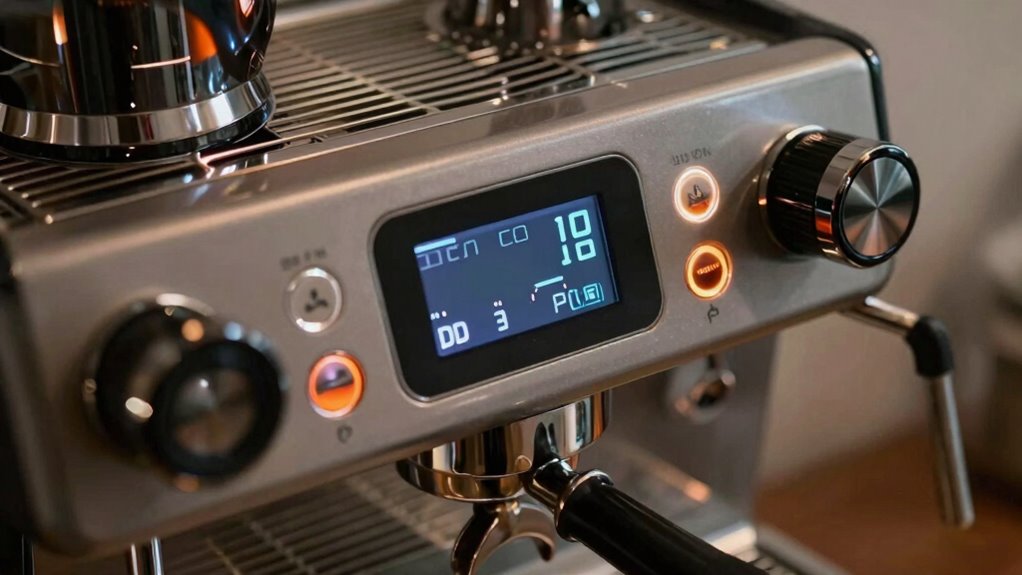

PID temperature control adjusts your espresso machine’s internal temperature, ensuring consistent brew and steam conditions. It fine-tunes the water temperature, stabilizes pressure during extraction, and regulates milk steaming heat. This results in better shot consistency, enhanced flavor, smoother microfoam, and fewer issues like scorching milk or under-extraction. If you want to discover how these adjustments improve your brewing experience and help you make professional-quality coffee at home, keep exploring the details.
Key Takeaways
- Precisely adjusts the machine’s internal temperature for optimal brewing conditions.
- Stabilizes brew pressure to ensure consistent extraction quality.
- Regulates steam temperature for better milk frothing and microfoam.
- Prevents temperature fluctuations that cause under- or over-extraction.
- Enhances flavor, aroma, and overall consistency of espresso and milk textures.
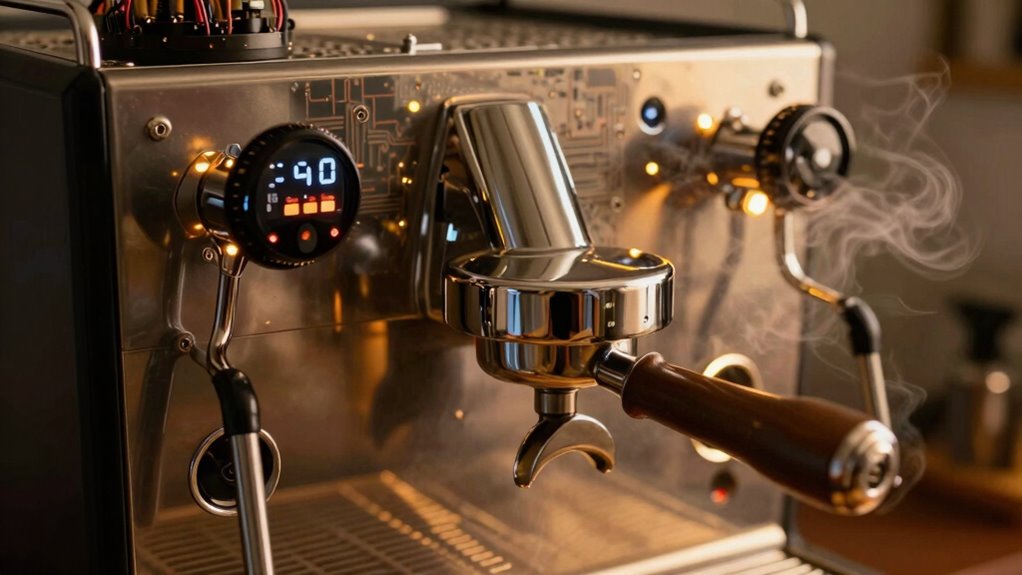
If you want consistently perfect espresso shots, understanding how PID temperature control works is essential. This technology fine-tunes the internal temperature of your espresso machine, ensuring each shot is extracted under ideal conditions. When you adjust the PID settings, you’re not just changing a number on a display; you’re influencing how your machine manages critical factors like brew pressure and milk foam quality. Brew pressure is essential because it affects how water interacts with coffee grounds, extracting flavors effectively. If the temperature isn’t just right, you might find that your espresso is under-extracted, lacking richness, or over-extracted, resulting in bitterness. PID control maintains a steady temperature, which helps keep the brew pressure consistent, producing a balanced shot shot after shot.
When the temperature is regulated precisely, your machine produces a more stable environment for brewing. This stability impacts the crema and flavor profile, ensuring that the coffee’s delicate oils and aromas are preserved. Without PID control, temperature fluctuations can cause inconsistent pressure levels, disrupting the espresso extraction process. These fluctuations can also influence how well you create milk foam. If your machine runs too hot or too cold, the milk won’t foam properly, either becoming too thin or overly stiff. Consistent temperature means you can steam milk to the perfect texture—smooth, glossy, and rich—making your lattes and cappuccinos look and taste better.
Adjusting the PID settings allows you to fine-tune your machine’s temperature, which directly impacts the quality of your espresso and milk foam. When you set the right temperature, you’ll notice a more uniform extraction, resulting in a shot with balanced acidity and body. This consistency also makes steaming milk easier, as the milk heats evenly and foams up to the desired microfoam texture. Furthermore, accurate temperature control helps prevent common issues like scorching the coffee or overheating the milk, which can ruin both the shot and your milk art. Additionally, temperature stability is crucial for maintaining consistent brew pressure and avoiding fluctuations that can negatively affect extraction and foaming. Proper temperature regulation can also extend the lifespan of your machine by reducing wear on its heating components.
Having a better understanding of thermal regulation can help you troubleshoot and optimize your espresso-making process for better results. In essence, PID temperature control changes more than just the internal display number. It creates a more controlled brewing environment, stabilizing brew pressure and enhancing milk foam creation. With this technology, you gain the ability to consistently produce high-quality espresso and perfectly textured milk, elevating your home brewing game. This precise temperature management not only improves the taste but also contributes to the longevity of your equipment, making it a smart investment for serious coffee enthusiasts. The result is a more enjoyable, professional-level coffee experience every time you press the button.

AMZCHEF Ultra Espresso Machine, 58mm Professional with PID Temperature Control for Light to Dark Roast Beans, Built-in Pressure Gauge & 10mm Steam Wand,Provides Barista-Level Lattes and Cappuccinos
✅ Commercial-Grade 58mm Portafilter Unlike common 51mm portafilters, our product features a true 58mm professional portafilter. This larger…
As an affiliate, we earn on qualifying purchases.
As an affiliate, we earn on qualifying purchases.
Frequently Asked Questions
How Does PID Control Affect Espresso Shot Consistency?
PID control improves your espresso shot consistency by maintaining temperature stability, reducing fluctuations that can affect extraction. With precise temperature regulation, you get more brewing precision, ensuring each shot is brewed at the perfect temperature. This consistency helps you achieve the desired flavor profile every time, making your espresso more reliable and enjoyable. Overall, PID control allows you to fine-tune your machine for maximum performance, resulting in better-tasting espresso shots.
Can PID Temperature Adjustments Improve Flavor Extraction?
Yes, PID temperature adjustments can improve flavor extraction by fine-tuning the water temperature. When you optimize the temperature, you enhance extraction precision, allowing more desirable flavors to develop while reducing bitterness or sourness. This control helps you achieve a richer, more balanced flavor profile, making your espresso shots more consistent and flavorful. Adjusting the PID settings gives you the ability to tailor the brew process to your taste preferences.
Is PID Control Suitable for All Types of Espresso Machines?
PID control isn’t suitable for all espresso machines. You need to take into account machine compatibility and installation requirements. Many modern espresso machines can integrate PID controllers easily, but older models might lack the necessary components or space. Before installing a PID, check if your machine supports it and whether you can meet the installation needs. If compatible, PID can greatly enhance temperature stability and brewing consistency.
How Often Should the PID Settings Be Recalibrated?
Think of your PID as a finely tuned orchestra, requiring regular tuning to stay in harmony. You should recalibrate your PID settings every 3 to 6 months, depending on usage and temperature stability needs. Regular calibration ensures consistent brewing temperatures, preventing fluctuations that can spoil your espresso. Keep an eye on performance and recalibrate when you notice temperature inconsistencies or after significant machine maintenance for peak results.
Does PID Control Impact Energy Consumption of the Machine?
Yes, PID control impacts your espresso machine’s energy consumption. By precisely maintaining the most suitable temperature, it enhances energy efficiency, reducing unnecessary power use. Instead of overheating or constantly adjusting, the PID system stabilizes temperature with minimal energy waste. This means you’ll see lower power consumption and save on electricity bills over time, all while ensuring your machine consistently delivers perfect espresso shots.

Breville BES003 Temp Control Milk Jug Espresso Accessory for Creating Latte Art
The Breville Temp Control Milk Jug includes an integrated thermometer indicator strip to help you texture milk to…
As an affiliate, we earn on qualifying purchases.
As an affiliate, we earn on qualifying purchases.
Conclusion
So, by switching to PID temperature control, you safeguard your shot’s soul, smoothing out sudden shifts and securing consistency. It’s not just a tweak—it’s a transformation that turns temperamental temps into tranquil tides. With steady settings, you savor a superior sip, every single time. Remember, precision prevails; patience pays. Perfecting your pour begins with a simple step—embrace the control, and let your espresso’s excellence evolve effortlessly.
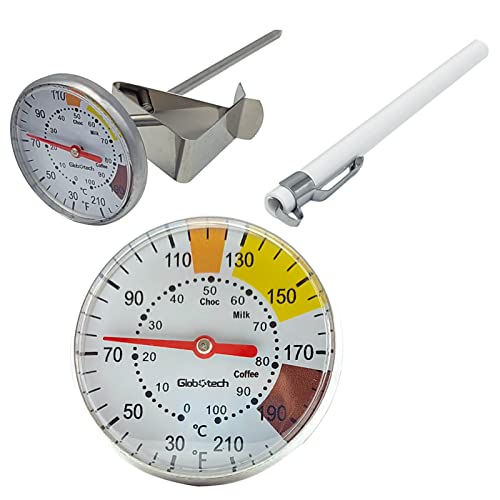
Milk Frothing Thermometer for Coffee Chocolate – Cappuccino Frothy Milk Foam Stainless Steel Thermometer for 12 Oz, 20 Oz and 32 Oz Espresso Steaming Pitchers 2" Dail 5" Stem
MILK FROTHING THERMOMETER – This stainless-steel thermometer is designed for milk frothing, steaming and making cappuccino, measure the…
As an affiliate, we earn on qualifying purchases.
As an affiliate, we earn on qualifying purchases.

Qipecedm Espresso Cups Set of 2, 4 OZ Double Spouts Cups, Shot Glasses, Milk Cup with Handle, Clear Glass, Espresso Accessories for Machine, Small
【ESPRESSO MACHINE ACCESSORIES】The capacity of 4 oz allows you to fill 2 servings of espresso at one time….
As an affiliate, we earn on qualifying purchases.
As an affiliate, we earn on qualifying purchases.