
Choosing the right material and base type for your moka pot affects its durability, heat transfer, and coffee quality. Aluminum pots heat quickly and are lightweight, but they need proper maintenance to prevent corrosion. Stainless steel lasts longer, resists rust, and works on induction stovetops, offering consistent brewing. The base shape also impacts heat distribution and stability. Understanding these factors helps you get the best results—and if you keep going, you’ll discover how to optimize your brewing experience even more.
Key Takeaways
- Aluminum moka pots heat quickly and are lightweight but require careful cleaning to prevent corrosion.
- Stainless steel moka pots are durable, corrosion-resistant, and suitable for induction stovetops.
- Flat-bottomed bases ensure compatibility with most stove types and stable heating.
- Material choice affects heat transfer, durability, and ease of maintenance for long-term use.
- Proper base design and material compatibility optimize heat distribution and brewing efficiency.
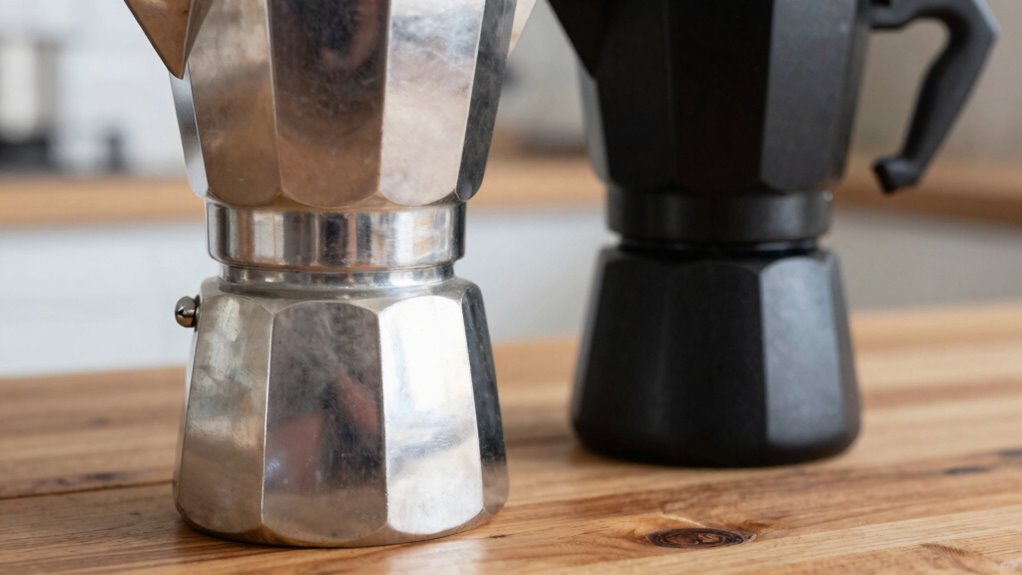
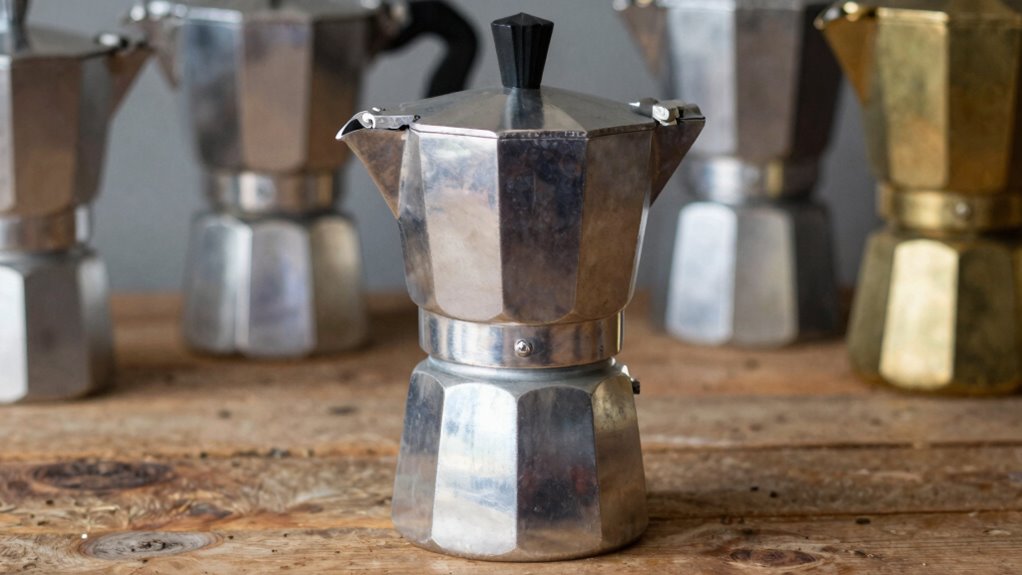
Choosing the right moka pot isn’t just about style—it’s also about understanding how the material and base type can influence your brewing experience. The material affects heat transfer, durability, and even the flavor of your coffee, so selecting the right one makes a difference in your daily ritual. For coffee brewing, aluminum moka pots are popular because they heat quickly and distribute heat evenly, which helps produce a rich, consistent espresso-like brew. These pots are lightweight and typically more affordable, making them a practical choice for everyday use. However, aluminum can react with certain cleaning agents and acidic ingredients, so proper maintenance tips are essential to keep your moka pot in top shape. Regularly hand washing with warm water and avoiding abrasive scrubbers will help maintain the integrity of the aluminum, preventing discoloration and corrosion. Avoid dishwashers, as the harsh detergents can damage the material over time.
On the other hand, stainless steel moka pots are more durable and resistant to corrosion, making them ideal for those who want a long-lasting option. They’re also generally compatible with induction stovetops, expanding your brewing possibilities. Stainless steel tends to retain heat longer, which can lead to more consistent brewing, but it may take slightly longer to heat up compared to aluminum. When it comes to maintenance tips, stainless steel requires less delicate handling. You can safely use mild detergents and scrub brushes to clean the interior and exterior without worry. Just be sure to dry the pot thoroughly after washing to prevent water spots and corrosion, especially if you live in a humid climate. Proper stove compatibility is essential to ensure your moka pot heats efficiently and produces the best coffee. Additionally, choosing a moka pot with a high-quality seal can prevent leaks and ensure optimal pressure during brewing. Understanding the material properties of your moka pot can help you make better decisions about cleaning and usage to prolong its lifespan.
The base type of your moka pot also influences your overall experience. A flat-bottomed moka pot sits securely on most stove types, providing stable heating, while a rounded or more specialized base might be designed for specific stovetops, like induction. If you’re using an induction stove, ensure your moka pot has a compatible base; otherwise, it won’t heat efficiently. The size and shape of the base can also impact how evenly heat is distributed during brewing, which directly affects coffee quality. Proper maintenance, regardless of material or base, is key to a great coffee brewing experience. Regular cleaning, avoiding harsh chemicals, and storing your moka pot in a dry place will ensure that it continues to perform well over time. Additionally, choosing a well-designed base can improve the overall stability and heat distribution, contributing to a better brewing process. Being aware of the heat conduction properties of different base types can help you optimize your brewing technique. By choosing the right material and understanding your stove’s compatibility, you set yourself up for consistently delicious coffee and a longer-lasting moka pot.

Bialetti – New Venus Induction, Stovetop Coffee Maker, Suitable for all Types of Hobs, Stainless Steel, 6 Cups (7.9 Oz), Silver
- Traditional and innovative design: Original induction coffee maker with Italian taste
- High-quality stainless steel: Made from durable 18/10 stainless steel
- Easy to use: Fill with ground coffee, heat, and serve
As an affiliate, we earn on qualifying purchases.
As an affiliate, we earn on qualifying purchases.
Frequently Asked Questions
Are Moka Pots Suitable for Induction Cooktops?
Yes, moka pots are suitable for induction cooktops if they have a compatible base. Compatibility issues often arise with traditional moka pots made of aluminum, which don’t work on induction unless they have a magnetic base. Aesthetic differences, like stainless steel designs, also matter because they match induction cooktops better. Always check if your moka pot’s base is induction-compatible to guarantee efficient heating and avoid frustration.
How Does Material Affect the Longevity of a Moka Pot?
The material directly impacts your moka pot’s longevity through durability and corrosion resistance. For instance, stainless steel resists rust and withstands daily use, making it more durable over time. Aluminum, though lightweight and good heat conductor, may corrode if not properly maintained, reducing its lifespan. Choosing a high-quality, corrosion-resistant material guarantees your moka pot remains reliable and lasts longer, saving you money and effort in replacements.
Can I Use Different Types of Coffee Grounds With Various Materials?
Think of your moka pot as a musical instrument, where the right coffee grounds hit the perfect note. You can use different types of coffee grounds with various materials, but keep in mind, coffee grind compatibility varies—finer grounds work better with aluminum, while coarser ones suit stainless steel. Material flavor influence affects taste, so experiment to find what complements your preferred brew best. Adjust grind size accordingly for ideal flavor and performance.
Is Cleaning Different Depending on the Moka Pot’s Material?
Yes, cleaning techniques vary depending on your moka pot’s material. For instance, stainless steel is durable and can handle scrubbing with a brush and mild soap, while aluminum may require gentler cleaning to prevent damage. You should avoid abrasive cleaners for delicate materials. Regular cleaning preserves material durability, prevents buildup, and guarantees the best coffee flavor. Always dry your moka pot thoroughly after cleaning to prevent corrosion or discoloration.
Do Base Types Impact Brewing Temperature Stability?
Your moka pot’s base type profoundly impacts brewing temperature stability, making it as essential as a maestro’s baton. A flat base offers superior temperature consistency and heat transfer efficiency, ensuring your coffee brews evenly. Conversely, a rounded base might cause uneven heating, leading to inconsistent extraction. So, choosing a base that maximizes heat transfer efficiency helps maintain stable brewing temperatures, resulting in richer, more flavorful coffee every time.

Primula Classic Stovetop Espresso and Coffee Maker, Moka Pot for Italian and Cuban Café Brewing, Greca Coffee Maker, Cafeteras, 6 Espresso Cups, Silver
- Serves Six Espresso Cups: Produces six rich espresso servings
- Durable Cast Aluminum Construction: Long-lasting, even heat distribution
- Easy to Use Stovetop Design: Simple water and coffee setup
As an affiliate, we earn on qualifying purchases.
As an affiliate, we earn on qualifying purchases.
Conclusion
Think of choosing your moka pot as selecting the perfect paintbrush for a masterpiece. Just as the right brush brings your art to life, the material and base type shape your coffee’s flavor and aroma. When you pick wisely, you’re not just making coffee—you’re crafting a daily ritual, a symphony of taste that awakens your senses. So, choose your moka pot thoughtfully, and let each brew be a masterpiece in your morning routine.
Bialetti – New Venus Induction, Stovetop Coffee Maker, Suitable for all Types of Hobs, Stainless Steel, 6 Cups (7.9 Oz), Silver
- Traditional and innovative design: Original induction coffee maker with Italian taste
- High-quality stainless steel: Made from durable 18/10 stainless steel
- Easy to use: Fill with ground coffee, heat, and serve
As an affiliate, we earn on qualifying purchases.
As an affiliate, we earn on qualifying purchases.
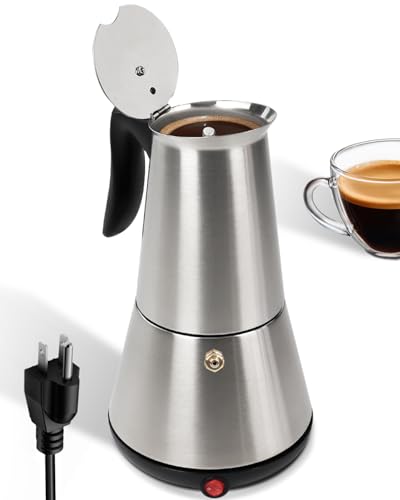
Belly Moka Electric Moka Pot with Detachable Base Stainless Steel Espresso Maker 10oz 6 Cup 300ml Silver Italian Coffee Maker for Kitchen Home 110V
- Material: Stainless steel construction for durability
- Safety Features: Cool handle and heat-resistant lid
- Compact Design: Space-saving for small kitchens
As an affiliate, we earn on qualifying purchases.
As an affiliate, we earn on qualifying purchases.