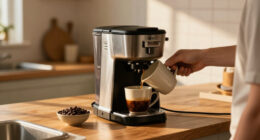
For many home brewers, the first meaningful coffee accessory decision is how to grind the beans. A burr grinder and a blade grinder can both turn whole beans into grounds, but they produce different results and suit different routines. Burr grinders crush beans between set surfaces, giving you more consistent particle sizes and repeatable settings. Blade grinders chop beans with a spinning blade, which keeps the price and footprint down but gives you less control over the grind.

Get coffee and tea gear delivered free with Prime
- Fast, free delivery on millions of items
- Prime Video, Amazon Music and more included
- Member-only deals all year

Bodum 34oz Pour Over Coffee Maker, High-Heat Borosilicate Glass with Reusable Stainless Steel Filter and Cork Grip
- ✔ Capacity: 34 oz (up to eight 4-ounce cups)
- ✔ Materials: Borosilicate glass, stainless steel filter, cork grip
- ✔ Filter: Reusable stainless steel mesh
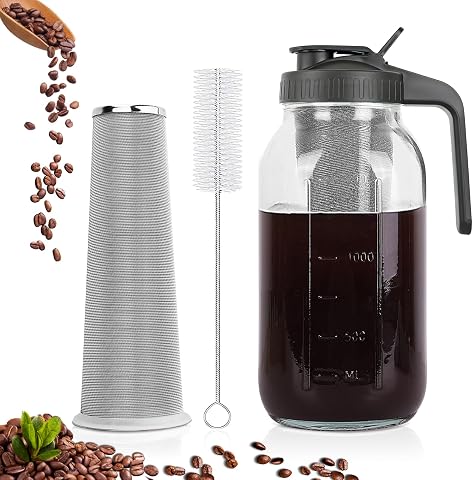
Cold Brew Coffee Maker, 64 oz Mason Jar Pitcher with Stainless Steel Filter, Pour Spout Handle Lid, Airtight & Leak-Proof for Ice…
- ✔ Capacity: 64 oz
- ✔ Materials: Soda lime glass, plastic lid, stainless steel filter
- ✔ Filter mesh: 160 microns

Subminimal SubScale Digital Dosing Cup with LED Display (Black)
- ✔ Accuracy: 0.1 g
- ✔ Form factor: Handheld dosing cup and scale
- ✔ Material: Food-safe Tritan
The difference matters most when you care about brewing consistency, use methods that need a specific grind size, or make coffee often enough to notice small changes. A burr grinder is the stronger long-term choice for espresso, pour-over, and people who want to adjust their recipes. A blade grinder can make sense for occasional drip or French press coffee, especially when cost and storage space matter more than precision. This comparison focuses on the practical tradeoff: how much better control is worth paying for in your kitchen.
At a Glance
| Criteria | Burr grinder | Blade grinder | Winner |
|---|---|---|---|
| Grind consistency | More even particle sizes from crushing beans between burrs | Uneven mix of fine and coarse pieces from chopping | A |
| Brew-method control | Adjustable settings support a wider range of brewing methods | Limited precision; timing the grind is a rough adjustment | A |
| Taste repeatability | Repeatable settings make recipes easier to reproduce | Harder to reproduce the same grounds from batch to batch | A |
| Price and value | Higher upfront cost, with benefits for regular and precision-focused brewers | Low upfront cost and practical for occasional use | Depends |
| Ease of use | Set a grind size and dose, then repeat the process | Simple controls, but results depend on how long you run the blade | Depends |
| Cleaning and upkeep | Often needs occasional brushing; design affects how much disassembly is required | Chamber and blade need careful cleaning; grounds can cling to surfaces | Depends |
| Size and noise | Can be larger and still noisy, especially in electric models | Usually compact, though the motor can be loud | B |
Bodum 34oz Pour Over Coffee Maker, High-Heat Borosilicate Glass with Reusable Stainless Steel Filter and Cork Grip
The Bodum is the most complete brewing accessory in this group: it turns ground coffee and hot water into a carafe of ready-to-serve pour-over. Its 34-ounce capacity suits a shared breakfast or several cups across the morning, while the reusable stainless steel filter avoids paper filters and lets more aromatic oils through. Compared with the cold brew pitcher, this is the better fit when we want hot coffee now rather than a chilled batch waiting in the refrigerator. Compared with the SubScale, it directly handles brewing rather than just preparation.The borosilicate carafe is designed to handle brewing heat, and the cork grip gives us a place to hold it while pouring. Still, this is single-wall glass, so the body can become hot; the grip does not make the whole vessel insulated. We also need to control the pour ourselves. That takes more attention than steeping coffee in the pitcher and makes consistency partly dependent on technique. The mesh filter is convenient and reusable, though it can produce a different cup texture from paper filtration. We should choose the Bodum for a straightforward manual brewing setup, and skip it if we want push-button brewing or a fully insulated server.
Pros:
- Brews up to 34 ounces in one carafe for serving several cups.
- Reusable stainless steel mesh filter avoids paper-filter waste.
- Borosilicate glass is suited to hot brewing, with a cork grip for handling.
- Dishwasher-safe design helps simplify routine cleanup.
Cons:
- Single-wall glass can become hot during brewing and serving.
- Consistent results require some practice with manual pouring.
Best for: Coffee drinkers who want a reusable-filter pour-over carafe for serving multiple cups of hot coffee.
Not ideal for: People who want cold brew, insulation, or a brewing process that requires little attention to pouring.
Bottom line: For the broadest brewing usefulness in this lineup, we would choose the Bodum if we are comfortable learning a manual pour.
“For the broadest brewing usefulness in this lineup, we would choose the Bodum if we are comfortable learning a manual pour.”
Cold Brew Coffee Maker, 64 oz Mason Jar Pitcher with Stainless Steel Filter, Pour Spout Handle Lid, Airtight & Leak-Proof for Ice…
When our priority is having cold coffee ready in the refrigerator, this 64-ounce mason jar pitcher offers more capacity than the Bodum and a different kind of convenience. Its stainless steel filter holds grounds, tea leaves, or fruit during steeping, while the silicone-sealed lid is designed to close tightly for storage and pouring. The 160-micron mesh is a useful detail for straining fine particles, especially if we want a clean pour without transferring the drink through a separate sieve. Unlike the Bodum, it is built around steeping and storage, not pouring hot water through grounds.The wide mouth makes filling and cleaning easier, and the dishwasher-safe design reduces the friction of using it regularly. The main limitation is the vessel itself: heavy-duty soda lime glass is still breakable, and the specified maximum safe temperature is 60°C (140°F). We should avoid boiling water and sudden temperature changes. That rules it out as a general hot coffee carafe and calls for care when moving it around a crowded kitchen. Compared with the SubScale, it takes up more storage space but produces a full batch of a drink. This pitcher is a sensible choice for cold brew and other chilled infusions; buyers seeking compact hot brewing should pick the Bodum instead.
Pros:
- 64-ounce capacity supports make-ahead batches.
- Fine 160-micron stainless steel filter strains coffee grounds and infusion ingredients.
- Airtight lid with silicone seal is designed to help prevent leaks during storage.
- Wide mouth and dishwasher-safe construction make filling and cleanup easier.
Cons:
- Glass can break if dropped or knocked against a hard surface.
- Maximum safe temperature of 60°C (140°F) excludes boiling water and sudden temperature changes.
- Larger body requires more refrigerator and cabinet space than a dosing cup.
Best for: Households that prepare cold brew, iced tea, or fruit-infused drinks in larger batches and want an integrated filter.
Not ideal for: Anyone who needs a hot-water-safe carafe, an impact-resistant pitcher, or a compact dosing accessory.
Bottom line: We would pick this pitcher over the Bodum when batch cold brew and chilled infusions matter more than hot, immediate brewing.
“We would pick this pitcher over the Bodum when batch cold brew and chilled infusions matter more than hot, immediate brewing.”
Subminimal SubScale Digital Dosing Cup with LED Display (Black)
The Subminimal SubScale is the specialist of this roundup. It combines a handheld dosing cup with a digital scale that measures in 0.1-gram increments, which can help us portion coffee more precisely before brewing. Its touch-activated LED display stays out of view until needed, and USB-C charging means we do not have to keep disposable batteries on hand. In contrast to the Bodum and cold brew pitcher, it does not brew or store a batch; its value is in making the preparation step more compact.The food-safe Tritan body and IPX-4 splash resistance suit a busy counter where drips are likely, while auto shut-off helps conserve its rechargeable battery. The handheld format can be convenient for weighing a dose directly into the cup, but it is less versatile than a broader counter scale for weighing containers, ingredients, or larger quantities. Battery capacity is 400 mAh, so frequent daily use may mean charging more often. The black finish is the only listed color, a small but real constraint for buyers matching a kitchen setup. We would choose it over either glass vessel only when measured dosing is the priority; if we need the accessory to make coffee, the Bodum or pitcher is the more direct purchase.
Pros:
- Measures in 0.1-gram increments for controlled coffee dosing.
- Integrated cup and handheld scale consolidate two preparation steps.
- USB-C rechargeable battery avoids disposable batteries.
- IPX-4 splash resistance and auto shut-off suit routine counter use.
Cons:
- A 400 mAh battery may need frequent charging with heavy daily use.
- The handheld dosing format is more specialized than a general counter scale.
- Available in black only.
Best for: Espresso and coffee enthusiasts who want a compact, rechargeable way to weigh doses into an integrated cup.
Not ideal for: Buyers seeking a brewer, a large-capacity scale, or a tool for weighing a wide range of kitchen ingredients.
Bottom line: We would choose the SubScale when precise, compact dosing matters more than owning another brewing vessel.
“We would choose the SubScale when precise, compact dosing matters more than owning another brewing vessel.”
As an Amazon Associate we earn from qualifying purchases.
Key Differences
The burr grinder’s central advantage is control. Its settings change the gap between grinding surfaces, so you can aim for a finer espresso grind or a coarser French press grind with much greater consistency. The blade grinder offers no comparable setting: running it longer tends to make more fine particles, but the result can still contain a broad mix of sizes. That difference affects extraction. Fine particles can release flavor quickly while larger pieces extract more slowly, so a mixed grind may taste both harsh and weak in the same cup.
That advantage does not make every burr grinder the right purchase for every household. Burr models cost more, take up more space in some kitchens, and need adjustment and cleaning like any grinder. If you make coffee only now and then with a forgiving method, a blade grinder can do the basic job at a fraction of the cost. For daily brewing, espresso, or a routine built around dialing in a recipe, the burr grinder’s consistency is usually worth paying for.
Detailed Comparison
Grind consistency (Burr grinder wins — major)
Burr grinder wins by a major margin. Burrs crush beans through a controlled gap, producing a more uniform grind than a blade’s chopping action. A blade grinder can create both dust-fine particles and large fragments in the same batch. In practice, that unevenness makes extraction less predictable and can leave coffee tasting imbalanced. Choose a burr grinder if consistent cups matter to you; for occasional coffee where exact flavor is less important, the blade grinder may be adequate.
Brew-method control (Burr grinder wins — major)
Burr grinder wins by a major margin for people who switch brewing methods or use espresso. Its grind settings let you make deliberate changes, and many models offer small adjustments that help fine-tune a recipe. A blade grinder’s timing is only a rough proxy for grind size, not a dependable setting. The practical result is that a burr grinder gives you a workable route from espresso to pour-over to French press. A blade model is better suited to one familiar, less exact brewing routine.
Taste repeatability (Burr grinder wins — moderate)
Burr grinder wins by a moderate margin. Because its grind settings and particle sizes are more consistent, it is easier to repeat a recipe and understand what changed when a cup tastes different. With a blade grinder, results can vary with the batch, bean quantity, and grinding time. This is most noticeable for daily drinkers who adjust water, dose, or brew time. Someone who simply wants a straightforward cup may not notice enough difference to justify upgrading.
Price and value (moderate difference)
The winner depends on use. A blade grinder costs less to buy, making it the clear budget choice for a tight budget or occasional brewing. A burr grinder demands more upfront, but regular users get value from more repeatable results and broader control. The price premium makes sense when better grinding will change how often you enjoy your coffee or help you use methods that depend on precision. If the grinder will sit unused most days, the blade model is the more sensible purchase.
Ease of use (minor difference)
Neither option wins for everyone. A blade grinder has very simple controls, but getting a particular result takes some judgment about how long to grind. A burr grinder requires choosing a setting and may take a few batches to dial in, but that setting is easier to repeat after you find one you like. For an occasional user who values minimal setup, the blade grinder has a small convenience edge. For a regular brewer, the burr grinder’s repeatability tends to save guesswork.
Cleaning and upkeep (minor difference)
This is a close, model-dependent comparison. Burr grinders may need brushing around the burrs, and some designs require removing parts to clear trapped grounds. Blade grinders have a simpler chamber, but grounds can cling around the blade and careful handling is needed during cleaning. Neither style is maintenance-free, and a removable, accessible design matters more than the category alone. Check how each model opens and what its manufacturer recommends before buying.
Size and noise (Blade grinder wins — minor)
Blade grinder wins by a minor to moderate margin on size. Many blade models are small and easy to put away, which helps in a kitchen with limited counter space. Burr grinders vary widely: some are compact, while others are bulky. Both types can be loud when grinding, so the category alone does not promise a quiet morning routine. If storage is the deciding factor, compare the specific model’s dimensions and cord storage rather than assuming all burr grinders are large.
Burr grinder: Pros and Cons
Pros:
- More consistent grounds support more balanced extraction.
- Adjustable settings suit multiple brewing methods.
- Repeatable grind settings help recreate recipes.
- A strong foundation for daily brewing and espresso.
Cons:
- Costs more upfront than a blade grinder.
- Some models take more counter or storage space.
- Requires setting selection and periodic cleaning.
Blade grinder: Pros and Cons
Pros:
- Low purchase price makes it accessible.
- Compact design is often easy to store.
- Simple controls suit occasional use.
Cons:
- Uneven grounds make extraction less predictable.
- Timing offers limited control over grind size.
- Difficult to repeat an exact grind from batch to batch.
Who Should Choose What
Choose Burr grinder if:
- You brew coffee daily and want more consistent results.
- You make espresso or pour-over, or change between brewing methods.
- You like adjusting recipes and want to know how grind changes affect the cup.
- You are willing to pay more for an accessory that can improve every batch.
Choose Blade grinder if:
- You grind beans only occasionally and want to spend as little as possible.
- You have limited storage space and prefer a compact appliance.
- You use a forgiving brewing method and accept some variation in the cup.
- You want to try grinding whole beans before deciding whether to invest in a more precise setup.
Skip both if: You rarely use whole beans and value convenience above freshness or grind control; pre-ground coffee may be the more practical choice.
Value for Money
The burr grinder costs more, but its value rises with how often you brew and how much you care about consistency. For a daily coffee drinker, a more uniform grind can improve the results of every batch and make it easier to use methods such as espresso or pour-over. That makes the higher price worthwhile for regular brewers who will use its settings. It may also be a better long-term buy than paying for a low-cost grinder that cannot meet your needs as your routine changes.
A blade grinder offers better value when the grinder will be used infrequently, when counter space is scarce, or when price is the main constraint. Its lower cost is a real benefit, but it buys basic grinding rather than precision. Pay more for a burr grinder if you can name the brewing methods or improvements you want from it. If coffee is an occasional convenience, save the money and accept the limits of the blade grinder.
Final Verdict
Choose a burr grinder if coffee is part of your daily routine, you want to improve consistency, or you brew espresso and pour-over. Its grind control is the biggest deciding factor, and the advantage is substantial for recipes that depend on particle size. For most regular home brewers, the burr grinder is the better choice and the stronger long-term value.
Choose a blade grinder if you brew occasionally, have a strict budget, or need a compact appliance for a simple routine. It performs the basic task at lower cost, but it will not deliver the same control or repeatability. If you rarely use whole beans, skip both and buy pre-ground coffee instead.
Frequently Asked Questions
Is a burr grinder always better than a blade grinder?
A burr grinder is better for consistent grounds and control, which matter for daily brewing and precise methods. A blade grinder can be a reasonable lower-cost choice for occasional use when those benefits are not a priority.
Can a blade grinder make coffee fine enough for espresso?
It can chop beans into fine particles, but the mix is usually too uneven for reliable espresso extraction. A burr grinder with fine, adjustable settings is a better fit for espresso.
Is paying more for a burr grinder worth it?
Usually, if you brew often, care about repeatability, or use pour-over or espresso. If you grind beans only occasionally and accept variable results, a blade grinder’s lower price may be better value.
Which grinder is easier to clean?
That depends on the model. Burr grinders can need brushing around the grinding parts, while blade grinder chambers can hold grounds around the blade. Look for accessible parts and follow the manufacturer’s cleaning guidance.