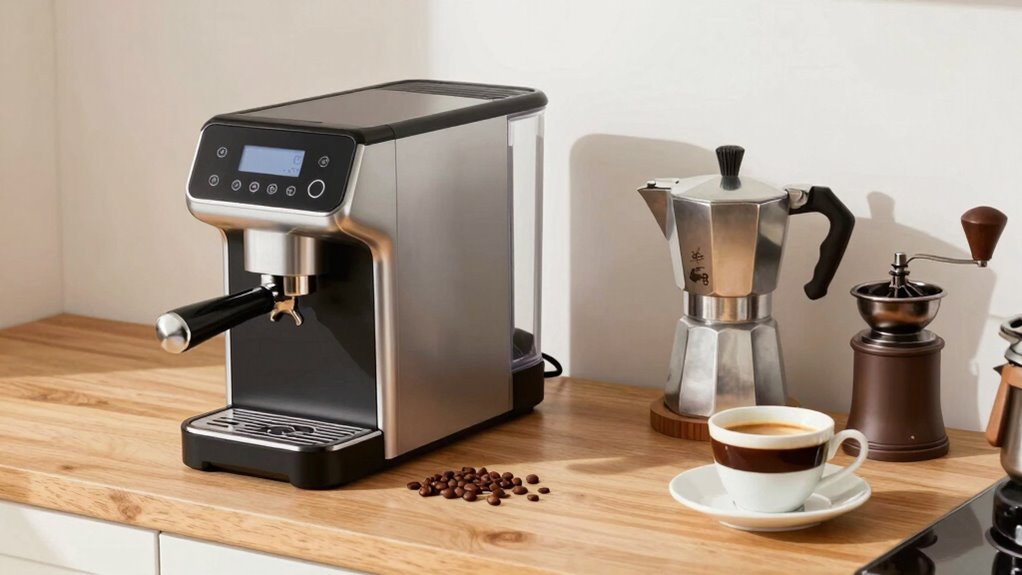

If you’re busy mornings, a bean-to-cup machine lets you quickly brew fresh espresso with minimal effort, thanks to automatic grinding and frothing. It’s perfect if you want speed and convenience without sacrificing quality. Traditional setups take more time but give you full control over each shot, ideal if you enjoy customizing your brew and honing your skills. To find the best fit for your routine, consider the features that matter most—more details await if you keep exploring.

Get coffee and tea gear delivered free — and shop member deals
- Fast, free delivery on millions of items
- Access to Prime Big Deal Days deals on October 6–7
- Prime Video, Amazon Music and more included
Key Takeaways
- Bean-to-cup machines offer quick, one-touch brewing ideal for busy mornings, while traditional setups require more time and manual steps.
- Traditional espresso setups provide greater control over grind, tamping, and brewing, suited for those who enjoy customizing their coffee.
- Bean-to-cup machines typically include automatic cleaning and milk frothing, reducing maintenance time for busy households.
- Traditional systems involve multiple components and manual processes, demanding more time but allowing skill development.
- Both options deliver quality coffee; the choice depends on prioritizing convenience versus control in daily routines.

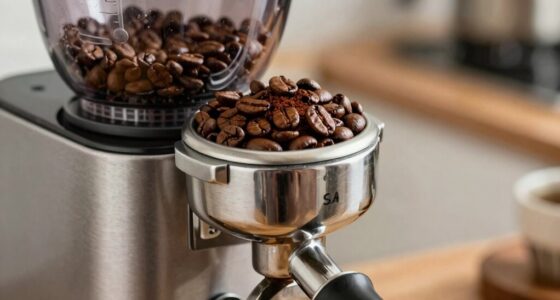
For busy households, choosing the right coffee setup can make a significant difference in daily routines. Whether you’re rushing out the door or enjoying a quiet morning, having a reliable and efficient coffee system matters. A bean-to-cup machine offers the convenience of grinding fresh beans automatically, providing a rich, flavorful espresso at the push of a button. It’s perfect if you value freshness and want a streamlined process without multiple steps. On the other hand, a traditional espresso setup requires more effort but gives you control over every aspect of your brew. You’ll need to grind beans manually, tamp them precisely, and use a separate milk frother if you enjoy milk-based drinks.
If you lean towards the bean-to-cup machine, you’ll find that milk frothing is simplified because many models come with built-in steam wands or automatic frothing functions. This means you can prepare your milk just how you like it with minimal fuss, making lattes or cappuccinos quickly. However, to keep your machine performing at its best, it’s essential to follow some maintenance tips. Regularly descaling your machine prevents mineral buildup, which can impact performance and taste. Also, clean the milk frothing components after each use to prevent milk residue from clogging the system and causing bacteria growth. Many machines have automatic cleaning cycles—use them as recommended to extend your equipment’s lifespan. Proper maintenance ensures your coffee quality remains consistently high and your machine lasts longer. Additionally, understanding the different types of coffee machines can help you choose the best option for your household’s needs. Being aware of these types can also assist in managing expectations regarding cost and features.
If you prefer a traditional setup, you’ll appreciate the hands-on experience and the ability to customize your coffee precisely. You’ll grind fresh beans, tamp them evenly, and control water temperature and pressure. When it comes to milk frothing, you might need a separate frothing pitcher and steam wand, which allows you to hone your technique for perfect microfoam. Maintenance tips for traditional setups involve regular cleaning of the portafilter, group head, and steam wand, along with daily rinsing to prevent coffee oils and milk residues from clogging the system. Understanding machine maintenance and proper cleaning routines is essential for ensuring your equipment remains in optimal condition. Properly cleaning and descaling your equipment keeps it running smoothly and ensures your coffee always tastes fresh. Moreover, investing in good-quality cleaning products can simplify these routines and prolong the life of your espresso machine.
In a busy household, the choice boils down to convenience versus control. A bean-to-cup machine offers speed and simplicity, perfect for mornings when time is tight, while a traditional setup provides a more customizable experience if you have a little more time to enjoy the process. Whichever you choose, focusing on milk frothing techniques and regular maintenance will ensure your coffee setup remains reliable, delivering great-tasting coffee every day with minimal hassle.
automatic bean-to-cup coffee machine
As an affiliate, we earn on qualifying purchases.
As an affiliate, we earn on qualifying purchases.
Frequently Asked Questions
Which Setup Offers Better Energy Efficiency for Daily Use?
A bean-to-cup machine usually offers better energy efficiency for daily use because it heats only when needed, reducing energy consumption. Traditional espresso setups often leave components like boilers on standby, increasing energy use. By choosing a bean-to-cup machine, you minimize environmental impact, as it uses less power overall. This setup promotes sustainable habits, helping you save energy while still enjoying quality coffee every day.
How Easy Is Maintenance for Each System?
You’ll find that maintenance varies between the two systems. Bean-to-cup machines often require regular cleaning routines and can be noisier during operation, which might surprise you if you’re not prepared. Traditional espresso setups usually need less frequent cleaning but demand more attention to grinder and filter maintenance. The coincidence is that both systems, in their own way, demand ongoing care, reminding you that great coffee always involves some effort.
Can Both Setups Make Other Coffee Beverages Easily?
Both setups can make a variety of coffee beverages easily, but a bean-to-cup machine often wins for flavor versatility and milk frothing. With integrated milk frothers, you can create lattes, cappuccinos, and more without extra equipment. Traditional espresso setups might require additional tools for milk frothing, but they offer greater control over flavor profiles. Overall, bean-to-cup machines simplify making diverse drinks, ideal for busy households wanting quick, tasty options.
What Is the Typical Lifespan of Each Machine?
A typical bean-to-cup machine lasts about 5 to 10 years, thanks to its durable build and consistent performance, maintaining your coffee flavor over time. Traditional espresso machines often have a similar lifespan, around 5 to 15 years, but their durability depends on regular maintenance. Both machines’ longevity hinges on quality materials and proper care, ensuring you enjoy great-tasting coffee and machine durability for years.
Are There Size Constraints for Small Kitchens?
You might think small kitchens limit your coffee options, but with smart storage solutions, both machine types can fit comfortably. Counter space is essential—compact models save room and keep your kitchen uncluttered. Measure your available space carefully, and look for slim or integrated designs to maximize efficiency. Don’t let size constraints hold you back; the right setup can deliver great coffee without sacrificing your kitchen’s functionality.
manual espresso machine with steam wand
As an affiliate, we earn on qualifying purchases.
As an affiliate, we earn on qualifying purchases.
Conclusion
Choosing between a bean-to-cup and a traditional espresso setup is like picking between a trusted old friend and a new adventure—both have their charm. If you crave simplicity and speed, a bean-to-cup machine is your reliable companion, ready to serve at a moment’s notice. But if you enjoy the ritual and artistry, a traditional setup invites you to craft each cup with care. Whichever path you take, your perfect brew awaits—like a hidden treasure just for you.
milk frother for espresso machines
As an affiliate, we earn on qualifying purchases.
As an affiliate, we earn on qualifying purchases.
coffee grinder for espresso beans
As an affiliate, we earn on qualifying purchases.
As an affiliate, we earn on qualifying purchases.
Evergreen bestsellers Picks
bestsellers
As an affiliate, we earn on qualifying purchases.