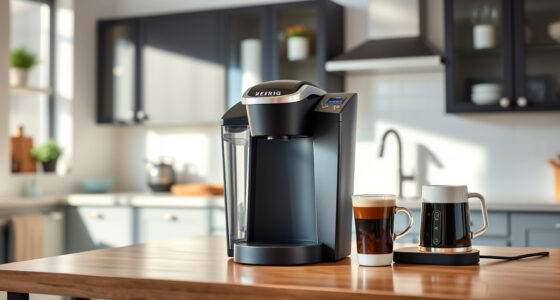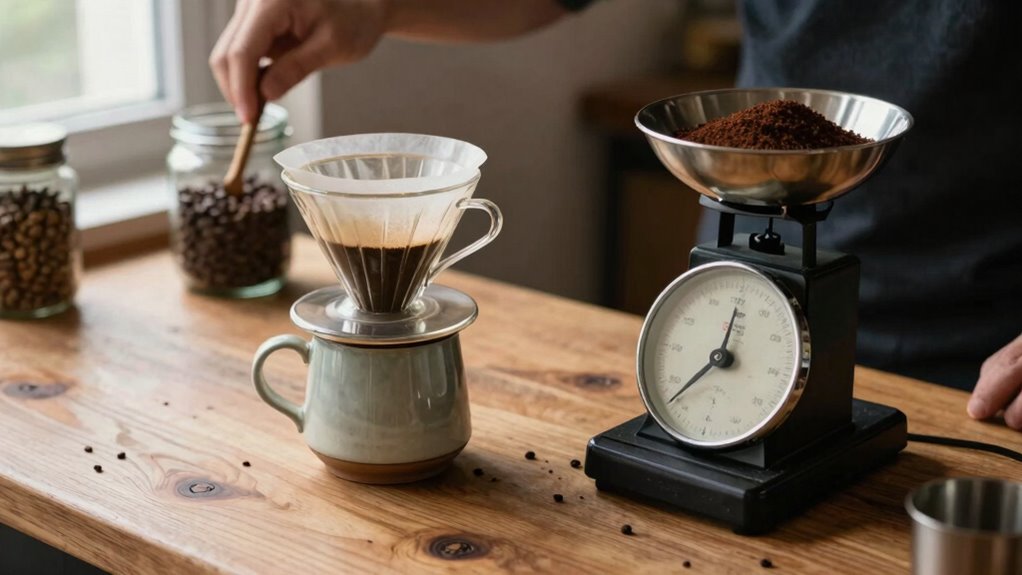
The best coffee workflow starts before the water boils by focusing on controlling your grind size and water temperature. Use a burr grinder to guarantee a consistent, medium grind for drip or coarser for French press, and aim for a water temperature around 195°F to 205°F. These steps influence extraction, flavor, and aroma, making a huge difference in your final brew. Keep these fundamentals in mind, and you’ll open the door to better coffee—there’s more to discover ahead.

Get coffee and tea gear delivered free — and shop member deals
- Fast, free delivery on millions of items
- Access to Prime Big Deal Days deals on October 6–7
- Prime Video, Amazon Music and more included
Key Takeaways
- Select high-quality coffee beans and grind them to the appropriate size for your brewing method.
- Use a burr grinder for consistent, uniform grind particles to ensure even extraction.
- Measure the coffee accurately to maintain proper coffee-to-water ratio.
- Preheat your brewing equipment to stabilize temperature and improve extraction.
- Confirm water temperature is between 195°F and 205°F before pouring for optimal flavor.
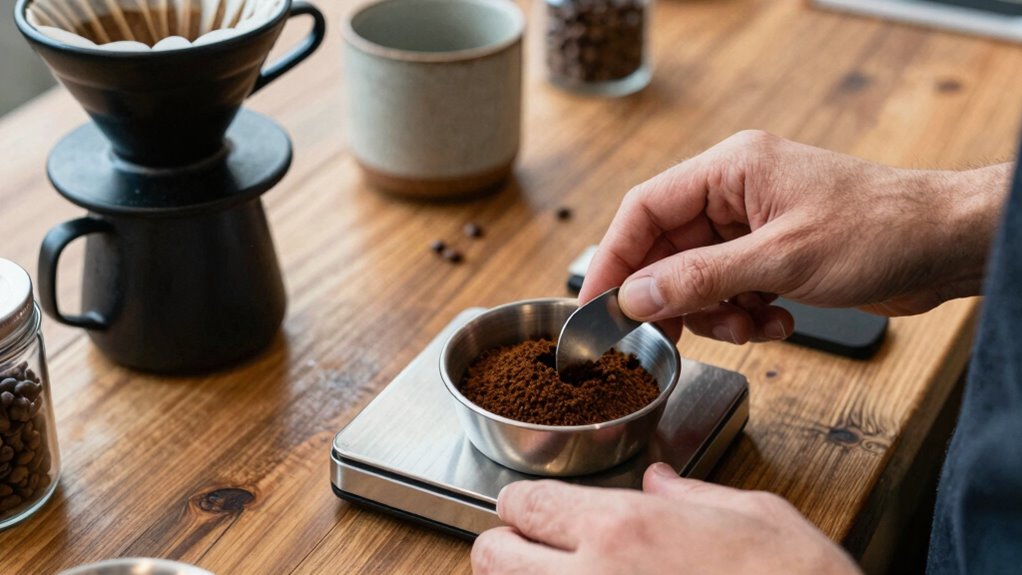
Have you ever wondered why your coffee often doesn’t taste as good as it could? The secret lies in the steps you take before the water even hits your beans. The best coffee workflow starts long before the water boils, beginning with your coffee grind and the water temperature you aim for. These details might seem small, but they have a huge impact on flavor, aroma, and overall quality.
First, pay attention to your coffee grind. The grind size isn’t just about convenience; it’s about extracting the right flavors. A grind that’s too fine can lead to over-extraction, resulting in bitter, harsh coffee. Conversely, a grind that’s too coarse can cause under-extraction, leaving your brew weak and flat. To get it just right, match your grind size to your brewing method. For example, use a medium grind for drip coffee, a coarse grind for French press, and a fine grind for espresso. Consistency is key, so invest in a good burr grinder that delivers uniform particles. The right grind ensures water interacts evenly with the coffee grounds, making every sip taste balanced. Additionally, selecting a grinder with precise settings can help maintain that consistency over time.
Next, consider your water temperature. When you start brewing, the temperature at which your water hits the grounds can make or break the extraction. Too hot, and you risk over-extracting, pulling out bitter compounds. Too cold, and you’ll under-extract, leaving behind sour or weak flavors. The ideal water temperature for most brewing methods falls between 195°F and 205°F (90°C to 96°C). Before pouring, heat your water to this range, and avoid rushing to pour as soon as it hits boiling. Letting the water sit for a moment after boiling helps stabilize the temperature, giving you a more controlled extraction. Remember, even slight temperature variations can change the flavor profile significantly. Ensuring your water temperature is precise can be helped by using a thermometer or a kettle with temperature control. Proper water temperature control can prevent undesirable extraction outcomes and improve consistency.
Combining these two factors—your grind and water temperature—sets the foundation for an excellent brew. If you start with a proper grind tailored to your brewing method and ensure your water is at the correct temperature, you’ll notice a marked improvement in taste. These are the core elements you control before the water ever touches your coffee. Skipping or rushing through these steps often results in a lackluster cup, no matter how good your beans are or how fancy your equipment. Paying attention to these details, however, transforms your routine into a precise ritual that consistently produces better coffee. Moreover, understanding the science of extraction can help you fine-tune your process for even better results.
In the end, it’s about setting the stage for extraction. When your grind is right and your water hits the grounds at just the right temperature, you unlock the full potential of your beans. That’s where the true magic begins, and your coffee starts to taste more vibrant, complex, and satisfying. Proper coffee preparation techniques are the foundation of a great brew, emphasizing the importance of these early steps.
As an affiliate, we earn on qualifying purchases.
Frequently Asked Questions
How Does Coffee Bean Freshness Affect Brewing Quality?
Fresh coffee beans greatly impact brewing quality because they preserve the rich coffee aroma, which is key to a flavorful cup. As beans age, they lose their vibrancy, leading to duller taste and diminished aroma. When you use fresh beans, you’ll notice a brighter, more complex flavor profile. Avoiding bean aging guarantees your brew maintains its full potential, delivering a more satisfying and aromatic coffee experience.
What Grinders Produce the Most Consistent Coffee Grounds?
You’ll find that burr grinders, especially those with precise calibration and well-maintained burr alignment, produce the most consistent coffee grounds. These grinders gently cradle your beans, ensuring uniform particle sizes that enhance extraction. Regular calibration keeps grind consistency sharp, while proper burr alignment prevents uneven grounds. This harmony results in a smoother, richer brew, letting you truly enjoy the nuances of freshly roasted beans with every cup.
How Does Water Mineral Content Impact Extraction?
Water mineral content considerably impacts extraction by influencing flavor and clarity. Mineral influence, like calcium and magnesium, enhances extraction by improving water’s ability to dissolve coffee compounds, resulting in a richer taste. Proper mineral levels can boost extraction enhancement, making your brew more balanced and vibrant. Too many minerals, however, may lead to over-extraction or a bitter taste. Adjust mineral content carefully to optimize flavor and achieve the perfect cup.
What Is the Ideal Coffee-To-Water Ratio?
The ideal coffee-to-water ratio is about 1:15, meaning for every gram of coffee, you use 15 grams of water. Notably, this ratio balances coffee flavor extraction without over- or under-extracting, especially when combined with the right brewing temperature. By maintaining this ratio, you ensure a rich, balanced cup that highlights the nuanced flavors of your beans, making your brewing process both precise and enjoyable.
How Can I Store Coffee Beans for Maximum Freshness?
To keep your coffee beans fresh, store them in an airtight container away from light, heat, and moisture. Coffee bean storage in a cool, dark place maintains freshness and prevents oxidation. Avoid the fridge or freezer, as temperature fluctuations can harm flavor. Instead, use a dedicated container, and only buy what you’ll consume in a few weeks. This freshness preservation ensures your coffee remains flavorful and aromatic with every brew.
As an affiliate, we earn on qualifying purchases.
Conclusion
Remember, the key to a great cup of coffee begins long before the water hits the kettle. By selecting quality beans, grinding just before brewing, and maintaining your equipment, you set the stage for flavor. For example, imagine a barista who pre-measures and calibrates each step; their coffee consistently impresses customers. So, invest time in your prep work, and you’ll enjoy richer, more satisfying brews every time. Your perfect cup starts with the right groundwork.
coffee brewing temperature control kettle
As an affiliate, we earn on qualifying purchases.
As an affiliate, we earn on qualifying purchases.
As an affiliate, we earn on qualifying purchases.
Fall Picks
fall essentials
As an affiliate, we earn on qualifying purchases.